Female Pileated Woodpecker: Identification Guide
The female pileated woodpecker looks much like the striking male, a large crow-sized black woodpecker with a flaming red crest, but she has a black forehead and a black cheek stripe where the male shows red. These subtle differences are the key to telling the sexes apart. This guide covers what a female pileated woodpecker looks like, how she differs from the male, how to identify her, her behavior and nesting, and where and when to see her.
| Feature | Female Pileated Woodpecker |
|---|---|
| Size | Large, crow-sized |
| Body | Mostly black |
| Crest | Red |
| Forehead | Black or grayish |
| Cheek stripe | Black |
What Does a Female Pileated Woodpecker Look Like?
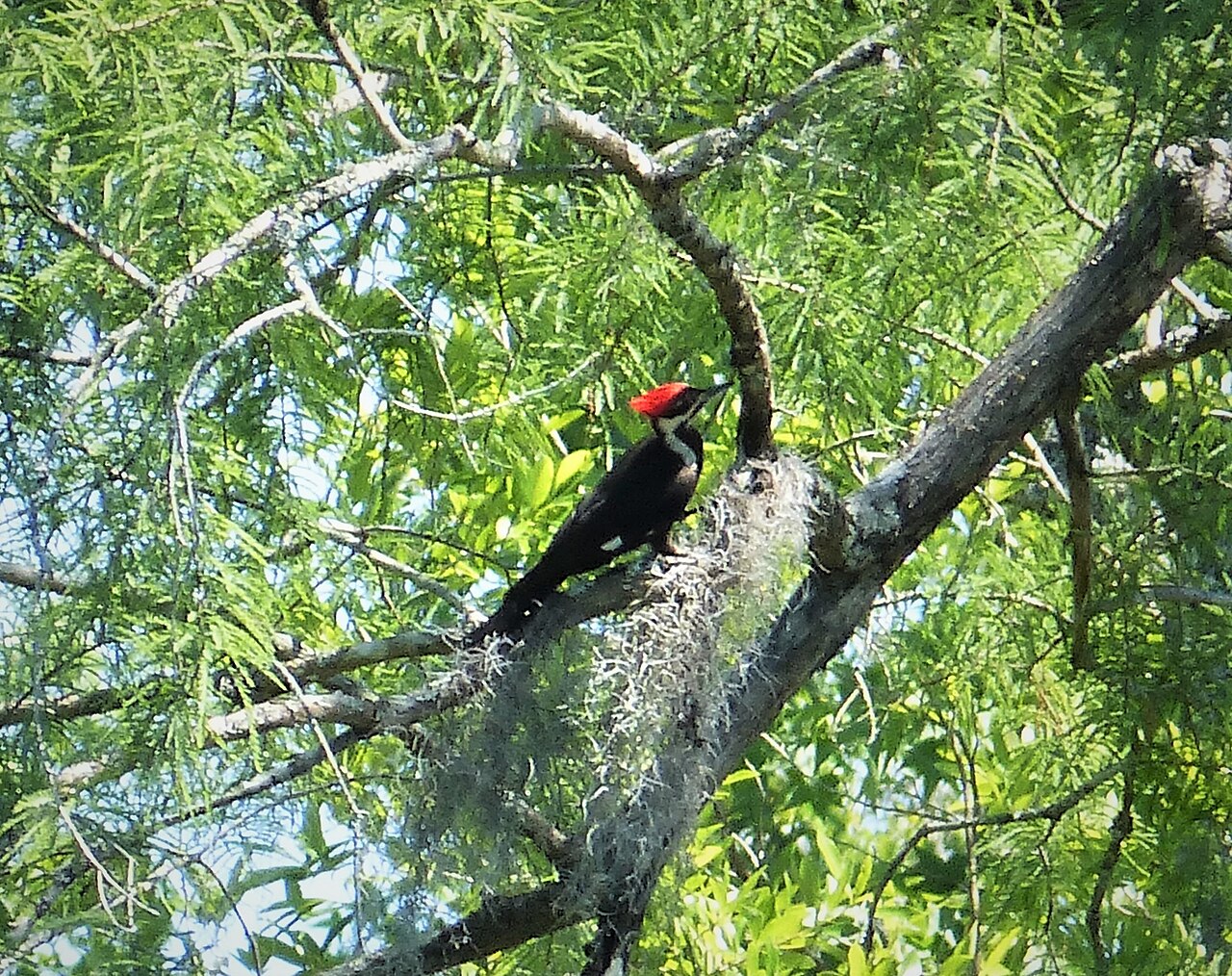
A female pileated woodpecker is a large, impressive black woodpecker, nearly the size of a crow, and looks very similar to the male at first glance. She has a mostly black body with white stripes on the face and neck, white underwings visible in flight, and a prominent, pointed red crest on the head. The key differences that mark her as female are on the head: her forehead is black or grayish rather than red, and her cheek or mustache stripe is black rather than red. So while she shares the male’s dramatic size and red crest, the front of her crown and her malar stripe lack the male’s red. She has a long, chisel-like bill for excavating wood. Overall she is a spectacular bird, and the black forehead and black cheek stripe, combined with the red crest, are the key to recognizing her as a female, as covered in our guide to types of woodpeckers.
Female vs Male Pileated Woodpecker

The difference between female and male pileated woodpeckers is subtle but consistent, focused on the head markings. Both sexes are large, mostly black birds with white face and neck stripes and a bright red crest, so they look very much alike overall. The differences are that the male has a red forehead, with the red extending all the way from the crest forward to the bill, and a red mustache or cheek stripe, while the female has a black or grayish forehead, with red only on the rear crest, and a black cheek stripe. In other words, the male shows more red on the head, including the forehead and mustache, whereas the female’s red is limited to the crest. These head markings are the reliable way to tell the sexes apart. Both male and female are equally striking birds, and seeing the two together makes the difference in the amount of red on the head easy to appreciate.
How to Identify a Female Pileated Woodpecker
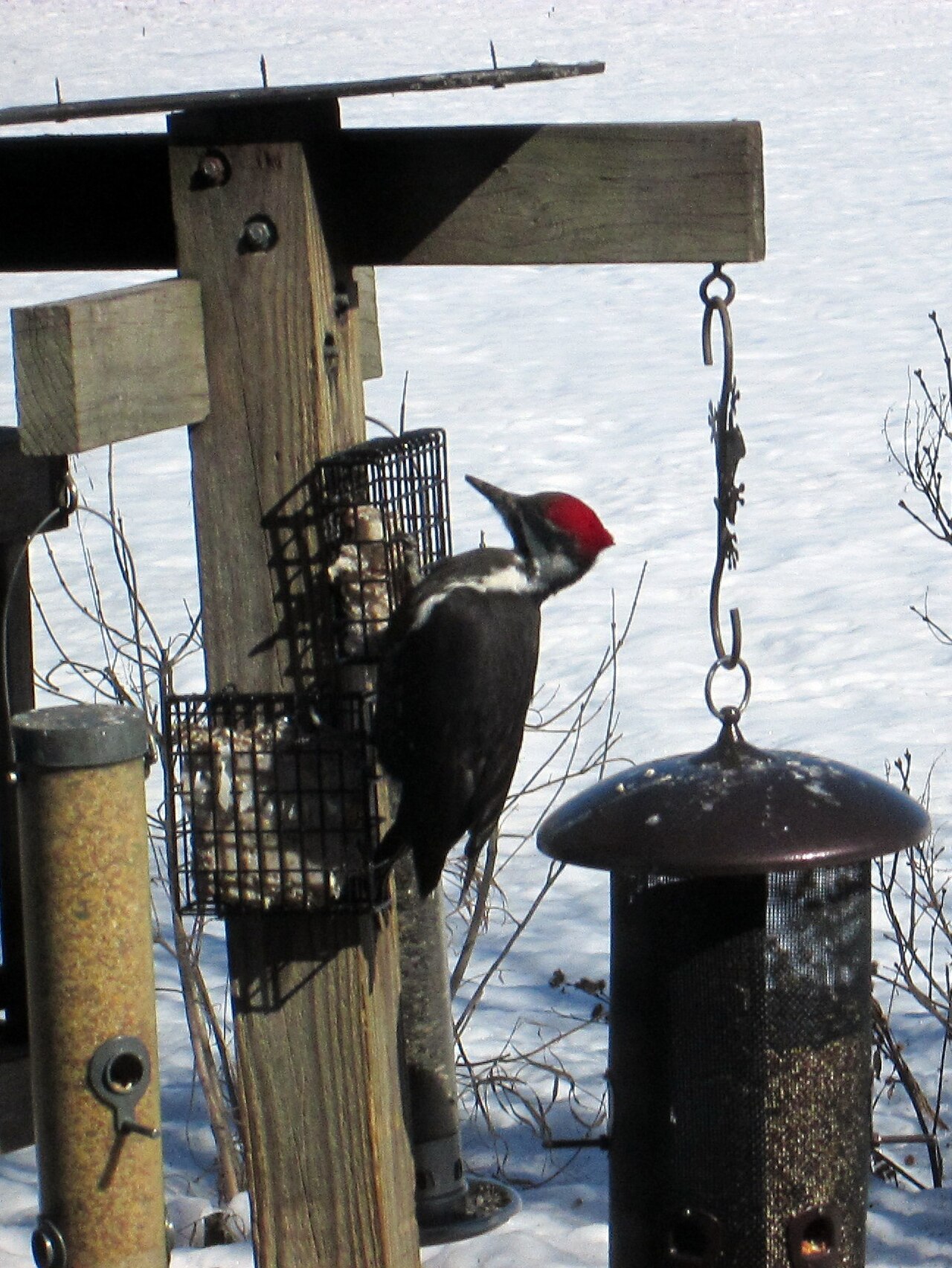
Identifying a female pileated woodpecker starts with recognizing the species, then noting the features that mark her as female. First, the pileated woodpecker itself is unmistakable in most of North America, being a very large, crow-sized black woodpecker with a bright red triangular crest, far bigger than other common woodpeckers. To identify a female specifically, look at the head: the female has a black or grayish forehead and a black cheek stripe, while the male has a red forehead and a red cheek stripe. Because the birds are so large and their markings so bold, these differences are visible with a good look. Be aware that the only truly similar bird, the ivory-billed woodpecker, is considered extinct or virtually so, meaning a large crested black woodpecker you see is almost certainly a pileated. Focusing on the black forehead and cheek stripe against the red crest confirms a female, a rewarding identification for anyone watching mature woods, as covered in our guide to attracting birds.
Female Pileated Woodpecker Behavior and Nesting
The female pileated woodpecker, like the male, is a powerful excavator with fascinating habits. Pileated woodpeckers feed heavily on carpenter ants and wood-boring beetle larvae, and they chisel large, distinctive rectangular holes into dead and dying trees to reach their prey, leaving behind piles of wood chips at the base. These excavations are so substantial that they can be a sign of the birds’ presence even when the woodpeckers are not seen. When nesting, the pair excavates a large nest cavity in a dead tree, with both male and female helping, and they raise their young inside. The abandoned cavities they create are later used by many other animals, making pileated woodpeckers important for other wildlife. The female shares in excavating, incubating, and feeding the young. This powerful wood-working behavior and the large cavities they produce make pileated woodpeckers remarkable birds, as reflected in our guide to feeding backyard birds.
Where and When to See Female Pileated Woodpeckers
Female pileated woodpeckers are found in forests across much of North America, alongside the males. Look for them in mature woodlands, especially those with large trees and plenty of dead and decaying wood, since they depend on big trees for feeding and nesting. They inhabit deciduous, coniferous, and mixed forests across the eastern United States, parts of the West, and much of Canada, and they have adapted to some wooded suburbs and parks with large trees. Pileated woodpeckers are year-round residents, not migratory, so they can be seen in every season within their range. They will also visit backyard suet feeders, especially near wooded areas, offering a chance for close views. Listening for their loud, ringing call and their deep, resonant drumming, and watching for their large rectangular excavations and wood-chip piles, helps locate them. Because they are large, striking, and present year round, female pileated woodpeckers are a rewarding bird to find in mature woods, as detailed in our guide to plants that attract birds.
Female Pileated Woodpecker Markings Explained
The subtle differences that mark a female pileated woodpecker are well documented by ornithologists. According to the Cornell Lab of Ornithology, the pileated woodpecker is a very large, crow-sized woodpecker, and the female differs from the male in having a black forehead and lacking the male’s red mustache stripe. This means that while both sexes share the dramatic red crest and mostly black body, the female’s red is confined to the crest, with a black or grayish forehead and a black cheek stripe, whereas the male shows red on the forehead and a red mustache as well. These head markings are the reliable way to distinguish the sexes. The pileated woodpecker’s great size makes it unmistakable, since it is by far the largest common woodpecker in most of North America. Understanding these markings makes the female easier to identify and reveals the fine details that separate her from the male, a striking bird covered in our guide to types of woodpeckers.
The Pileated Woodpecker’s Powerful Excavations
One of the most remarkable things about pileated woodpeckers, shared by both the female and male, is their powerful wood excavation. These big woodpeckers chisel large, distinctive rectangular holes into dead and dying trees as they dig for carpenter ants and wood-boring beetle larvae, their main foods, often leaving sizable piles of wood chips at the base of the tree. These excavations can be surprisingly deep and long, and their characteristic rectangular shape is a telltale sign that a pileated woodpecker has been at work, even when the bird itself is not seen. When nesting, the pair excavates a large cavity in a dead tree, and these abandoned cavities later provide homes for many other animals, from owls to ducks to squirrels, making pileated woodpeckers important for whole ecosystems. The female takes a full part in this excavating, nesting, and raising of young. This powerful behavior makes pileated woodpeckers keystone birds, as reflected in our guide to bird symbolism.
Related reading: what do woodpeckers eat.
Frequently Asked Questions
What does a female pileated woodpecker look like?
A female pileated woodpecker is a large, crow-sized black woodpecker with a red crest, but she has a black forehead and a black cheek stripe where the male shows red.
How can you tell a female pileated woodpecker from a male?
The male has a red forehead and a red cheek stripe, while the female has a black forehead and a black cheek stripe, with red limited to the crest.
Do female pileated woodpeckers have a red crest?
Yes, female pileated woodpeckers have a bright red crest just like the male. The difference is that the female’s forehead and cheek stripe are black rather than red.
How big is a pileated woodpecker?
The pileated woodpecker is very large, nearly the size of a crow, making it the biggest common woodpecker in most of North America, with a wingspan around two and a half feet.
Do pileated woodpeckers come to feeders?
Yes, pileated woodpeckers will visit backyard suet feeders, especially near wooded areas, offering a chance for close views of these large, striking birds.
What do the rectangular holes in trees mean?
Large rectangular holes in dead trees are made by pileated woodpeckers excavating for carpenter ants and beetle larvae. Piles of wood chips often lie at the base.
Where do female pileated woodpeckers live?
Female pileated woodpeckers live in mature forests with large trees across the eastern United States, parts of the West, and Canada, present year round.