Pileated Woodpecker: Identification, Sound, and Behavior Guide
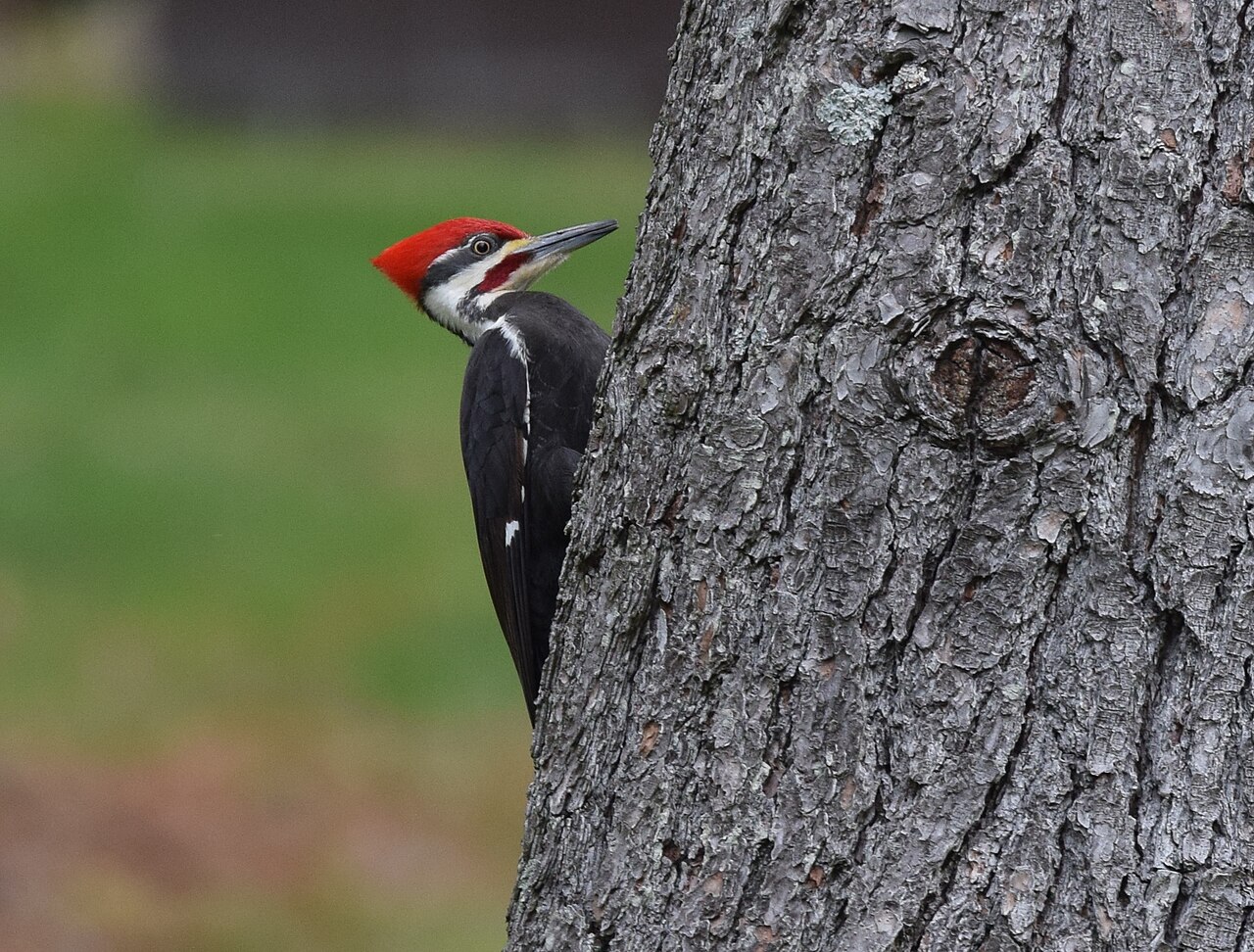
The pileated woodpecker (Dryocopus pileatus) is the largest woodpecker commonly found in North America, roughly the size of a crow, with a striking flaming red crest, black body, and bold white stripes down the neck and face. Its size, dramatic appearance, and loud, ringing call have made it one of the most exciting backyard sightings for birders, and it’s widely believed to be the inspiration for the classic Woody Woodpecker cartoon character. Look for its unmistakable rectangular excavation holes in dead trees, a feature no other North American woodpecker produces at this size, and consider yourself fortunate if you spot one, since even in areas where the species is common, its wariness and preference for mature forest interior mean sightings are still far less frequent than hearing the bird’s unmistakable call or drumming from a distance.
| Quick Reference | Detail |
|---|---|
| Length | 16 to 19 inches |
| Wingspan | 26 to 30 inches |
| Weight | 8.8 to 12.3 oz |
| Crest color | Bright red (both sexes) |
| Male vs female | Males have a red “mustache” stripe; females have black |
| Signature sign | Large rectangular excavation holes in dead wood |
| Diet | Primarily carpenter ants and wood-boring beetle larvae |
How to Identify a Pileated Woodpecker
The pileated woodpecker’s size alone sets it apart from every other North American woodpecker except the possibly extinct ivory-billed woodpecker; at 16 to 19 inches long, it’s roughly crow-sized, dwarfing the familiar downy and hairy woodpeckers seen at backyard suet feeders. Its plumage is mostly black with bold white stripes running down the neck and a white patch visible on the underside of the wing in flight, topped by a tall, flaming red crest that both males and females share. This combination of large size, black-and-white pattern, and vivid red crest makes the pileated woodpecker essentially unmistakable once seen clearly, unlike the far more common downy and hairy woodpeckers that require closer inspection of bill size and outer tail feathers to tell apart confidently.
Male vs Female Pileated Woodpecker

Both sexes share the dramatic red crest, but the easiest way to distinguish males from females is the “mustache” stripe running from the base of the bill: males have a red mustache stripe, while females have a black one. Males also tend to show slightly more red on the forehead extending toward the bill, while females have a black forehead just behind the bill before the red crest begins. These differences are subtle at a distance but clear in a good photo or through binoculars, similar to the more dramatic plumage differences documented between male and female red-winged blackbirds, though in that species the sexes look almost entirely different rather than sharing most of the same base pattern.
The Rectangular Excavation Holes
One of the most reliable signs of pileated woodpecker activity, even without seeing the bird itself, is its distinctive feeding excavation: large, deep, rectangular or oval holes chiseled into dead or dying trees, often extending a foot or more in length. These holes are dug specifically to expose galleries of carpenter ants, the woodpecker’s primary food source, and the excavations are so large and deep that they sometimes cause weakened trees to eventually snap at the hole site. No other common North American woodpecker produces holes at this scale, making the shape and size of the excavation itself a reliable identification tool.
Why Pileated Woodpeckers Matter for Forest Ecosystems

Because pileated woodpeckers are one of the few species capable of excavating cavities large enough for medium-sized animals to use, their feeding and nesting holes create housing that dozens of other species depend on but cannot build themselves. Wood ducks, several owl species, and even some bat species regularly use abandoned pileated woodpecker cavities for roosting or raising young, making the woodpecker’s presence in a forest a strong positive indicator for overall biodiversity in that habitat. Forest managers increasingly consider pileated woodpecker activity a useful proxy for measuring how much large dead wood, an often-overlooked but ecologically critical habitat feature, remains present in a given stretch of forest, since the species simply cannot persist in areas that have been cleared of large dead and dying trees.
Diet and Foraging Behavior
Pileated woodpeckers feed primarily on carpenter ants, which can make up as much as 60 percent of their diet, along with wood-boring beetle larvae, other insects, and seasonally fruit and nuts. Their powerful, chisel-like bill and reinforced skull allow them to excavate deep into solid wood to reach ant galleries that other woodpeckers cannot access, a specialized feeding strategy that also makes them valuable for natural pest control in forested areas, unlike the more varied, opportunistic diet of ground-foraging birds such as the common grackle. This reinforced skull structure, along with specialized shock-absorbing tissue between the bill and braincase, is what allows the bird to withstand the repeated high-impact strikes needed to break through solid, undamaged wood day after day without sustaining injury.
The Call and Drumming
The pileated woodpecker’s call is a loud, wild, ringing series of notes often described as sounding almost tropical or jungle-like, frequently used as a stock sound effect in movies set in dense forests regardless of actual location. In addition to vocal calls, pileated woodpeckers drum on resonant dead wood in a slow, deep, rolling pattern to communicate territory and attract mates, distinct from the faster, higher-pitched drumming of smaller woodpecker species and entirely different in tone from the raspy call of a small flycatcher defending a much smaller territory. The drumming pattern itself is diagnostic to experienced birders, since the slow cadence and deep resonance carry noticeably farther through a forest than the quicker, higher-pitched drumming produced by downy or hairy woodpeckers working on smaller branches.
Habitat and Range
Pileated woodpeckers require mature forests with a substantial amount of large dead or dying trees for both feeding and nesting, and they are found across most of the eastern United States, the Pacific Northwest, and parts of the upper Midwest and Canada. According to the Cornell Lab of Ornithology, pileated woodpecker populations have increased significantly since the mid-20th century as eastern forests have matured following widespread historical logging, a recovery that mirrors the broader trend seen in other forest-dependent species once suitable mature habitat becomes available again. The species has increasingly been spotted in large wooded suburban parks and even sizable backyards with mature trees as a direct result of this population growth and range stability.
Nesting Behavior
Pileated woodpeckers excavate a new nest cavity nearly every year, typically in a large dead tree, creating an oval entrance hole considerably bigger than that of smaller woodpecker species. Both parents share incubation of the typical 3 to 5 egg clutch for about 15 to 18 days, and the abandoned nest cavities they leave behind become critical nesting sites for numerous other species that cannot excavate their own holes, including owls, wood ducks, and even smaller songbirds looking for a secure cavity to raise their own young. For comparison to other large woodland woodpeckers, see our guide to distinguishing common backyard woodpecker species.
Frequently Asked Questions
How do you identify a pileated woodpecker?
Look for a crow-sized woodpecker with a black body, bold white neck stripes, and a tall, flaming red crest, roughly the size of a crow and unmistakable once seen clearly against the smaller, more common backyard woodpecker species most people are already familiar with.
How can you tell a male from a female pileated woodpecker?
Males have a red “mustache” stripe running from the bill, while females have a black mustache stripe and a black forehead just behind the bill.
Why do pileated woodpeckers make such large rectangular holes?
They excavate large, deep holes to reach galleries of carpenter ants, their primary food source, and no other common North American woodpecker produces holes at this size.
What do pileated woodpeckers eat?
Pileated woodpeckers primarily eat carpenter ants and wood-boring beetle larvae, along with some fruit and nuts seasonally, using their powerful bill to expose deeply buried insect galleries other woodpeckers cannot reach.
What does a pileated woodpecker sound like?
Its call is a loud, wild, ringing series of notes often described as jungle-like, and it also produces a slow, deep, rolling drumming pattern on dead wood.
Was the pileated woodpecker the inspiration for Woody Woodpecker?
It’s widely believed to be, based on the character’s red crest and general resemblance, though the connection is based on visual similarity rather than a confirmed direct statement from the cartoon’s creators, and the debate over the exact inspiration continues among animation historians.
Where do pileated woodpeckers live?
Pileated woodpeckers live in mature forests with large dead trees across the eastern United States, the Pacific Northwest, and parts of the upper Midwest and Canada, and increasingly in large wooded suburban parks as their populations continue to recover.