House Wren: Facts, Identification, and Nesting Guide
The house wren is one of the most widespread and familiar backyard birds in the Americas, a tiny, plain, brown bundle of energy with a bubbling song that seems impossibly loud for its size. At just four and a half inches long, it has almost no bold markings, which is part of what makes it recognizable: a small, drab, warm brown wren with a cocked tail, faint barring on the wings, and a busy, restless manner. This guide walks through how to identify a house wren, its remarkable song, its aggressive nesting habits, and how to attract one to a nest box.
| Length | 4.3 to 5.1 inches |
| Key marks | Plain grayish brown, faint wing barring, thin eyering, weak eyebrow |
| Song | Bubbly, chattering cascade of notes |
| Range | Most of the US and southern Canada in summer, southern US and Mexico in winter |
| Diet | Almost entirely insects and spiders |
| Nest | Cavity nester, fills boxes and nooks with sticks |
| Behavior | Migratory, fiercely territorial |
How to Identify a House Wren
The house wren is defined by its plainness. It is small and compact with a short, often upraised tail, a thin slightly downcurved bill, and warm grayish brown plumage that is only faintly barred on the wings and tail. Unlike the Carolina wren, it has no bold white eyebrow, just a hint of a paler line and a subtle pale eyering. The overall impression is a nondescript little brown bird that moves in quick, jerky hops through low tangles and brush. When you see a wren shape with no strong markings, house wren is the default answer across most of North America. It belongs to a family covered in full in our types of wrens guide.
What Does a House Wren Sound Like?
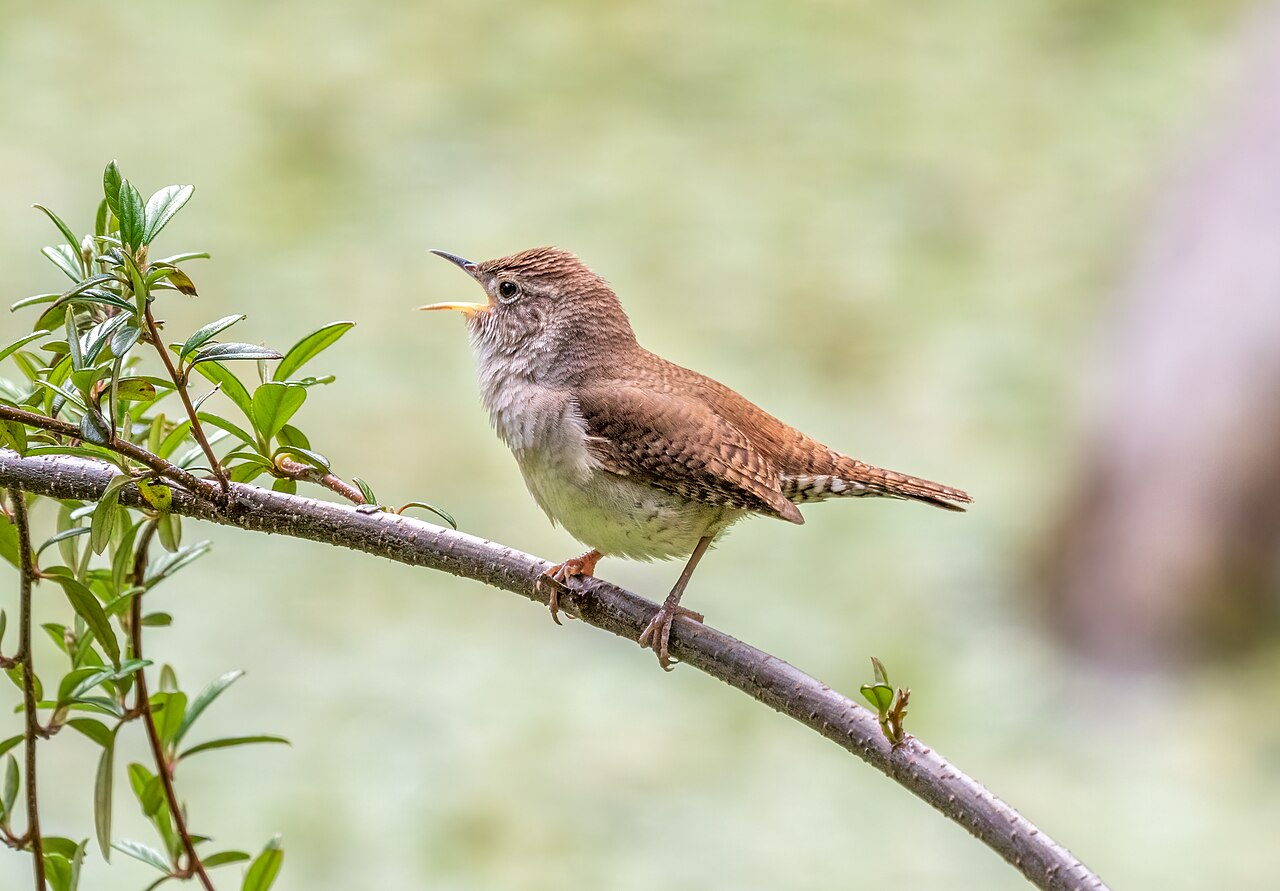
For such a plain bird, the house wren has an unforgettable voice. The male sings a rush of bubbling, churring, chattering notes that rise and then tumble downward in a rapid, energetic cascade. It is one of the busiest sounding songs in the backyard, repeated tirelessly through the breeding season from prominent perches. This exuberant song, combined with the bird’s restless energy, is often the first sign a house wren has claimed your yard. The song contrasts sharply with the clear, ringing teakettle phrases of the Carolina wren.
House Wren Nesting Behavior: Sticks Everywhere
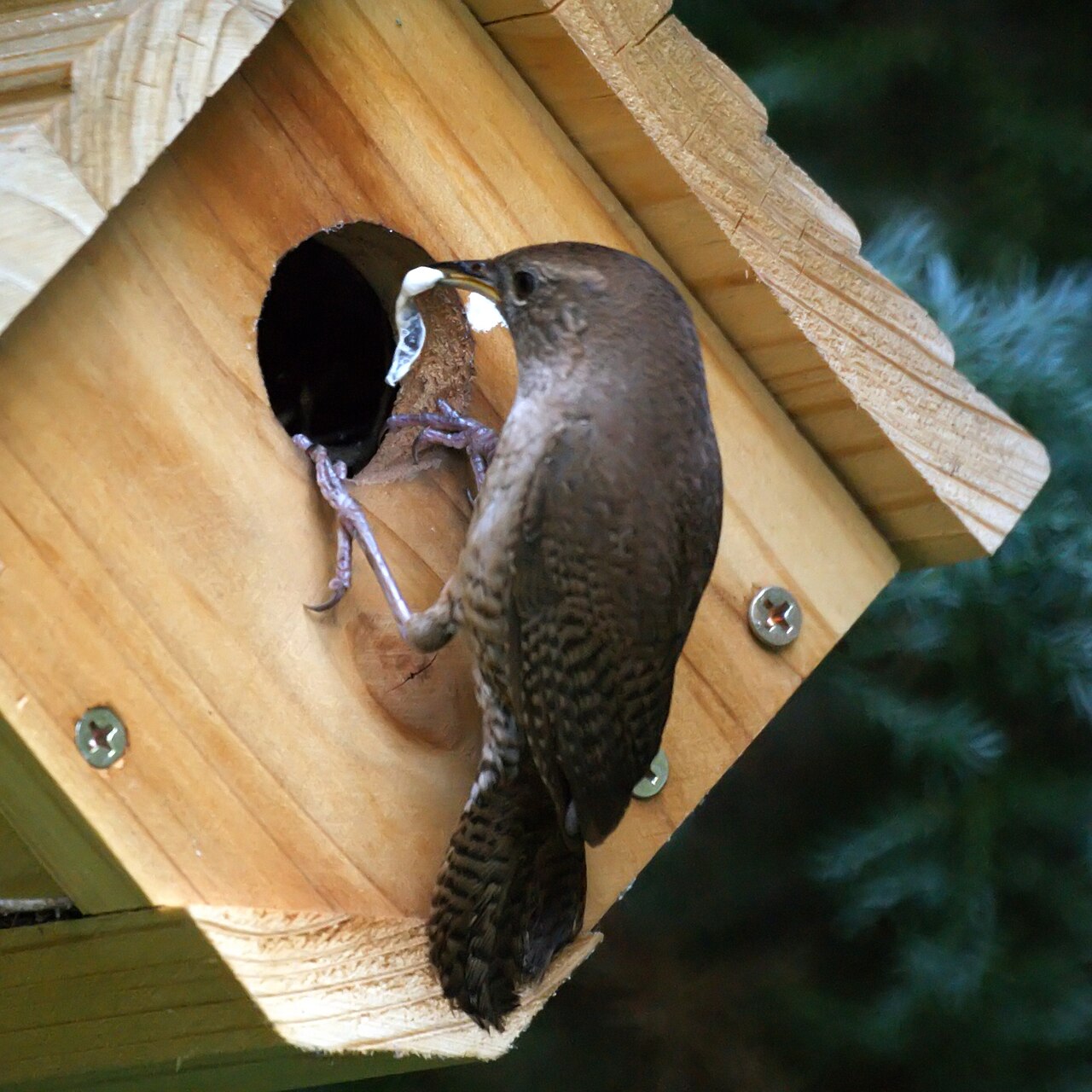
House wrens are enthusiastic cavity nesters, and their nesting behavior is one of the most interesting in the backyard bird world. The male arrives first and begins stuffing sticks into every available cavity in his territory, sometimes filling several boxes or nooks with partial nests. These are sometimes called dummy nests. When a female arrives, she inspects his offerings and selects one cavity, then lines it with softer material and completes it. She typically lays six to eight tiny eggs. This habit of filling multiple cavities with sticks may help the male monopolize nest sites and crowd out competitors. For a look at other cavity nesters, see our house finch guide.
Are House Wrens Aggressive? The Darker Side
Behind the cheerful song lies a fierce competitor. House wrens are notably aggressive toward other cavity nesting birds. They will enter the nests of bluebirds, chickadees, tree swallows, and other wrens and puncture or remove the eggs, sometimes destroying an entire clutch to claim the cavity. According to the Cornell Lab of Ornithology, this behavior is a well documented part of their breeding strategy. It can frustrate people hoping to host bluebirds, and it is one reason nest box placement and spacing matter. This aggression is natural and not a sign of a problem with an individual bird.
How to Attract House Wrens to a Nest Box
House wrens are among the easiest birds to attract to a nest box. Choose a small box with an entrance hole of about one and one eighth inches, which admits wrens while excluding larger competitors. Mount it four to ten feet high on the edge of your yard, near shrubs or a wood line where wrens like to forage. Because house wrens tolerate human activity well, boxes near a patio or garden often succeed. Keep the surroundings brushy, since these birds hunt insects in low tangles. If you also host bluebirds, place their boxes in open areas well away from brushy wren habitat to reduce conflict. Our guide to attracting cavity nesters covers box placement in more detail.
House Wren Range and Migration
The house wren has one of the largest ranges of any songbird in the Western Hemisphere. In North America it breeds across nearly the entire United States and southern Canada during summer, then migrates south to winter in the southern United States and Mexico. This makes it a classic summer arrival in most yards, announcing spring with its bubbling song and departing in fall. The migratory habit is a key difference from the year round Carolina wren and helps explain why the two can share the eastern states without directly competing at all seasons. To identify the small brown birds that pass through with it, see our small brown birds guide.
House Wren Behavior and Personality
Few backyard birds pack as much energy into a small frame as the house wren. It is in near constant motion, hopping and creeping through low tangles, tail flicking, pausing only to burst into its bubbling song from a favorite perch. That restless intensity extends to its social life: house wrens are pugnacious and territorial well beyond their size, and a single male will patrol and sing over a surprisingly large area, driving off rivals and competitors with fierce determination. This bold, busy temperament, combined with the loud song, means a house wren makes its presence known the moment it arrives in spring. Watching a house wren work a brush pile is watching a tiny bundle of pure motion.
The House Wren Breeding Season
The house wren’s summer follows a busy schedule. Males arrive on the breeding grounds first and immediately begin claiming cavities and stuffing them with sticks, singing constantly to attract a female. Once paired, the female selects and lines a nest and lays a clutch of six to eight tiny eggs, which she incubates for about two weeks. Both parents then work tirelessly to feed the hungry nestlings a steady stream of insects and spiders. House wrens often raise two broods in a single season, and the male may begin building nests for a second attempt while the female tends the first brood. This productive, fast paced breeding cycle, repeated across their vast range, is part of why house wrens are among the most abundant birds in the Americas. For other summer cavity nesters to host, see our eastern bluebird guide and tufted titmouse guide.
Frequently Asked Questions
What does a house wren look like?
A house wren is a tiny, plain grayish brown bird about four and a half inches long with faint dark barring on the wings and tail, a thin pale eyering, and almost no eyebrow stripe. It often holds its short tail cocked upward. There are no bold field marks, which is itself a clue to its identity.
What does a house wren sound like?
The male sings a bubbly, energetic cascade of chattering, churring notes that tumbles up and then down. It is a busy, jumbled, cheerful song delivered rapidly and repeated often through the breeding season.
How is a house wren different from a Carolina wren?
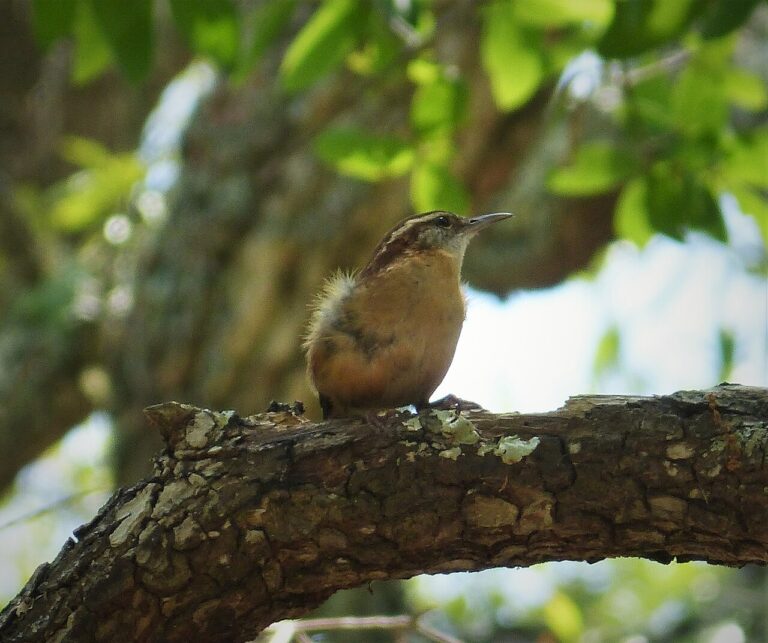
The house wren is smaller, plainer, and grayer, with only a faint eyebrow, while the Carolina wren is larger, richly rusty brown, and has a bold white eyebrow stripe. Their songs differ too: the house wren bubbles and chatters, while the Carolina wren rings out a clear teakettle phrase.
Will house wrens use a nest box?
Yes. House wrens readily accept nest boxes with a small entrance hole around one and one eighth inches, and they will also nest in almost any cavity, from tin cans to old boots. Placing a wren box on the edge of a yard near shrubs improves your chances.
Why do house wrens fill boxes with sticks?
Males build multiple partial stick nests in several cavities within their territory. The female inspects them and chooses one to finish and line. The extra dummy nests may help claim cavities and reduce competition from rivals.
Are house wrens aggressive?
Yes, surprisingly so. Despite their tiny size, house wrens fiercely defend their territory and may destroy the eggs of competing cavity nesters, including bluebirds and chickadees, by puncturing them. This aggression is a natural, if harsh, part of their breeding strategy.
Do house wrens migrate?
Yes. Unlike the resident Carolina wren, house wrens are migratory across most of their range, breeding across the northern and central United States and southern Canada, then wintering in the far southern US and Mexico.