Female Painted Bunting: Identification Guide
The female painted bunting is a bright, uniform yellow-green bird, unlike any other songbird in the United States, and quite different from the multicolored male. While the male is famously rainbow-colored, the female’s vivid green is actually her own unique and useful field mark. This guide covers what a female painted bunting looks like, how she differs from the male, how to identify her, her behavior and nesting, and where and when to see her.
| Feature | Female Painted Bunting |
|---|---|
| Color | Bright yellow-green |
| Underparts | Paler lime-green |
| Bill | Small, conical |
| Pattern | Plain, unmarked |
| Similar birds | Few, green is unique |
What Does a Female Painted Bunting Look Like?
A female painted bunting is a striking bright green bird, and although she lacks the male’s rainbow of colors, her vivid green plumage is unlike that of almost any other bird in the United States. She is a rich yellow-green above, sometimes described as lime or parrot green, and paler, more yellowish green below, giving her an overall bright, fresh appearance. She has a plain, unmarked face and body without bold streaks or patterns, a pale eye ring, and a small conical bill typical of seed-eating birds. Immature painted buntings look similar to the female, also green. This uniform bright green is remarkable because very few North American songbirds are truly green, so the color itself is one of the best clues to her identity. Her lovely green plumage makes the female painted bunting a distinctive and memorable bird, quite unlike the finches in our guide to the female house finch.
Female vs Male Painted Bunting
The difference between female and male painted buntings is extraordinary, as the male is often called the most colorful bird in North America. The breeding male painted bunting is a dazzling combination of a deep blue head, a bright red breast and underparts, and a vivid green back, looking almost too colorful to be real. The female, by contrast, is entirely bright yellow-green, with none of the male’s blue or red. This makes the sexes look completely different, and while the male is unmistakable, the female is recognized instead by her unique uniform green. Young males resemble the green female before gradually acquiring their colorful adult plumage. The male’s stunning colors are used to attract mates and defend territory, while the female’s green provides camouflage in the leafy, brushy habitats where she nests. Both are beautiful in their own way, one flamboyant and one elegantly simple.
How to Identify a Female Painted Bunting
Identifying a female painted bunting is largely a matter of recognizing her unique green color and small finch-like shape. Look for the bright, uniform yellow-green plumage, brightest above and paler below, along with the plain unmarked face, pale eye ring, and small conical bill. The key point is that the bright green itself is highly distinctive, since so few United States birds are green. Still, a few birds could cause momentary confusion: some greenish warblers are yellow-green but are usually slimmer with thinner bills and often have wing markings or streaks, and female indigo buntings are brown rather than green, so they are not a match. Female and immature orioles and some finches can look greenish-yellow but differ in shape and pattern. Focusing on the uniform bright green, the plain pattern, and the conical bill makes the female painted bunting reliably identifiable, a delightful find for birders in the South, as explored in our guide to attracting birds.
Female Painted Bunting Behavior and Nesting
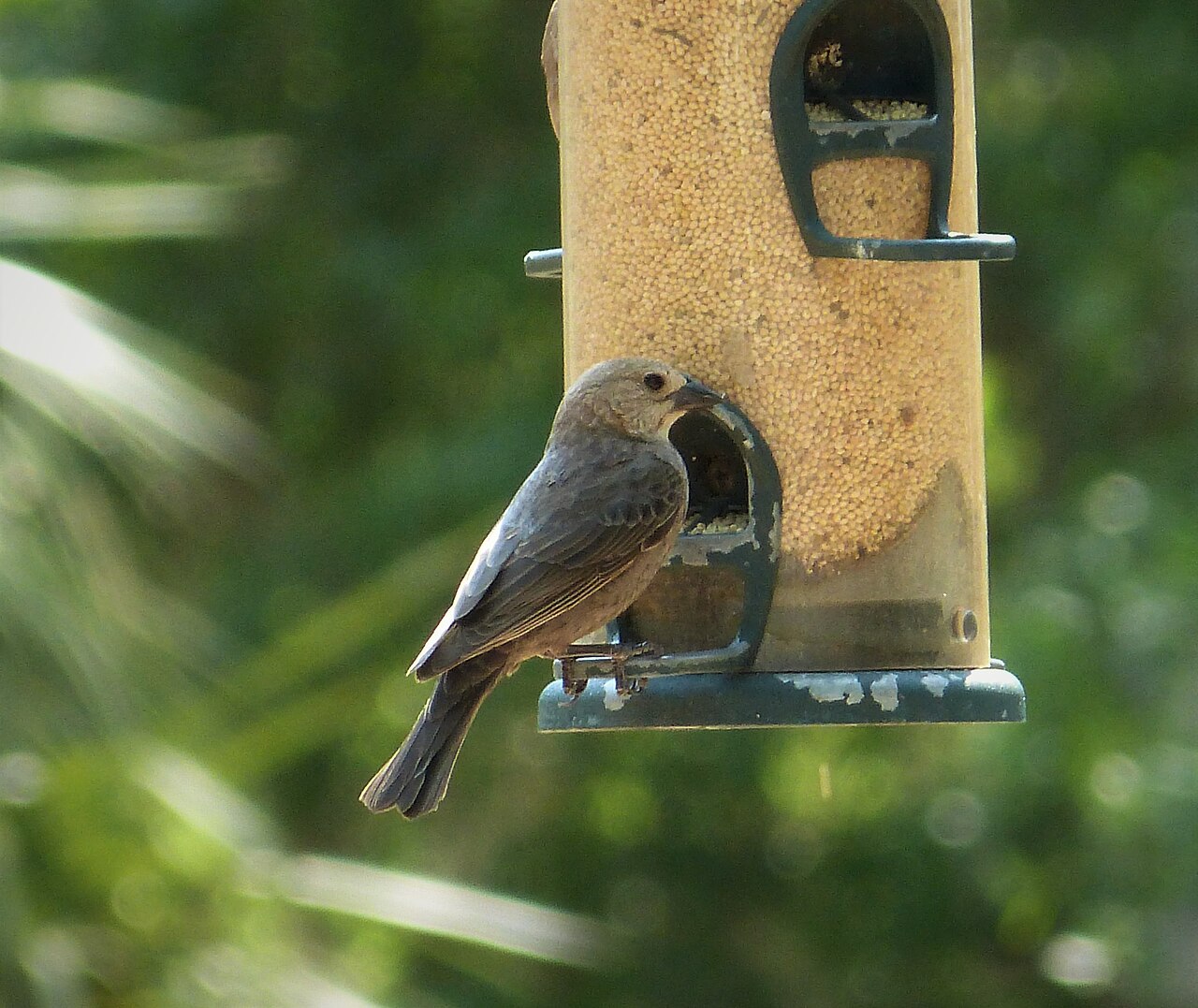
The female painted bunting is a somewhat secretive bird with typical bunting habits. Painted buntings tend to be shy and skulking, often staying hidden in dense, brushy vegetation, so the female can be hard to see well despite her bright color, frequently keeping to cover. She feeds mainly on seeds, especially grass seeds, along with some insects, particularly in the breeding season, and painted buntings will visit feeders offering small seeds like white millet. When nesting, the female builds a cup nest low in dense shrubs or tangled vegetation, where she lays and incubates her eggs, and her green plumage helps conceal her among the leaves. The dense habitat provides protection for the nest and young. This combination of shyness, a seed-based diet, and well-hidden nesting is characteristic of painted buntings, and offering the right food and cover can help attract them, as reflected in our guide to the best bird seed.
Where and When to See Female Painted Buntings
Female painted buntings are found in the southern United States during the breeding season, alongside the males. Look for them in two main regions, one across the south-central states such as Texas, Oklahoma, Louisiana, and neighboring areas, and another along the southern Atlantic coast, including parts of the Carolinas, Georgia, and Florida. Within these areas, painted buntings favor brushy habitats, woodland edges, thickets, overgrown fields, and shrubby areas near water, where dense vegetation provides food and cover. They are present mainly in the warmer months, arriving to breed and then migrating south to spend the winter in Mexico, Central America, and southern Florida. Because they are shy and stay in cover, seeing a female often requires patience, but feeders with millet can bring them into view in the right areas. The best time to look is spring and summer within their southern range, making the female painted bunting a special sight for birders, as detailed in our guide to plants that attract birds.
Female Painted Bunting Plumage Explained
The unique green of a female painted bunting is well documented by ornithologists. According to the Cornell Lab of Ornithology, female and immature painted buntings are a distinctive bright green, unlike any other United States songbird, which makes the color itself a key identification clue. This uniform yellow-green plumage is remarkable precisely because green is so rare among North American birds, so a plain, bright green songbird in the South is very likely a female or young painted bunting. The green also provides camouflage in the leafy, brushy habitats where these birds live and nest, helping the female stay hidden. Meanwhile, immature males share this green coloring before developing the adult male’s famous blue, red, and green pattern. Understanding that the female’s green is both unique and useful for identification makes her easier to recognize and appreciate, a very different bird from the streaky female in our guide to the female house finch.
The Painted Bunting’s Colorful Family
The painted bunting belongs to a group of colorful seed-eating birds that includes several other striking species worth knowing. Its relatives, the buntings and their kin, include the indigo bunting, an entirely deep blue bird, the lazuli bunting of the West with blue and orange tones, and the blue grosbeak, all of which are prized for their bright colors. Like the painted bunting, these birds are seed-eaters with conical bills that also take insects, and the males are far more colorful than the females, which tend to be brown or, in the painted bunting’s case, green. This pattern of brilliant males and camouflaged females is common in the group. The painted bunting stands out even among these colorful relatives for the male’s rainbow appearance and the female’s unique green. Appreciating this colorful family adds context to the painted bunting and connects it to other vivid birds, complementing the seed-eaters in our guide to the best bird seed.
Frequently Asked Questions
What does a female painted bunting look like?
A female painted bunting is a bright, uniform yellow-green bird with a plain face, pale eye ring, and small conical bill, unlike any other common songbird in the United States.
Are female painted buntings green?
Yes, female painted buntings are bright yellow-green all over, which is unusual since very few United States birds are green. This unique color is her best field mark.
How can you tell a female painted bunting from a male?
The male is multicolored with a blue head, red underparts, and green back, while the female is entirely bright yellow-green with none of the male’s blue or red.
What is the difference between a female painted bunting and a warbler?
A female painted bunting is bright green with a stubby conical bill and plain pattern, while greenish warblers are slimmer with thin, pointed bills and often wing markings.
Do female painted buntings come to feeders?
Yes, painted buntings will visit feeders offering small seeds like white millet, though they are shy and often stay near cover, so patience is needed to see them.
Are young male painted buntings green like females?
Yes, immature male painted buntings look like the green female and gradually gain their colorful blue, red, and green adult plumage as they mature.
Where do female painted buntings live?
Female painted buntings live in brushy habitats in the south-central states and along the southern Atlantic coast in the warmer months, then migrate south for winter.