Female Summer Tanager: Identification Guide
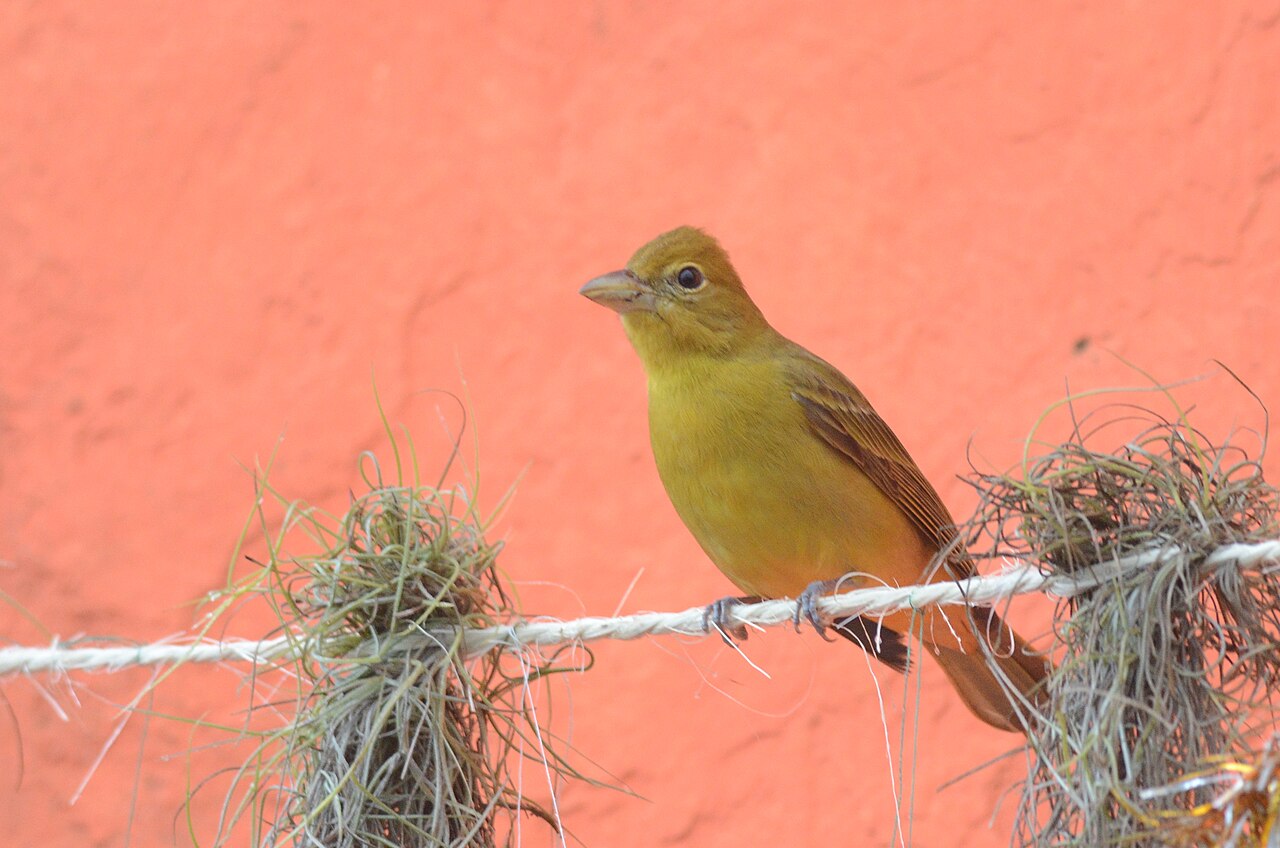
The female summer tanager is a warm mustard-yellow bird overall, quite different from the entirely rosy-red male, with plain wings and a large pale bill. Her soft yellow coloring, sometimes tinged with orange, makes her distinctive once you know what to look for. This guide covers what a female summer tanager looks like, how she differs from the male, how to identify her, her behavior and diet, and where and when to see her.
| Feature | Female Summer Tanager |
|---|---|
| Color | Warm mustard yellow |
| Wings | Plain, no wingbars |
| Bill | Large, pale, stout |
| Tinge | Sometimes orange |
| Diet | Bees and wasps |
What Does a Female Summer Tanager Look Like?
A female summer tanager is a warm, rich yellow bird, softer in color than the striking all-red male but attractive in her own right. She is generally a mustard or golden yellow overall, sometimes described as orangey-yellow, and some individuals show an orange tinge, especially on the head or underparts. Her wings are plain, without the bold wingbars seen in some similar birds, and she has a large, stout, pale bill that is a helpful field mark. Overall she looks like a fairly plain, warm yellow songbird with a big bill, lacking strong patterning. Young males can resemble females and may show a patchy mix of yellow and red as they mature. This combination of warm mustard-yellow coloring, plain wings, and a large pale bill is the key to recognizing her, and it helps separate her from other yellowish birds, as covered in our guide to birds that look like cardinals.
Female vs Male Summer Tanager
The difference between female and male summer tanagers is striking in color, though the two share the same shape and large bill. The adult male summer tanager is entirely rosy red, one of the few birds that is completely red with no black or other markings, which makes him unmistakable. The female, by contrast, is warm mustard yellow, with none of the male’s red, though some females carry an orange wash. This makes the sexes easy to tell apart by color, while their identical stout pale bill and body shape confirm they are the same species. Young males are especially interesting, since they often appear blotchy, showing a patchwork of yellow and red as they transition to adult plumage. The male’s brilliant red is used in display, while the female’s yellow provides camouflage. Both share the summer tanager’s remarkable diet and behavior, making them a fascinating pair to observe.
How to Identify a Female Summer Tanager
Identifying a female summer tanager involves recognizing her warm yellow color and large bill while ruling out similar birds. Look for the mustard-yellow plumage, sometimes with an orange tinge, the plain unmarked wings, and the notably large, pale, stout bill, which is one of her best clues. Her overall plain, warm appearance helps too. Be aware of a few possible mix-ups: the female scarlet tanager is more olive-green above and yellowish below with darker wings and a smaller bill, female orioles have pointed bills and often show wingbars and are slimmer, and the female western tanager has wingbars. Warblers are much smaller with thin bills. Focusing on the uniform warm yellow, the plain wings, and especially the large pale bill separates the female summer tanager from these lookalikes, a rewarding skill for birders in the South, as explored in our guide to the female oriole.
Female Summer Tanager Behavior and Diet
The female summer tanager, like the male, is remarkable for its specialized diet and foraging behavior. Summer tanagers are well known as bee and wasp specialists, expertly catching these stinging insects in flight or at their nests, then beating them against a branch to remove the stinger before eating them, a behavior that sets them apart from most other birds. They also eat other insects and some fruit. The birds forage in the treetops of open woodlands, often staying high in the canopy, which can make them a little tricky to spot despite their bright colors. When nesting, the female builds a cup nest on a horizontal branch, often well up in a tree, where she lays and incubates her eggs. Her yellow plumage helps conceal her among the sunlit foliage. This bee-eating specialization and canopy lifestyle make summer tanagers fascinating birds to watch, and planting for insects and fruit can help attract them, as reflected in our guide to plants that attract birds.
Where and When to See Female Summer Tanagers
Female summer tanagers are found across the southern and central United States during the breeding season, alongside the males. Look for them in open woodlands, especially oak and pine-oak forests in the East and cottonwood and willow groves along streams in the Southwest, where they forage high in the canopy. As their name suggests, summer tanagers are present in the warmer months, arriving in spring to breed and departing by fall to spend the winter in the tropics, from Mexico through Central and South America. Because they often stay high in the treetops and are not as flashy as the red males when it comes to the yellow females, seeing one can take patience and a careful look upward. Listening for their calls and song can help locate them. Spring and summer within their southern range are the best times to look, making the warm-yellow female summer tanager a rewarding find, as detailed in our guide to attracting birds.
Female Summer Tanager Plumage Explained
The warm yellow coloring of a female summer tanager is well documented by ornithologists. According to the Cornell Lab of Ornithology, female summer tanagers are mustard yellow overall, and summer tanagers are specialists at eating bees and wasps. Her warm yellow plumage, sometimes with an orange tinge, provides camouflage in the sunlit canopy where she forages and nests, while the male’s all-red coloring is used for display. The bee and wasp specialization is one of the most remarkable things about the species, as the birds catch these stinging insects and remove the stinger by beating them against a branch before eating them, a skill few other birds share. This diet ties summer tanagers to areas with plenty of flying insects. Understanding both her plumage and this extraordinary diet makes the female summer tanager easier to identify and appreciate, a warmer-yellow relative of the greener bird in our guide to the female scarlet tanager.
Summer Tanagers, the Bee Eaters
The summer tanager’s reputation as a bee and wasp specialist deserves a closer look, since it shapes the lives of both males and females. These tanagers are expert hunters of stinging insects, often perching near a wasp nest or beehive and darting out to snatch the insects in flight, then returning to a branch to remove the stinger before swallowing their prey. This behavior allows them to exploit a food source that most birds avoid, and it makes them beneficial around areas with abundant wasps. The female relies on this same skill to feed herself and, along with the male, to provision the young. Summer tanagers also eat other insects and some fruit, especially outside the breeding season. This specialized bee-eating lifestyle is a defining feature of the species and a big part of what makes summer tanagers so interesting to watch, complementing the insect-focused birds in our guide to plants that attract birds.
Related reading: types of red birds, types of yellow birds.
Frequently Asked Questions
What does a female summer tanager look like?
A female summer tanager is a warm mustard-yellow bird, sometimes with an orange tinge, with plain unmarked wings and a large pale stout bill, unlike the all-red male.
How can you tell a female summer tanager from a male?
The male is entirely rosy red, while the female is warm mustard yellow with no red. They share the same large pale bill and body shape, confirming the same species.
Are female summer tanagers yellow?
Yes, female summer tanagers are a warm mustard or golden yellow overall, sometimes with an orange wash, quite different from the completely red adult male.
How do you tell a female summer tanager from a female scarlet tanager?
The female summer tanager is warmer yellow with plain wings and a larger bill, while the female scarlet tanager is more olive-green with darker wings and a smaller bill.
What do summer tanagers eat?
Summer tanagers are bee and wasp specialists, catching these insects and removing the stinger before eating them. They also eat other insects and some fruit.
How do you tell a female summer tanager from an oriole?
A female summer tanager has a stout pale bill and plain wings, while female orioles have slender pointed bills and often show wingbars, and are slimmer overall.
Where do female summer tanagers live?
Female summer tanagers live in open woodlands across the southern and central United States in the warmer months, then migrate south to the tropics for winter.