Female Blue Jay: Identification and Behavior Guide
Female blue jays look almost exactly like males. Both sexes share the same blue crest, black necklace, and white face, so you cannot reliably sex a blue jay by color alone. The clearest clues are subtle: females average slightly smaller, and during courtship and nesting their behavior gives them away. This guide covers every reliable difference, the common mix-ups, and why a plain gray bird is almost never a female blue jay.
| Feature | Female Blue Jay | Male Blue Jay |
|---|---|---|
| Color | Identical blue, white, and black | Identical blue, white, and black |
| Size | Slightly smaller on average | Slightly larger on average |
| Weight | About 2.5 to 3.5 oz | About 2.5 to 3.5 oz |
| Courtship role | Perches and is fed by the male | Hops and offers food to the female |
| Nesting | Does most of the incubating | Brings food to the nest |
| Voice | Same calls, plus soft nest whispers | Same calls and mimicry |
Can You Tell a Female Blue Jay by Color?
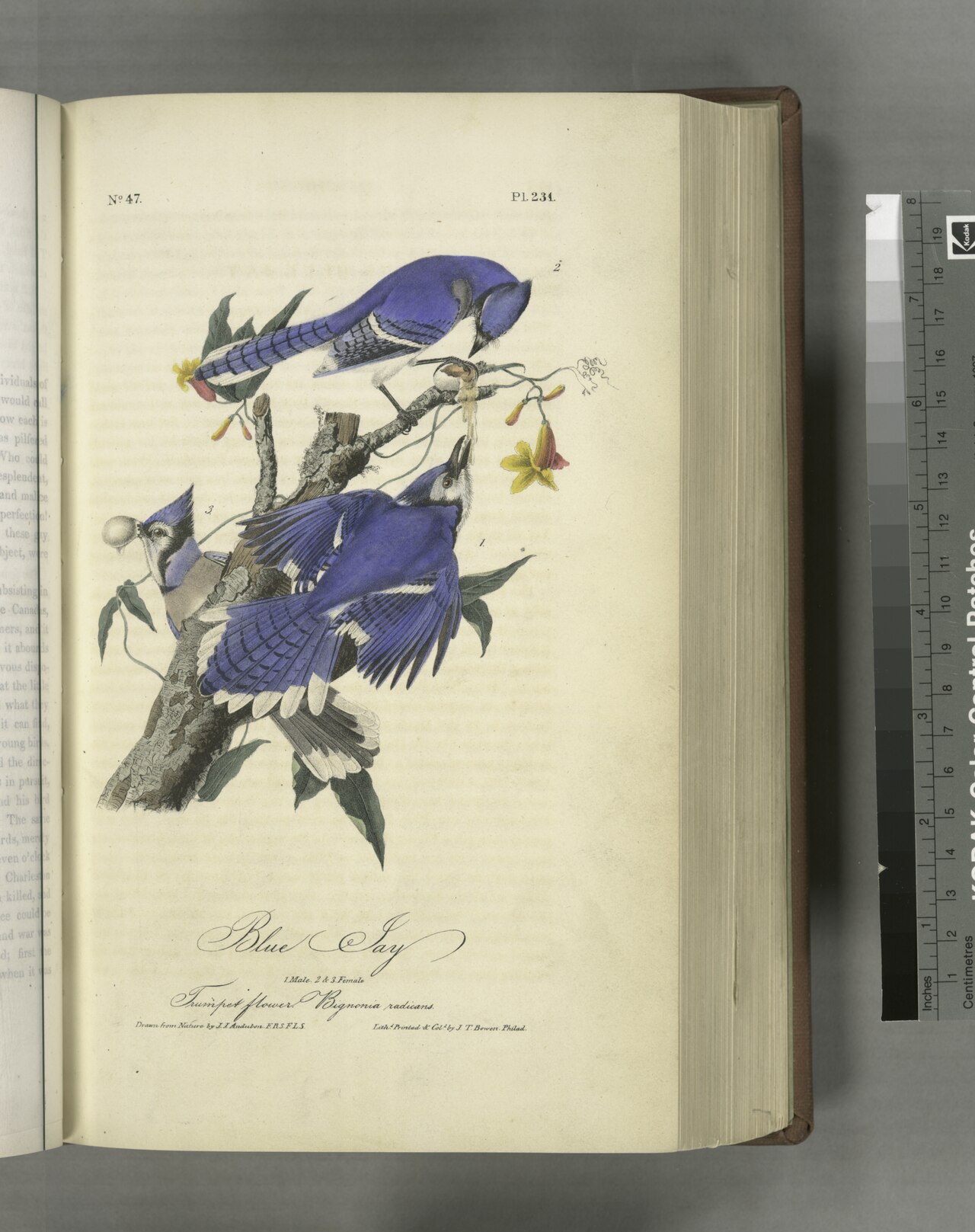
No. Blue jays are one of the many bird species where males and females look the same to the human eye. Both wear the same bright blue upperparts, the pale gray-white chest, the bold black necklace across the throat, and the crest that raises and lowers with mood. The blue itself is not even a pigment. It comes from the microscopic structure of the feathers scattering light, which is why a blue jay feather looks brown when backlit. Because both sexes share this exact structure, color offers no help at all in telling them apart. Anyone who tells you a female blue jay is a duller blue is repeating a myth.
The Real Differences Between Males and Females
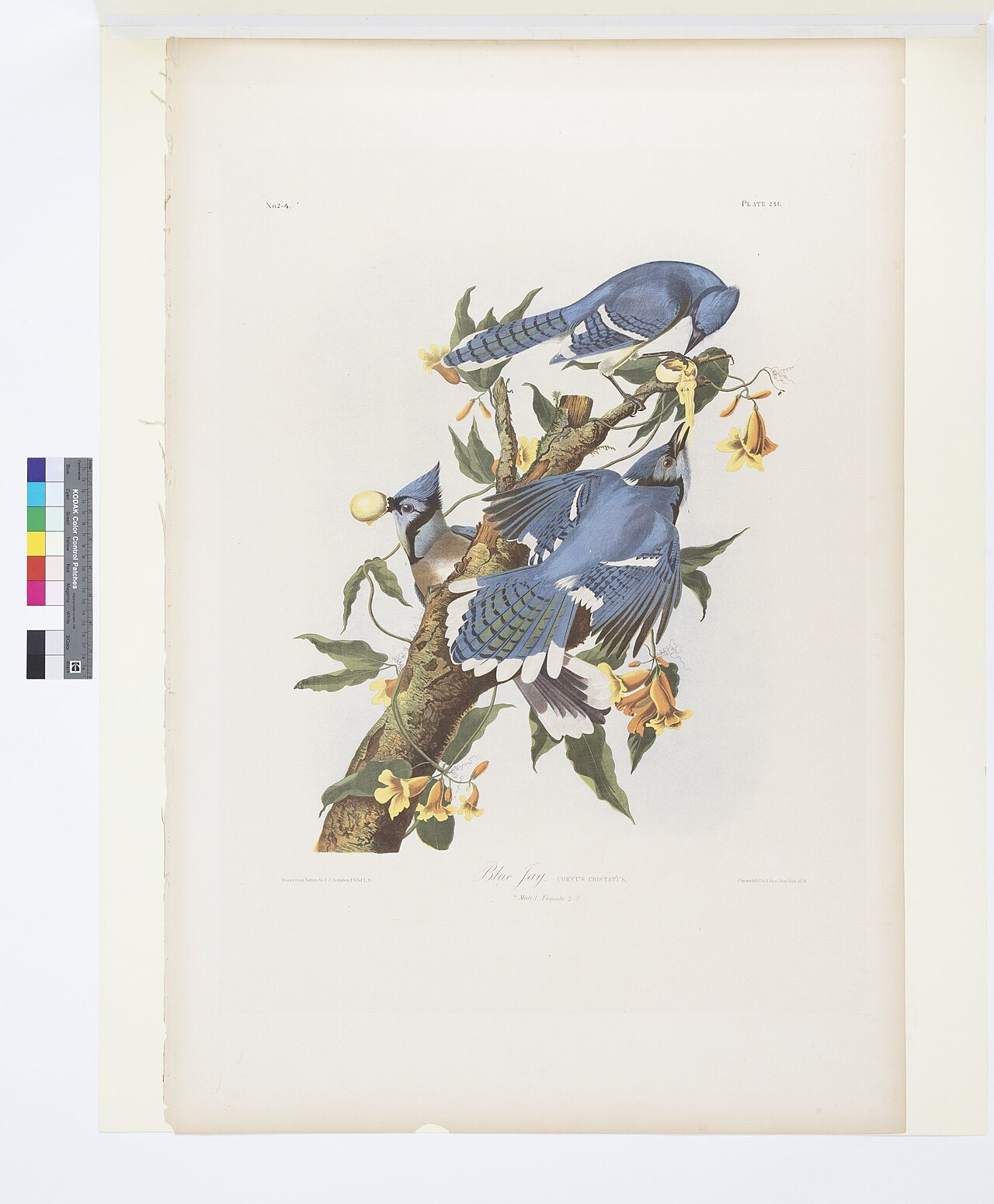
Size is the only physical difference, and it is slight. Males average a little larger and heavier, but the ranges overlap so much that a big female can easily outsize a small male. Unless you see a known pair side by side, size alone will not settle it. The reliable tells are behavioral and appear mainly in spring. During courtship, a female perches with a slightly hunched, quivering posture while the male hops around her and offers her food, a ritual called courtship feeding. At the nest, the female does nearly all of the incubating while the male brings her food. If you watch a blue jay sitting tight on a nest for long stretches, you are almost certainly watching the female. Away from the breeding season, there is no dependable way to sex an individual blue jay by sight. Even experienced birders and banders rely on measurements or on watching breeding behavior. For the science behind these ID points, the full Blue Jay guide and the Northern Cardinal guide both draw on data from the Cornell Lab of Ornithology.
Why Do Some Blue Jays Look Gray?
A surprising number of people search for a gray female blue jay, but a plain gray crested bird is almost never a blue jay of either sex. The confusion usually comes from one of three birds. The Tufted Titmouse is a small gray crested bird common at the same feeders, and it is the most frequent mix-up. A juvenile blue jay can look slightly washed out and grayer than a crisp adult, but it still shows obvious blue in the wings and tail. And in poor light, a blue jay with its back to you can look dull until it turns and the blue flashes. If you are seeing a truly gray bird with a crest and no blue at all, compare it against our guides to small gray birds and the Tufted Titmouse rather than assuming it is a female jay.
Female Blue Jay Calls and Sounds
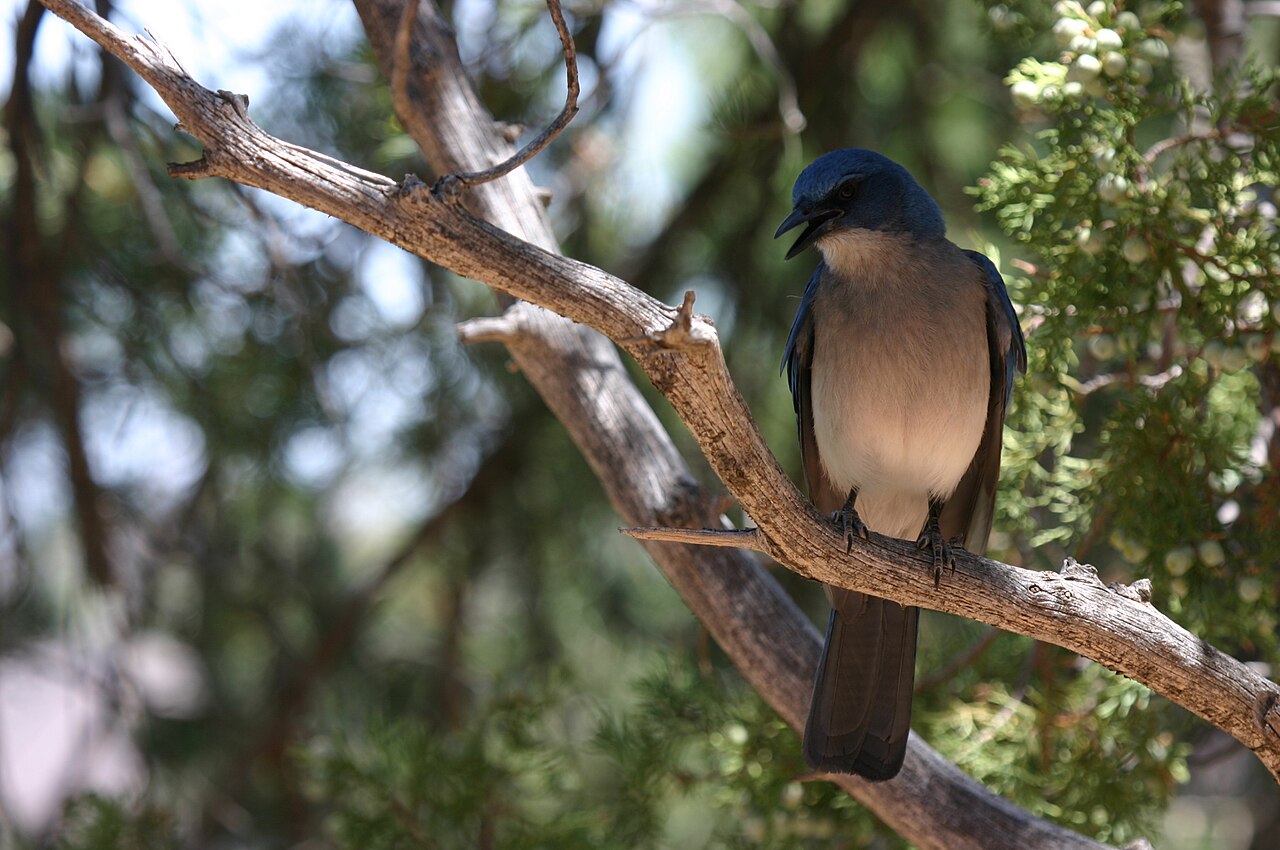
Females make the same wide range of sounds as males, including the harsh jay-jay scream, the musical queedle-queedle, and even convincing imitations of hawk calls. There is no call that is exclusive to one sex. During nesting, females add very soft, low whisper songs near the nest that are easy to miss unless you are close. Because voice does not separate the sexes any better than color does, sound is another dead end for identification, useful for confirming the species but not the sex.
Female Blue Jays and Nesting
Once a pair forms, the female takes the lead on incubation. She lays a clutch of usually four to five eggs and sits on them for around 17 to 18 days while the male feeds her. Both parents then feed the nestlings, but it is the female you will most often see settled deep in the nest. This division of labor is the most dependable real-world way to know you are looking at a female. For the full breeding timeline, see our companion guide to the blue jay nest, and if you find a young bird on the ground, our guide to the baby blue jay explains what to do.
Do Male and Female Blue Jays Behave Differently?
Outside of nesting, males and females act much the same. Both defend the territory, both visit feeders, both cache acorns in fall, and both will mob a hawk or cat that comes too close. The clearest behavioral split appears in the breeding season. Males take the lead in courtship, following a chosen female and offering her food, while females take the lead once eggs are laid, doing nearly all of the incubating. Pairs are monogamous and often stay together year after year, which is part of why blue jays symbolize loyalty in folklore. Within a bonded pair you may notice the two birds staying close and calling softly to each other, but you still cannot label either one male or female from color alone. To see how jays compare with another bold backyard bird whose sexes differ far more obviously, our guide to the cardinal is a useful contrast, since female and male cardinals look strikingly different.
Do Female Blue Jays Have Blue in Their Feathers?
Yes, female blue jays are just as blue as males, and for the same reason. The blue comes from tiny structures in the feather barbs that scatter light and reflect blue back to your eye, a phenomenon called structural color. There is no blue pigment in the feather at all, which is why a jay feather turns brown when you hold it up to the light or crush it. Both sexes carry the identical feather structure, so both show the same vivid blue upperparts, the white and black wing markings, and the barred blue tail. This is a key point for identification, because it means you should never try to sex a blue jay by how bright or dull the blue looks. Any brightness difference you think you see is far more likely to be lighting, feather wear, or a young bird than a true sex difference.
Watching Female Blue Jays at Your Feeder
Your backyard feeder is one of the best places to study blue jay behavior, even if you cannot label individuals by sex. During spring, watch for the telltale courtship feeding, where one bird passes food to another, since the bird receiving the food is the female. Later, if one member of a pair disappears from the feeder for long stretches while the other keeps visiting and carrying food away, the absent bird is very likely the female incubating a clutch nearby. Blue jays are bold, regular feeder visitors that love peanuts and sunflower seeds, so offering those foods gives you frequent, close views of pairs through the breeding season. Over weeks of watching, these behavioral patterns tell you far more about which bird is which than any attempt to judge color or size ever could.
Related reading: Blue Jay Symbolism.
Related reading: what do blue jays eat.
Related reading: what is a female horse called.
Frequently Asked Questions
How can you tell a female blue jay from a male?
Not by color, since both sexes look identical. Females average slightly smaller, and during spring they are the bird being fed during courtship and the one doing most of the incubating at the nest. Behavior in the breeding season is the only reliable tell.
Are female blue jays a different color than males?
No. Both sexes have the same blue, white, and black plumage. The idea that females are a duller blue is a myth. Blue jay color comes from feather structure, not pigment, and it is the same in both sexes.
Is there such a thing as a gray female blue jay?
No. A plain gray crested bird is almost always a Tufted Titmouse, not a female blue jay. Blue jays of both sexes always show blue in the wings and tail, even when juveniles look slightly washed out.
Do female blue jays have a crest?
Yes. Both males and females have the same blue crest that they raise when excited or alarmed and lower when relaxed. The crest is not a sex difference.
Do female blue jays sing or call differently?
No. Females make the same jay screams, musical calls, and hawk imitations as males. During nesting they add soft whisper songs near the nest, but there is no call unique to one sex.
Which blue jay sits on the eggs?
The female does nearly all of the incubating, sitting for about 17 to 18 days while the male brings her food. A blue jay settled tightly on a nest for long periods is almost certainly the female.
Are female blue jays smaller than males?
On average, slightly, but the size ranges overlap heavily. A large female can be bigger than a small male, so size alone is not a reliable way to tell them apart without a known pair to compare.