Weasel Tracks: How to Identify Them in Snow, Mud and Sand
Weasel tracks are small, five toed prints that usually show claw tips and almost always come in pairs, because weasels bound instead of walking. On good snow a long-tailed weasel (Mustela frenata) leaves prints about 0.5 to 1 in long (1.3 to 2.5 cm) set side by side, with a gap of 10 to 20 in (25 to 50 cm) to the next pair. That paired, hopping line is the identification, not the individual print.
Winter is tracking season: weasels hunt all winter, stay on the crust, and often vanish into a hole under the snow. Snow, mud and sand each record a different part of the foot, so each is treated separately, snow first.
A weasel track has five toes on both front and hind feet, often with visible claw tips, and measures roughly 0.5 to 1 in long (1.3 to 2.5 cm). Prints appear in pairs from a bounding gait, with 10 to 20 in (25 to 50 cm) between pairs. Trails frequently disappear into snow tunnels or brush piles.
| Animal | Track length | Typical stride | Pattern |
|---|---|---|---|
| Least weasel | 0.25 to 0.4 in (0.6 to 1 cm) | 6 to 12 in (15 to 30 cm) | Fine paired bounds |
| Short-tailed weasel | 0.4 to 0.6 in (1 to 1.5 cm) | 8 to 16 in (20 to 40 cm) | Paired bounds, 2 by 2 |
| Long-tailed weasel | 0.5 to 1 in (1.3 to 2.5 cm) | 10 to 20 in (25 to 50 cm) | Paired bounds, 2 by 2 |
| American mink | 1.25 to 1.5 in (3 to 4 cm) | 10 to 26 in (25 to 66 cm) | Pairs or 3 by 3, near water |
| Fisher | 2 to 2.5 in (5 to 6.5 cm) | 14 to 30 in (35 to 76 cm) | Heavy paired bounds |
What Do Weasel Tracks Look Like?
A weasel print is a small oval with five toes in a loose arc and one compact palm pad behind them. The fifth inner toe is the giveaway against dogs and cats, but it is also the toe that fails to register most often, so a clean four toed print with claw tips still fits a weasel when size and pattern agree.
Front and hind feet are close in size, which is unusual and useful. In a bound the hind foot lands in or just behind the front print, so the two overlap into one messy oval, and winter fur on the soles blurs the rest. Read the trail line before the print, exactly as with fisher tracks, the same shape at three times the size.
Weasel Tracks in Snow
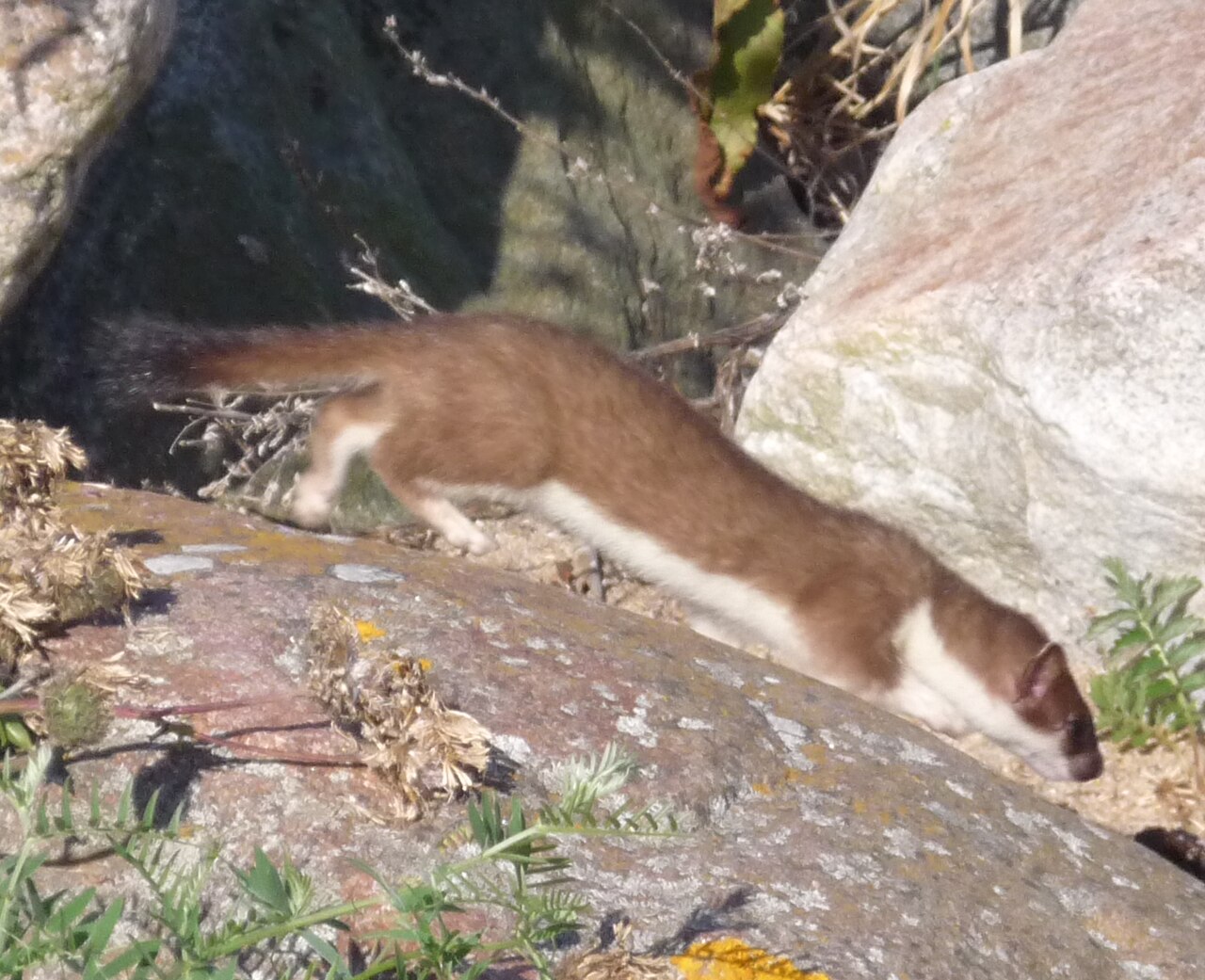
Snow is where weasels are easiest to follow. The classic sign is the 2 by 2 bound: two prints nearly abreast, a clean gap, then two more, repeating in a straight line. In deep powder the prints collapse into twin dimples with drag marks between them, and an ermine at speed may leave only a dotted line of plunge holes.
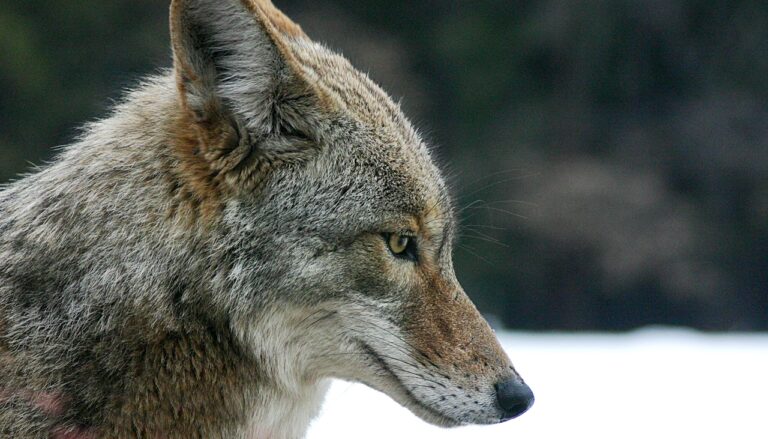
Weasels hunt voles under the snowpack, so a trail ending at a hole the width of a golf ball is not lost; circle the spot and find the exit. Trails that hug stone walls and brush piles belong to weasels far more often than to coyote tracks, which cut straight across open ground.
Weasel Tracks in Mud and Sand
Firm mud at a pond edge gives the best detail of any surface: five toes, claw tips and the lobed palm pad, with the print looking smaller than in snow because nothing collapses. Search the water line, under docks and at culvert mouths.
Dry sand is the worst surface. It keeps size and gait but loses the toes, leaving round depressions in pairs. Measure the straddle, meaning the total width of the trail, and compare the bound distance to the table above, since that pairing separates weasel from mink better than any single print. Blunt bear tracks stay readable on the same sand.
What Is the Difference Between Mink and Weasel Tracks?
Size and location separate them. A mink print runs 1.25 to 1.5 in long (3 to 4 cm), roughly double a long-tailed weasel, and the toes splay into a star shape because the feet are partly webbed. Mink trails stay married to water, following a shoreline for hundreds of feet, while weasel trails wander inland through cover.
Gait decides it when the prints are poor. Mink bound in pairs like weasels but also use a 3 by 3 pattern, and a fresh mink trail often shows a slide mark on a wet bank. Prints of 2 in or more point to fisher or marten.
Tracks Often Mistaken for Weasels
Squirrels cause the most winter confusion, since they also bound and leave four prints in a tight block. Their trails run tree to tree and the larger hind feet land ahead of the front feet, giving a wide square set rather than a narrow pair. Mouse and vole trails are much smaller and usually carry a tail drag.
Dogs and coyotes show four toes, a large triangular pad and a single file line. Cats print round without claw marks, foxes narrow and often furred over. Opossums leave a five toed, hand like print with a thumb set off at an angle. For comparison see bobcat tracks, bird tracks and deer tracks; range maps from the National Park Service show which mustelids are possible where you live.
Frequently Asked Questions
How do you know if you have a weasel?
Look for paired tracks near outbuildings, chewed entry holes under 1.5 in across, poultry killed with the carcass left behind, and small twisted scat with fur and bone on rocks or logs. Weasels reuse routes, so fine sand at a suspected entry confirms it within a night.
What animals are sometimes mistaken for weasels?
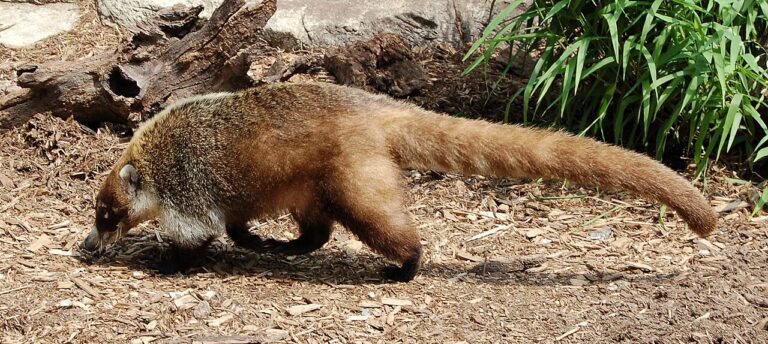
Mink, marten, fisher and young otters share the long body and the five toed track. Chipmunks and ground squirrels get called weasels at a glance in summer. In the Southwest the ringtail is a common misidentification, although its prints are rounder with a different pad shape.
How do you identify rodent tracks?
Rodents show four toes on the front foot and five on the hind foot, the reverse of the weasel pattern of five and five. Mice and rats add a thin tail drag. Squirrel groups are square and wide with the hind prints leading, and the trail nearly always ends at a tree.
What do possum tracks look like?
Opossum prints look like small hands. Both feet show five toes, and the hind foot has an opposable inner toe pointing sideways at nearly 90 degrees, which nothing else in North America leaves. Prints run about 1.5 to 2 in (4 to 5 cm), often with a tail drag in snow.