Fisher Tracks: How to Identify the 5 Toed Print and 2 by 2 Bound
Fisher tracks show five toes, visible claw marks, and an asymmetric spread that sets them apart from every dog and cat print you are likely to find in the same woods. A clear fisher print measures about 2 to 2.5 in (5 to 6.4 cm) across, and in winter the heavily furred foot can blur that to an impression nearly 4 in wide.
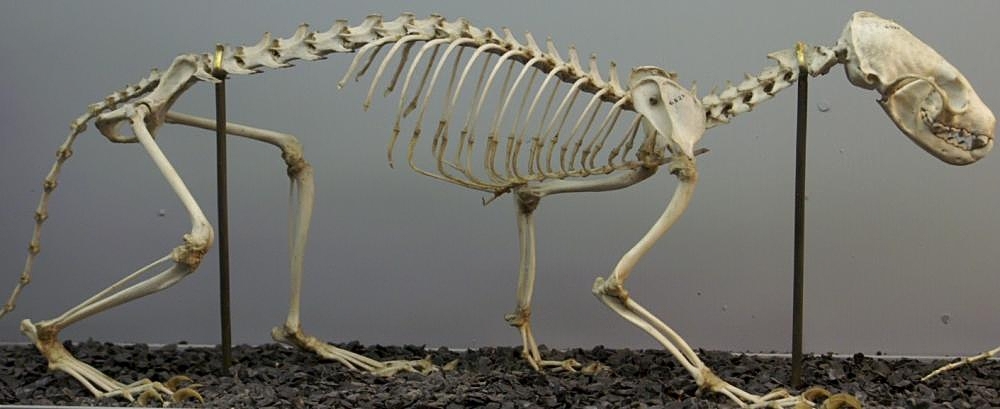
The fisher (Pekania pennanti, long listed as Martes pennanti) is a large forest weasel, and it moves like one. Instead of the tidy walking line a fox or coyote leaves, a fisher bounds, planting its feet in paired sets that skip across the snow. That gait is often easier to recognize from twenty feet away than any single print is up close, which is why this guide starts with snow and treats mud and sand separately.
Fisher tracks are five toed prints about 2 to 2.5 in (5 to 6.4 cm) wide with claw marks, a C shaped toe arc, and a chunky palm pad. The trail usually runs as paired prints 20 to 35 in (51 to 89 cm) apart in a bounding pattern, not a straight walking line.
| Feature | Fisher | Raccoon | American marten |
|---|---|---|---|
| Toes | 5, arced, often 4 register | 5, long and finger like | 5, arced |
| Front print width | 2 to 2.5 in (5 to 6.4 cm) | 2 to 3 in (5 to 7.6 cm) | 1.3 to 1.8 in (3.3 to 4.6 cm) |
| Claws | Visible, short and curved | Visible, long and thin | Visible, fine |
| Palm pad | Chunky, often lobed | Broad, flat | Small, fur obscured |
| Typical gait | 2 by 2 bound | Pacing walk, pairs offset | 2 by 2 bound, smaller |
| Stride between sets | 20 to 35 in (51 to 89 cm) | 10 to 18 in (25 to 46 cm) | 12 to 24 in (30 to 61 cm) |
| Winter activity | Active all winter | Mostly denned up in cold | Active all winter |
How to Identify Fisher Tracks
Count the toes first. Five toes rules out every canid and every cat, leaving you with weasels, raccoons, otters, and a few others. A fisher front print is roughly as wide as it is long, with the toes arranged in a wide C around a lumpy palm pad, and the innermost toe sits lower and often fails to register at all. That is why many good fisher prints show only four toes, which sends beginners down the wrong path.
Claws print as short curved slashes close to the toe pads, not as the long rake marks a raccoon leaves. Hind prints are slightly smaller than front prints and may show a small heel pad in deep substrate. Measure the width across the toes rather than the length, since the furred heel makes length unreliable in winter.
Fisher Tracks in Snow: Where Most People Find Them
Fishers stay active all winter, which makes snow the surface where almost every fisher trail is discovered. In light snow of an inch or two, the paired prints are clean enough to count toes. In anything deeper, the dense fur between the pads spreads the print into a soft round crater that can run 3.5 to 4 in across with no toe detail at all.
Read the trail instead. A fisher crossing deep powder leaves a line of paired depressions with a shallow drag between them, often heading from one conifer stand to the next and passing close to downed logs and stumps. The trail will also climb: fishers run up and down trunks, so prints that vanish at a tree base and reappear thirty feet away are a strong confirmation. In the same woods, bobcat tracks will show four toes and no claws.
Fisher Tracks in Mud and Sand
Mud along stream banks and logging roads gives the best toe detail of the year. Without winter fur in the way, the fifth inner toe registers more often, the palm pad lobes show, and claw tips print as distinct pinpricks. A fisher in soft mud typically leaves a print 2.2 in wide, and the toe arc wraps noticeably around the pad rather than sitting in a straight row.
Dry sand is the worst surface for this animal. The loose grains collapse the toe outlines into a shapeless oval and erase the claws, which makes a sand print nearly useless on its own. Work from the gait pattern and look for a single better print where the sand is damp. Fisher trails near water also cross rat tracks and other small prints that help date the surface.
How Can I Tell the Difference Between Fisher Tracks and Raccoon Tracks?
Toe length is the fastest check. A raccoon has long, slender, finger like toes that print well separated from the pad, giving the whole track a small human hand look. A fisher has short, teardrop toes set in a tight arc close to a chunky pad. Side by side, the raccoon print looks stretched and the fisher print looks compact.
Gait separates them even when the prints are poor. Raccoons walk with a pacing stride that puts a front and a hind foot side by side in offset pairs, producing a stuttering trail. Fishers bound, landing two feet at a time in clean pairs with a long gap between sets. Season helps too: raccoons go quiet in hard cold, while fishers travel through the worst of it.
Fisher or Otter? Fisher vs Marten and Bobcat
River otters also show five toes and a bounding gait, and the two get confused constantly in snow. Otters leave webbing marks between toes in good substrate, run wider prints up to 3.5 in, and above all leave slides: long belly troughs down banks and across flat ice that no fisher produces. If the trail slides, it is an otter.
American martens (Martes americana) bound the same way but are half the size, with prints under 1.8 in wide and a shorter stride. Bobcats are the other common mix up at a distance, and they are easy to resolve: four toes, no claw marks, and a lobed heel pad. Comparing a trail with fox tracks also helps, since foxes register four narrow toes in a dead straight line.
Gait and Stride: Reading the 2 by 2 Bound
The fisher signature is the 2 by 2 bound, in which the animal pushes off with both front feet and lands its hind feet in or near the front prints. On the ground this prints as pairs of tracks separated by 20 to 35 in, with the pairs set at a slight angle to the direction of travel rather than square to it.
Fishers also use a 3 by 3 and a 4 by 4 lope, which groups three or four prints per set and shortens the gaps. Changing patterns within one trail is normal and reflects snow depth and speed, so do not discard an identification because the rhythm shifts. What stays constant is the paired, skipping quality, very unlike the even walking line of deer tracks or coyote tracks.
What States Are Fishers Found In?
Fishers occupy mature forest across the northern tier of the United States. The strongest populations are in Maine, New Hampshire, Vermont, New York, Massachusetts, Michigan, Wisconsin, and Minnesota, with expanding numbers in Pennsylvania and West Virginia after reintroductions. Western populations persist in Washington, Oregon, northern California, Idaho, and Montana, where they are far scarcer.
Within those states, search where the canopy is closed and the ground is cluttered. Fishers avoid open fields and favor hemlock and mixed conifer stands with downed logs, hollow trees, and rocky ledges. Snow covered logging roads that cut through such forest are the most productive places to find a trail, especially in the first clear morning after a storm.
For current range information and research summaries on forest carnivores, the USDA Forest Service publishes regional accounts that are worth checking against what you find locally. Trackers working the same forests often turn up squirrel tracks in the same bounding family of patterns, at a fraction of the size.
Frequently Asked Questions
How rare is it to see a fisher?
Sightings are uncommon but not rare in core range. Fishers are mostly active at dawn and dusk, move constantly, and avoid open ground, so most people who live alongside them never see one. Finding tracks is far more likely than seeing the animal, which is why winter trailing is the usual way to confirm one.
Will a fisher cat go after a human?
No. There is no documented case of an unprovoked fisher attack on a person. A cornered or trapped fisher will bite in defense, as any wild animal will, and the name fisher cat is misleading since the animal is a weasel and does not hunt prey anywhere near human size.
What is the predator of a fisher cat?
Adult fishers have few predators. Bobcats, coyotes, mountain lions, and golden eagles take them occasionally, and kits in the den are vulnerable to black bears and hawks. In most of the range, vehicles and trapping account for more deaths than natural predation does.
Can a fisher cat take down a deer?
Not a healthy adult deer. Fishers weigh 4 to 13 lb and hunt snowshoe hares, squirrels, mice, birds, and porcupines, which they kill with repeated face attacks. They will scavenge deer carcasses in winter and can occasionally take a very young or injured fawn, but deer are not meaningful prey for them.
What can be mistaken for a fisher cat?
River otters, American martens, and large mink produce similar five toed bounding trails. At a distance, people also mistake fishers for black cats, young black bears, and even wolverines. Checking print width, stride length, and the presence of slides separates the group quickly.