Ladybug Infestation: Causes, Removal, and Prevention
A ladybug infestation in a house is almost always Asian lady beetles rather than native ladybugs, and it happens in autumn when the beetles seek out sheltered places to spend the winter. They gather on sun-warmed south and west facing walls, work their way in through gaps around windows, siding, and soffits, and then emerge into living space whenever a warm spell wakes them.
The insects cause no structural damage and pose no health threat to most people, but they stain surfaces when crushed, produce a musty odor, and in heavy infestations trigger allergic reactions. Removing them once they are inside is far harder than keeping them out, which makes timing the central issue. This guide covers what causes an infestation, how to remove them without making a mess, sealing the house, and what genuinely does not work.
| Quick Facts | Ladybug Infestations |
|---|---|
| Usual species | Asian lady beetle, not native ladybugs |
| Timing | Autumn, first cold snaps after warm days |
| Entry points | Window and door gaps, siding, soffits, vents |
| Damage to house | None structural, staining when crushed |
| Best removal | Vacuum with a nylon stocking insert |
| Best prevention | Sealing in late summer, before they arrive |
What Causes a Ladybug Infestation
The trigger is seasonal rather than anything about your house being dirty or neglected. As temperatures drop in autumn, Asian lady beetles stop feeding and search for overwintering sites, and in their native range in Asia those sites are cliff faces and rock outcrops.
Buildings substitute for cliffs. The beetles orient toward tall, light-colored, sun-warmed vertical surfaces, which is why south and west facing walls collect the heaviest numbers and why pale siding attracts more than dark. A house in an open area with contrasting walls is a target regardless of how well maintained it is.
Aggregation pheromones do the rest. The first arrivals release a chemical signal that draws more beetles to the same spot, and the residue persists on the building for years, which is why the same house is hit every autumn while a neighbor’s is not. Our guide to the Asian lady beetle covers the species in detail.
Why It Is Not Native Ladybugs
Native North American ladybugs overwinter outdoors under leaf litter, bark, and rocks, and they do not aggregate on buildings or enter houses in numbers. If beetles are pouring into your home, they are almost certainly Harmonia axyridis.
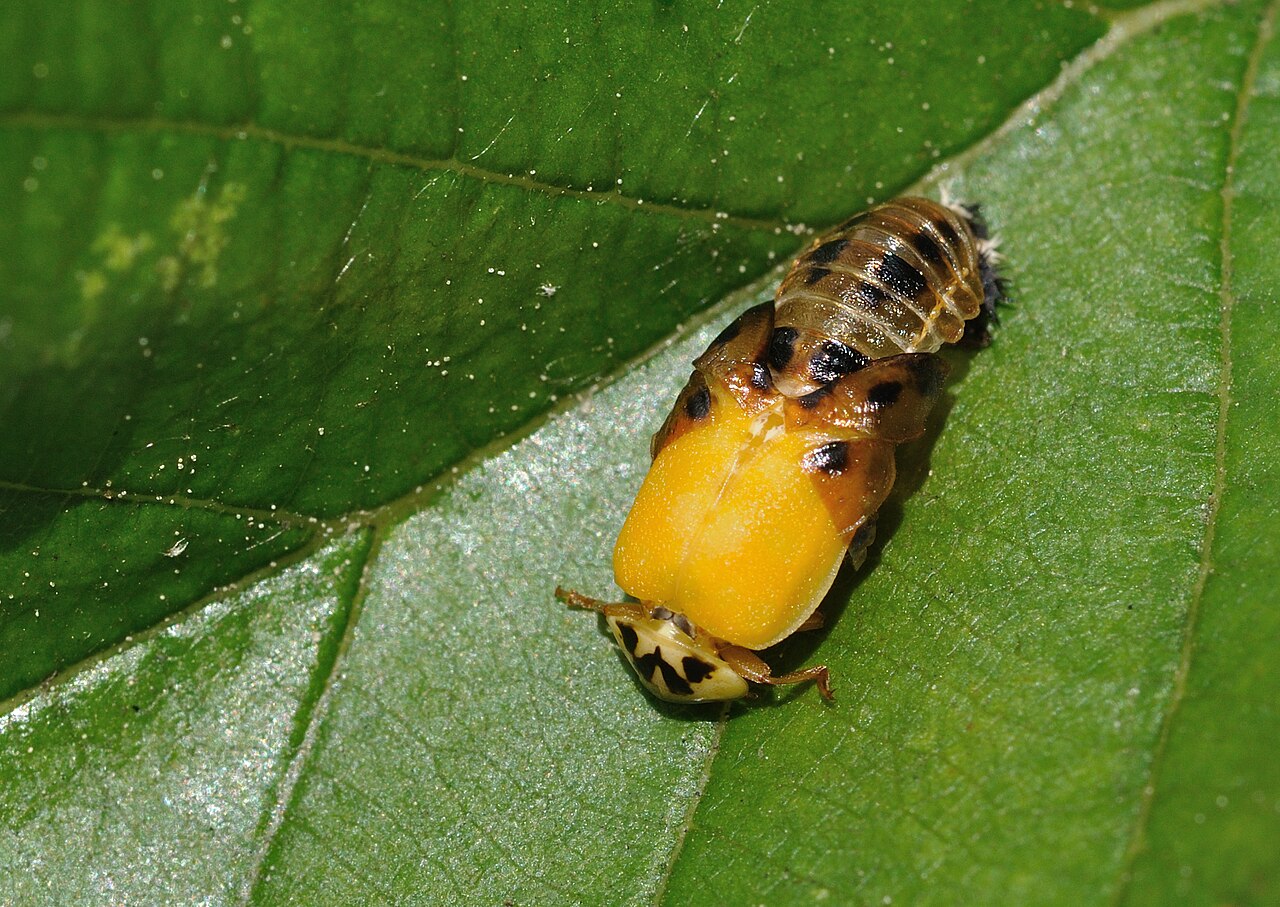
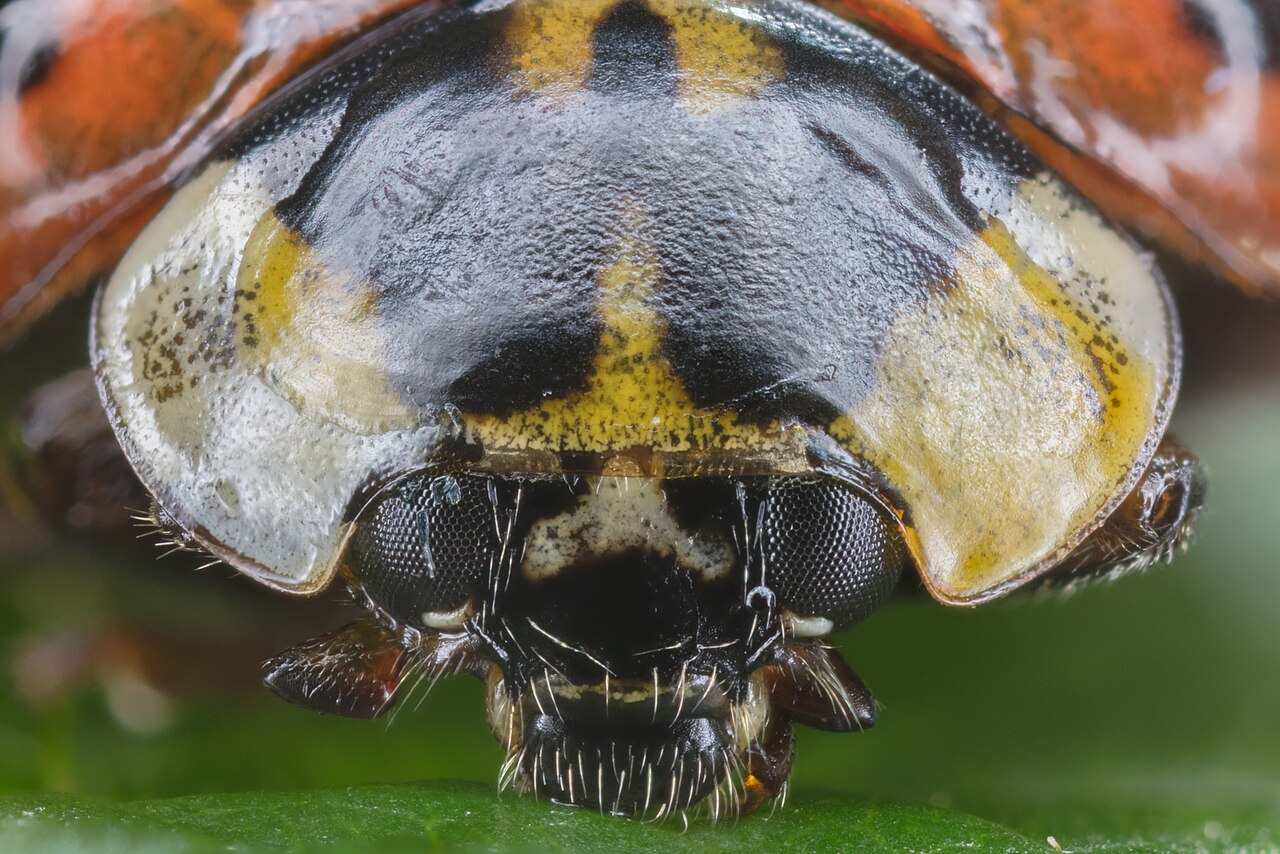
The identifying mark is on the shield behind the head. Asian lady beetles carry a dark marking shaped like an M or a W depending on viewing angle on the white pronotum, while most native species have simpler pronotum markings. Asian lady beetles also vary enormously in color, from deep red through orange to pale yellow, with spot counts from zero to nineteen.
The species was introduced repeatedly for aphid control from the early twentieth century onward and is now the most abundant ladybug across much of the continent. Several native species have declined sharply in the same period, and the indoor nuisance is one visible consequence of that shift. Our guide comparing the Asian lady beetle and native ladybugs works through the identification.
Are They Harmful?
To the house, no. Asian lady beetles do not eat wood, fabric, paper, or stored food, they do not reproduce indoors, and they cause no structural damage of any kind. An infestation is a nuisance rather than a threat to the building.
To people, mostly no, with real exceptions. The beetles release a yellow defensive fluid through their leg joints when disturbed, a behavior called reflex bleeding, and that fluid stains walls, curtains, and upholstery and smells musty. They also bite occasionally, which feels like a sharp pinprick and is harmless.
Allergy is the genuine health concern. Studies of homes with heavy infestations have documented allergic rhinitis, conjunctivitis, and asthma exacerbation caused by beetle proteins in household dust, and the effect scales with population size. Pets are affected too, and dogs that eat large numbers can develop chemical burns in the mouth, which is uncommon but documented. Our guide to whether ladybugs bite covers the bite question in full.
Removing Them Without Making It Worse
Vacuuming is the best method and the technique matters. Slide a nylon stocking or a knee-high into the vacuum hose, secure the open end over the hose mouth with a rubber band, and vacuum the beetles into the stocking. Remove it, tie it off, and dispose of it outdoors, and the beetles never touch the vacuum bag or the machine.
Without that trick, beetles die inside the vacuum and the staining fluid and odor end up in the bag, which then smells every time the machine runs. Emptying the canister outdoors immediately is the minimum alternative.
For smaller numbers, a jar and a piece of card work, and a broom pushes them into a dustpan without crushing. Whether you release them outdoors or dispose of them is a personal call, and releasing them near the house simply returns them to the wall they came from, so a distance of some yards is worth the walk. Sticky traps and light traps designed for the species are available and help with ongoing trickles.
Sealing the House
This is the only measure that actually solves the problem, and the timing is what most people get wrong. Sealing must happen in late summer, before the beetles arrive in autumn, because sealing after they are inside traps them in wall voids where they die and decompose.
Work through the obvious gaps first. Caulk around window and door frames, repair or replace damaged weatherstripping and door sweeps, seal where utility lines, pipes, and cables enter the building, and repair torn window and vent screens.
Then the less obvious ones. Screen soffit vents, ridge vents, and attic and crawl space vents with fine mesh, seal gaps where siding meets the foundation and where different materials meet at corners, and check around exterior light fixtures and dryer vents. Asian lady beetles pass through gaps as small as an eighth of an inch, so the standard used for rodents is nowhere near tight enough.
What Does Not Work
Indoor insecticide sprays are the most common wasted effort. Beetles that die inside wall voids and attics attract carpet beetles and other scavengers that then feed on the carcasses and move on to fabrics, so the spray creates a second pest problem while doing nothing about the entry route.
Bug bombs and foggers are worse. They do not penetrate the voids where beetles cluster, they leave residue across living surfaces, and they have no residual effect on beetles arriving the following week.
The home remedies circulating online are largely ineffective. Citrus and citronella sprays, bay leaves, cloves, camphor, and ultrasonic devices all lack evidence of meaningful effect on aggregating beetles. Diatomaceous earth has some contact effect but requires the beetles to walk through it while dry and does nothing about a wall already coated in aggregation pheromone. Exterior perimeter treatment by a professional in late summer, applied before arrival, is the one chemical approach with real evidence behind it.
Cleaning Stains
Act on staining promptly, since the fluid sets and becomes harder to remove. On hard surfaces, warm soapy water and a cloth handle most marks, with a mild solvent for stubborn spots on non-porous materials tested first in an inconspicuous area.
Fabric is harder. Blot rather than rub, treat with an enzyme laundry product if the item is washable, and launder promptly. Upholstery and curtains may need professional cleaning if staining is extensive, and light-colored fabrics near infested windows suffer worst.
Painted walls sometimes retain a shadow after cleaning, and repainting is occasionally the practical answer in a room that has been heavily infested for several seasons. Removing the aggregation pheromone residue from exterior walls is essentially impossible with household methods, which is why the same house keeps attracting beetles even after thorough cleaning.
Spring Emergence
The second wave surprises people who thought the problem was over. Beetles that overwintered in wall voids and attics become active as temperatures rise, and rather than finding their way back outside they frequently move toward light and end up in living space.
March and April are typical, and warm spells in midwinter produce smaller versions of the same event. A house that seemed clear through January can suddenly produce dozens of beetles on the first mild week of spring.
The response is the same as in autumn, meaning vacuum rather than crush. The beetles emerging in spring have not fed since autumn and are trying to get outside to find aphids, so releasing them outdoors is genuinely returning them to where they want to be, and they will not re-enter once temperatures are consistently warm. Their aphid hunting is what makes the species useful outdoors, as our guides to what ladybugs eat and ladybug eggs describe.
Living With Them Outdoors
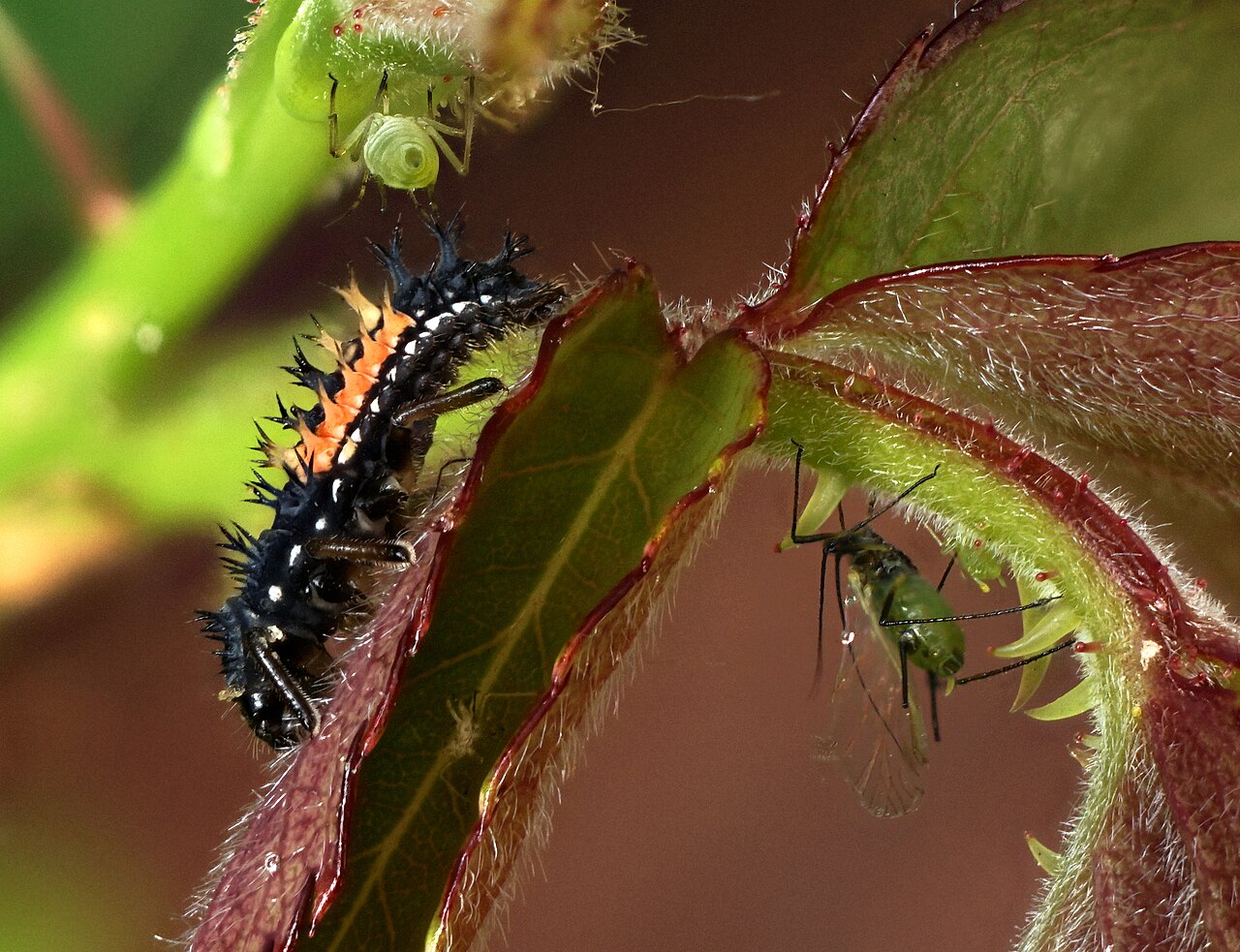
The species is a genuine asset in a garden and a nuisance only indoors, which makes blanket elimination the wrong goal. Asian lady beetles are effective aphid predators, and their larvae consume large numbers through the growing season.
They do carry ecological costs worth acknowledging. They outcompete and prey on native ladybug species, they feed on soft fruit including grapes and raspberries late in the season, and they have contaminated wine grape harvests badly enough to affect vintages, since even a few beetles crushed during pressing taint the flavor.
The practical position for a homeowner is to accept them outdoors and exclude them indoors. Seal in late summer, vacuum what gets in, avoid indoor spraying, and treat the exterior professionally if the numbers justify it. Native ladybug species need no management at all, and encouraging them by tolerating some aphids and avoiding insecticides supports the ones that do not end up in your living room, as our guide to the orange ladybug explains.
Frequently Asked Questions
What causes a ladybug infestation in a house?
Asian lady beetles seeking overwintering sites in autumn. They orient toward tall, light-colored, sun-warmed walls, which substitute for the cliff faces they use in their native range, and aggregation pheromones draw more beetles to the same building year after year.
Are they native ladybugs?
Almost never. Native species overwinter outdoors under leaf litter and bark and do not aggregate on buildings. Indoor swarms are Asian lady beetles, identified by a dark M-shaped or W-shaped mark on the white shield behind the head.
How do I get rid of a ladybug infestation?
Vacuum them using a nylon stocking inserted into the hose so they never reach the bag, then tie it off and dispose of it outdoors. Never crush them, since the fluid stains and the release triggers more beetles to gather. Seal entry points in late summer to prevent recurrence.
Are ladybug infestations dangerous?
They cause no structural damage and do not eat food or fabric. The real concerns are staining from their defensive fluid, a musty odor, occasional harmless bites, and documented allergic reactions including asthma exacerbation in homes with heavy infestations.
When should I seal my house?
Late summer, before the beetles arrive. Sealing after they are inside traps them in wall voids where they die and decompose, attracting scavenging insects. They pass through gaps as small as an eighth of an inch, so rodent-proofing standards are not sufficient.
Do bug bombs work on ladybugs?
No. Foggers do not reach the wall voids and attic spaces where beetles cluster, leave residue across living surfaces, and have no effect on beetles arriving days later. Indoor spraying also leaves carcasses that attract carpet beetles.
Why do they come back every spring?
Because beetles that overwintered in wall voids become active as temperatures rise and move toward light, ending up in living space rather than outside. They have not fed since autumn and are trying to reach aphids, so releasing them outdoors in spring genuinely works.