Blue Morpho Butterfly: The Science Behind Its Brilliant Blue
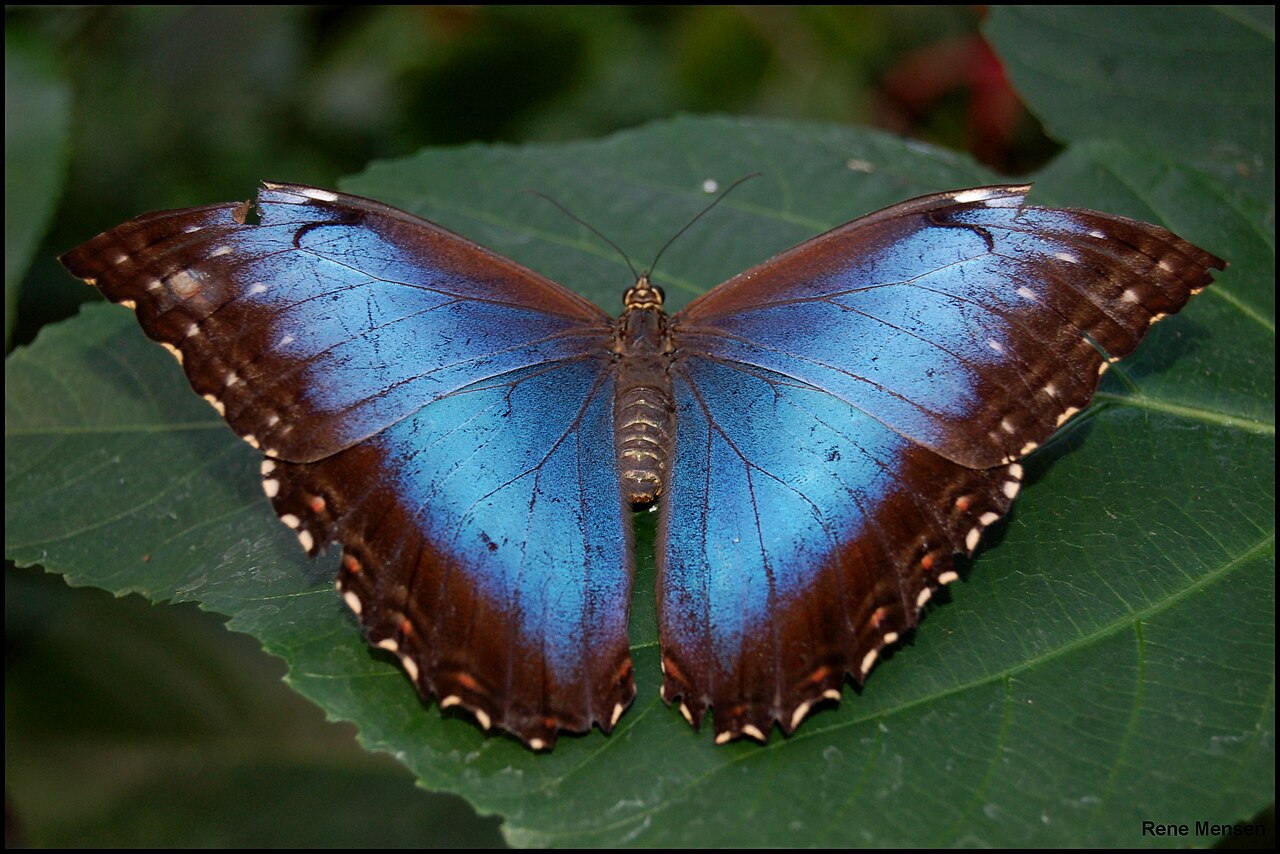
The blue morpho butterfly displays one of the most genuinely striking visual effects in the entire insect world, with its brilliant, seemingly glowing blue coloring produced not by any actual blue pigment at all but through structural coloration, microscopic scale structures on the wing surface that reflect and refract light in a way that creates this vivid iridescent blue appearance, a genuinely different mechanism from ordinary pigment-based coloring that makes the blue morpho’s color shift and shimmer dramatically depending on viewing angle and lighting conditions.
Native to the tropical rainforests of Central and South America rather than North America, blue morphos rank among the most recognizable and frequently sought butterfly species for tourists and wildlife photographers specifically visiting these tropical regions, with their considerable size, dramatic color-shifting flight pattern, and genuine rarity of extended close observation, since morphos typically flash their blue coloring only briefly during flight before landing with wings closed to reveal their remarkably different, camouflaged brown underside. This guide covers the science behind the blue morpho’s structural coloration, its natural habitat and range, the camouflage strategy revealed when wings close, conservation considerations, and how this species differs from the blue-colored butterflies found across North America instead.
| Fact | Blue Morpho Butterfly |
|---|---|
| Wingspan | 5 to 8 inches |
| Color mechanism | Structural coloration, not pigment |
| Native range | Central and South American rainforests |
| Underside coloring | Brown with eyespots, camouflaged |
| Adult lifespan | About 2 to 3 weeks |
| Host plants | Various legume family plants |
The Science Behind the Brilliant Blue
The blue morpho’s genuinely remarkable coloring results from structural coloration rather than any actual blue pigment, with microscopic scale structures on the wing surface arranged in a way that reflects and refracts light specifically to produce this vivid blue appearance, a physical mechanism entirely different from how most colored objects, including most other colorful butterflies, achieve their coloring through pigment molecules absorbing and reflecting specific light wavelengths.
This structural basis for the coloring explains why blue morpho wings shift and shimmer dramatically depending on viewing angle and available light, appearing brilliantly, almost impossibly vivid blue from certain angles while showing different, sometimes darker or less saturated tones from other viewing positions, a genuinely different visual behavior than pigment-based coloring, which remains essentially constant regardless of viewing angle.
Researchers studying this structural coloration mechanism have found genuine scientific and even technological interest in understanding exactly how these microscopic wing structures achieve their remarkable optical effect, with some research exploring whether similar structural principles might inform the development of new materials or technologies capable of achieving vivid coloring without relying on traditional pigments or dyes, giving the blue morpho genuine significance beyond simple aesthetic appreciation alone.
Native Habitat and Range
Blue morphos are native to the tropical rainforests of Central and South America, found across a range extending from Mexico through much of South America, with different specific morpho species occupying somewhat different portions of this broader tropical range, making blue morphos an iconic and genuinely characteristic sighting for anyone visiting these tropical rainforest regions rather than a species native to North America.
Within their rainforest habitat, blue morphos typically favor forest edges, clearings, and areas along rivers or streams where sunlight penetrates more effectively than in the denser forest interior, since these butterflies rely on sunlight both for basic thermoregulation and, given their structural coloration mechanism, to fully display their characteristic vivid blue appearance during flight.
This tropical rainforest dependency means blue morphos face genuine conservation pressure connected to ongoing rainforest habitat loss across their native range, a conservation concern shared by other iconic tropical and migratory species like those covered in our orange and black butterfly guide, making sustainable ecotourism initiatives specifically centered on butterfly observation and appreciation an important economic incentive supporting rainforest conservation efforts in regions where blue morphos and their broader ecosystem depend on continued forest habitat preservation.
The Camouflage Secret: What Happens When Wings Close
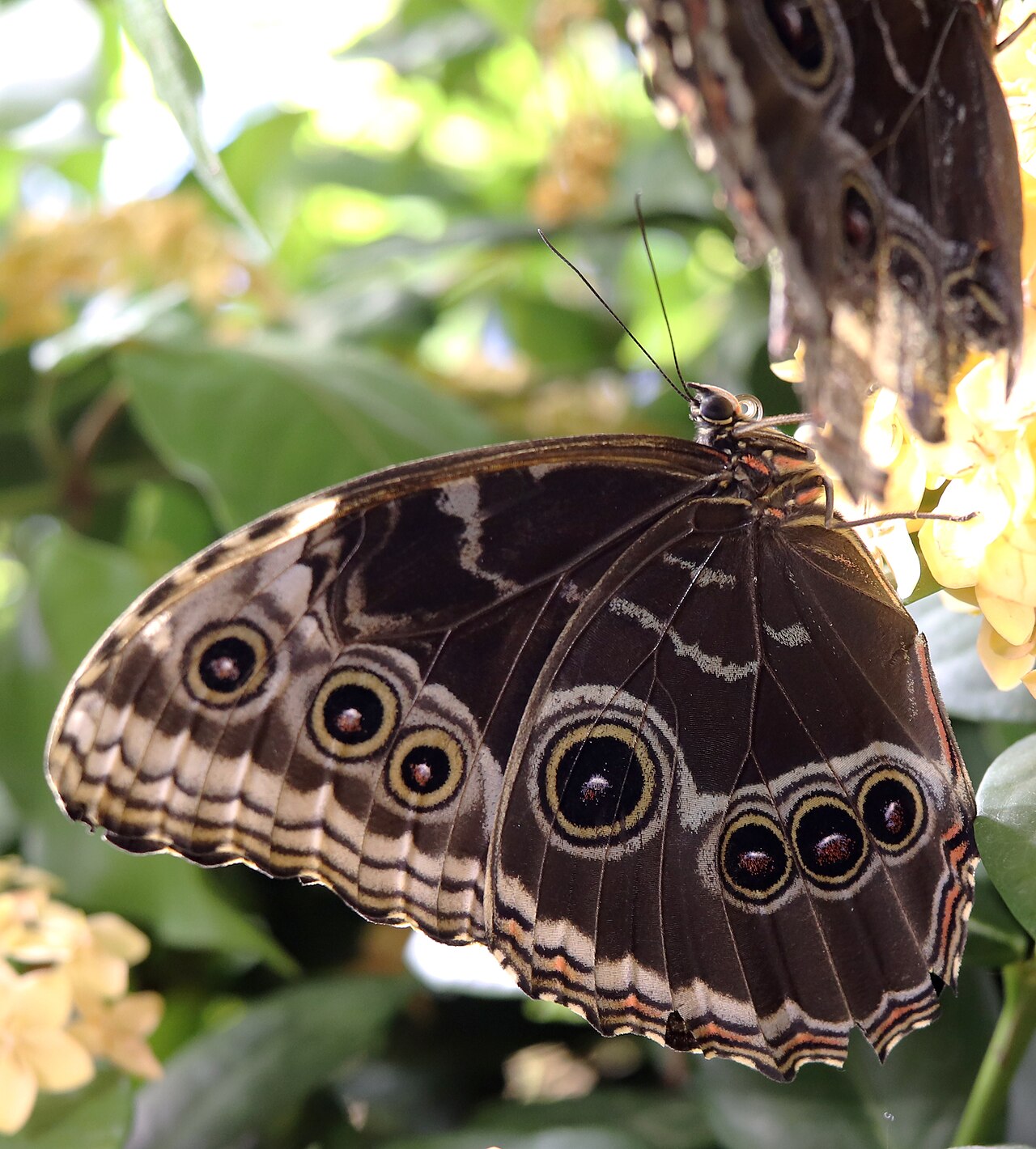
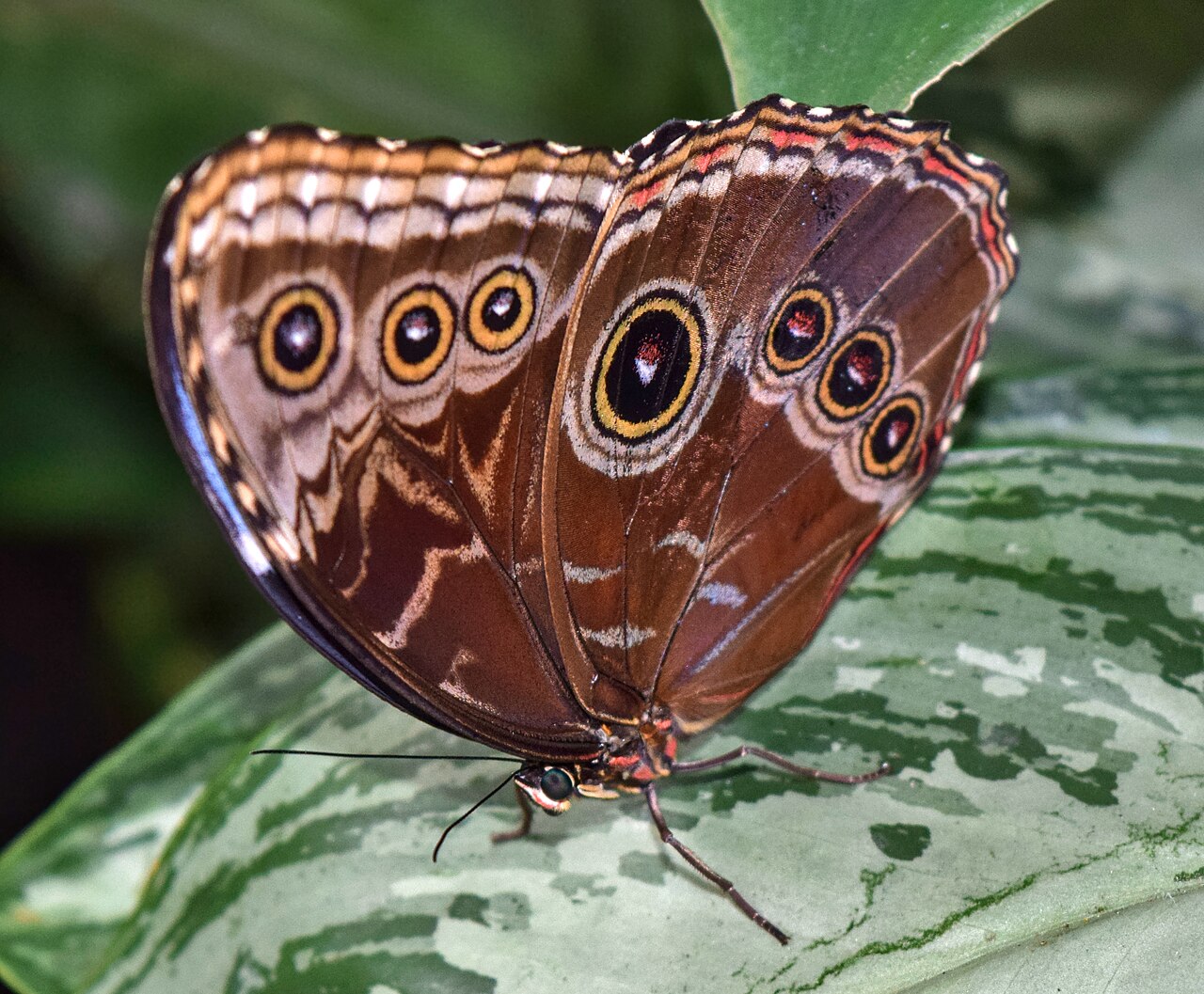
Perhaps the most genuinely surprising fact about blue morphos is the dramatic difference between their dorsal, or upper, wing surface displaying the famous brilliant blue coloring, and their ventral, or underside, surface, which shows a considerably more muted brown coloring marked with distinctive eyespots, a camouflage pattern that helps the butterfly blend effectively into leaf litter and forest floor debris when at rest with wings closed.
This dramatic color contrast between open and closed wing positions serves genuine defensive purposes, since the brilliant blue flash during flight may startle or confuse potential predators through its sudden, unpredictable visibility, while the camouflaged brown underside provides effective concealment the moment the butterfly lands and closes its wings, creating a combined offense-and-defense visual strategy relatively few other butterfly species execute quite so dramatically.
The eyespots present on the underside wing surface likely serve an additional defensive function, potentially startling predators by resembling the eyes of a larger animal, or directing predator attacks toward these less vital wing areas rather than the butterfly’s actual body, a defensive eyespot strategy documented across numerous other butterfly and moth species beyond blue morphos specifically.
Adult Lifespan and Life Cycle
Adult blue morphos live remarkably brief lives, typically only about 2 to 3 weeks, a notably short adult lifespan compared to some other large, showy butterfly species, meaning the relatively rare opportunity to observe this species’ characteristic flashing blue flight represents an even more genuinely time-limited natural spectacle than casual observers might initially assume given the species’ considerable size and visual impact.
Blue morpho caterpillars feed on various legume family plants within their native rainforest habitat, following the same basic complete metamorphosis life cycle, egg, caterpillar, chrysalis, adult, shared across all butterfly species, though the specific host plants and environmental conditions differ considerably from the North American butterfly species covered throughout most of our broader butterfly identification guides.
This brief adult lifespan places genuine pressure on successful mating and egg-laying within a compressed timeframe, making the blue morpho’s remarkably visible, attention-grabbing flight display potentially serve mate-attraction functions alongside the predator-confusion defensive purpose covered in the previous section, giving this species’ famous blue flash multiple overlapping biological functions within its genuinely brief adult existence.
Blue Morphos in Captivity and Butterfly Houses
Given their genuine rarity and specific tropical rainforest habitat requirements, most people outside blue morpho’s native range encounter this species specifically through butterfly houses and conservatories, specialized facilities maintaining appropriate tropical temperature and humidity conditions to successfully house and breed this and other tropical butterfly species for public education and appreciation purposes.
These captive breeding and display programs serve genuine conservation and education functions beyond simple entertainment value, helping fund broader butterfly conservation research while providing accessible opportunities for people in temperate climates to observe this genuinely spectacular species without requiring travel to its native tropical rainforest habitat.
For anyone specifically planning a visit to a butterfly house or conservatory hoping to observe blue morphos, understanding their preference for sunny, open areas within the enclosed habitat and their characteristic flash-and-land flight pattern helps set realistic expectations for successfully spotting and appreciating this species during a typical visit, rather than expecting continuous, easily observed flight display throughout an entire visit.
Blue Morphos and Structural Coloration in the Wider Natural World
The blue morpho’s structural coloration mechanism is not entirely unique within nature, since several other organisms achieve vivid, angle-dependent coloring through similar physical principles rather than pigment alone, including certain beetle species, peacock feathers, and even some fish scales, placing the blue morpho within a broader, genuinely fascinating category of structurally colored organisms found across diverse branches of the animal kingdom.
This shared structural coloration principle across otherwise unrelated species suggests convergent evolution has independently arrived at similar optical solutions multiple times across different animal lineages, each achieving vivid, often iridescent coloring through microscopic physical structures rather than the biochemical pigment pathways most colored organisms rely on instead, making the blue morpho part of a genuinely interesting broader pattern in evolutionary biology worth appreciating beyond this single species alone.
Optical physics research, including studies published through institutions like the Smithsonian, has confirmed that these microscopic wing scale arrangements function similarly to photonic crystals, precisely structured materials capable of manipulating light in ways ordinary materials cannot achieve, giving the blue morpho’s coloring mechanism genuine relevance to fields well beyond biology, including materials science and photonics research specifically investigating how nature’s structural solutions might inform new technological applications.
Researchers specifically studying these various structurally colored organisms continue investigating the precise physical and evolutionary mechanisms producing these remarkable optical effects, connecting blue morpho research to a broader, active scientific field studying structural coloration across the natural world generally, an area of study covered in additional context across our broader butterfly identification resources including our purple butterfly, green butterfly, and black and blue butterfly guides, each addressing other genuinely striking color possibilities within the wider butterfly world.
Blue Morpho vs North American Blue Butterflies
Unlike the blue morpho’s tropical structural coloration mechanism, blue-colored butterflies found across North America, covered in complete detail in our blue butterfly guide, typically achieve their blue coloring through different mechanisms and generally display considerably smaller size and less dramatically saturated coloring compared to the blue morpho’s genuinely exceptional visual impact, making direct comparison between these species highlight just how visually exceptional the tropical blue morpho actually is.
North American blue butterflies also generally lack the dramatic dorsal-versus-ventral color contrast that makes the blue morpho’s camouflage strategy so genuinely striking, meaning observers specifically familiar with smaller North American blue butterfly species should expect a considerably more dramatic visual experience when encountering an actual blue morpho, whether in its native tropical habitat or within a butterfly house setting.
This comparison helps place the blue morpho within the broader context of blue-colored butterfly diversity worldwide, illustrating how considerably the specific mechanism, size, and visual drama of blue coloring can vary even among butterflies sharing this same general color category, from the more modest blue butterflies common across North American gardens to the genuinely spectacular tropical blue morpho covered throughout this guide.
Related reading: Red Butterfly.
Frequently Asked Questions
Why is the blue morpho butterfly so blue?
Its brilliant blue coloring comes from structural coloration, microscopic wing scale structures that reflect and refract light, rather than any actual blue pigment, causing the color to shift dramatically depending on viewing angle.
Where do blue morpho butterflies live?
They are native to tropical rainforests across Central and South America, not North America, favoring forest edges and sunny clearings within their native range rather than temperate climate gardens.
Why does a blue morpho look brown sometimes?
The underside of its wings shows camouflaged brown coloring with eyespots, quite different from the brilliant blue upper surface, revealed when the butterfly lands and closes its wings for effective ground camouflage.
How long do blue morpho butterflies live?
Adults live only about 2 to 3 weeks, a notably brief lifespan compared to some other large, showy butterfly species, making sightings of their characteristic flight display genuinely time-limited.
Can I see blue morphos outside of tropical rainforests?
Yes, many butterfly houses and conservatories maintain appropriate tropical conditions to house and breed blue morphos, providing accessible viewing opportunities for people in temperate climates.
What is the difference between a blue morpho and other blue butterflies?
Blue morphos achieve their color through structural coloration and show considerably larger size and more dramatic color-shifting compared to smaller North American blue butterfly species using different coloring mechanisms.
Are blue morpho butterflies endangered?
While not universally classified as endangered, they face genuine conservation pressure from ongoing rainforest habitat loss across their native range, making habitat preservation important for long-term population health.