Sun Conure: Cost, Noise, Lifespan and Care Before You Buy
The sun conure (Aratinga solstitialis) is a small, brilliantly orange and yellow parrot from northeastern South America that makes an affectionate but extremely loud companion bird. It is one of the most recognizable parrots in the pet trade and one of the most frequently rehomed, almost always for the same reason: the volume. A healthy sun conure lives 25 to 30 years, which makes the decision to buy one closer to adopting a dog three times over than to buying a bird.
This profile covers what the species actually is in the wild, what it costs, how loud it gets, whether it talks, how hard it bites, and what a realistic day of care looks like. The wild population is in far worse shape than the pet population, and that part of the story rarely makes it onto a breeder page.
The sun conure is a 12 in (30 cm) parrot native to Guyana, southern Venezuela, and far northern Brazil, weighing 4 to 4.6 oz (110 to 130 g) and living 25 to 30 years in captivity. It is highly social, moderately trainable, a poor talker, and loud enough that most apartment owners cannot keep one.
| Trait | Sun Conure |
|---|---|
| Scientific name | Aratinga solstitialis |
| Length and weight | 12 in (30 cm), 4 to 4.6 oz (110 to 130 g) |
| Lifespan | 25 to 30 years in captivity, about 15 in the wild |
| Native range | Guyana, southern Venezuela, far northern Brazil |
| IUCN status | Endangered |
| Typical price | $500 to $1,200 from a breeder |
| Noise level | Very high, screams audible through walls |
What Is a Sun Conure?
The sun conure is a medium sized member of the Aratinga genus, a group of long tailed neotropical parakeets that also includes the jandaya and golden capped conures. In much of the world it is called the sun parakeet, and the two names refer to the same bird. American aviculture settled on conure, which is not a formal taxonomic term at all.
It belongs to the family Psittacidae and sits closest to the jandaya conure (Aratinga jandaya), close enough that the two interbreed readily in captivity and were once treated as the same species by some authors. Hybrids are common in the US pet trade, which is one reason a bird sold as a sun conure may never develop the full solid yellow adult plumage.
Sun Conure Appearance and How Juveniles Change
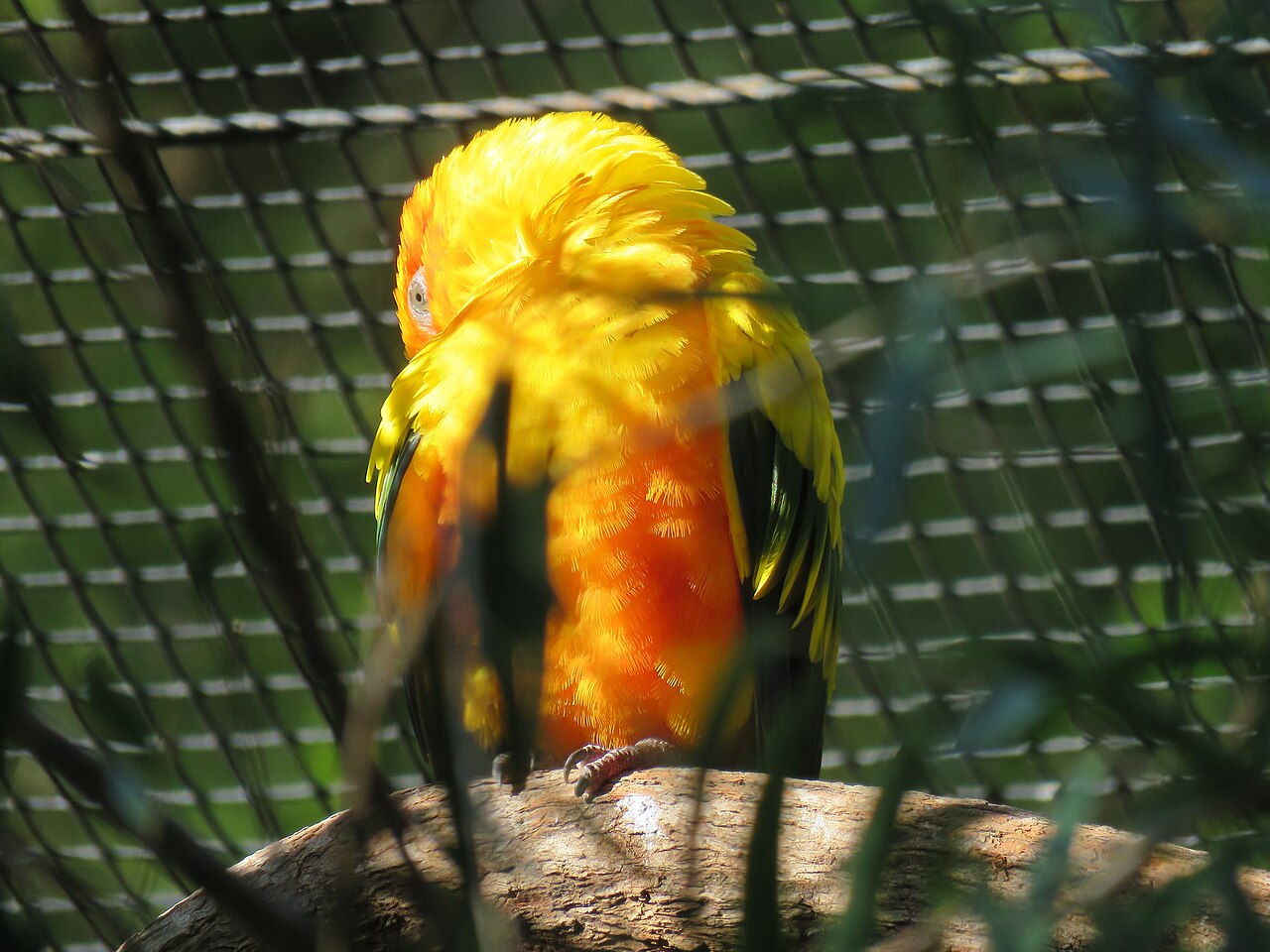
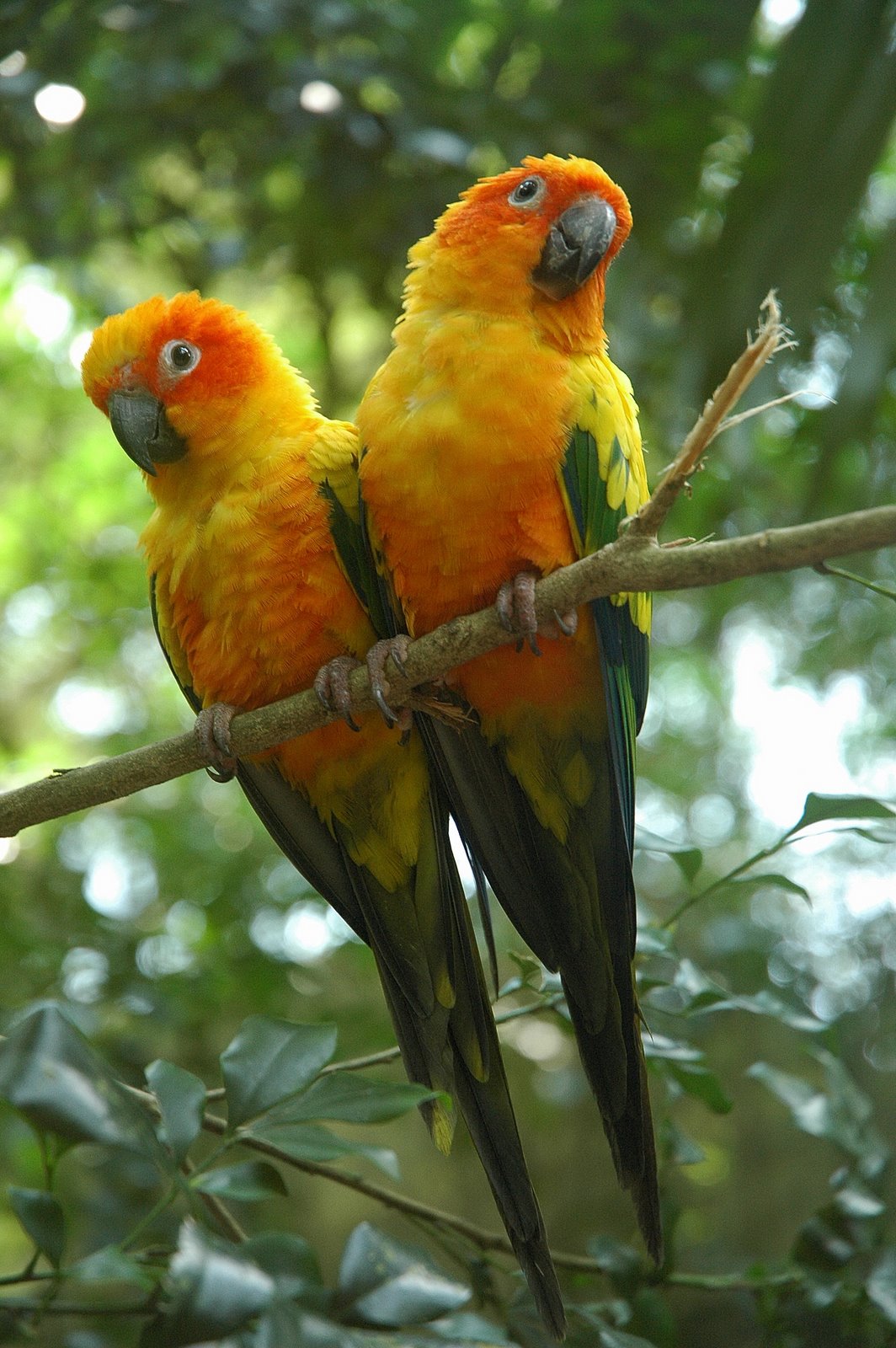
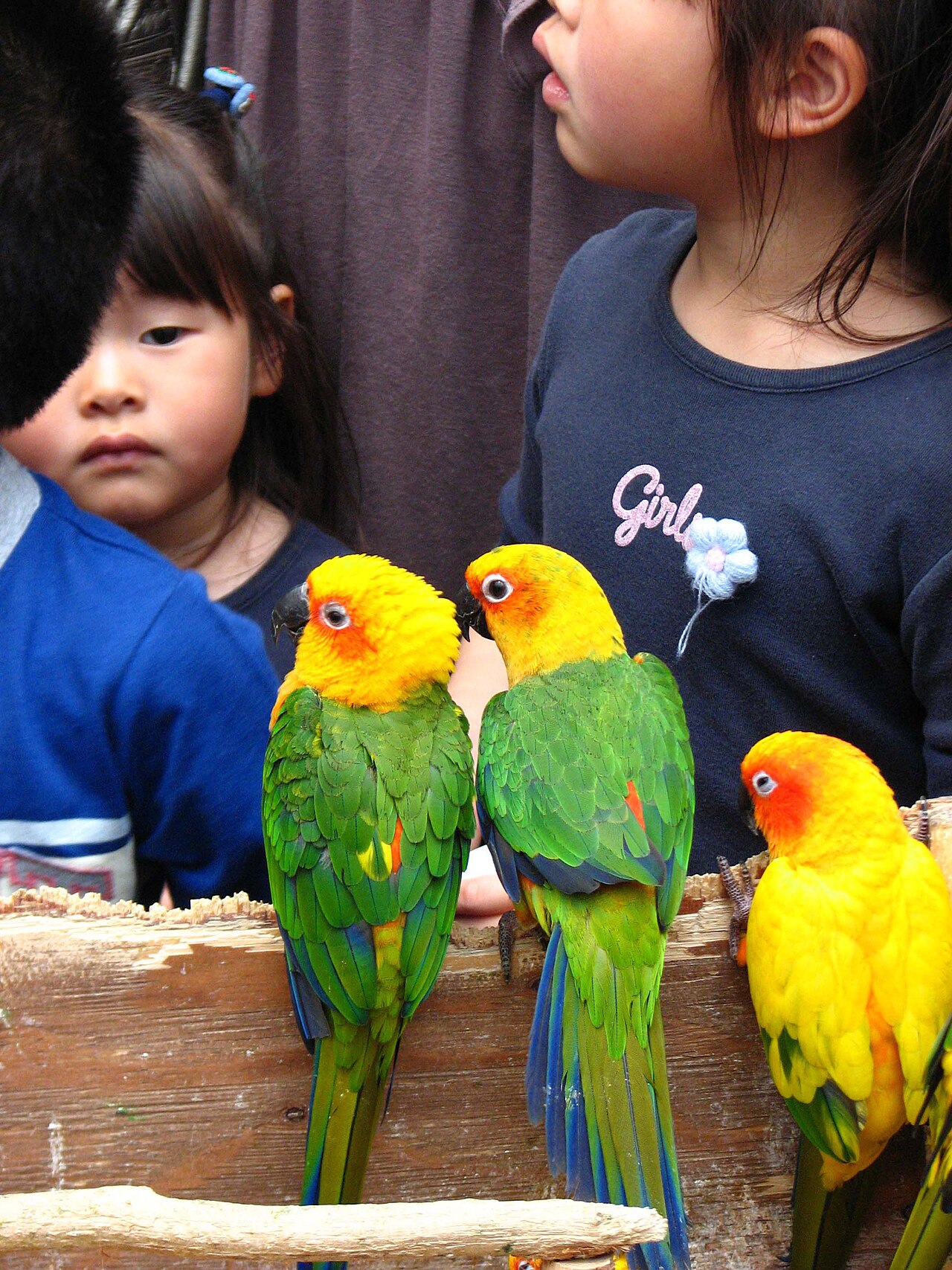
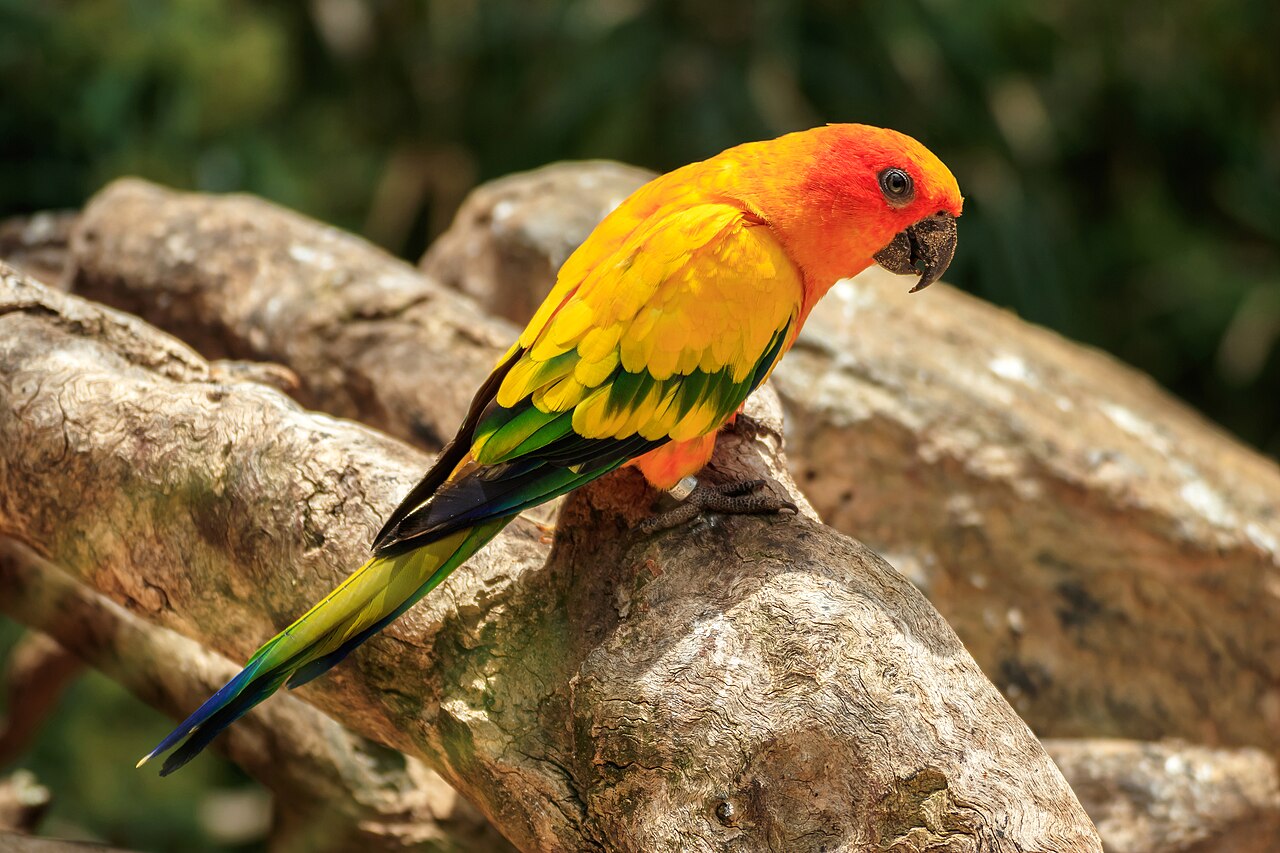
Adult sun conures are golden yellow across the head, chest, and belly, washed with deep orange around the face and abdomen, with green and blue flight feathers and a dark tipped tail. The bare eye ring is white and the beak is black. Males and females look identical, so sexing requires a DNA test from a feather or blood sample.
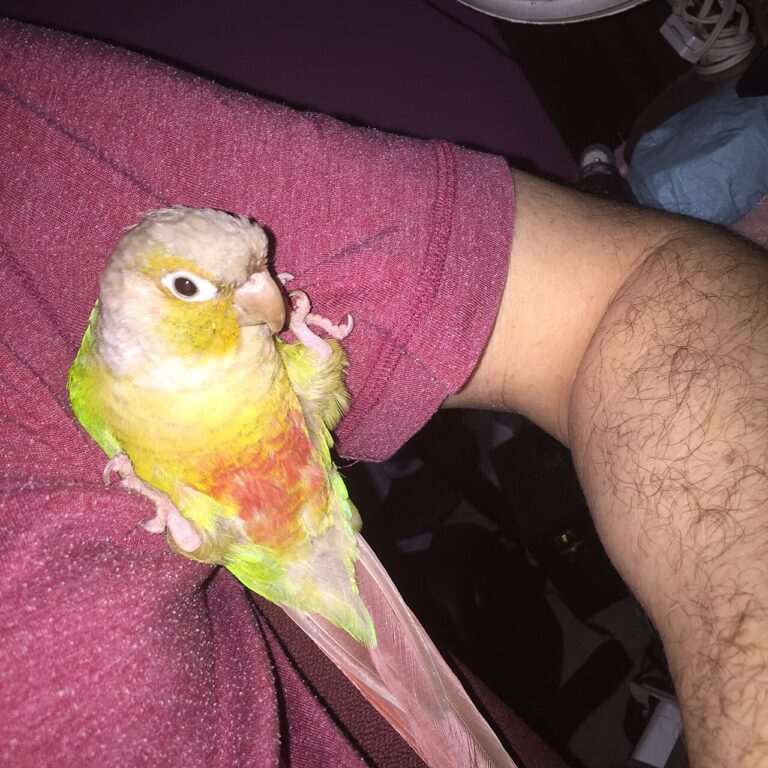
Juveniles look like a different bird entirely. A fledgling is mostly olive green with scattered yellow, and the adult coloration comes in gradually over the first 18 to 24 months. Buyers who expected a glowing orange parrot are often startled by a green one. The orange comes from carotenoid pigments in the diet, unlike the structural blue of a jay or the pigment failure behind an albino peacock.
Where Sun Conures Live in the Wild
Wild sun conures occupy a surprisingly small range: the Guiana Shield region covering Guyana, southern Venezuela, and a sliver of far northern Brazil in Roraima. They favor seasonally flooded savanna edges, palm groves, and dry forest rather than deep rainforest, and they move in flocks of roughly 15 to 30 birds.
The IUCN lists the species as Endangered, and the driver is the pet trade itself. Decades of trapping stripped much of the accessible range, and the Brazilian population in particular has collapsed. Nearly every sun conure sold in the United States today is captive bred, which is the reason imports are no longer legal and why the Smithsonian National Zoo and similar institutions run managed breeding programs for the species.
Is a Sun Conure a Good Pet?
A sun conure is a good pet for someone with a detached house, a flexible schedule, and 25 years of patience. They are genuinely affectionate, quick to bond, playful into old age, and small enough to handle comfortably. Owners who suit the bird describe them as a permanent toddler that never grows out of wanting attention.
They are a poor pet for apartments, shared walls, households with an infant, or anyone who works long unpredictable hours. Rescue organizations receive sun conures constantly, and the surrender reason is almost always noise or a neighbor complaint. If the noise is the deal breaker but the personality is not, a guinea pig or a quieter parrotlet is the honest alternative.
How Much Does a Sun Conure Cost?
A hand raised sun conure costs $500 to $1,200 from a reputable breeder in the United States, with hand fed weaned juveniles at the upper end and rehomed adults often free or under $300 through rescues. Pet store prices run higher without being better birds. The purchase price is the smallest number involved.
Budget $400 to $800 for a cage large enough to matter, $50 to $80 a month for pellets, fresh produce, and replacement toys, and $200 to $400 a year for an avian veterinarian who actually sees parrots. A single emergency, such as an egg binding or a heavy metal ingestion, can run past $1,000 on its own.
How Loud Are Sun Conures, Really?
Sun conures produce a piercing contact scream in the range of 100 to 120 decibels at close quarters, comparable to a chainsaw or a smoke alarm. They do it in short bursts several times a day, usually at dawn, at dusk, and whenever a favorite person leaves the room. Nothing in training removes the behavior, because flock contact calling is hardwired.
What training can do is reduce frequency. Ignoring the scream and rewarding a quieter sound, keeping the cage out of high traffic doorways, and answering with a whistle rather than a shout all help. Compare that with the American robin singing outside a window and it becomes clear how far outside normal household sound a conure sits.
Can a Sun Conure Parrot Talk?
A sun conure parrot can talk, but poorly. Most learn between 5 and 20 words, delivered in a raspy, mechanical voice that takes familiarity to understand. Some individuals never say anything at all, and that outcome is common enough that no buyer should count on speech. Mimicked household sounds such as a microwave beep or a phone ring usually come faster than words.
If speech is the goal, the species is the wrong choice. African greys, Amazons, and even budgies outperform conures by a wide margin on both vocabulary and clarity. What sun conures do well is body language, routine learning, and simple trick training such as targeting, recall, and retrieving small objects.
Do Sun Conures Cuddle, and Do Conures Pick One Person?
Sun conures cuddle enthusiastically. They burrow into shirt collars, lie on their backs in a hand, and tuck under a chin for long stretches, which is a large part of their appeal. That tactile bonding is normal for the species and not a sign of a nervous bird.
Conures do pick one person in many households, typically the one who handles them most during the first year. The bond can tip into territorial defense, where the bird lunges at anyone else who approaches its chosen human. Rotating handling duties across the household from week one is the single most effective prevention, and it is far easier than undoing the behavior later.
How Hard Do Sun Conures Bite?
Sun conures bite hard enough to draw blood and leave a bruise, though they cannot break a finger the way a macaw can. The beak is built to crack palm nuts, and a serious bite from a frightened or hormonal adult will puncture skin. Most owners are bitten within the first month while both sides learn boundaries.
Bites are almost always communication rather than aggression: a warning before a bite is a raised foot, pinned eyes, or a fanned tail, and people who learn those signals get bitten rarely. Never punish a bite. Put the bird down calmly, end the interaction, and try again later, because a dramatic reaction teaches the bird that biting produces an interesting result.
Cage, Enrichment, and Daily Care
The minimum cage for one sun conure is 24 x 24 x 30 in (61 x 61 x 76 cm) with bar spacing of 0.5 to 0.75 in (13 to 19 mm), and bigger is better in every direction. Long tailed parrots need horizontal room to move, so a tall narrow cage wastes space the bird cannot use. Natural wood perches of varying diameter prevent the foot problems that dowel perches cause.
Plan on 3 to 4 hours of out of cage time daily and a rotating stock of chewable toys, since a bored conure turns to feather destruction fast. Cover the cage or dim the room for 10 to 12 hours of dark, quiet sleep each night. Sleep deprivation shows up as screaming and biting long before anyone connects the two.
Sun Conure Diet and What Is Toxic to Sun Conures
A good diet is 60 to 70 percent formulated pellets, 20 to 30 percent fresh vegetables and some fruit, and a small amount of seed and nut as training rewards. An all seed diet is the most common cause of premature death in pet conures, producing fatty liver disease and vitamin A deficiency over years rather than weeks.
What is toxic to sun conures: avocado, chocolate, caffeine, alcohol, onion, garlic, apple and cherry pits, salt, and anything containing xylitol. Airborne hazards kill faster than food, and overheated nonstick cookware is the classic case, along with scented candles, aerosols, and cigarette smoke. Bright plumage depends on carotenoids the way an American goldfinch depends on seasonal diet for its color.
Do Sun Conures Need to Be in Pairs?
Sun conures do not need to be in pairs if a person is available for several hours a day. A single bird with steady human contact usually bonds more strongly with its owner and stays more interested in training than a bonded pair does. Two birds will often prefer each other and treat handling as an interruption.
If the household is empty for 10 hours a day, a second bird is the kinder option, and the second does not have to be another sun conure. Introduce slowly, quarantine any new arrival for 30 to 45 days, and provide separate cages first. A pineapple conure is a common and compatible companion choice, and hummingbird species such as the Allen’s hummingbird illustrate the opposite extreme, birds that tolerate almost no company at all.
Related reading: Golden Conure.
Frequently Asked Questions
Should you cover a conure cage at night?
Yes in most homes. A cover creates the 10 to 12 hours of uninterrupted darkness that conures need, and it blocks the light and movement of an active household. Use a breathable cloth, leave one side partly open if the bird panics under full cover, and keep the routine consistent, since irregular sleep drives screaming and biting.
How long do sun conures live?
Sun conures live 25 to 30 years in captivity with good nutrition and veterinary care, and occasionally past 30. Wild birds average closer to 15 because of predation and drought. An all seed diet commonly cuts captive lifespan to 10 or 15 years, which is why pellet conversion matters more than any other single care decision.
Are sun conures legal to own in the United States?
Yes, captive bred sun conures are legal to own throughout the United States, though wild caught imports have been banned since the Wild Bird Conservation Act of 1992. A few cities and homeowner associations restrict parrots by noise ordinance rather than by species. Check local rules before buying, not after a neighbor complains.
Can a sun conure live with other bird species?
Sometimes, with supervision and separate cages. Sun conures are bold and can injure smaller birds such as budgies, cockatiels, or finches even in play. Pairings with similarly sized conures usually work best. Never leave mixed species together unattended, and quarantine any new bird for 30 to 45 days to avoid transmitting psittacosis or polyomavirus.
Why is my sun conure plucking its feathers?
Feather destruction usually traces to boredom, insufficient sleep, low humidity, or a lack of bathing, and occasionally to giardia, skin infection, or heavy metal toxicity. Start with an avian veterinarian to rule out medical causes, then add out of cage time, daily misting, and foraging toys. Plucking that has run for years rarely reverses completely.
Do sun conures smell?
Not much. Parrots lack the oily musk of some pet birds, and a healthy sun conure has a faint, slightly sweet scent. Odor almost always comes from the cage rather than the bird, so daily tray liner changes and weekly grate scrubbing solve it. A sudden sour smell is worth a veterinary check for crop or vent problems.