Why Do Birds Fly in a V Formation? The Science
Birds fly in a V formation mainly to save energy, because each bird catches the upward moving air left behind by the wingtip of the bird ahead, making flight easier for everyone except the leader. This drafting effect can cut the energy a bird spends by a meaningful margin over long distances, which matters enormously during migration. The V also helps the flock stay together and communicate, since every bird has a clear view forward and can watch its neighbors. Geese, ducks, pelicans, cranes, and other large migrating birds use it most. This guide breaks down the aerodynamics of the V, why birds rotate the demanding lead position, and which species you will see doing it.
| Question | Answer |
|---|---|
| Main reason | Energy saving through drafting |
| How it works | Each bird rides the upwash off the wingtip ahead |
| Second reason | Keeping the flock together and in view |
| Hardest spot | The leader at the point of the V |
| Who flies in V | Geese, ducks, pelicans, cranes, swans, ibises |
The aerodynamics: how the V saves energy
When a bird flaps, its wings push air down to create lift, and a side effect is a swirl of air off each wingtip. Just behind and to the side of the wingtip, that swirl actually pushes air upward, a zone called upwash. A bird that positions itself in the upwash of the bird ahead gets a free lift boost, so it does not have to flap as hard or as often to stay aloft. String enough birds together, each riding the upwash of the one in front, and the shape that emerges is a V or a shifted J. Studies of large birds have measured lower heart rates and reduced wingbeat frequency for birds flying in formation compared with flying alone.
Why birds take turns in the lead
The bird at the point of the V gets no drafting help and works the hardest, punching through undisturbed air. To spread that cost, birds rotate. When the leader tires, it drops back into the formation and another bird moves up to take the point. Research on northern bald ibises found that birds precisely matched their time in front, essentially taking fair turns so no single bird was exhausted. This cooperation is one of the more striking examples of teamwork in the animal world and explains how a flock can cover hundreds of miles without any one bird burning out.
The V also keeps the flock together
Energy is not the only benefit. The staggered line gives every bird an unobstructed view forward and of its flockmates, which helps the group stay coordinated over long distances. Spacing themselves diagonally prevents collisions and lets birds react together to changes in direction. The familiar honking of geese in flight is thought to be communication that helps maintain the formation and encourage the flock, especially the hard working leader. For a smaller flock or shorter trip, staying together and navigating as a unit may matter as much as the aerodynamic savings.
Which birds fly in a V formation?
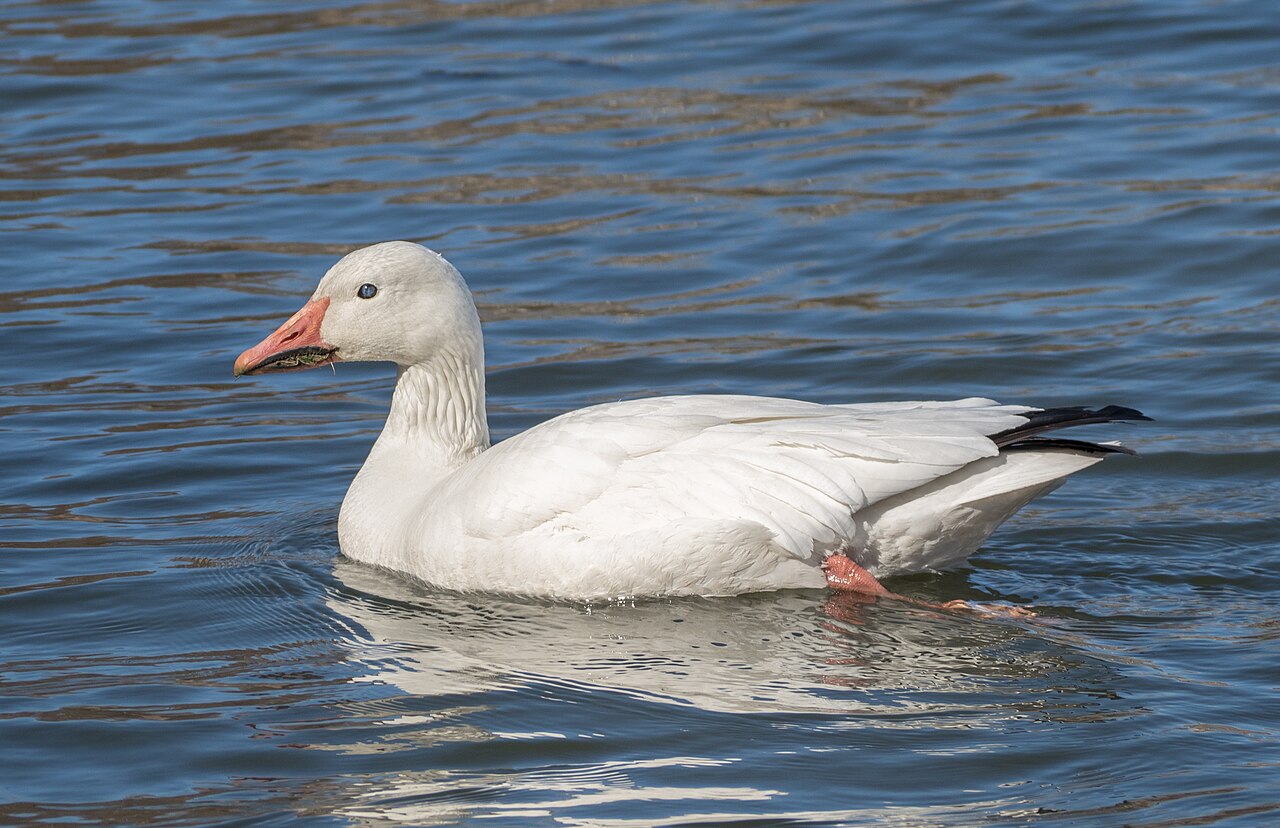
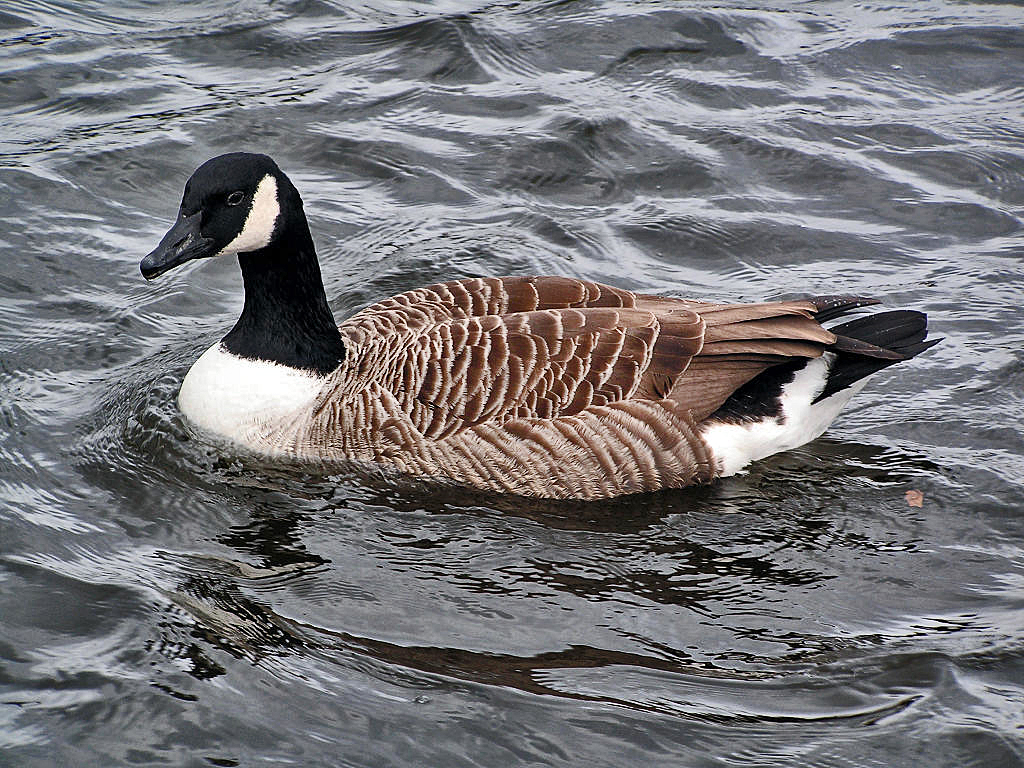
The V is a big bird strategy. It works best for large, heavy species with broad wingspans, because the upwash they generate is strong enough for a trailing bird to exploit. Canada Geese are the textbook example, along with snow geese, ducks, swans, pelicans, cormorants, cranes, and ibises. Smaller songbirds generally do not fly in a V; their wingtip vortices are weaker and they tend to migrate in loose flocks or alone, often at night. So if you see a crisp V overhead, you are almost certainly watching waterfowl or another large migrant on a long journey.
Many of these birds pass through on seasonal migration. If you want to know which large birds visit your area and when, our regional bird guides track seasonal movements.
Do birds always fly in a perfect V?
Not always. Real formations are often lopsided, forming a J shape with one arm longer than the other, or shifting constantly as birds jockey for the best position. Wind, turbulence, and the size of the flock all distort the shape. Smaller groups may fly in a simple diagonal line rather than a full V. The important thing is not the geometry but the position: each bird trying to sit in the rising air off the wingtip ahead. The V is simply the tidy average that emerges when many birds all solve that same problem at once.
Other flight formations and how geese migrate
The V is the most famous formation, but it is not the only one. Many birds fly in a straight diagonal line, which is really just half a V and works on the same drafting principle. Smaller birds often travel in loose, shifting clusters or dense flocks called murmurations, where the goal is safety in numbers and confusing predators rather than saving energy. Shorebirds may fly in tight synchronized sheets. The V specifically belongs to big, heavy birds on long journeys, where the energy math pays off. According to the Cornell Lab of Ornithology, migrating geese and other waterfowl can cover hundreds of miles in a push, and the V helps them do it without exhausting the flock. Canada Geese and other goose species are the birds you are most likely to see in a clean V overhead, often calling as they go. During migration season these formations pass along established flyways, so a single good vantage point can reveal skein after skein. If you are curious how birds achieve the flight power behind all this, see our guide on how birds fly, and for the record holders, our roundup of the fastest birds. The next time a V passes over, you are watching one of nature’s most elegant energy saving strategies in action, refined over millions of years, much like the feeding habits that fuel these long flights.
How high and far do birds fly in formation?
The energy savings of the V matter most because migrating birds cover astonishing distances at real altitude. Canada Geese routinely migrate at a few thousand feet, and some geese climb far higher, with bar headed geese famously crossing the Himalayas at extreme elevations where the air is thin. A migrating flock can travel hundreds of miles between stops, and the drafting benefit of the V is what makes such marathons survivable without exhausting every bird. Formation flying also lets the group navigate as a unit, following coastlines, rivers, and traditional flyways passed down across generations. Weather pushes them to adjust, and a headwind can force a flock lower or break the formation entirely. The next clear autumn evening, look up near dusk and you may catch skeins of geese threading south, calling as they go. For the broader picture of seasonal movement in your region, our state guides track which migrants pass through and when, and our bird lifespan guide shows how these long journeys fit into a bird’s year.
It is easy to take the V for granted, but it represents a genuine feat of collective problem solving with no leader directing traffic. Each bird independently seeks the pocket of rising air behind its neighbor, and the elegant shape simply emerges from every bird solving the same puzzle at once. There is even evidence that birds time their wingbeats to match the rhythm of the air left by the bird ahead, squeezing out every bit of lift. That so many large species converge on the same solution, from geese to pelicans to cranes, shows how powerful the energy savings really are over a long migration. The V is not taught or planned; it is physics and instinct producing cooperation, one of the quiet marvels you can watch unfold in any autumn sky.
Frequently Asked Questions
Why do birds fly in a V formation?
Mainly to save energy. Each bird rides the upward moving air off the wingtip of the bird ahead, so it flaps less. The V also keeps the flock together and in clear view.
Does the lead bird get tired?
Yes. The leader at the point of the V gets no drafting help and works hardest, so birds rotate the lead, dropping back to rest while another takes over.
How much energy does the V save?
Studies of large birds show reduced wingbeat frequency and lower heart rates in formation compared with solo flight, a significant saving over the long distances of migration.
Which birds fly in a V?
Large, broad winged species such as Canada Geese, snow geese, ducks, swans, pelicans, cranes, and ibises. Smaller songbirds usually do not use the V.
Why do geese honk while flying?
The honking is thought to be communication that helps the flock stay coordinated and may encourage the hard working birds up front to keep the pace.
Do small birds fly in a V too?
Generally no. Small songbirds produce weaker wingtip air currents and tend to migrate in loose flocks or alone, often at night, rather than in a V.
Is it always a perfect V?
No. Formations are often lopsided J shapes or shifting diagonal lines. What matters is each bird finding the rising air behind the wingtip ahead, not the exact shape.