How Do Birds Fly? Flight Mechanics Explained
How do birds fly? Flight comes down to two forces working together: lift, which holds the bird up, and thrust, which drives it forward. A bird’s wing is shaped like an airfoil, curved on top and flatter beneath, so air rushes faster over the upper surface and creates lower pressure there, letting the higher pressure below push the wing upward. Flapping supplies the thrust that keeps that air moving. Combine this with an incredibly lightweight body, and a bird can do what humans have envied for millennia. This guide explains the physics of bird flight in plain language.
| Two key forces | Lift (holds up) and thrust (drives forward) |
| Lift source | Airfoil wing shape and air pressure difference |
| Thrust source | Flapping, powered by chest muscles |
| Weight savings | Hollow bones, air sacs, no teeth, light feathers |
| Soaring | Riding thermals and updrafts without flapping |
| Wing shapes | Matched to each bird’s flying lifestyle |
Lift: How Birds Stay Up
The first requirement of flight is lift, the upward force that counters gravity. It comes from the shape of the wing. A bird’s wing is an airfoil: rounded and curved on the upper surface, flatter on the lower. When the bird moves through the air, the air flowing over the curved top travels faster than the air beneath, and faster moving air exerts less pressure. That leaves higher pressure below the wing and lower pressure above it, and the difference pushes the wing, and the bird, upward. The angle at which the wing meets the oncoming air, called the angle of attack, also matters; tilting the wing increases lift up to a point. This same principle keeps airplanes aloft, borrowed directly from birds. Different wing designs across species are covered in our guide to bird body shapes.
Thrust: How Birds Move Forward
Lift alone is not enough; the bird needs air moving over its wings, and that requires thrust, the forward driving force. Birds generate thrust by flapping. On the powerful downstroke, the wing pushes air downward and backward, and by Newton’s principle of action and reaction, the bird is propelled forward and up. The upstroke is partly a recovery, with the wing often partly folded to reduce resistance. Driving all this are large flight muscles, chiefly the pectorals, anchored to a deep keel on the breastbone. In strong fliers these muscles make up a substantial share of the bird’s total weight. The interplay of a lifting wing and a thrusting flap is the heart of flapping flight. For the fastest practitioners, see our fastest birds guide.
Built to Be Light: A Body Engineered for Flight
Flight is expensive, and birds meet the cost by being astonishingly light for their size. Their bones are hollow, reinforced inside with a lattice of struts that keeps them strong while cutting weight, and many bones are fused for rigidity. Birds have no heavy teeth or jaws; a lightweight beak does the job instead, and food is ground in a muscular gizzard. A system of air sacs connected to the lungs extends into some bones, reducing weight and powering an extremely efficient breathing system that supplies the oxygen flight demands. Even feathers, though they create the flight surfaces, are marvels of lightweight strength. According to the Cornell Lab of Ornithology, this whole body commitment to reducing weight is what makes powered flight possible. It is why a large bird can weigh far less than you would guess.
Soaring and Gliding: Flying Without Flapping
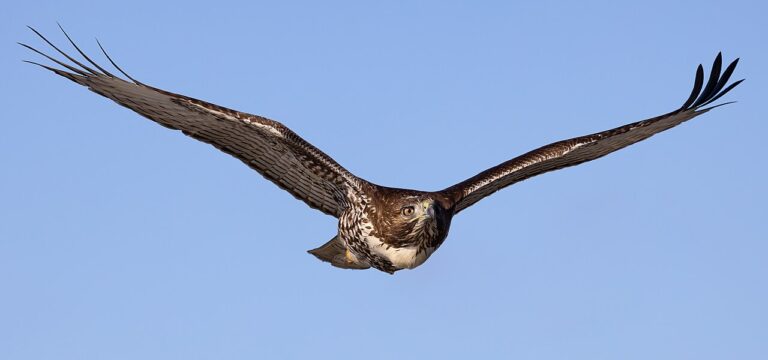
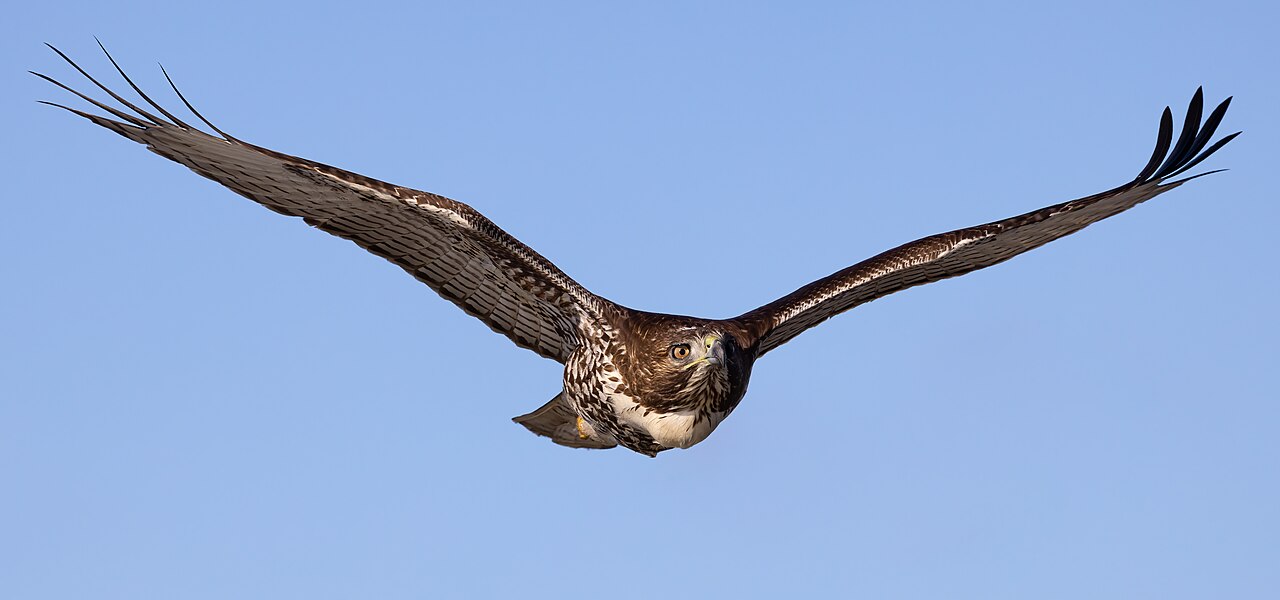
Flapping burns energy, so many birds have mastered ways to fly with little or none. Soaring birds ride rising air. Thermals are columns of warm air that rise from ground heated by the sun, and hawks, vultures, and eagles circle within them to gain altitude effortlessly, then glide off to the next thermal. Seabirds like albatrosses exploit the updrafts and wind gradients over ocean waves to travel vast distances with barely a wingbeat. Ridge lift, where wind is deflected upward by a hill or cliff, offers another free ride. By harnessing moving air, these birds turn flight from an exhausting effort into an energy saving glide, which is essential for species that cover huge ranges. Our guide to hawks shows the broad, slotted wings built for this.
Wing Shapes and Flightless Birds
Not all wings are alike, because not all birds fly the same way. Long, narrow wings suit ocean gliders that soar for hours. Broad, rounded wings give forest birds the quick maneuverability they need among trees. Pointed, swept back wings let falcons fly fast and dive. Broad wings with slotted, spread wingtip feathers help hawks and vultures soar on thermals with heavy loads. Wing shape is a signature of lifestyle. And some birds have given up flight altogether: ostriches, emus, penguins, and kiwis all descend from flying ancestors but redirected their bodies toward running, swimming, or predator free ground life. Their example shows that flight, for all its wonder, is one strategy among several. To see flight adaptations across the size spectrum, compare our smallest birds and largest birds guides.
Takeoff and Landing: The Hardest Parts
If steady flight is impressive, takeoff and landing are where a bird’s control is most tested. Getting airborne demands a burst of power to generate enough lift from a standing start, which is why small birds leap into the air with a strong downstroke and larger birds often run, hop, or drop from a height to build speed first. Water birds may patter across the surface to gain momentum. Landing is the reverse challenge: the bird must shed speed without stalling or crashing. It does this by tilting its body and wings to increase drag, spreading its tail, and often stalling deliberately just above the perch so it settles gently. Watch a bird land on a feeder and you will see the wings cup forward and the tail fan out in the final instant, a precise piece of aerial control repeated countless times a day without a thought.
The Evolution of Flight
Bird flight did not appear fully formed; it is the product of a long evolutionary history that connects modern birds to dinosaurs. Feathers, it turns out, evolved before flight, likely first for insulation and display, and only later were co opted for gliding and then powered flight. The famous fossil Archaeopteryx, with its blend of reptilian and bird like features, captures a moment in this transition. Over millions of years, the lineage that led to birds accumulated the lightweight skeleton, powerful flight muscles, and refined feathers that flight demands. Today’s birds are, in a real sense, the living dinosaurs, and every time one takes to the air it demonstrates an ability that took eons to perfect. Understanding this history adds depth to the simple act of watching a sparrow cross a yard. For more on how different birds put flight to use, explore our guides to the fastest birds and soaring hawks.
Related reading: do birds have teeth.
Frequently Asked Questions
How do birds fly?
Birds fly by generating lift with specially shaped wings and thrust with their flight muscles. As air moves over the curved upper surface of a wing faster than the flatter underside, it creates lower pressure above and higher pressure below, producing lift. Flapping provides the forward thrust that keeps air flowing over the wings.
What is lift?
Lift is the upward force that holds a bird in the air. It is created by the wing’s airfoil shape, curved on top and flatter below, which makes air move faster over the top, lowering pressure there so the higher pressure beneath pushes the wing up.
How do birds create thrust?
Birds create thrust by flapping their wings, especially on the downstroke, which pushes air backward and downward and drives the bird forward. Powerful chest muscles anchored to a deep keel bone power this motion.
Why are birds so light?
Birds have many weight saving adaptations: hollow bones reinforced with internal struts, no teeth, air sacs connected to the lungs, and lightweight feathers. Every part of a bird’s body is engineered to reduce weight for flight.
How do birds soar without flapping?
Soaring birds ride rising air. They use thermals, columns of warm air that rise from sun heated ground, and updrafts deflected off ridges and waves, to gain height and glide long distances with little or no flapping, saving enormous energy.
How do bird wings differ by species?
Wing shape matches lifestyle. Long narrow wings suit ocean gliders like albatrosses, broad rounded wings help forest birds maneuver, pointed swept back wings enable fast flight in falcons, and slotted broad wings let hawks and vultures soar on thermals.
Do all birds fly?
No. Some birds are flightless, including ostriches, emus, penguins, and kiwis. They evolved from flying ancestors but lost flight in favor of running, swimming, or life without predators, redirecting their bodies toward other ways of moving.