Fancy Goldfish Care: Types, Tank Size, Cost and Lifespan
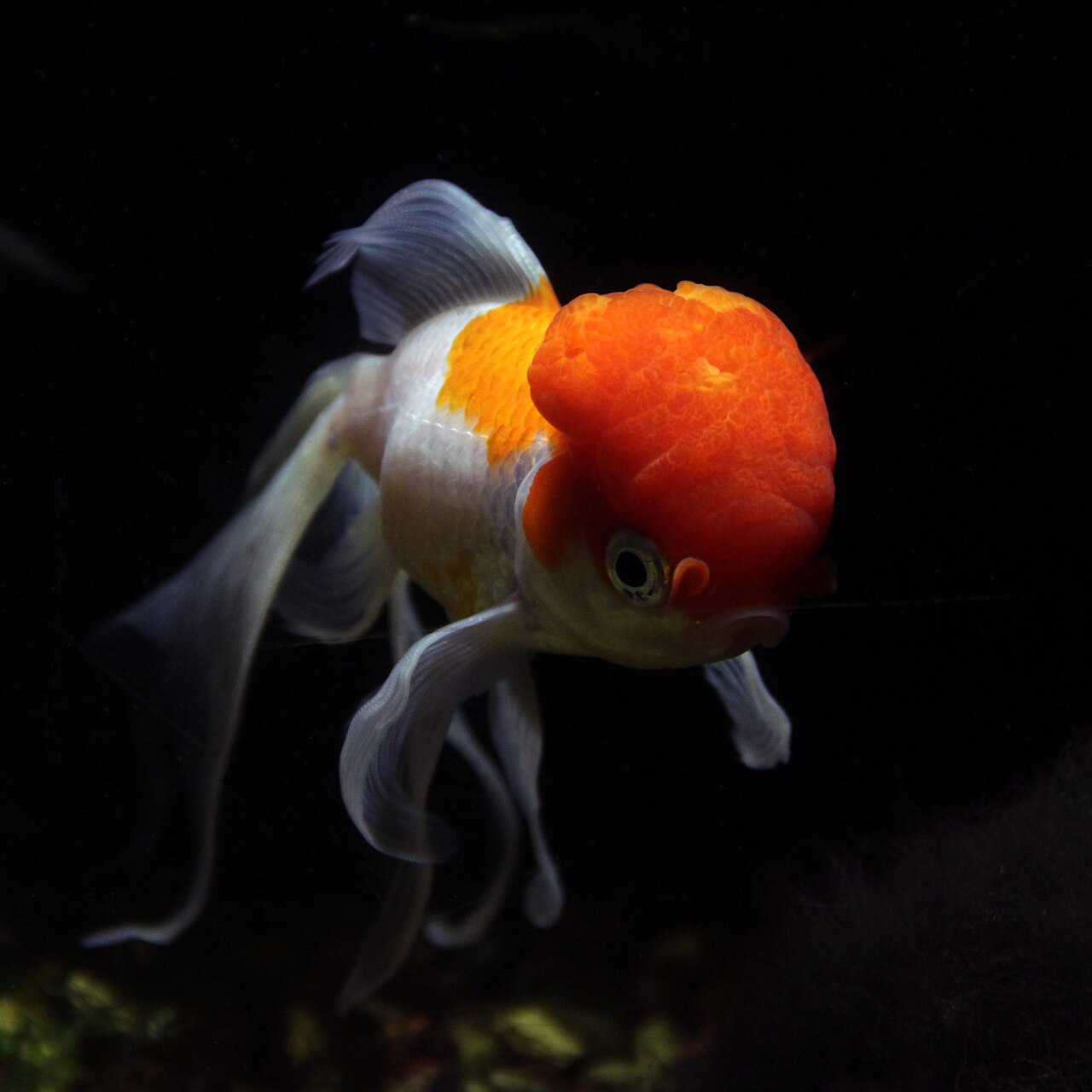
Fancy goldfish are the selectively bred, egg shaped varieties of Carassius auratus: orandas, ryukins, black moors, fantails, ranchus, and the rest of the round bodied forms. They are slower, shorter, and far less hardy than the common goldfish, and they need a filtered, heated free aquarium of at least 20 gallons rather than a bowl.
The body shape is the whole story. Centuries of breeding for a compressed, rounded body pushed the swim bladder and intestines into a space never designed for them, which is why buoyancy trouble is the defining health problem of the group and why a fancy cannot outswim a common goldfish for food.
Fancy goldfish are round bodied goldfish varieties that reach 6 to 8 inches (15 to 20 cm) and live 10 to 15 years. Two fancies need at least 30 gallons with strong filtration and gentle flow. They are hardier than tropicals in temperature but sensitive to ammonia, overfeeding, and swim bladder problems.
| Quick facts | Fancy goldfish |
|---|---|
| Scientific name | Carassius auratus |
| Adult size | 6 to 8 in (15 to 20 cm) including tail |
| Tank for two | 30 gal, plus 10 gal per extra fish |
| Temperature | 65 to 74 F (18 to 23 C), no heater needed |
| Lifespan | 10 to 15 years, 20 with good care |
| Price | 15 to 60 USD, show grade 100 USD and up |
| Pond suitable | Only in mild climates, never with commons |
What Counts as a Fancy Goldfish?
A fancy goldfish is any variety with a shortened, deepened body and a double tail, as opposed to the streamlined single tailed forms. That line separates the orandas and ryukins from the comet goldfish and the common, which keep the torpedo shape of their wild ancestor and can reach 12 inches (30 cm) in a pond.
The distinction matters for stocking, not just for looks. Single tailed goldfish outcompete fancies at feeding time and grow far larger, so the two groups should never share a tank. A fancy kept with commons usually ends up thin within a few months.
Fancy Goldfish Types Worth Knowing
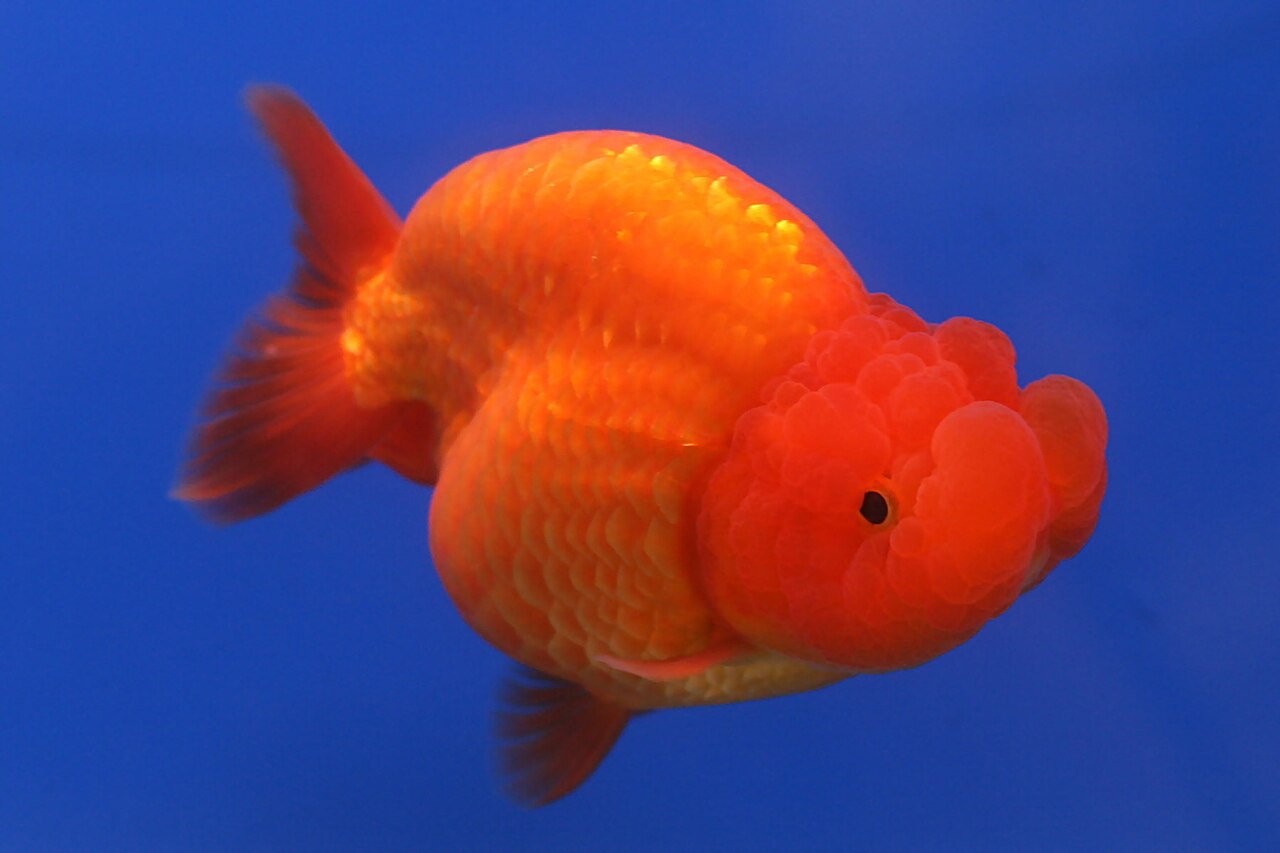
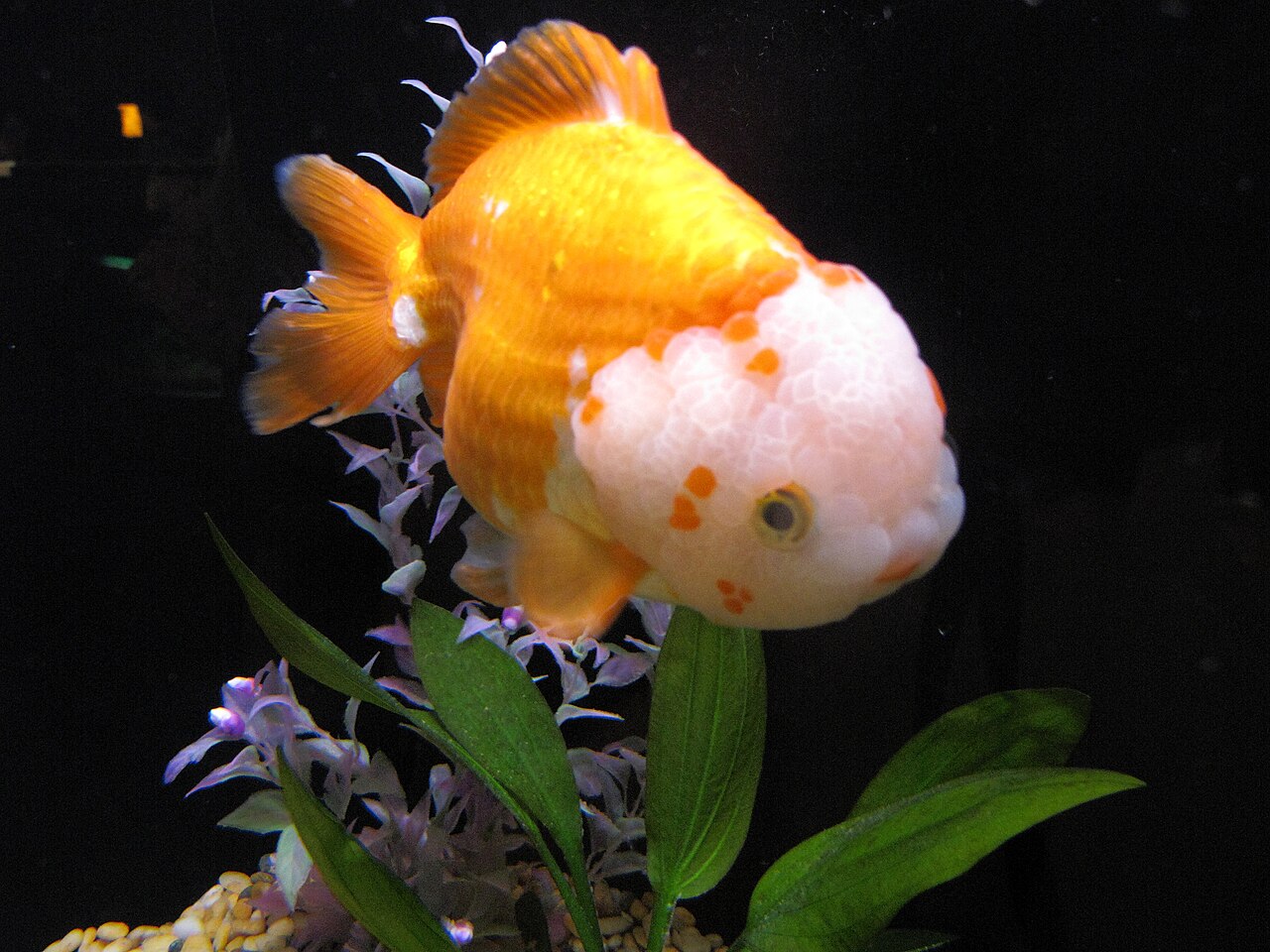
The oranda carries a raspberry like hood called a wen and is the most popular fancy in the United States. The ryukin has a pronounced shoulder hump and a tall body, and it is among the hardiest of the group, which makes it a sensible first fancy.
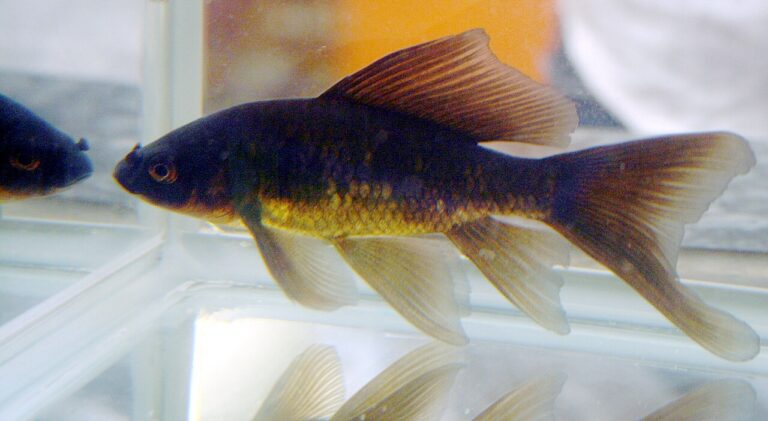
The fantail is the plainest and the toughest, a good choice for a first tank. The black moor has protruding telescope eyes and poor vision to match. The bubble eye carries fluid filled sacs under each eye that tear on sharp decor, so it belongs only in a bare, smooth tank with experienced keepers.
What Size Tank Do I Need for 2 Fancy Goldfish?
Two fancy goldfish need at least 30 gallons, with 10 gallons added for each additional fish. The old inch per gallon rule fails badly here because goldfish are heavy waste producers with no stomach, digesting continuously and excreting ammonia all day. Filtration capacity, not water volume alone, is what keeps that in check.
Run a filter rated for at least twice the tank volume, then baffle the outflow. Fancies swim poorly against current, and a strong powerhead exhausts them. Footprint beats height: a wide, shallow tank gives more surface for gas exchange and more floor for the fish to forage across.
Are Fancy Goldfish Hard to Keep?
Fancy goldfish are moderately hard to keep, and nearly every failure traces to water quality rather than to anything exotic. The most common causes of goldfish death are ammonia poisoning in an uncycled tank, chronic overfeeding, and the buoyancy problems that follow. None of the three needs special equipment to prevent.
Cycle the tank before the fish arrives, test ammonia and nitrite weekly, and change 25 to 30 percent of the water every week. Feed once or twice a day only what disappears in a minute, and soak dry pellets before feeding so they do not expand with trapped air in the gut. A sinking goldfish food causes fewer buoyancy problems than a floating flake.
Can Goldfish Live in Just Tap Water?
Goldfish can live in tap water once it has been treated with a dechlorinator, but never straight from the faucet. Chlorine and chloramine burn gill tissue within minutes, and chloramine in particular does not gas off if you simply let a bucket sit overnight. A conditioner that binds both is a few dollars and non negotiable.
Can goldfish survive in a bowl without a pump? Briefly, and badly. A bowl has almost no surface area for oxygen exchange and no filter to process ammonia, so waste concentrates within days. Goldfish kept in bowls routinely die at one or two years old against a normal lifespan above ten.
Can Fancy Goldfish Survive in a Pond?
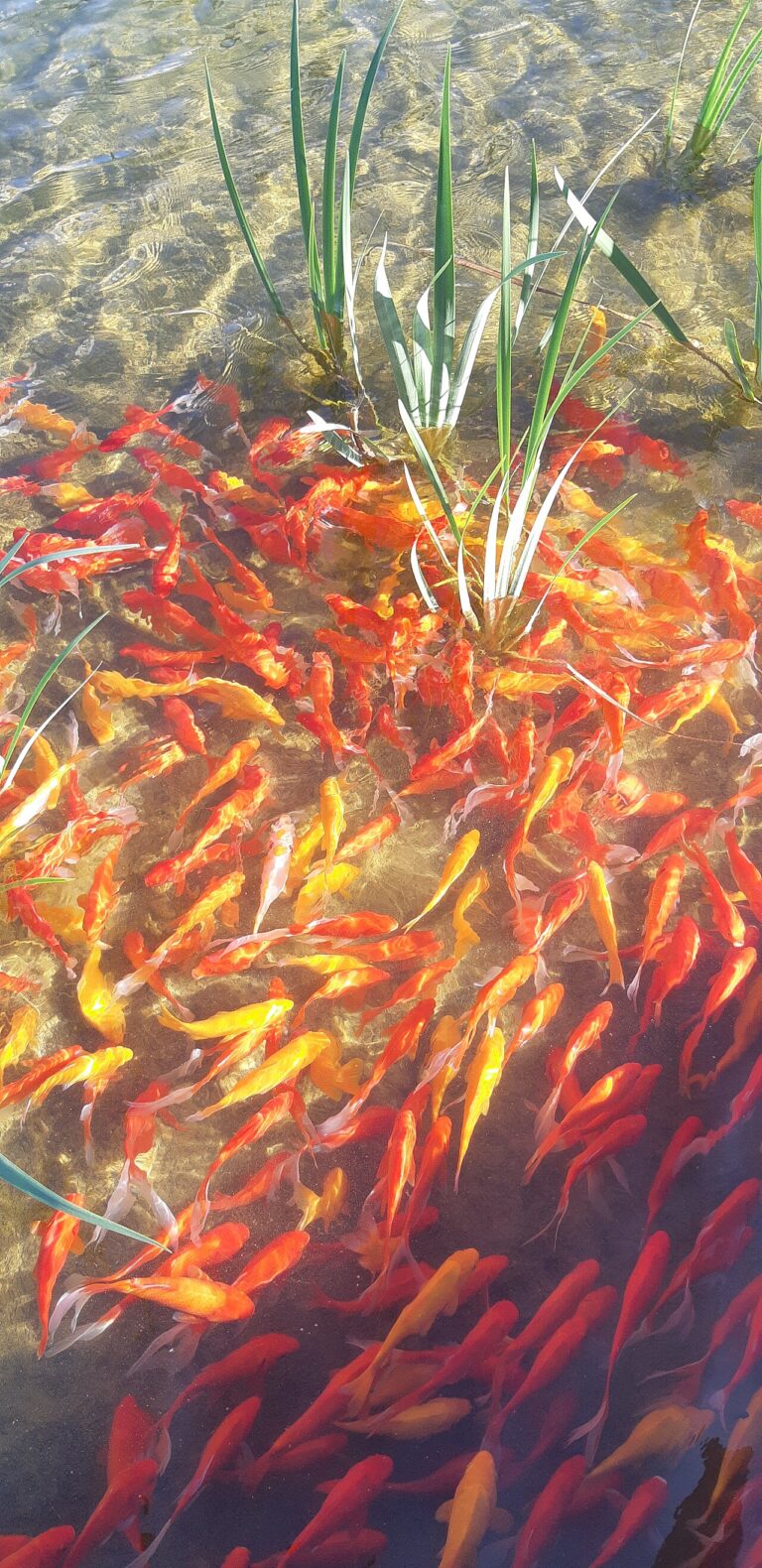
Fancy goldfish survive in ponds in mild climates, but they are poor candidates for cold winters. The round body makes them slow, so they cannot escape herons and raccoons, and varieties with impaired vision such as moors and bubble eyes cannot find food in open water. Anything below roughly 50 F (10 C) for long stretches puts them at real risk.
Is it illegal to put goldfish in a pond? Not in a private garden pond in most of the United States, but releasing them into any natural water body is illegal in many states and ecologically serious. Feral goldfish reach dinner plate size, uproot plants, and cloud whole lakes, a problem documented by the United States Geological Survey in waters across the country.
How Expensive Are Fancy Goldfish?
Pet store fancy goldfish cost 8 to 25 USD, better quality specimens from a specialist breeder run 40 to 100 USD, and imported show grade ranchus and orandas pass 300 USD. Price tracks body symmetry, finnage, and color stability rather than size, and the cheapest fish often carry the most health problems.
The setup costs more than the fish. A 30 gallon tank, a filter rated for 60 gallons, a test kit, and a conditioner run 200 to 350 USD before a single goldfish goes in. Buying the tank first and the fish a month later, after it is cycled, is the single change that most improves the odds.
Frequently Asked Questions
Are fancy goldfish hard to keep?
Moderately. They tolerate a wide temperature range but produce heavy waste and need a cycled, well filtered tank with weekly water changes. Most deaths come from ammonia in a new tank and from overfeeding, both preventable without special equipment.
What size tank do I need for 2 fancy goldfish?
At least 30 gallons, plus 10 gallons for each additional fish. Filtration should be rated for double the tank volume, with the outflow baffled, since fancies swim poorly against strong current and tire in heavy flow.
How expensive are fancy goldfish?
Pet store fish cost 8 to 25 USD and breeder quality specimens 40 to 100 USD, while imported show grade ranchus and orandas exceed 300 USD. A properly equipped 30 gallon setup adds another 200 to 350 USD before the first fish.
Can fancy goldfish survive in a pond?
Only in mild climates. Their slow, round bodies make them easy prey for herons and raccoons, and varieties with poor vision cannot compete for food outdoors. Sustained water below 50 F (10 C) is dangerous for fancies even though commons handle it.
Can goldfish live in just tap water?
Only after treatment with a dechlorinator that neutralizes both chlorine and chloramine. Untreated tap water damages gill tissue within minutes, and letting a bucket stand overnight does not remove chloramine the way it slowly removes chlorine.