Black Molly Fish Care: Size, Tank Mates, Breeding and Water
The black molly fish is a solid black, live bearing aquarium fish that grows to about 3 inches (7.5 cm), lives 3 to 5 years, and tolerates a wider range of water than almost any other beginner species. It is a color form of Poecilia sphenops, bred for the melanistic coloring rather than found that way in the wild.
Mollies earn their reputation as easy fish honestly, with one catch: they want harder, more mineral rich water than the soft water most community fish prefer, and they are far happier with a touch of salinity than a guppy or a tetra would be. Get the water right and the rest of their care is straightforward.
Black mollies reach 3 to 4 inches (7.5 to 10 cm), live 3 to 5 years, and need at least 20 gallons with hard, alkaline water at 75 to 82 F (24 to 28 C). Keep them in groups of four or more with two to three females per male. They are peaceful, prolific live bearers.
| Quick facts | Black molly |
|---|---|
| Scientific name | Poecilia sphenops |
| Adult size | 3 to 4 in (7.5 to 10 cm), females larger |
| Minimum tank | 20 gal for a group of four |
| Water | 75 to 82 F (24 to 28 C), pH 7.5 to 8.5, hard |
| Lifespan | 3 to 5 years |
| Temperament | Peaceful, males chase females |
| Breeding | Live bearer, 20 to 60 fry per drop |
Are Black Mollies Good Fish for a Beginner?
Black mollies are good beginner fish because they eat anything, handle temperature swings, and show illness early enough that you can act. Their solid black body also makes white spots from ich obvious days before you would notice them on a silver fish, which turns them into a useful early warning system for the whole tank.
The honest caveat is that they are sold to people with tanks that are too small and water that is too soft. A 10 gallon tank with three mollies looks fine for two months, then the first batch of fry arrives and the bioload doubles. Start with 20 gallons and the species is genuinely forgiving.
Black Molly Size, Lifespan, and Color
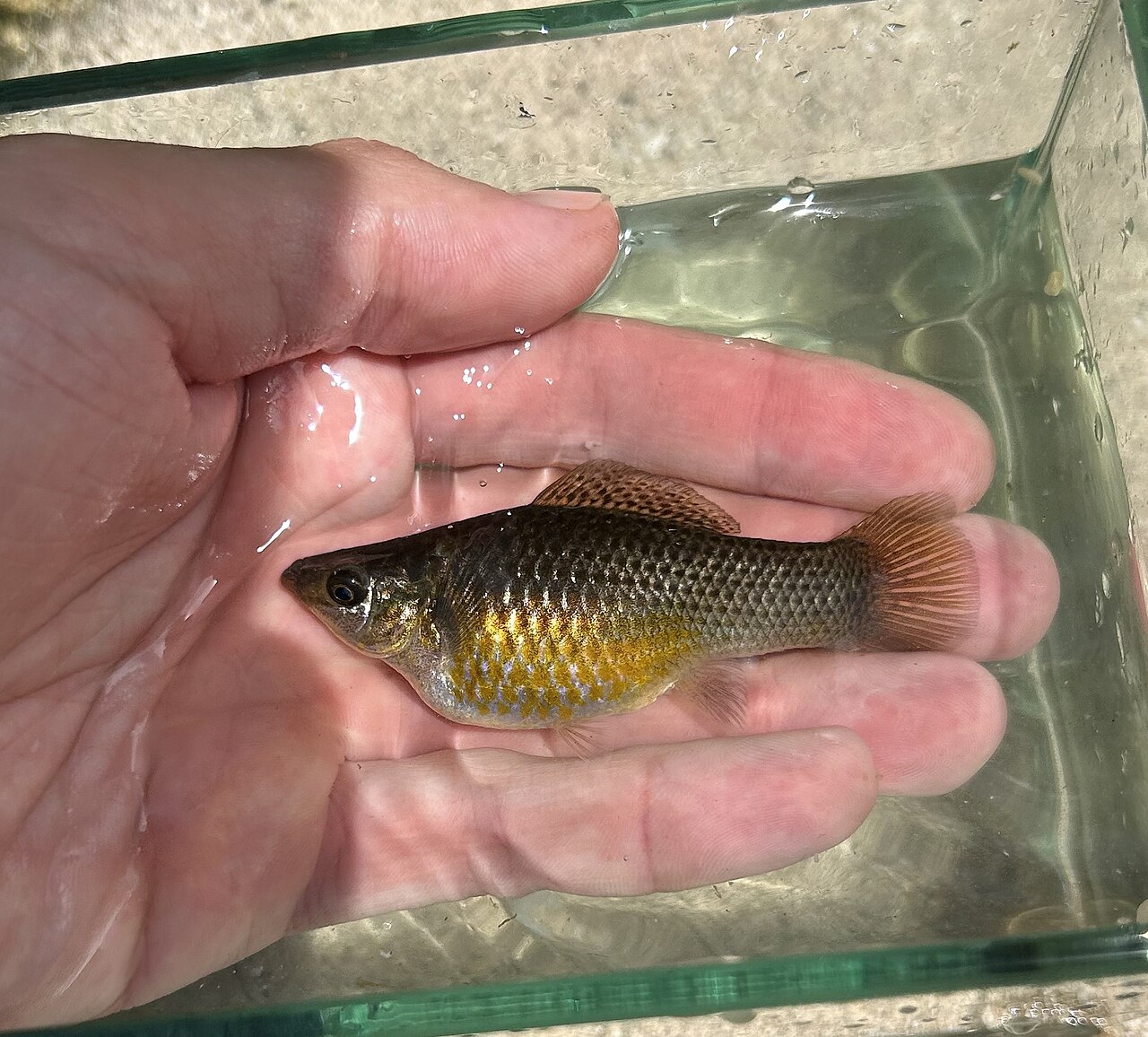
Adults reach 3 to 4 inches (7.5 to 10 cm), with females noticeably larger and rounder than males. Lifespan runs 3 to 5 years in good conditions, and shorter in soft, acidic water, which is the single most common reason a molly dies at eighteen months instead of four years.
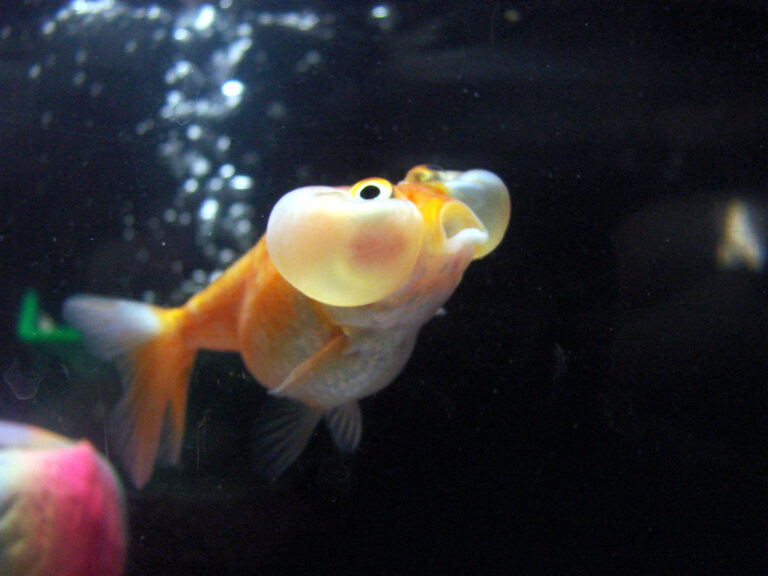
The black comes from selective breeding for melanism, and some individuals carry so much pigment that dark patches appear inside the mouth and gills. Sailfin and balloon body variants exist too. The balloon form has a compressed spine and a shorter life, so a standard bodied fish is the better buy. Other color forms are covered under molly fish care.
Are Mollies Hard to Keep Alive?
Mollies are not hard to keep alive, but they are easy to kill with soft water. They come from hard, mineral rich, often brackish streams in Central America, and a pH below 7.0 leaves them prone to fin rot, shimmying, and a wasting decline that no medication fixes. Aim for pH 7.5 to 8.5 and general hardness of 10 dGH or higher.
Crushed coral in the filter or a substrate of aragonite holds hardness steady without dosing. A teaspoon of aquarium salt per five gallons helps mollies that came from brackish breeding stock, though it does not suit every tank mate. Range data for Poecilia species is listed on FishBase, and escaped populations are tracked by the United States Geological Survey in warm, hard water systems across the southern states, which tells you what these fish actually tolerate.
How Many Black Mollies Should Be Kept Together?
Keep at least four black mollies together, and stock two to three females for every male. Males court constantly, and a single female with a single male is harassed to exhaustion. Spreading that attention across several females is the difference between an active tank and one where a fish hides behind the heater all day.
Is 2 molly fish enough? Two will survive, but a pair is the worst ratio if it happens to be one male and one female. If you want only two fish, buy two females. For a 20 gallon tank, four to five mollies is a comfortable group, and every step up in stocking needs another five gallons.
Can Black Molly Live With Other Fish?
Black mollies live well with other fish and rank among the more peaceful community species. Platies, swordtails, corydoras, and larger tetras all work, since they share the same temperature range and none of them are slow enough to be bullied off the food. Male mollies occasionally flare at each other, but the displays rarely turn into damage.
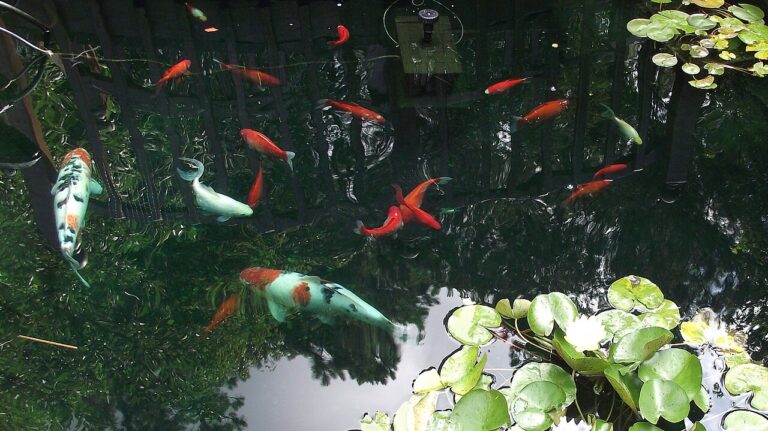
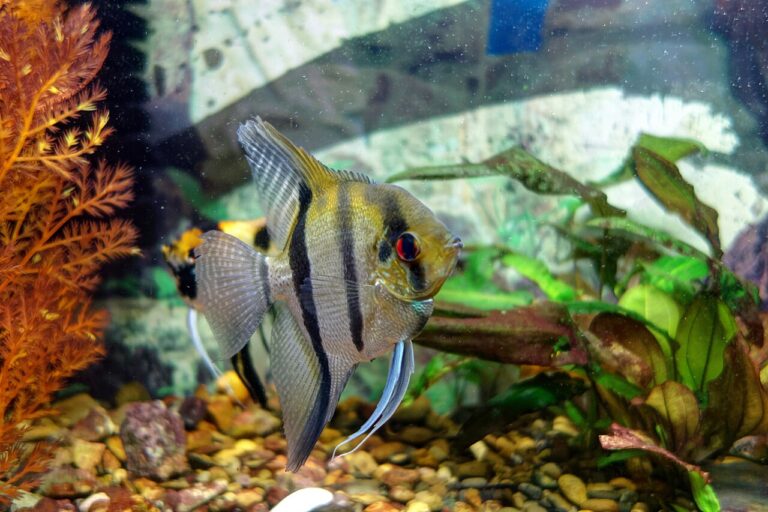
Do black mollies get along with goldfish? No. Goldfish want 65 to 72 F (18 to 22 C) while mollies want 78 F (26 C), and neither fish thrives in the compromise. A black moor goldfish also produces far more waste than a molly tank is filtered for. Long finned fish are a mixed case: a betta fish can share space with mollies if the tank is large and planted, and the betta water temperature range does overlap. Larger cichlids such as a freshwater angelfish will eat molly fry and eventually the adults.
How Many Babies Do Black Mollies Give Birth To?
A black molly gives birth to 20 to 60 live fry per drop, and a well fed female repeats that roughly every four to six weeks. Females store sperm and can deliver several broods from a single mating, so a fish bought from a store often arrives already pregnant. Gestation runs about 60 days.
Fry are born fully formed and swimming, and the adults will eat them within hours. Dense floating plants such as hornwort give enough cover that a handful survive in a community tank, which is usually what an aquarist actually wants. Move the female to a breeding tank only if you intend to raise the whole brood, and return her promptly after the drop.
Which Fish Is Better, Molly or Guppy?
Mollies are the better fish for a hard water community tank, and guppies are better for small tanks and bright color. A molly at 3 inches has real presence and a calmer temperament; a guppy at 1.5 inches fits a 10 gallon tank and breeds even faster. Both are live bearers with the same water preferences.
Black mollies also serve a purpose guppies do not: they graze algae off glass and decor persistently, more like a small plecostomus than a typical community fish. If your tank has an algae problem and hard water, mollies solve two things at once. For pure color in a nano tank, the guppy wins. Larger marine displays with an emperor angelfish are a different hobby entirely.
Frequently Asked Questions
Are black molly fish aggressive?
Black mollies are peaceful toward other species. The only regular aggression is male to female courtship chasing and occasional flaring between males. Keeping two to three females per male and providing planted cover removes nearly all of it in a tank of 20 gallons or more.
How many black mollies should be kept together?
Four or more, stocked at two to three females per male. A lone pair means one female absorbs all the male attention and hides constantly. Four mollies need at least 20 gallons, and each additional fish adds roughly five gallons to the requirement.
Do black mollies get along with goldfish?
No. Goldfish are coldwater fish that prefer 65 to 72 F (18 to 22 C), while mollies want 75 to 82 F (24 to 28 C). Neither does well at a compromise temperature, and goldfish waste output overloads filtration sized for a molly community.
Are mollies hard to keep alive?
Not if the water is hard and alkaline. Most molly deaths trace to soft, acidic water that causes fin rot and shimmying. Hold pH 7.5 to 8.5, hardness above 10 dGH, and temperature near 78 F (26 C), and a black molly lives three to five years.
Are black mollies good fish?
Yes, for hard water community tanks. They are peaceful, eat readily, graze algae, and their solid black bodies make ich visible early. The drawbacks are constant fry production and a genuine need for mineral rich water that soft water tanks cannot provide.