Molly Fish: Care, Varieties, Breeding, and Water Needs
Molly fish are livebearing freshwater fish that give birth to free-swimming young rather than laying eggs, and a single female can produce 20 to 100 fry roughly every 60 days. They are hardy, sociable, and available in black, dalmatian, silver, gold, balloon, sailfin, and lyretail forms, which is why they are among the most widely kept beginner fish.
One detail separates keepers who succeed from those who lose fish repeatedly. Mollies come from hard, mineral-rich, often brackish water, and putting them in the soft acidic water that suits tetras and most other community fish causes chronic stress and the shimmying behavior that so many owners describe. This guide covers water requirements, the varieties, breeding and pregnancy, tankmates, and the health problems that follow from getting the water wrong.
| Quick Facts | Molly Fish |
|---|---|
| Adult size | 3 to 4.5 in depending on variety |
| Lifespan | 3 to 5 years |
| Minimum tank | 20 gallons for a small group |
| Water hardness | Hard, 15 to 30 dGH |
| pH | 7.5 to 8.5, alkaline |
| Temperature | 72 to 82 F, upper half for sailfins |
| Group | 4 or more, 1 male to 2 or 3 females |
| Reproduction | Livebearer, 20 to 100 fry every 60 days |
Molly fish need hard alkaline water: pH 7.5 to 8.5, hardness 15 to 30 dGH, and 72 to 82 F. Keep at least four in a 20 gallon tank at one male to two or three females, and choose tankmates that share those water needs, such as platies, swordtails and guppies.
What Molly Fish Are
Mollies belong to the genus Poecilia in the family Poeciliidae, the livebearers, alongside guppies, platies, and swordtails. The fish sold as mollies are mostly Poecilia sphenops and Poecilia latipinna along with hybrids between them, and decades of selective breeding have blurred the species boundaries considerably.
They are native to the Americas, from the southern United States through Mexico and Central America into northern South America, occupying coastal streams, estuaries, brackish lagoons, and hard-water rivers. That habitat range is the key to keeping them, because it is quite different from the soft tropical rainforest streams most aquarium fish come from.
Adults reach 3 to 4.5 in depending on variety, with sailfin mollies the largest and balloon mollies the smallest. Females are noticeably larger and rounder than males, and lifespan runs three to five years in good conditions. Our guide to what fish eat covers the feeding side across aquarium species.
Water: The Thing Most Keepers Get Wrong
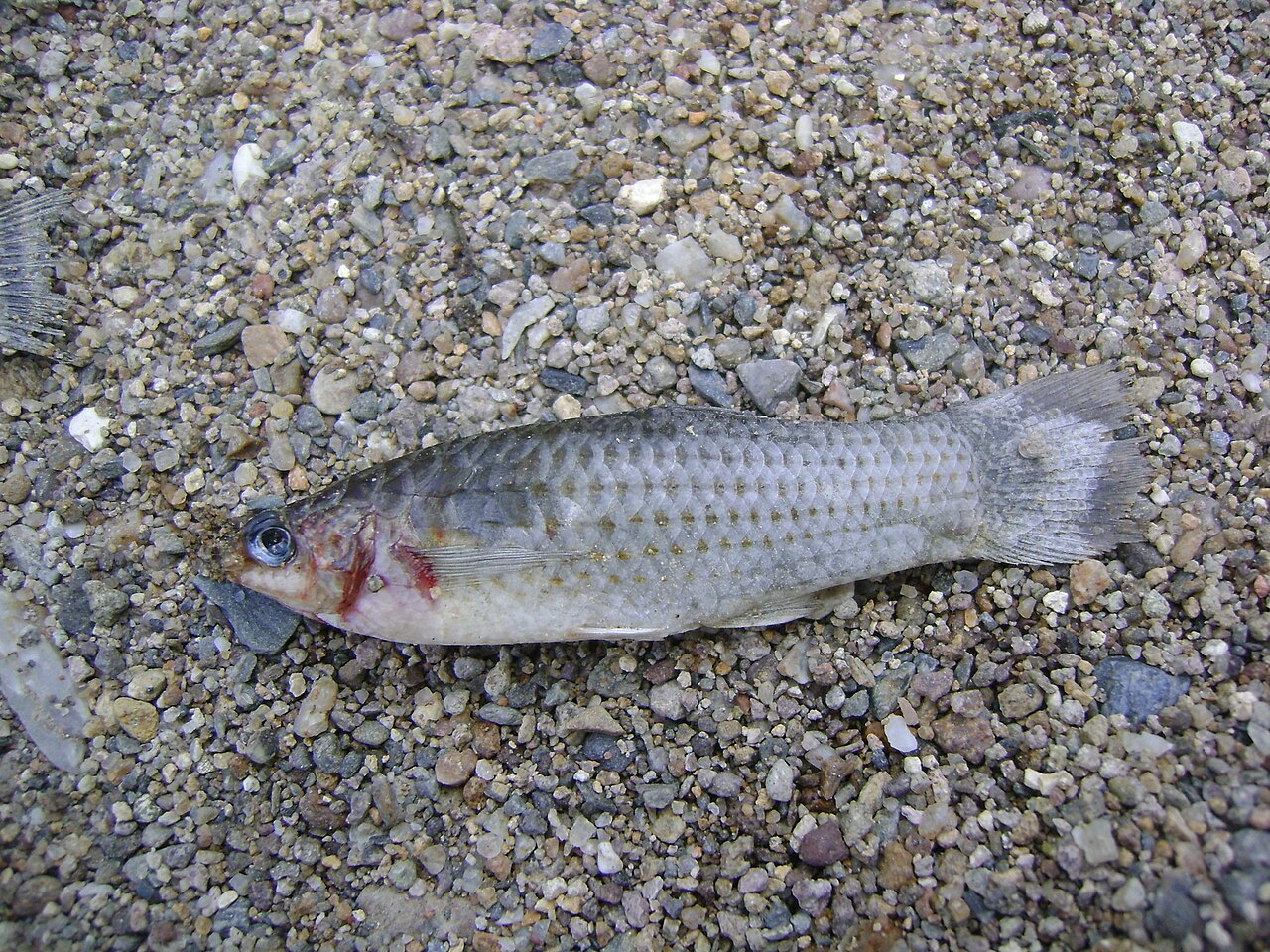
Mollies need hard alkaline water, and this is the single most important fact about them. Target a pH of 7.5 to 8.5 and hardness of 15 to 30 dGH, which is considerably harder and more alkaline than the conditions that suit tetras, rasboras, and most other community fish.
In soft acidic water they survive rather than thrive, and the symptoms are recognizable. Shimmying, where the fish rocks side to side without moving forward, is the classic sign and is essentially a stress response to unsuitable water chemistry rather than a disease in its own right. Clamped fins, lethargy, and susceptibility to fungal and bacterial infection follow.
Salt is where the advice gets contradictory online, so it is worth being precise. Mollies tolerate brackish water well and some wild populations live in it, but they do not require salt in an aquarium provided the water is genuinely hard and alkaline. Adding salt to a community tank harms most other fish and many plants, so the better approach is to fix hardness with crushed coral or aragonite in the filter and leave salt out unless keeping mollies in a dedicated brackish setup.
Molly Varieties
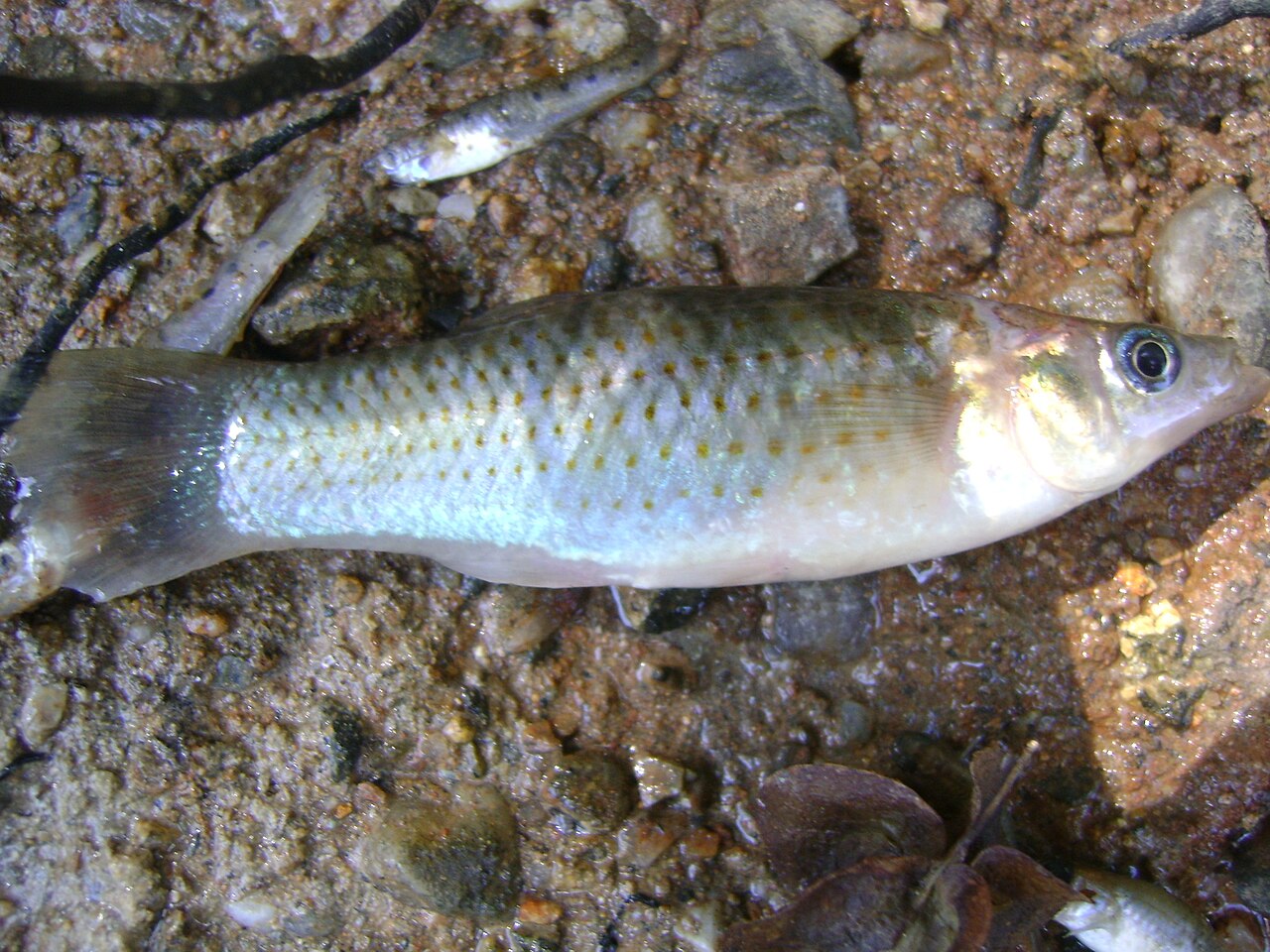
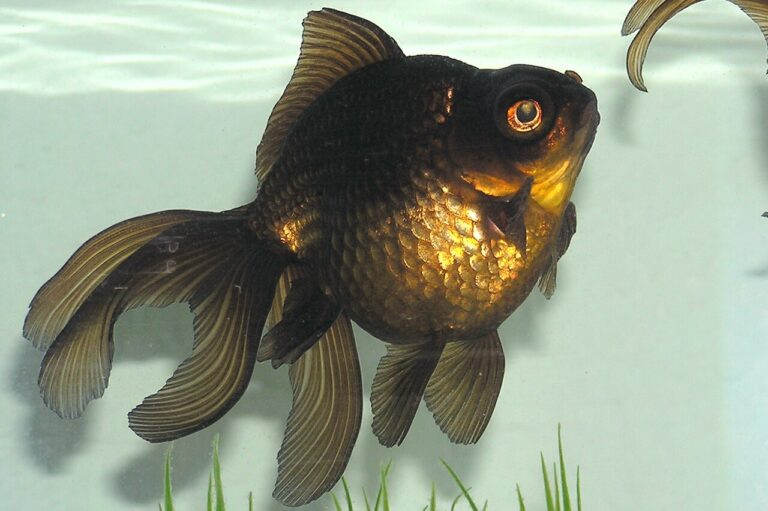
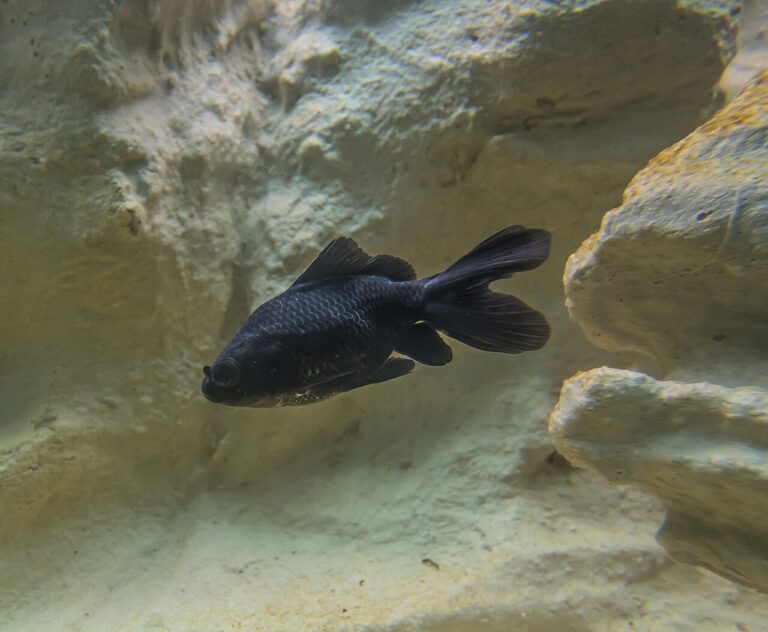
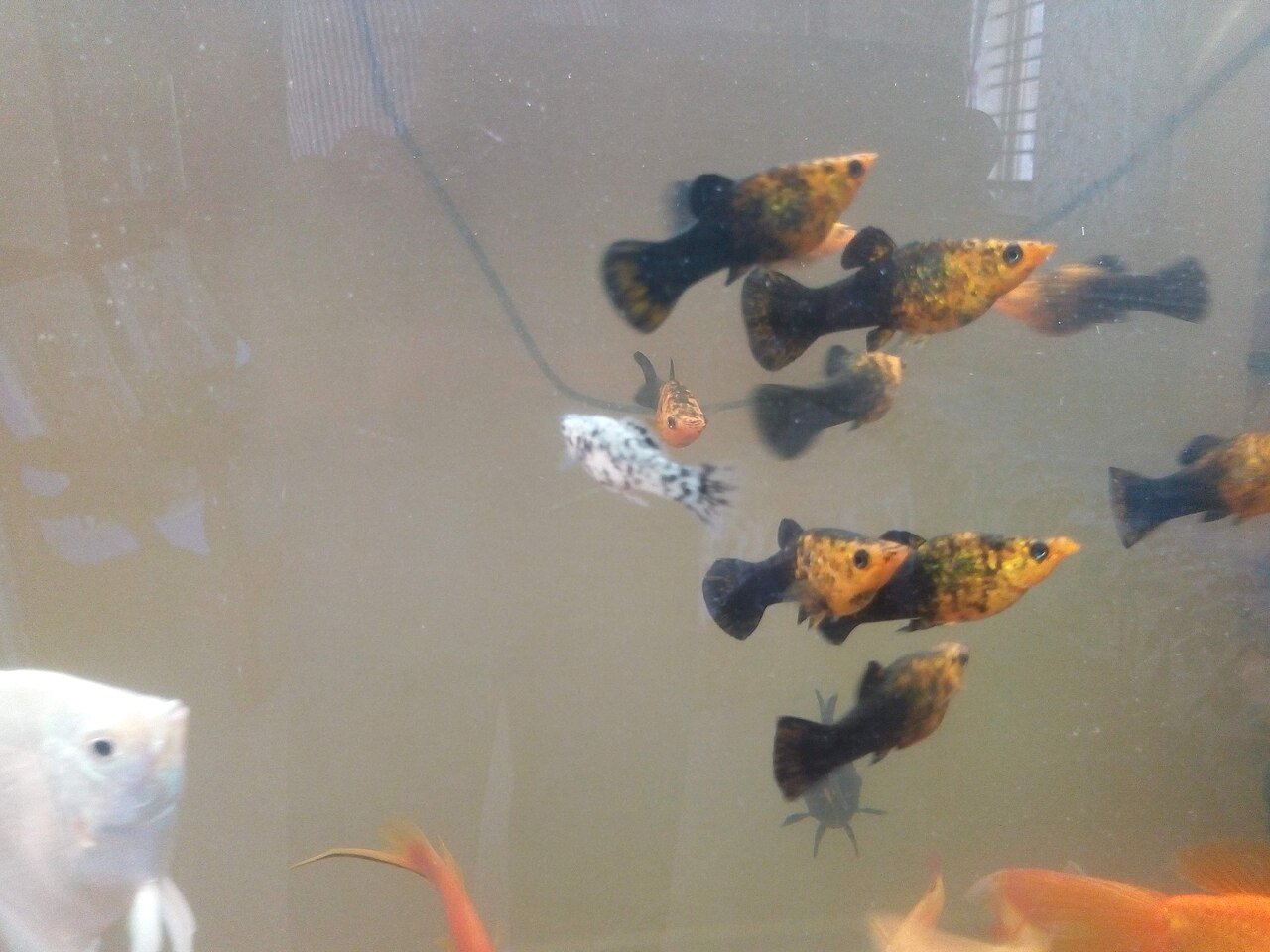
Black mollies are the most recognizable, a solid velvety black form that shows the color from a young age and remains the single most popular variety. Dalmatian mollies are white to silver with irregular black speckling, and no two are patterned alike.
Fin shape produces the other major divisions. Sailfin mollies carry an enormous dorsal fin that males raise in display, and they need more space and better water flow than standard forms. Lyretail mollies have extended trailing points on the tail fin, which is decorative and slightly reduces swimming efficiency.
Balloon mollies deserve a frank note. The rounded body shape comes from a spinal deformity fixed through selective breeding, and it compresses the internal organs, which is associated with swim bladder problems, difficulty giving birth, and shortened lifespan. They are widely sold and popular, and prospective buyers should know what the shape actually is before choosing them.
Tank Setup
Twenty gallons is a realistic minimum for a small group, and sailfin varieties want thirty or more given their size and the male’s fin. Mollies are active swimmers that use the full length of a tank, so footprint matters more than height.
They are social and should be kept in groups of at least four, with a skew toward females. A ratio of one male to two or three females is standard, because males pursue females persistently and a lone female with a lone male is harassed continuously.
Fill the tank with plants and structure. Mollies graze algae and biofilm constantly and appreciate dense planting, which also gives fry somewhere to hide, and hardy plants that tolerate alkaline hard water such as java fern, anubias, vallisneria, and hornwort suit the conditions. Maintain 72 to 82 F, provide moderate filtration with gentle flow, and keep up weekly partial water changes, since mollies are heavy feeders that produce a substantial bioload.
Feeding
Mollies are omnivores with a stronger herbivorous leaning than most community fish. In the wild they spend much of the day grazing algae and biofilm off surfaces, and that grazing behavior should be supported rather than replaced in an aquarium.
A quality flake or pellet formulated for tropical omnivores forms the base, ideally one with meaningful vegetable content such as spirulina. Supplement with blanched vegetables including zucchini, spinach, and peas, and offer frozen or live foods such as brine shrimp, daphnia, and bloodworms a couple of times a week.
Feed small amounts once or twice daily, only what is consumed in a couple of minutes. Overfeeding is the most common beginner error and it fouls water quickly in a tank that is already heavily stocked with a rapidly reproducing fish. Leaving some algae growth on the back glass and hardscape gives them something to graze between feedings.
Breeding and Pregnancy
Mollies breed readily and mostly without intervention. Males have a modified anal fin called a gonopodium, a rod-shaped structure used to transfer sperm, and its presence is the simplest way to sex the fish since females have a normal fan-shaped anal fin.
Gestation runs roughly 60 days, though it varies with temperature. A pregnant female develops a visibly swollen abdomen with a squared-off profile and a dark gravid spot near the vent, and she becomes noticeably less active and may seek cover shortly before giving birth. Broods run 20 to 100 fry, with larger and older females producing more.
One trait surprises new keepers. Females store sperm and can produce several broods from a single mating, so a female bought from a store frequently gives birth weeks later with no male present in the tank. Adults readily eat their own fry, so dense planting, a separate breeding box, or a nursery tank is needed if you want them to survive, and moving the female shortly before birth and returning her afterward is the usual approach.
Raising Fry
Molly fry are born fully formed and free-swimming, which is the main advantage of livebearers over egg layers for a beginner. They start eating immediately and need no special first food beyond finely crushed flake, powdered fry food, or baby brine shrimp.
Feed small amounts several times a day, since fry have small stomachs and grow fast, and keep water quality high with frequent small water changes. Fry are more sensitive to poor conditions than adults, and a nursery tank with a sponge filter is the standard setup.
Growth is quick. Fry reach a size safe from adult predation in six to eight weeks and are sexually mature at three to six months, which is where the practical problem begins. A tank with a few females produces hundreds of fish within a year, so plan in advance whether you want to raise them, let nature take its course in a planted community tank, or arrange with a local shop to take surplus.
Tankmates
The constraint is water chemistry rather than temperament. Mollies are peaceful and get along with most fish behaviorally, but they need hard alkaline water that many popular community species dislike, so pairing them with soft-water fish means one group is always in the wrong conditions.
Good matches share their requirements. Platies, swordtails, guppies, and other livebearers all suit hard alkaline water, as do many rainbowfish, and bristlenose plecos and corydoras of the hardier species work as bottom dwellers. Some keepers pair mollies with brackish species in a dedicated setup.
Poor matches include the soft-water tetras, most rasboras, discus, and ram cichlids, all of which want the opposite chemistry. Avoid fin nippers such as tiger barbs with sailfin and lyretail varieties, and avoid anything large enough to eat an adult molly. Our guides to betta fish and how long betta fish live cover a species often considered as a tankmate, and the answer there is that a betta with mollies works only sometimes and depends heavily on the individual.
Common Health Problems
Molly disease, sometimes called shimmying, is the condition most keepers meet first, and as described above it is a symptom rather than a disease. A shimmying molly is almost always in water that is too soft, too acidic, too cold, or poor in quality, and correcting the water resolves it in most cases without medication.
Ich, or white spot, appears as small white dots across the body and fins and is common after temperature swings or the stress of a new tank. It responds to gradually raising temperature and to standard treatments, and it spreads fast, so acting early matters.
Fin rot and fungal infections both follow poor water quality and physical damage, showing as ragged fin edges or cottony growths, and both are addressed primarily by improving conditions rather than by reaching for medication first. Given the reproduction rate, overcrowding is the underlying cause of a surprising share of molly health problems, and a tank that was well stocked in spring is frequently overloaded by autumn if fry have been surviving. Other freshwater species have their own specific weaknesses, as our guides to the oranda goldfish and the redear sunfish describe.
Are Molly Fish Hard to Keep?
No, molly fish are not hard to keep, provided the water is hard and alkaline. Everything else about them is forgiving. Keepers who lose mollies repeatedly have almost always put them in the soft acidic water that suits tetras and rasboras, and then treated the shimmying that follows as a disease instead of as a water reading.
How many mollies should be kept together? Four is the practical minimum, at one male to two or three females. Mollies are social and a single molly is a stressed molly, but males pursue females constantly, so a skewed ratio spreads that attention instead of concentrating it on one fish.
Can 3 mollies live in a 5 gallon tank? No. Three mollies need 20 gallons. A 5 gallon tank is too small for a fish that reaches 3 to 4.5 in, swims the full length of the tank, and drops 20 to 100 fry every 60 days. Within a few months that tank holds dozens of fish and water quality that cannot be held steady. Wild Poecilia sphenops populations range from fresh to brackish water across Mexico and Central America, and that is where the mineral requirement comes from.
Frequently Asked Questions
Is molly fish aggressive?
Not really. Mollies are peaceful toward other species, but males pursue females constantly and will nip the trailing fins of sailfin males and slow tankmates. Keep one male to two or three females, and give the tank enough length for a pursued fish to break away.
How many babies do mollies usually give birth to?
Twenty to 100 fry per drop, most often 30 to 60, roughly every 60 days. Older and larger females produce the bigger broods. Females store sperm, so they keep dropping fry for months after the male is removed.
Do molly fish jump out of a tank?
Yes. Mollies are strong surface swimmers and jump when startled, when water quality slips, or when a male is chasing them. Keep a lid or a tight hood on the tank, and leave a gap of 1 to 2 in between the water line and the rim.
Do molly fish sleep at the bottom of a tank?
Mollies rest low in the tank or among plants at night, hanging almost motionless once the lights are off, and that is normal. A molly sitting on the bottom during the day with clamped fins or a shimmy is reporting a water problem, not sleeping.
Can mollies live without an air pump?
Yes, if the filter keeps the surface moving. Oxygen enters through surface agitation rather than through the bubbles themselves. Warm water holds less oxygen, so a tank at 82 F with a full stock needs visible movement from the filter outflow or an air stone.
What water do molly fish need?
Hard alkaline water, with pH 7.5 to 8.5 and hardness 15 to 30 dGH, at 72 to 82 F. This is the opposite of what most community fish want. Soft acidic water causes chronic stress, shimmying, and susceptibility to infection.
Do mollies need salt in the tank?
No, provided the water is genuinely hard and alkaline. Mollies tolerate brackish water and some wild populations live in it, but salt is unnecessary in a freshwater tank and harms most other fish and plants. Fix hardness with crushed coral instead.
How long are molly fish pregnant?
Roughly 60 days, varying with temperature, producing 20 to 100 fry. A pregnant female shows a swollen squared-off abdomen and a dark gravid spot near the vent. Females store sperm and can produce several broods from one mating with no male present.
Will mollies eat their babies?
Yes, readily, including their own. Dense planting gives fry places to hide, or use a breeding box or separate nursery tank. Fry are born free-swimming and eat crushed flake or baby brine shrimp immediately.
What are balloon mollies?
A variety bred for a rounded body shape that comes from a spinal deformity. It compresses the internal organs and is associated with swim bladder problems, difficulty giving birth, and shortened lifespan. They are widely sold, and buyers should know what the shape is.
Why is my molly shimmying?
Almost always unsuitable water. Shimmying is a stress response to water that is too soft, too acidic, too cold, or of poor quality rather than a disease. Correcting hardness, pH, temperature, and cleanliness resolves most cases without medication.
Can molly fish live with other fish?
Yes, with species that share their need for hard alkaline water: platies, swordtails, guppies, other livebearers, many rainbowfish, and hardy bottom dwellers such as bristlenose plecos. Avoid soft-water species like most tetras and rasboras, and avoid fin nippers with sailfin varieties.