Do Betta Fish Sleep? Yes, 12 to 14 Hours Every Night
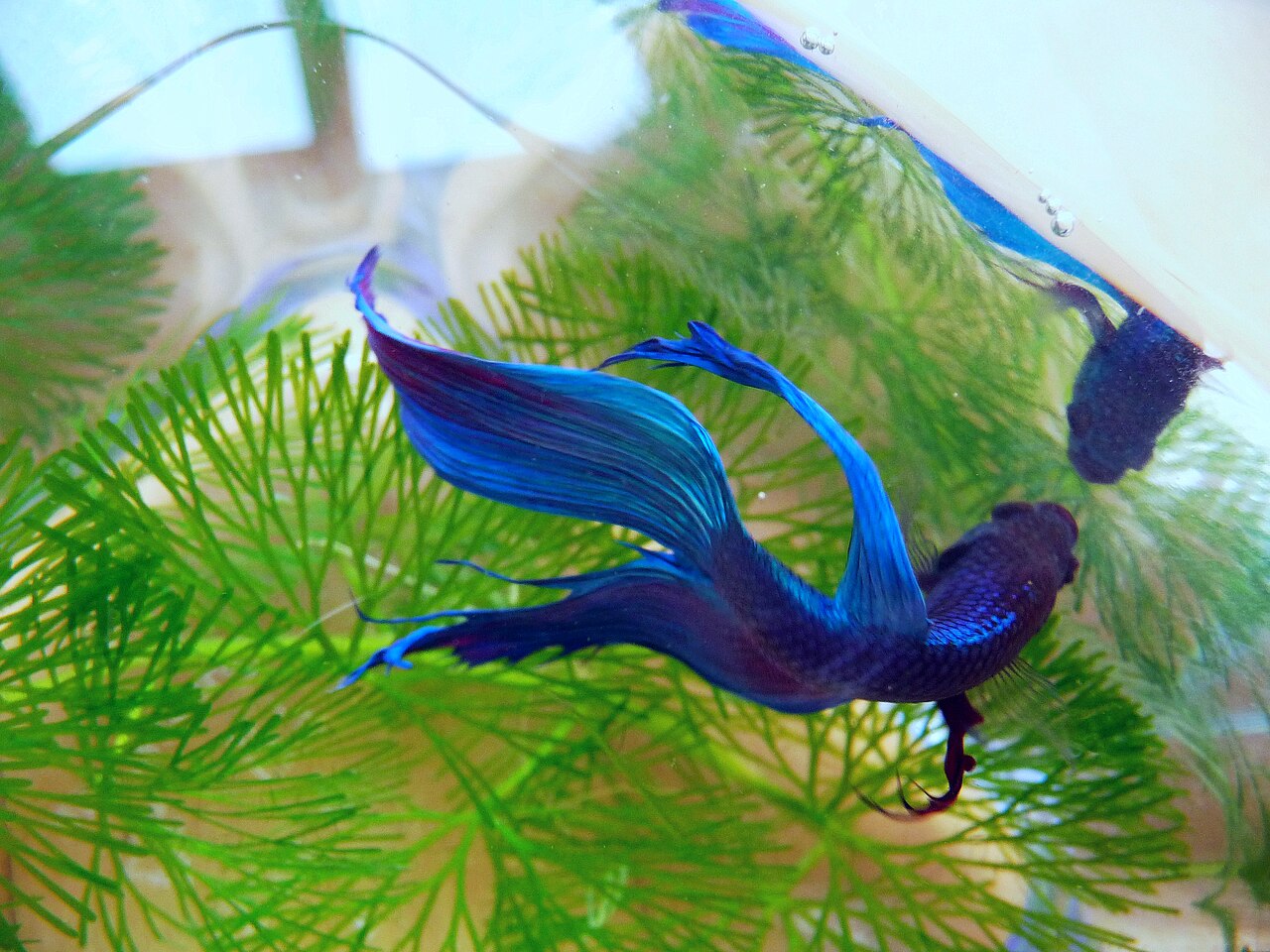
Betta fish sleep, and they do it lying motionless on a leaf, wedged behind the filter, or slumped on the gravel with their color faded. Owners ask “do betta fish sleep” almost always after a scare, because a resting betta looks exactly like a dying one to anyone who has not seen it before.
Fish have no eyelids and no neocortex, so their rest is not identical to mammal sleep. What they do have is a daily period of reduced metabolism, reduced responsiveness, and a species-typical posture, which is the working definition biologists use. For Betta splendens, that period is long, it is nocturnal, and it is easy to disrupt with a light left on.
Yes, betta fish sleep. They rest at night for roughly 12 to 14 hours, lying still on a leaf, the substrate, or a tank decoration with their fins relaxed and their color often paler. Bettas cannot close their eyes, so posture and stillness are the only signs. They need genuine darkness for this rest to happen.
| What you see | Most likely meaning | Action |
|---|---|---|
| Still on a leaf near the surface | Normal sleep | Leave alone |
| Lying on the gravel, breathing slowly | Normal sleep in a bare tank | Add a resting ledge |
| Color faded, fins clamped, still active by day | Normal night coloring | Leave alone |
| Resting all day, refusing food | Illness or cold water | Check temperature and water |
| At the surface gasping, not resting | Low oxygen or ammonia | Test water, partial change |
| On its side and unable to right itself | Swim bladder problem | Fast 24 hours, treat |
Do Betta Fish Sleep?
Yes. Bettas enter a true rest state every night, and researchers studying fish sleep use the same behavioral criteria they apply to any other animal: prolonged immobility, a typical resting posture and location, a raised threshold before the animal responds to a stimulus, and a rebound after the rest is prevented.
Bettas meet all four. A sleeping betta will not react to a hand near the glass that would normally bring it charging over. It settles in the same spot night after night. And after a night with the lights left on, it spends more of the next day resting, which is the rebound that separates sleep from simple inactivity.
What bettas do not have is the layered brain-wave architecture of mammal sleep, so there is no REM stage and no dreaming in any recognizable sense. Their rest is closer to a deep idle: metabolism drops, the gills slow, and the fish stops maintaining position in the water column. Anyone new to the species should read a general betta care overview alongside this, since sleep problems usually trace back to the tank.
What Sleep Looks Like in a Fish Without Eyelids
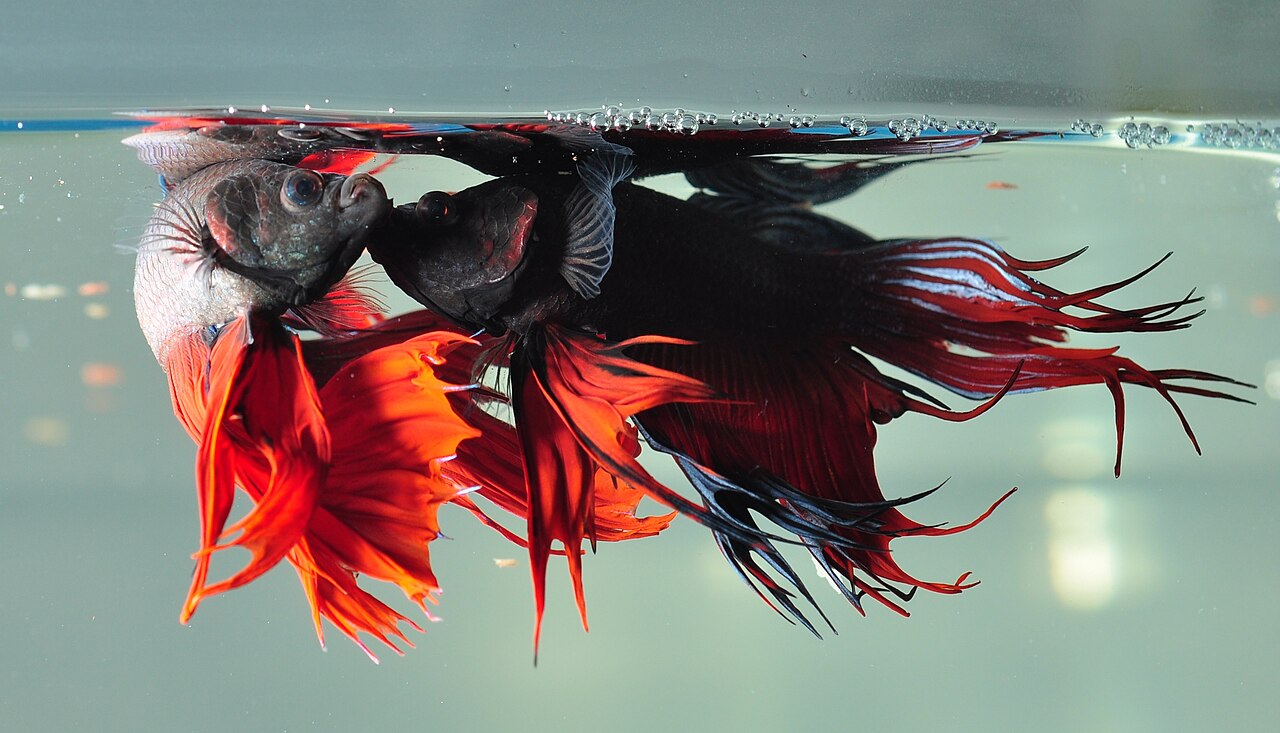
Bettas have no eyelids and no nictitating membrane, so the eyes stay open and the pupils stay visible all night. This single fact is responsible for most of the panic in betta forums. There is no visual cue at all that the fish is asleep beyond its body.
The posture is the tell. A sleeping betta lets its fins go slack instead of holding them spread, and the body often tips at an angle rather than staying level. Many bettas rest partly on their side against a broad leaf, which looks alarming and is completely normal for the species.
Gill movement is the reassurance to look for. A sleeping betta still pumps its gills, just slowly and evenly, maybe 40 to 60 beats per minute instead of the faster daytime rate. If the gills are moving in a steady rhythm and the fish reacts when you turn the light on, the fish is asleep, not dying.
How Do You Know If a Betta Fish Is Sleeping?
You know a betta fish is sleeping by the combination of stillness, a chosen resting spot, and a delayed response to light or movement. No single sign is enough on its own, but together they are reliable, and they take about thirty seconds to check.
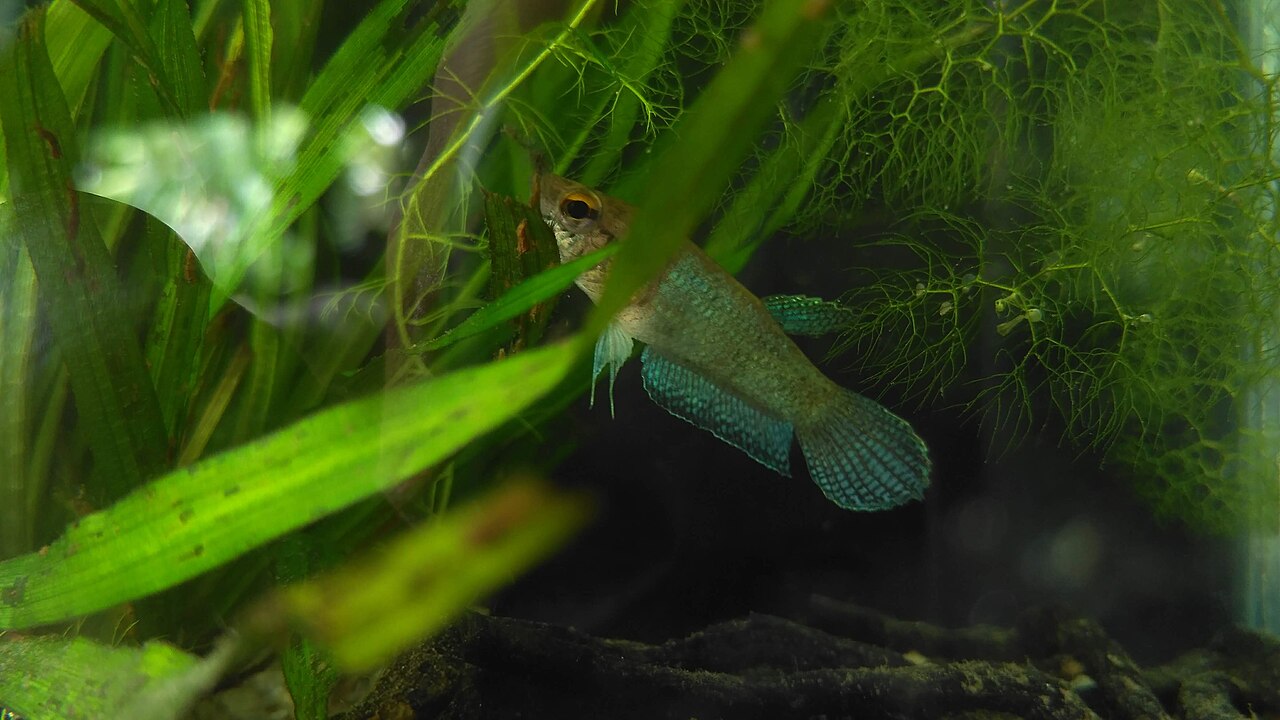
Look first at where the fish is. A sleeping betta picks a place with contact: a leaf, a cave, the corner where the filter meets the glass, or flat on the substrate. A sick fish tends to drift wherever the current puts it, without choosing. Then look at the fins, which should be relaxed but not clamped tight against the body.
Finally, test the response gently. Turn on the room light, not the tank light, and wait a minute. A sleeping betta will rouse, right itself, and swim off within a minute or two. A fish that stays limp, breathes rapidly, or cannot hold itself upright has a health problem rather than a sleep schedule.
What Time Do Betta Fish Go to Bed?
Bettas are diurnal, so they go to bed when the light goes out and wake when it comes back on. In a household tank that means the fish settles within 15 to 30 minutes of lights out and starts moving again shortly after sunrise or after the tank light comes on.
Their internal clock is strong but not rigid. A betta on a consistent schedule anticipates the change and starts drifting toward its resting spot before the light actually goes off. A betta on a chaotic schedule, where the light might go out at 9 pm one night and 2 am the next, never fully settles into the pattern and shows more daytime resting as a result.
The practical fix is a cheap outlet timer. Eight to ten hours of light and 12 to 14 hours of dark, set to the same times every day, is what the species does in its native rice paddies and slow streams in Thailand. Consistency matters more than the exact hours you pick.
Do Betta Fish Need Darkness to Sleep?
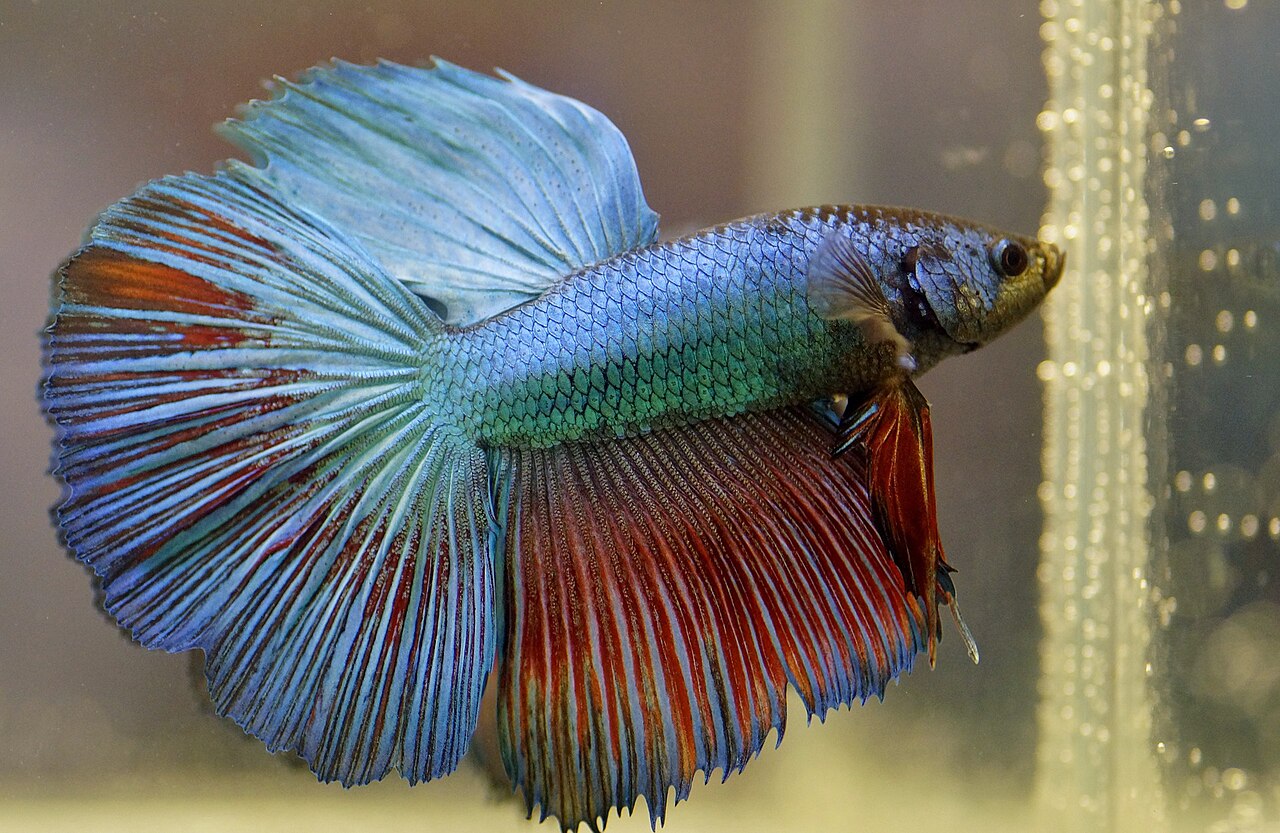
Yes, betta fish need real darkness to sleep properly. Light suppresses melatonin production in fish the same way it does in people, and a betta under a light left on all night will keep trying to be awake until exhaustion overrides it.
The consequences show up within a week or two. Chronically light-stressed bettas eat less, lose color intensity, and become more prone to fin rot and other opportunistic infections because sleep deprivation suppresses immune function. Owners often blame water quality when the actual problem is a tank sitting under a lamp that never goes off.
Darkness does not have to be absolute. Ambient room light filtering in from a hallway is fine, and a moonlight LED on a low blue setting does not appear to disrupt rest. What matters is turning off the bright white aquarium light and not parking the tank where a television or streetlight hits it all night.
Where Bettas Sleep in the Tank
Bettas sleep wherever they can rest their body against something, which is a habit that traces back to their wild environment of dense vegetation. A betta in a bare tank with nothing but gravel will sleep on the gravel, and it will look far more distressing than a betta curled on a broad leaf.
Favorite spots follow a predictable order. Broad-leaved plants near the surface come first, then floating logs and hammocks, then caves and hollow decorations, then the filter intake corner where the current is weakest, then the substrate. Bettas are obligate air breathers through their labyrinth organ, so they prefer a resting place within easy reach of the surface.
Give the fish at least one purpose-built option. A silk or live broad-leaf plant placed a few inches below the waterline gets used almost immediately, and a betta that has one stops sleeping on the gravel within a night or two. Sharp plastic plants are the wrong choice here, since they tear the long finnage of show strains and pale color morphs alike.
Sleeping or Sick? How to Tell the Difference
The reliable separator is the daytime pattern, not the night one. A healthy betta that sleeps 12 hours at night is alert, hungry, and patrolling during the day. A sick betta rests regardless of the light cycle and does not respond to food.
Check three things in order. Appetite comes first, because a betta that hits food within seconds is rarely seriously ill. Then breathing rate, which should be steady rather than rapid or labored. Then fins, looking for clamping, ragged edges, or white cottony patches, none of which appear in a merely sleeping fish.
Temperature explains a huge share of false alarms. Bettas are tropical and slow to the point of lethargy below about 74 F (23 C), so a tank in a cold room produces a fish that looks like it sleeps all day. Correct water temperature solves more suspected sleep disorders than any medication does.
Why Your Betta Sleeps at the Top of the Tank
Resting at the surface is normal for bettas and follows directly from their anatomy. The labyrinth organ lets them breathe atmospheric air, an adaptation to the oxygen-poor water of their native habitat, so a spot near the surface means less effort on every breath.
Older fish do it more. A betta past two years of age spends more time at the top simply because swimming down and back costs energy it would rather not spend. That is a normal aging pattern, not a symptom, and it is worth knowing where your fish sits in the typical betta lifespan before reading anything into it.
The version to worry about looks different. A fish hanging at the surface with its mouth breaking the water repeatedly, gills flared, is gasping rather than resting, and that points to low dissolved oxygen, high ammonia, or high temperature. Test the water rather than guessing when the mouth is at the surface line.
How Much Sleep a Betta Needs
Bettas need roughly 12 to 14 hours of dark rest per day, which is more than most owners expect from an animal that seems busy all afternoon. That figure is the night period; short daytime naps come on top of it and are entirely normal.
Daytime naps last a few minutes to half an hour and often happen after a meal or a long session of flaring at a reflection. A betta that takes two or three of these a day is fine. A betta that spends more than about half of the lit hours motionless is either cold, sick, or not getting a dark night.
Age shifts the numbers. Juveniles under six months are relentlessly active and nap little, while fish over two years rest noticeably more and take longer to rouse. Both extremes are normal for their stage, and neither needs intervention on its own.
Tank Setup That Supports Healthy Sleep
A tank that supports sleep has four things: stable heat, gentle flow, dark nights, and something to rest on. Miss any one of them and the fish compensates by sleeping badly, which shows up as daytime lethargy rather than as an obvious night problem.
Volume matters more than most beginners are told. Five gallons is a realistic minimum, because a small volume swings in temperature overnight and a betta that wakes up cold at 3 am does not go back to a deep rest. A preset heater and a lid to hold heat and humidity above the water both help.
Flow is the other common mistake. A filter sized for a larger tank pushes a sleeping betta around all night and forces it to keep swimming. Baffle the outflow with a sponge or a cut bottle until the surface is barely rippling. Tankmates matter too, since a nippy schooling fish will not let a betta rest; peaceful species like mollies are a better fit than fin nippers.
Do Betta Fish Recognize Their Owners?
Yes, within limits. Bettas learn to associate a specific human shape and routine with food, and most will come to the front glass when their owner approaches while ignoring a stranger doing the same thing. That is recognition in the practical sense, even if it is driven by feeding rather than affection.
Laboratory work on Betta splendens shows they learn visual discrimination tasks readily and remember them for weeks. Owners can see the same thing at home: a betta trained to follow a finger or swim through a hoop keeps the behavior after days without practice.
Where this touches sleep is timing. A betta that recognizes its owner also anticipates the routine, so a consistent feeding and lights-out schedule reinforces the daily rhythm. Erratic attention, especially late-night tapping on the glass, repeatedly wakes a fish that had already settled. The FishBase entry for Betta splendens covers the species’ natural habitat and behavior in more detail.
How Can You Tell a Betta’s Age?
Size and fin condition give a rough estimate, since pet stores almost never know a fish’s hatch date. A betta sold at a chain store is typically 6 to 12 months old already, because males are only worth selling once their finnage and color have developed.
Young fish under a year have short, tight fins, intense color, and constant motion. Between one and two years the fins reach full length and the fish settles into a steady routine. Past two years, color dulls, the spine may curve slightly, fins start to look thin or ragged at the edges, and resting time increases noticeably.
Body length helps as a cross-check. Most males reach about 2.5 to 3 in (6 to 7.5 cm) including the tail by their first year and grow very little after that. Female bettas are shorter finned and often live slightly longer, which changes the look of aging but not the timeline much.
Frequently Asked Questions
How do I tell if my betta fish is happy?
A content betta has strong color, fins carried open rather than clamped, and an active interest in food and in whatever happens outside the glass. It explores the whole tank instead of hovering in one corner, builds bubble nests at the surface, and rests only at night. Fading color and constant hiding are the opposite signals.
Do bettas get attached to their owners?
They form a learned association rather than an emotional bond. A betta reliably recognizes the person who feeds it and will greet that person at the glass, respond to a finger, and learn simple tricks. Whether that counts as attachment is a question about words. Functionally, the fish treats its keeper as a distinct and predictable feature of its world.
How long is a betta’s memory?
Bettas retain learned tasks for weeks, and in some studies for several months, which makes the old three second goldfish myth doubly wrong. They remember tank layout, feeding times, and the individual who approaches. They also remember a rival, which is why reintroducing two males that have already fought goes badly every time.
Do betta fish like to be talked to?
They cannot hear speech the way a mammal does, but they detect vibration through the lateral line and inner ear, and a calm voice paired with feeding becomes a cue over time. What they do not enjoy is loud sound or tapping on the glass, which travels into the water as a sharp pressure wave and stresses the fish.
Do betta fish sleep on their side?
Often, yes, and it is one of the most common causes of a panicked search at midnight. A betta resting on a leaf or the substrate frequently tips over onto its flank. The difference from swim bladder disease is that a sleeping fish rights itself easily when disturbed, while a sick one struggles or floats back over.
Should I turn off the aquarium light at night?
Yes, every night, without exception. Run the tank light 8 to 10 hours a day on a timer and leave the rest dark. Continuous light suppresses rest, weakens the immune response, and fuels algae growth on the glass and plants. Ambient room light or a dim blue moonlight LED does not interfere with sleep.