Yellow Spider: How to Identify It and Whether It’s Dangerous
A yellow spider in a US backyard is almost always one of three species: the yellow garden spider, the goldenrod crab spider, or the spined micrathena. All three are harmless to people, and the color comes from pigment in the exoskeleton rather than anything unusual about the spider’s biology. The species you saw depends mostly on where you found it and what it was doing when you noticed it.
Size and web behavior separate the three species faster than color alone. A yellow spider sitting in a large zigzag-patterned web strung between shrubs is a yellow garden spider. One sitting motionless on a flower with no web nearby is a goldenrod crab spider. A small spiny yellow spider at face height on a wooded trail is a spined micrathena. The rest of this guide walks through each one, along with the safety questions people usually ask right after they see one.
A yellow spider in the yard is most often the yellow garden spider (Argiope aurantia), a large harmless orb-weaver. Smaller yellow spiders on flowers are usually goldenrod crab spiders, which ambush pollinators rather than building webs. Neither poses a meaningful health risk to humans or pets.
| Species | Typical Size | Web Type | Where Found | Risk to Humans |
|---|---|---|---|---|
| Yellow garden spider | 0.75 to 1.1 in (female) | Large orb web with zigzag stabilimentum | Gardens, tall grass, shrub edges | Harmless, mild bite if handled |
| Goldenrod crab spider | 0.2 to 0.4 in | None, ambush hunter | Flowers, especially goldenrod and daisies | Harmless |
| Spined micrathena | 0.3 to 0.4 in | Small orb web across trails | Wooded areas, forest paths | Harmless |
| Banana spider | 0.75 to 1 in (female) | Large golden-silk orb web | Southeastern US, wooded edges | Harmless |
What Is a Yellow Spider?
A yellow spider is not a single species but a color description that fits several unrelated spiders found across the United States. The most commonly reported one is the yellow garden spider, thanks to its large size and habit of building conspicuous webs in open, sunny spots. Smaller yellow spiders reported on flowers are usually a completely different family that hunts by ambush instead of trapping prey in silk.
Because “yellow spider” covers more than one species, identification usually comes down to three details: size, whether a web is present, and the exact setting. A spider the size of a thumbnail sitting in a large web belongs to a different group than a spider the size of a grain of rice sitting on a petal. Noting these details before searching for a match makes identification much faster.
None of the yellow spiders regularly seen in US yards and gardens are considered medically significant. They are predators of insects, not of people or pets, and their yellow coloring functions as camouflage against foliage and flowers rather than as a warning signal.
Yellow Garden Spider (Argiope aurantia)
The yellow garden spider is the species most people mean when they describe a large yellow spider in a web. Females have a bold black and yellow pattern across an abdomen roughly the size of a large grape, while males are much smaller and rarely noticed. The Xerces Society lists Argiope aurantia among the common orb-weavers that benefit gardens by controlling flying insect populations.
Its web is one of the easiest ways to confirm the species. Females build a distinctive zigzag band of thicker silk called a stabilimentum through the center of the web, and they typically rebuild the entire structure each night. The spider sits head-down at the center during the day, waiting for insects to strike the outer strands.
Bites are rare and only occur if the spider is handled directly, since it has no reason to approach a person. When a bite does happen, the result is comparable to a bee sting: localized redness and mild discomfort that resolves without treatment. No documented cases link this species to serious medical outcomes.
Goldenrod Crab Spider (Misumena vatia)
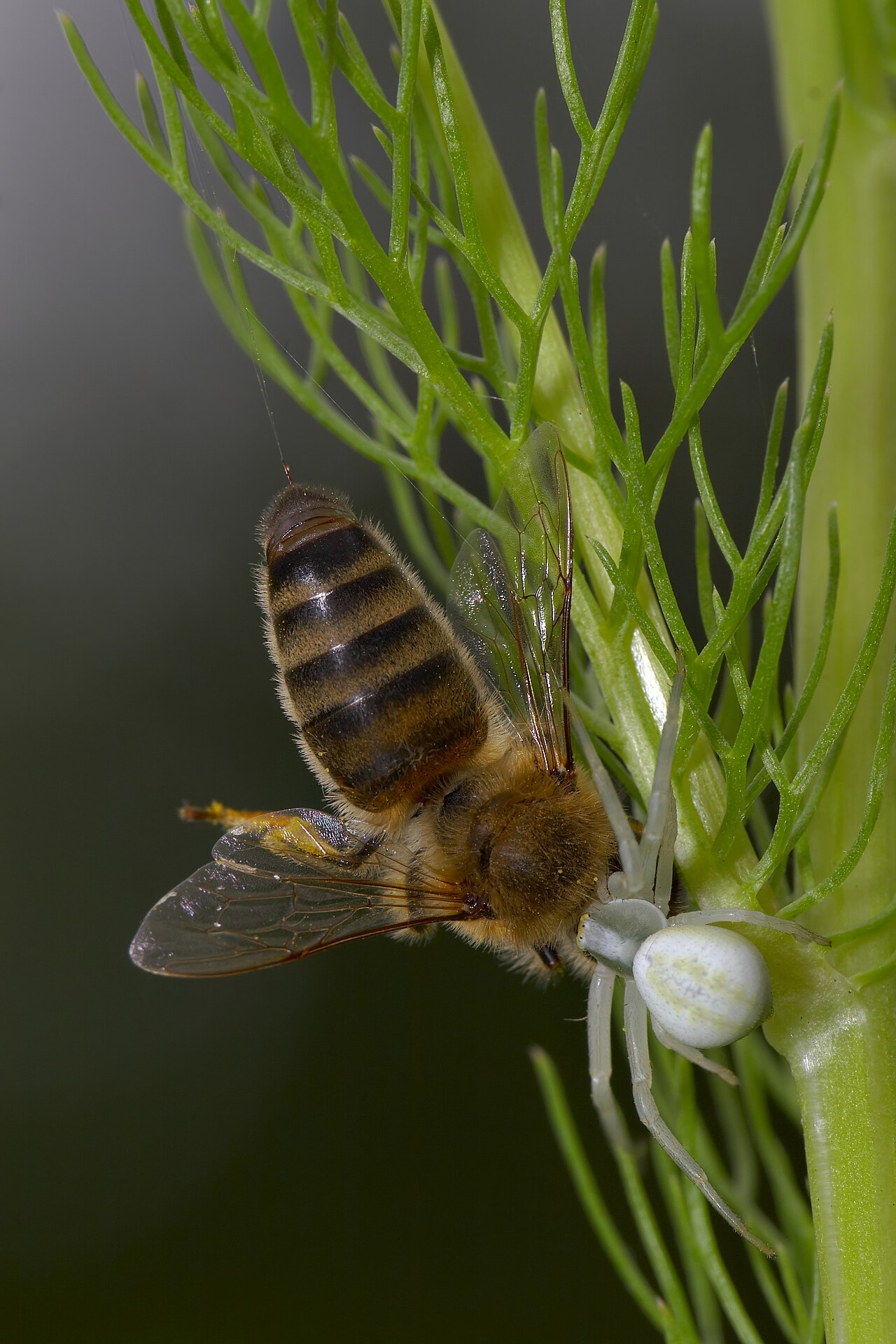
The goldenrod crab spider is the smaller, non-web-building yellow spider most often reported on flowers. It ambushes bees, flies, and other pollinators by sitting motionless on a blossom and grabbing prey that lands within reach. Unlike orb-weavers, it never spins a web to catch food.
Its yellow color is not fixed. This species can shift between white and yellow over a period of days to match the flower it is hunting on, a rare form of active camouflage among spiders. The two front pairs of legs are held out to the sides, giving it a crab-like stance that explains the common name.
People usually notice this spider while gardening or photographing flowers rather than finding it indoors. Its venom is potent enough to subdue insects quickly but has no meaningful effect on human skin beyond a possible pinprick sensation if squeezed directly.
Spined Micrathena (Micrathena gracilis)
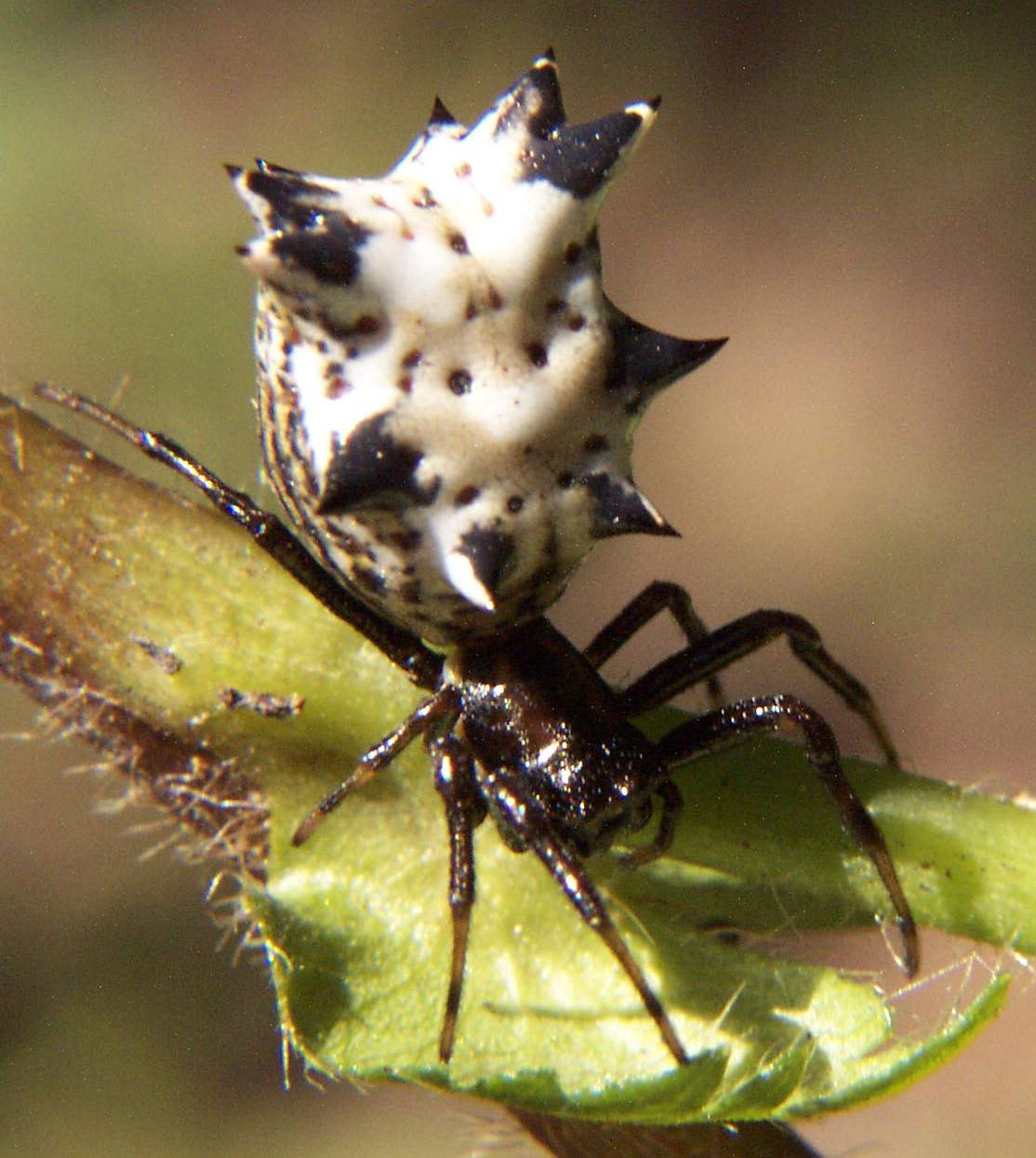
The spined micrathena is a small, spiky yellow-brown spider commonly encountered face-first on wooded hiking trails. Its body carries several hardened spines that give it an armored, angular silhouette very different from the smooth abdomen of a garden spider. Adults rarely exceed the size of a pencil eraser.
This species builds a fresh, tightly woven orb web across gaps in forest vegetation every morning, often at exactly head height for a hiker. Because trails act as natural clearings, the spider repeatedly rebuilds in the same spot, which is why walkers report walking into its web again and again on the same path.
Despite the intimidating spines, the spined micrathena is harmless and defensive rather than aggressive. It has no interest in biting people and will typically drop from its web or freeze in place if disturbed.
Is a Yellow Spider Dangerous or Venomous?
No yellow spider commonly found in the US poses a real danger to humans or pets. All spiders technically produce venom to subdue prey, but the species covered here have venom calibrated for insects, not mammals, and their fangs are often too small to break human skin unless directly pressed against it.
Symptoms after a rare bite are limited to brief redness, mild swelling, or an itchy welt similar to a mosquito bite. None of these species are grouped with the medically significant spiders in North America, a list that is limited to widow and recluse spiders.
Pets face the same low risk. A curious dog or cat that noses at a web may get a defensive nip at most, and veterinary guidance for genuinely dangerous spider bites focuses specifically on widow and recluse exposure rather than garden spiders of any color.
Where Yellow Spiders Are Commonly Found
Yellow garden spiders favor open, sunny areas with structure to anchor a large web, including tall grass, shrub borders, and fence lines. Goldenrod crab spiders stay close to flowering plants, particularly late-summer bloomers like goldenrod, daisies, and black-eyed Susans. Spined micrathenas stick to shaded, wooded settings where trails or clearings create natural gaps in vegetation.
All three species become more visible in late summer and early fall, when they have finished most of their growth for the season and their webs are largest. This seasonal timing is one reason sightings spike at the same time every year rather than spreading evenly across spring and summer.
Urban and suburban yards with a mix of tall plants, flowers, and undisturbed corners tend to host at least one of these species without any special effort from the homeowner. Removing all yellow spiders from a yard would also remove a meaningful amount of natural pest control.
Why Is There a Yellow Spider in My House?
A yellow spider indoors usually arrived by accident while following prey insects or seeking shelter from weather rather than intentionally moving in. Garden spiders and micrathenas are outdoor web-builders and rarely survive long or reproduce inside a home, since indoor conditions lack the airflow and insect density their webs depend on.
Doors, windows, and gaps around utility lines are the most common entry points, especially during a shift toward cooler nights in early fall. Porch lights that attract flying insects can also draw an orb-weaver’s web construction close enough to a doorway that the spider ends up inside on the next opened door.
A single indoor sighting is not evidence of an infestation. These species do not nest in structures or reproduce indoors the way some house spiders do, so one visitor is almost always an isolated event rather than the start of a colony.
How Rare Is a Yellow Spider?
Yellow spiders are not rare in the parts of the US where they occur; they are simply more noticeable at certain times of year. Yellow garden spiders in particular are considered common across most of the continental United States, and a lack of sightings in a given yard usually reflects habitat rather than scarcity.
Reports of sightings cluster heavily in August and September because that is when females reach their full adult size and their webs become large enough to catch attention. Earlier in the season, the same spiders are present but small enough to go unnoticed.
Regional gaps do exist. Colder northern climates and very arid regions host fewer individuals of some species, which can make a first sighting feel unusual to someone who has lived in that area for years without seeing one.
Do Spiders Mean a Clean or Dirty House?
Spiders indicate the presence of prey insects, not the cleanliness of a home. A yellow spider setting up near a doorway or window is responding to insect activity drawn by light or food odors, which can occur in both tidy and untidy homes.
Reducing spider sightings indoors is more effectively achieved by managing the insects that attract them, such as sealing food waste and fixing torn screens, than by cleaning surfaces the spider itself has no interest in. Spiders do not feed on crumbs, dust, or household debris.
A home with an active yellow spider outside a window is arguably doing pest control a favor, since the spider is removing flying insects that might otherwise find their way indoors.
Should I Kill or Relocate a Yellow Spider?
Relocating a yellow spider outdoors is the better option in almost every case, since none of these species pose a real threat and all of them provide natural insect control. A cup placed over the spider and a piece of paper slid underneath is enough to move it safely without contact.
Killing a yellow garden spider, crab spider, or micrathena removes a functioning predator from the local ecosystem for no real safety benefit. Their prey consists mainly of flies, moths, aphids, and other garden pests that would otherwise go unchecked.
The only situation that generally calls for removal rather than relocation is a web built directly across a frequently used doorway, where repeated rebuilding becomes a daily inconvenience. Even then, moving the spider a short distance away is preferable to killing it.
Yellow Spider Symbolism and Common Beliefs
Yellow spiders carry folk associations with patience, creativity, and good fortune in various cultural traditions, largely tied to the image of a spider methodically weaving its web. These beliefs are cultural interpretations rather than biological facts about the spider itself.
In some traditions, an unexpected spider sighting is treated as a minor good omen, particularly one connected to luck or an upcoming positive change. Other traditions read spiders more neutrally, simply as a sign of a healthy, insect-rich environment.
Whatever symbolic meaning a person assigns to the sighting, it has no bearing on the spider’s actual behavior or risk level, both of which are governed by biology rather than belief.
Frequently Asked Questions
Is the yellow spider poisonous?
No common yellow spider in the US is dangerous to humans. Their venom is built for subduing small insects and causes at most mild, short-lived irritation if a bite occurs.
Should I leave a yellow sac spider in my house?
Yellow sac spiders are a different species from the yellow garden spider and can deliver a more noticeable bite, so relocating one outdoors is a reasonable precaution. It is not considered medically dangerous, but the bite is more likely to cause localized irritation than the orb-weavers covered above.
How rare is a yellow spider?
Yellow spiders are common, not rare, across most of the continental United States. Sightings simply increase in late summer and early fall when the spiders reach full adult size.
Why is there a yellow spider in my house?
It most likely followed prey insects indoors or entered through a gap around a door, window, or utility line. A single sighting does not indicate an infestation, since these species do not nest or reproduce inside homes.
What do yellow spiders mean spiritually?
Various folk traditions associate yellow spiders with patience, creativity, or good luck, largely based on their web-building behavior. These are cultural interpretations rather than scientific claims about the spider.
Is it a good omen to see a spider?
Many folk traditions treat a spider sighting as a mild positive omen, though interpretations vary widely between cultures. Biologically, a spider sighting simply indicates a healthy population of insects nearby.
Related reading: what spiders eat, how to identify a black widow, black house spiders, the banana spider, jumping spiders, and grass spiders.