Jellyfish Symbolism: Spirit Animal Meaning of Letting Go
Jellyfish symbolism comes down to one lesson: let go and trust the current. A jellyfish has no brain, no bones and no fixed course, yet it has drifted through the oceans for more than 500 million years, and it still carries a sting for anything that touches it. That mix of softness and danger is why the animal shows up as a spirit animal, a tattoo and a warning at the same time.
Jellyfish symbolize surrender, flow and quiet resilience: trusting the current instead of fighting it, while keeping a sting for real threats. As a spirit animal the jellyfish tells you to stop forcing outcomes and conserve your energy. Its transparent body stands for honesty, and its sting stands for boundaries that hold without aggression.
What Does a Jellyfish Symbolize?
A jellyfish symbolizes surrender, flow, intuition, resilience and hidden strength behind a soft exterior. It cannot swim against a strong current, so it drifts, and that drift is the core of the symbol. The jellyfish does not fight the ocean. It rides it, and it survives where stronger swimmers wear themselves out.
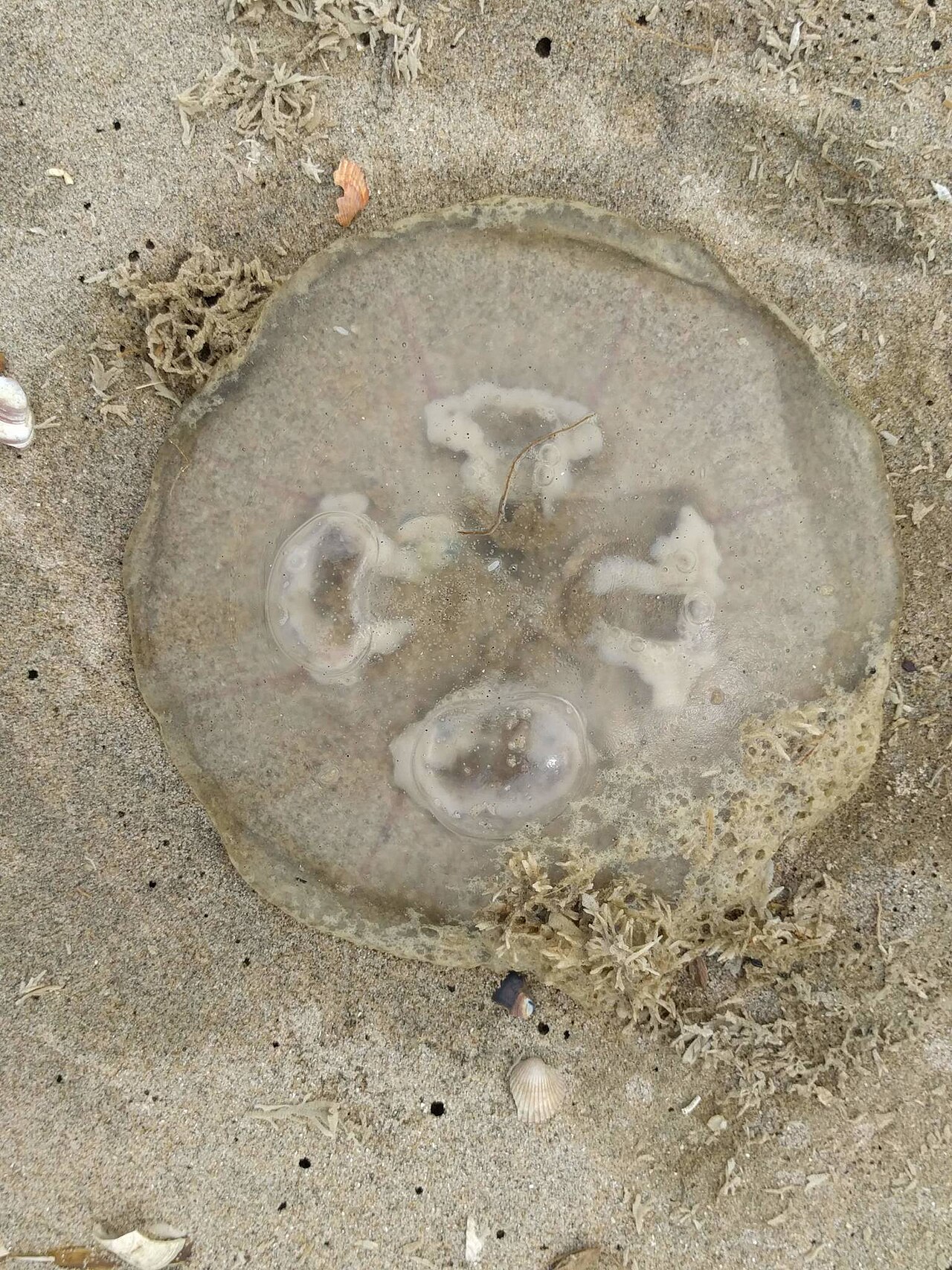
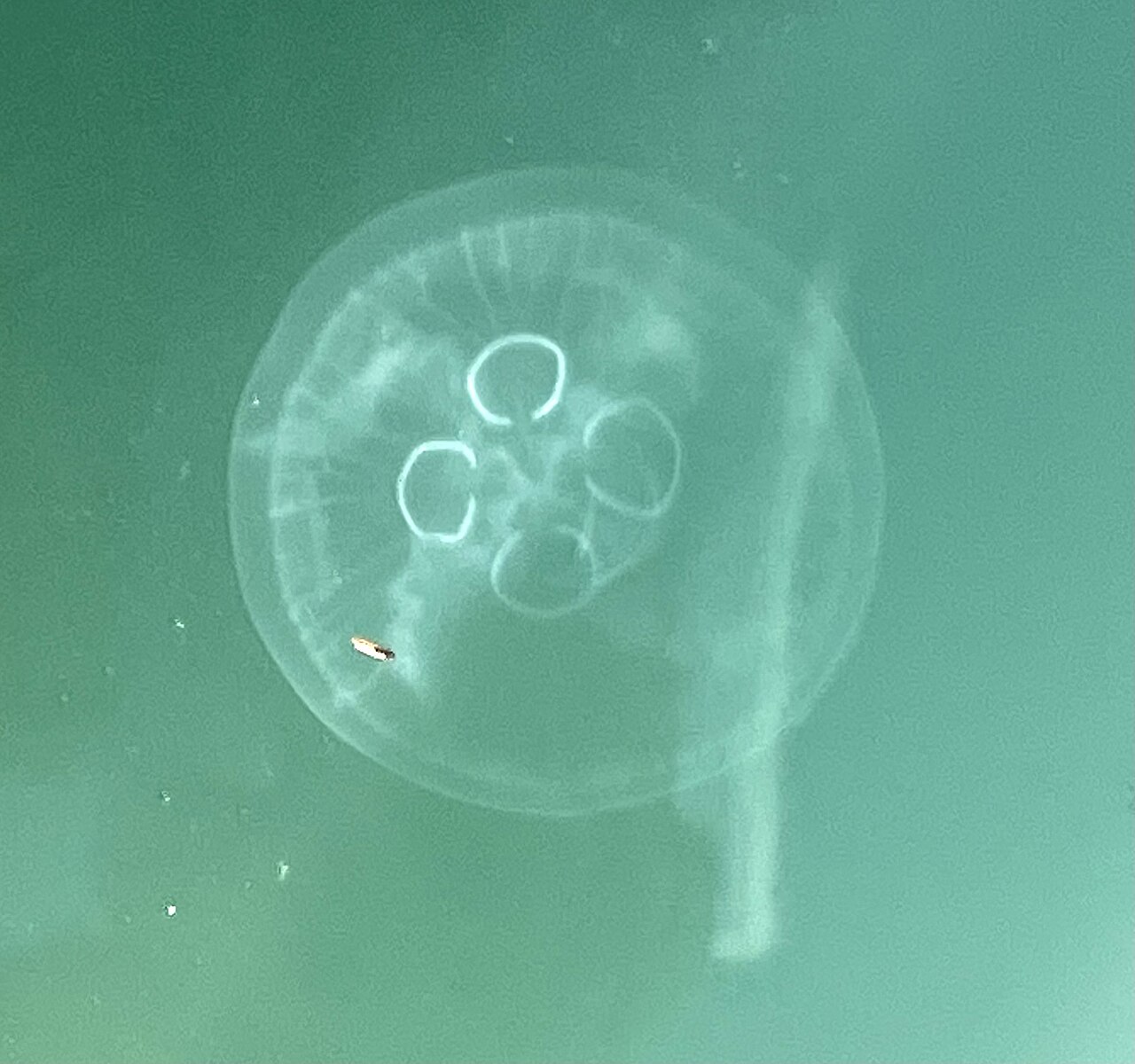
Transparency adds a second layer. You see straight through a moon jellyfish (Aurelia aurita), down to the four horseshoe shaped gonads in its bell, so the moon jellyfish stands for honesty and emotional openness, a reading it shares with few other creatures in animal symbolism.
The paradox of the jellyfish frames the whole symbol. It looks like a drifting veil, and it hurts. Gentle appearance and painful sting together mean that softness is not weakness. The shadow side is just as real. A jellyfish that only drifts is a symbol of passivity, of a person who never chooses a direction and calls it going with the flow.
Jellyfish Spirit Animal and Totem: The Message of Letting Go
Yes, the jellyfish is a spirit animal, and people adopt it during transitions and periods of overwhelm. The message is direct. The outcome you keep pushing may move on its own once you stop spending energy on it.
The totem traits follow from the animal. Jellyfish people stay calm under pressure, because a jellyfish does not panic when the tide turns. They are sensitive, picking up shifts in mood the way a jellyfish responds to light and touch through its nerve net. And they hold strong personal boundaries. A jellyfish totem does not chase, argue or threaten. It stings whatever crosses the line, then drifts on.
The shadow side of the totem is drifting too long. Letting go turns into avoiding every decision. If you feel drawn to jellyfish right now, three questions sort the message. Which outcome are you trying to force that you could release? Where are you swimming against a current you cannot beat? And who got stung this month, and was that sting a boundary or a reflex?
How Jellyfish Biology Shapes Its Meaning
Jellyfish symbolize going with the flow because that is how they live. A jellyfish has no brain. It has a nerve net spread through its body that responds to light, touch and chemicals in the water, so the animal acts by instinct and reflex rather than by planning.
Movement tells the second half of the story. The bell pulses, and each pulse pushes the jellyfish through the water, but currents set the real direction of travel. The symbol is effort plus surrender, not passivity. The jellyfish does its part, pulse after pulse, and lets the ocean choose the destination.
A jellyfish body is about 95 percent water, with no heart, no blood and no bones, so oxygen simply diffuses in from the sea. Fluidity is not a metaphor here; it is the animal.
Feeding fits the pattern too. A jellyfish hunts passively, trailing its tentacles and stinging whatever drifts into them, and our guide to what jellyfish eat covers that diet in detail.
Jellyfish as a Symbol of Rebirth and Renewal
Jellyfish symbolize rebirth because one species rewinds its own life. Turritopsis dohrnii, a jellyfish only a few millimeters across, reverts from the adult medusa stage back to the polyp stage when it is injured, starving or aging. The polyp then grows a new colony and buds off new medusae. Scientists nicknamed it the immortal jellyfish, and the name turned a tiny animal into a worldwide symbol of second chances and starting over.
The ordinary jellyfish life cycle carries the same meaning in a quieter form. True jellyfish begin as a larva, settle as a polyp attached to a rock, then release stacks of young medusae that grow into the drifting adults people recognize. One animal lives as a rooted stalk and then as a free swimming bell, so the cycle from polyp to medusa mirrors personal reinvention.
Seasonal blooms add a third layer. Jellyfish appear in huge numbers along a coast, vanish within weeks, and return the following year as if from nowhere. The jellyfish does not die out. It waits in the polyp stage and comes back when conditions turn, and beachgoers take that pattern as a cycle of ending and return. In Hawaii the pattern runs on a lunar clock, with box jellyfish arriving on Waikiki’s south shore about 8 to 10 days after each full moon, so regularly that lifeguards post the dates in advance.
Beauty and Danger: The Jellyfish Sting as a Symbol of Boundaries
The jellyfish sting symbolizes boundaries, because a jellyfish stings on contact rather than on purpose. Its stinging cells, called nematocysts, fire when something touches the trigger on the tentacle. There is no decision and no aggression. The jellyfish has a line, and crossing that line sets off a reflex.
This makes the jellyfish the symbol of gentle people who still enforce limits. The symbol also warns against underestimating quiet, soft looking forces. The box jellyfish is nearly invisible in the water and carries one of the most dangerous stings in the ocean, so beauty and threat share the same translucent body.
The shadow reading is the sting delivered without intent. A sensitive person hurts others by reflex, snapping at a partner who reached out at the wrong moment, and feels as surprised by the damage as the person who got stung.
Jellyfish Symbolism in Japanese Culture
In Japanese culture the jellyfish, called kurage, stands for formlessness, chaos before order, and a lack of backbone. The oldest reference is the Kojiki, the eighth century chronicle of Japan’s origins. In its opening passage the young land drifts like a floating jellyfish before the gods give it shape. The jellyfish there is an image of the world before it had solid ground.
A folktale explains the animal’s body. In The Monkey and the Jellyfish, the Dragon King of the sea sends the jellyfish, which still had bones and could walk, to fetch a monkey’s liver as medicine for his sick wife. The jellyfish talks too much, tells the monkey the plan, and the monkey tricks his way back to shore. The Dragon King orders every bone pulled out of the jellyfish and has its body beaten flat, and that is why kurage has no bones today.
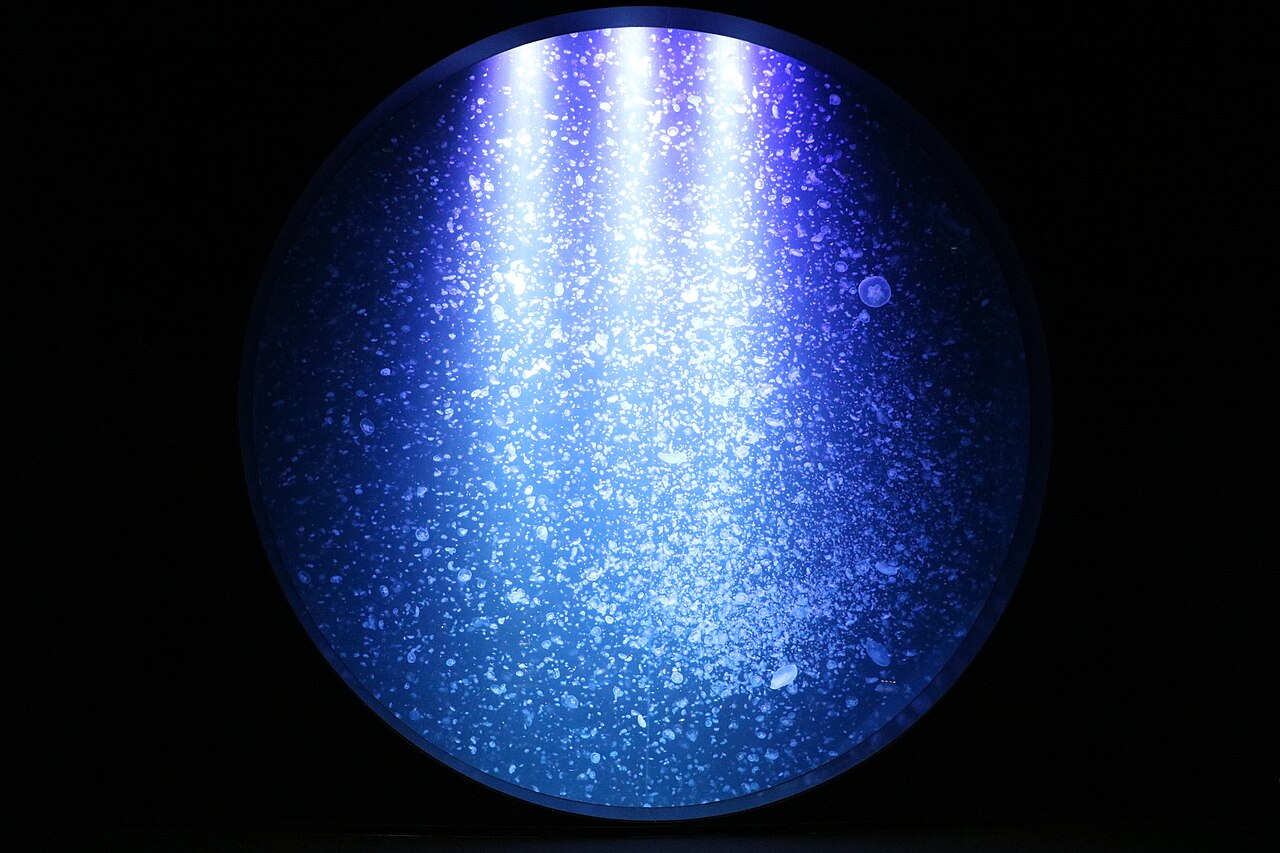
The folktale also gave Japanese the phrase kurage no hone, jellyfish bones, for something that does not exist; meeting jellyfish bones means a stroke of luck that almost never happens. The boneless jellyfish is the opposite of the koi, the fish Japan borrowed from the Chinese Dragon Gate legend as its picture of perseverance. Today the Kamo Aquarium in Tsuruoka, reopened in 2026 as Tohoku Epson Aquarium Kamosui, displays about 100 jellyfish species, and for the visitors in front of its glowing tanks the animal has become a symbol of calm rather than weakness.
The Medusa Connection: Why Jellyfish Share a Gorgon’s Name
Jellyfish share the name medusa because the free swimming adult stage of a jellyfish is called a medusa, after the Gorgon of Greek myth. Carl Linnaeus gave the animals that name in 1758, looking at the round bell and trailing tentacles and seeing Medusa’s head with its hair of living snakes. In several European languages the everyday word for jellyfish is medusa.
The link gives the jellyfish an older, darker layer. Medusa was a monster whose gaze turned people to stone, and a jellyfish tentacle stops a swimmer cold. Modern readings of Medusa have shifted, though. People now reclaim her as a survivor who was punished for what was done to her, and the jellyfish inherits that protective meaning, a creature that stings because it was given no other defense.
Ancient Greece backed up the protective reading in a practical way. The gorgoneion, an image of the Gorgon’s face, went on shields, doors, armor and amulets to ward off evil. A jellyfish tattoo or charm carries the same logic.
What Does a Jellyfish Symbolize in Love?
In love, a jellyfish symbolizes affection without control. A jellyfish does not chase or follow anything; it shares the water with whatever drifts beside it. Applied to a relationship, the symbol means letting a partner move freely, trusting that two people drifting in the same current stay close without being tied together.
Vulnerability is the second reading. A transparent body means nothing hidden between partners. You see the jellyfish’s stomach, its reproductive organs and whatever it ate last, and the symbol asks for the same openness in love.
The jellyfish also carries a warning in love. Attraction to someone beautiful who keeps stinging is a jellyfish relationship, and the sting hurts the same each time no matter how lovely the bell looks. The symbol does not tell you to leave, but it does tell you to stop pretending the sting is an accident.
What Does a Jellyfish Tattoo Mean?
A jellyfish tattoo means resilience, going with the flow, protection and femininity, and the wearer chooses which of those leads. Resilience comes from an animal that has survived every mass extinction without a skeleton. Flow comes from the drift. Protection comes from the sting, and femininity comes from the soft, flowing shape of the bell and tentacles, so the motif appears again and again on wrists, ribs and shoulders.
Wearers give the tattoo personal meanings too. Within the LGBTQ+ community a jellyfish tattoo stands for fluidity and living unapologetically, an animal with no fixed shape that stings anyone who tries to grab it. Neurodivergent wearers, and people with ADHD in particular, describe the jellyfish as a picture of drifting attention and sensory sensitivity, a mind that responds to everything around it. Neither reading is official.
Style changes the message. A fine line jellyfish in single needle work looks gentle, delicate and private. A blackwork jellyfish with heavy shading and dense tentacles signals power and protection. Placement matters too. A jellyfish along the spine or down the arm lets the tentacles follow the body’s own lines, so the tattoo shows flow in a way a static chest piece cannot.
Seeing a Jellyfish: What It Means by Place
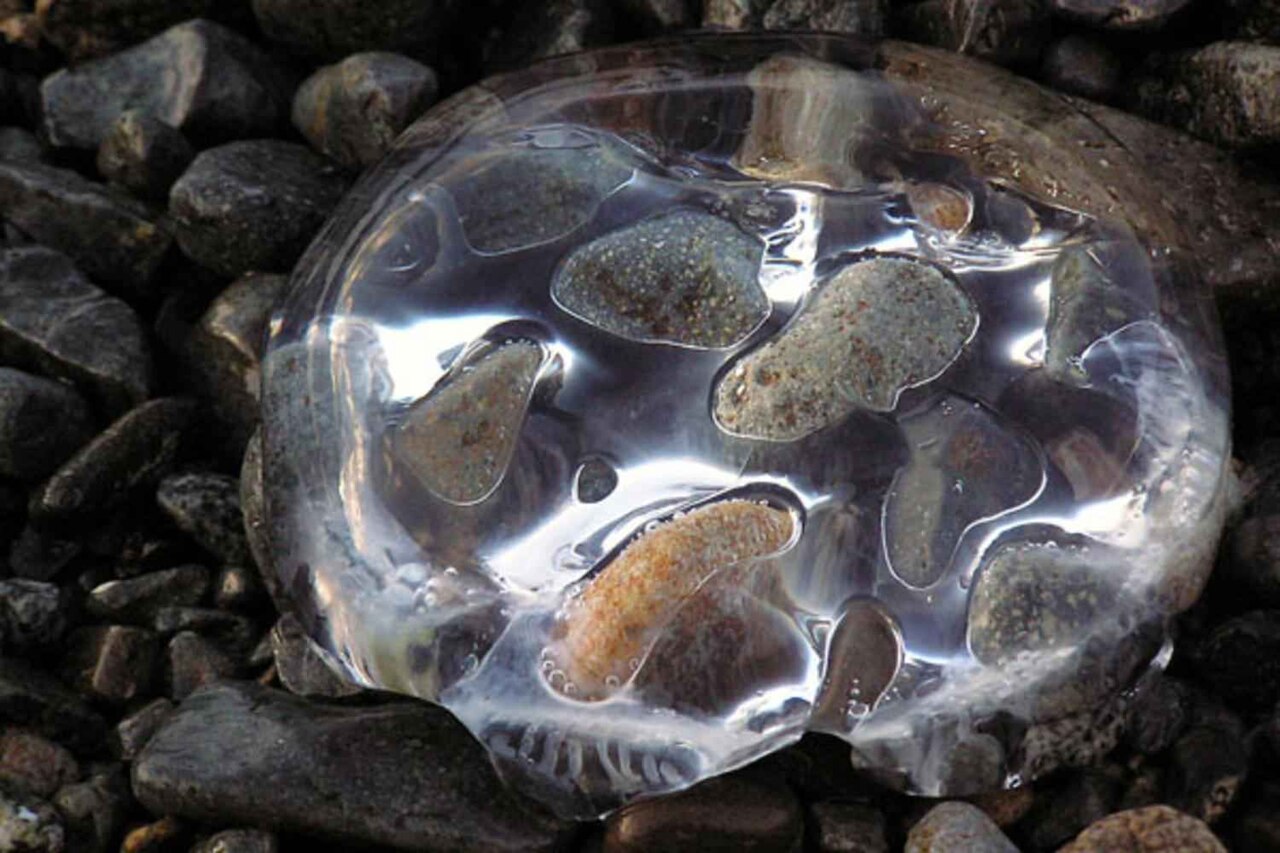
Washed up on the beach. A jellyfish on the beach stands for endings and for something released by the tide. The ocean let it go, and the animal that lived by drifting has stopped. Readers who find one take it as a sign that something in their own life has run its course. Look, but do not touch, because the stinging cells still fire after the animal is dead.
While swimming. A jellyfish beside you in the water is a nudge to slow down and watch your surroundings. The practical meaning and the symbolic one are the same here. Stop thrashing, look around, and move with care.
Being stung. A jellyfish sting means a boundary has been crossed, yours or someone else’s. Either you pushed into space that was not yours, or you have let someone drift through yours. Ask which line was crossed before you ask who is to blame.
In an aquarium. A jellyfish in an aquarium stands for calm and for a reminder to pause and breathe. Lit tanks of moon jellies are built to slow people down, and many visitors find that watching the pulsing bell slows their breathing.
Jellyfish Dream Meaning
A jellyfish in a dream points to emotions surfacing that you have let drift. Something you set aside is rising toward the surface, soft, translucent and still able to sting. Dream readers treat the water as the dreamer’s emotional life, so a jellyfish floating calmly stands for feelings you can finally look at without fear.
The details shift the reading. A sting in a dream stands for a hurt that came from someone close, or for a boundary you crossed without noticing. A swarm of jellyfish mirrors the feeling of too many small demands at once. A glowing jellyfish in dark water is read as hope or guidance in a difficult period. Dream symbolism is interpretation rather than evidence, so take the reading that matches what is going on in your waking life.
Jellyfish Color Meanings
The color of a jellyfish shifts its meaning, in nature and in art. A clear or white jellyfish, like the moon jelly, stands for purity, honesty and a fresh start, a body with nothing hidden and nothing added. Blue jellyfish mean calm, intuition and emotional depth, the color of the open water the animal drifts through.
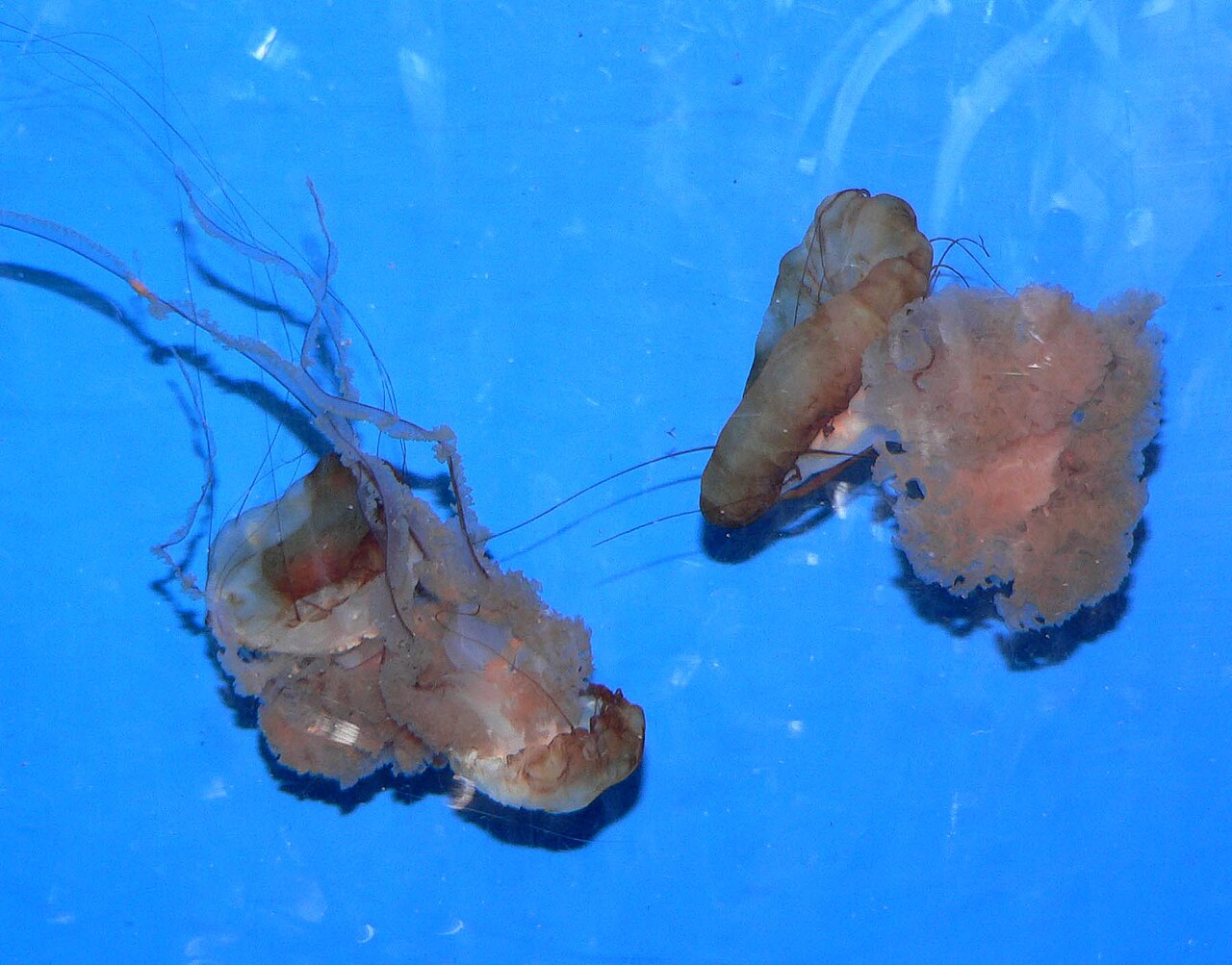
Pink and purple jellyfish stand for tenderness, love and spiritual sensitivity, and tattoo designs lean toward those shades for that reason. Red and orange jellyfish, including the Pacific sea nettle (Chrysaora fuscescens) and the lion’s mane, mean passion and warning, and they carry a call for caution, although color says little about a sting, since the nearly invisible box jellyfish is far more dangerous than any orange sea nettle.
The Glowing Jellyfish as a Symbol of Inner Light
A glowing jellyfish means inner light, and that reading has a scientific anchor. The crystal jelly (Aequorea victoria) produces green fluorescent protein, and scientists turned that protein into a tag that lets them watch genes and proteins inside living cells. The discovery earned Osamu Shimomura, Martin Chalfie and Roger Tsien the 2008 Nobel Prize in Chemistry.
The symbol follows the science. A light that comes from inside a transparent body stands for a quality nobody can take away, and glowing jellyfish appear in art and tattoos as a picture of hope in dark water. The living animal flashes when it is disturbed, a light used for defense, so even the glow belongs to the same family of meanings as the sting, a soft creature protecting itself without attacking anyone.
Jellyfish vs Other Water Animal Symbols
The jellyfish stands for instinct and surrender, while octopus symbolism centers on intelligence and strategy, the clearest pair of opposites in ocean symbolism.
The dolphin represents playful connection and social joy, a mammal that travels in pods and seeks out company. The jellyfish is solitary and self contained, drifting alone even in the middle of a bloom. The sea turtle represents patient navigation, an animal that crosses oceans to return to the beach where it hatched. The jellyfish has no destination at all.
The jellyfish is the right symbol for the moment when effort has stopped working; the octopus, dolphin and sea turtle all belong to situations where effort still pays off.
| Jellyfish | Look | Symbolic reading |
|---|---|---|
| Moon jellyfish (Aurelia aurita) | Clear bell with four pale horseshoe shapes, short fringe of tentacles | Honesty, purity, a fresh start |
| Lion’s mane (Cyanea capillata) | Reddish brown bell with a dense mass of long tentacles | Wild strength, passion, warning |
| Box jellyfish (Chironex fleckeri) | Cube shaped, almost invisible bell with tentacles at each corner | Hidden danger, respect for what you cannot see |
| Pacific sea nettle (Chrysaora fuscescens) | Golden brown bell, long trailing tentacles and frilly oral arms | Grace with a sting, boundaries |
| Cannonball jellyfish (Stomolophus meleagris) | Firm, round bell with a brown rim, no long tentacles | Resilience, groundedness, staying power |
| Compass jellyfish (Chrysaora hysoscella) | Pale bell marked with brown V shaped lines like a compass rose | Direction found by drifting, intuition |
Frequently Asked Questions
How many species of jellyfish are there?
About 200 species of true jellyfish (Scyphozoa) are described, plus roughly 50 stalked jellyfish and a few dozen box jellyfish. Counting the small hydrozoan medusae pushes the total well past 1,000, while comb jellies are an unrelated group and do not count.
What does a jellyfish symbolize spiritually?
Spiritually, a jellyfish stands for surrender, intuition and protected sensitivity. It asks you to stop steering for a while, trust what you sense rather than what you plan, and keep a sting ready for anything that crosses a real boundary.
Does the Bible mention jellyfish?
No, the Bible never names the jellyfish. Leviticus 11:10 bans eating any sea creature without fins and scales, a rule that covers jellyfish, but no verse gives the animal a symbolic role.
Do jellyfish sleep?
Yes, at least one jellyfish shows a sleep-like state. Caltech researchers found that the upside-down jellyfish (Cassiopea) slows its pulsing at night, responds more slowly to disturbance and pulses less the following day when kept awake. It was the first animal without a brain shown to behave this way, and it supports the symbol of rest and conserved energy.
What does the immortal jellyfish symbolize?
The immortal jellyfish (Turritopsis dohrnii) symbolizes second chances and starting over, because it can revert from adult back to polyp and grow again. People use it as a picture of recovery after injury, loss or burnout.
Is there a jellyfish emoji?
Yes, since 2022. Unicode added the jellyfish emoji in Emoji 15.0, and people use it online for calm, going with the flow and a soft but stinging personality.
Sources
- Smithsonian Ocean, Jellyfish and Comb Jellies
- NOAA National Ocean Service, What are jellyfish made of?
- Royal Ontario Museum, Researchers identify oldest known species of swimming jellyfish
- Natural History Museum, Immortal jellyfish: the secret to cheating death
- The Nobel Prize, Press release: The Nobel Prize in Chemistry 2008
- Encyclopaedia Britannica, Medusa