Types of Bees: How to Tell Them Apart
Bees fall into several broad groups people commonly encounter: honeybees, which live in large social colonies and produce honey; bumblebees, larger and fuzzier social bees active in cooler weather; and solitary bees, a category that actually contains the majority of bee species worldwide, including mason bees and leafcutter bees, none of which live in colonies at all.
The common assumption that most bees live in hives with a queen is actually backwards: roughly 90 percent of bee species are solitary, each female building and provisioning her own individual nest without workers or a colony structure. This guide covers the main types people encounter, how to tell them apart, and which ones actually sting.
The main bee types most people encounter are honeybees, colonial and honey-producing; bumblebees, larger, fuzzy, and cold-tolerant; and solitary bees like mason and leafcutter bees, which make up the majority of bee species and live alone rather than in colonies. Honeybees and bumblebees can sting repeatedly or once, respectively, while most solitary bees are docile and rarely sting people at all.
| Type | Social Structure | Sting Risk |
|---|---|---|
| Honeybee | Large colony, one queen | Stings once, dies afterward |
| Bumblebee | Smaller colony | Can sting repeatedly, generally docile |
| Mason bee | Solitary | Rarely stings; very docile |
| Leafcutter bee | Solitary | Rarely stings; mild if it does |
| Carpenter bee | Mostly solitary | Males can’t sting; females rarely do |
| Sweat bee | Varies; often solitary | Mild sting if pressed against skin |
What Are the Main Types of Bees?
Bees are broadly grouped by social structure rather than appearance alone: eusocial bees, which live in colonies with a queen and workers, and solitary bees, where each female operates independently, building her own nest and provisioning it without help from other bees.
Honeybees and bumblebees are the most familiar eusocial types, both forming colonies of varying size with cooperative labor and, in honeybees specifically, complex communication through movement patterns used to share food source locations with the rest of the colony.
Solitary bees, despite being far less familiar to most people, actually make up the large majority of bee species globally, and include mason bees, leafcutter bees, mining bees, and carpenter bees among many others, each with its own specific nesting habits and preferred materials.
What Are Honeybees?
Honeybees, genus Apis, are highly social bees living in large colonies of tens of thousands of individuals, organized around a single queen, with worker bees performing foraging, brood care, and colony defense, and the colony surviving across multiple years rather than dying off each season.
Honey production is a defining honeybee trait among bees generally, stored as a food reserve to sustain the colony through winter when flowers are unavailable, a strategy that requires the colony’s long-term survival structure that most other bee species simply don’t share.
A honeybee can sting only once, since its barbed stinger lodges in the victim’s skin and tears away from the bee’s body during the sting, a fatal injury for the bee, which is part of why honeybees are generally reluctant to sting unless the colony itself feels seriously threatened. The guide to a bee landing on you covers what it means when one approaches without stinging.
What Are Bumblebees?
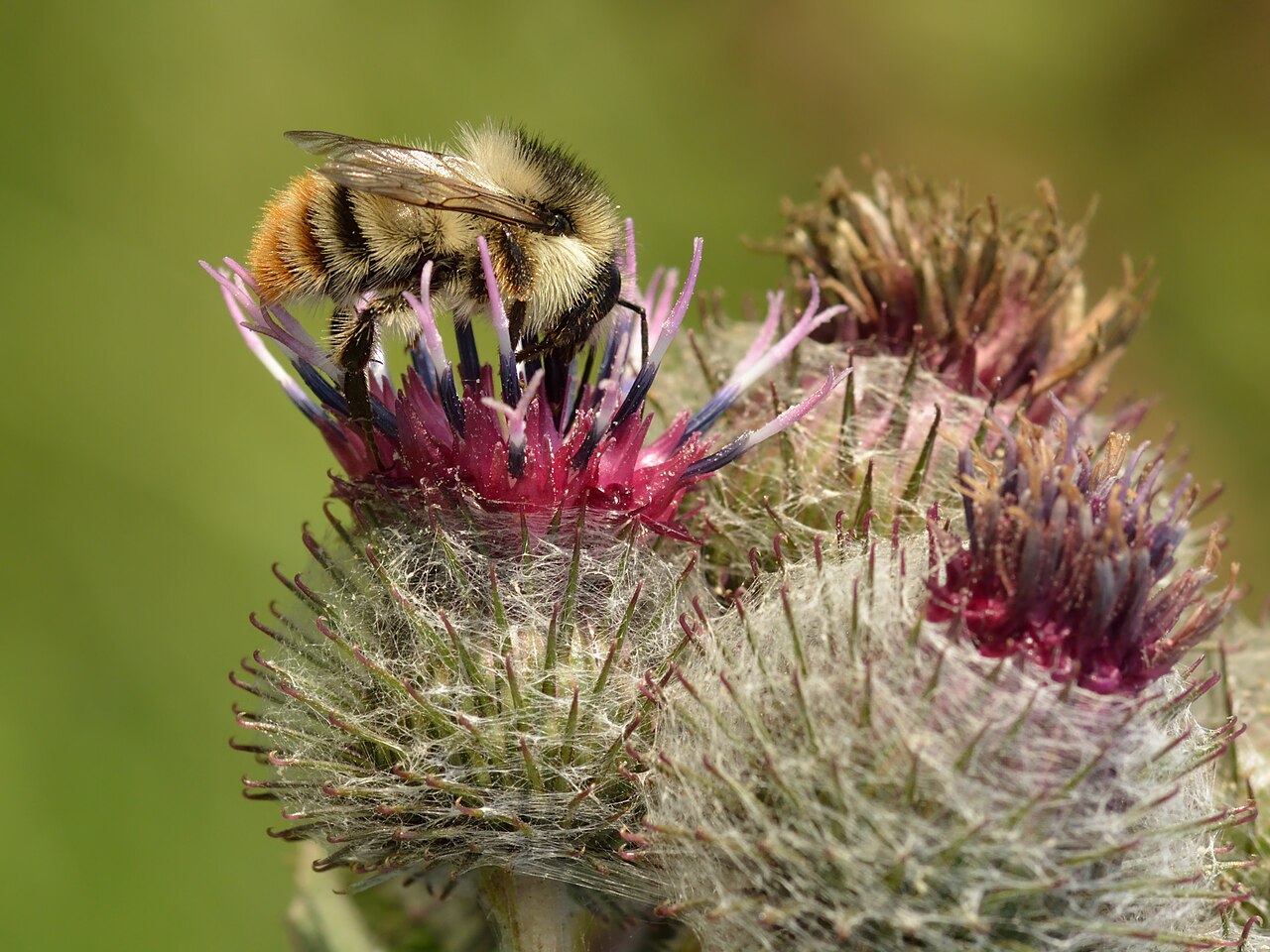
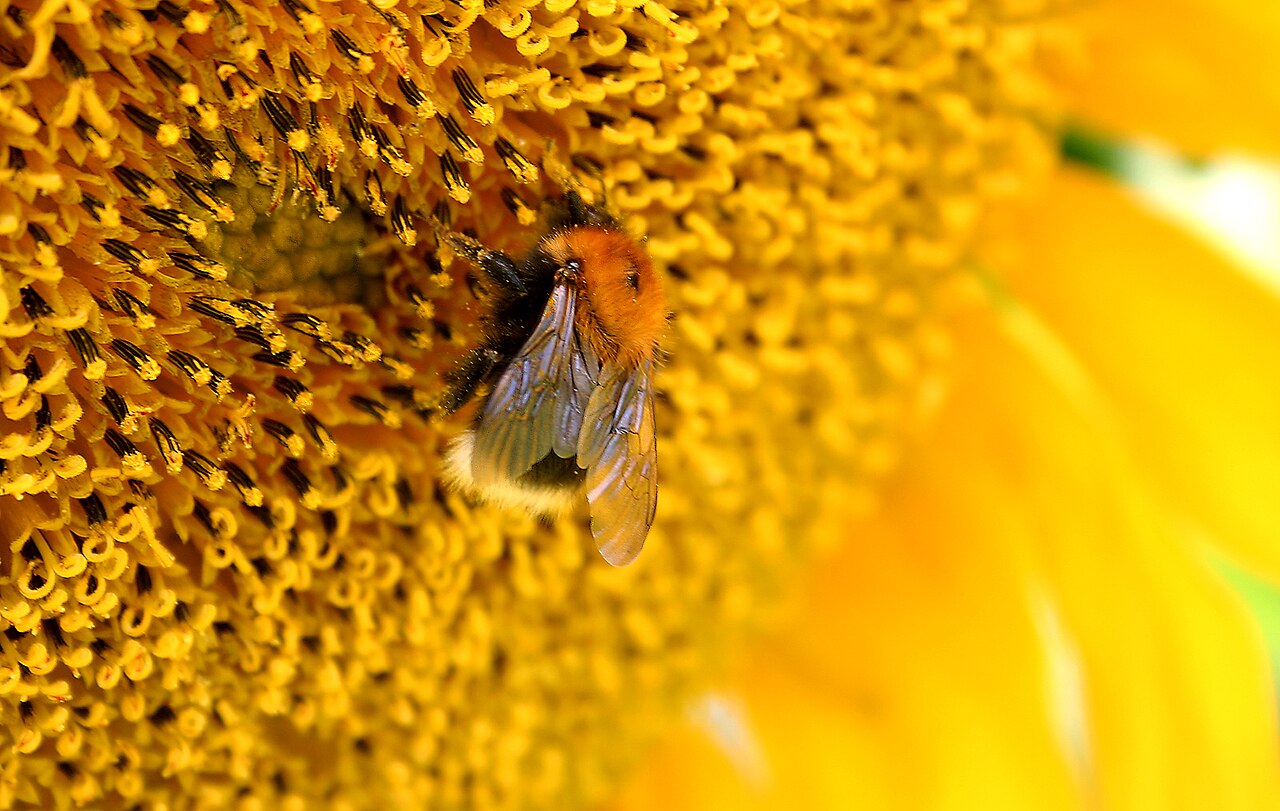
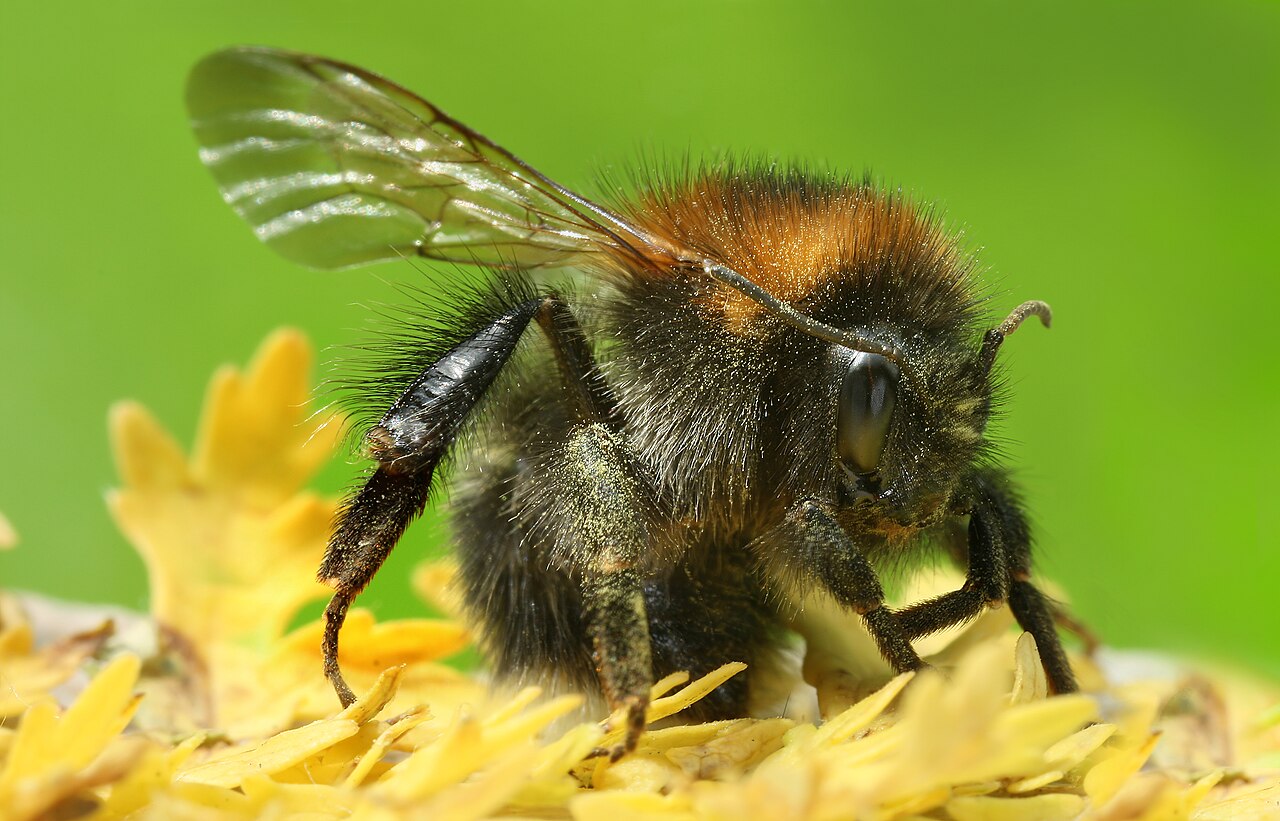
Bumblebees, genus Bombus, are larger, rounder, and fuzzier than honeybees, forming smaller annual colonies, typically dozens to a few hundred individuals, that die off each autumn except for new queens, who overwinter alone and start a fresh colony the following spring.
Cold tolerance is a notable bumblebee trait, since their dense fur and ability to generate body heat through rapid muscle vibration let them forage in cooler temperatures and at higher elevations than honeybees typically manage, making them important pollinators earlier and later in the season.
Unlike honeybees, bumblebees can sting more than once, since their stinger lacks the same barb structure, though they are generally docile and far less inclined to sting unless directly handled or their nest is disturbed. The black bumblebee guide covers a distinctive dark-colored bumblebee species. For a closely related question, see our guide to red and black beetle. For a closely related question, see our guide to red and black wasp.
What Are Solitary Bees?
Solitary bees make up the majority of the roughly 20,000 known bee species worldwide, and unlike honeybees and bumblebees, each female builds and provisions her own individual nest without workers, a queen, or any colony cooperation at all.
Mason bees nest in narrow tubes and cavities, sealing each egg chamber with mud, while leafcutter bees use neatly cut circular pieces of leaves for the same purpose, and mining bees dig individual burrows in bare or sparsely vegetated soil, each species adapted to a specific nesting material or location.
Solitary bees are frequently excellent, efficient pollinators, in some cases more effective per individual than honeybees for specific crops, and because there’s no colony to defend, most solitary species are remarkably docile, rarely stinging even when handled directly.
How Many Bee Families Are There?
Bees are classified into seven recognized families worldwide, distinguished by wing venation, body structure, and other anatomical features rather than by behavior alone, with the familiar honeybees and bumblebees both falling within the family Apidae alongside many solitary species.
The other six families include groups like Megachilidae, containing leafcutter and mason bees, and Halictidae, which includes many of the sweat bees commonly seen visiting garden flowers, each family containing species with widely varying size, color, and nesting behavior.
This taxonomic diversity reflects the ecological range bees occupy globally, from tiny solitary species barely visible without close inspection to large, conspicuous carpenter bees, all classified together as bees based on shared evolutionary ancestry and pollen-collecting anatomy rather than superficial similarity.
What Is the Rarest Type of Bee?
Rarity varies enormously by region and species, and several bee species worldwide are critically endangered or feared extinct due to habitat loss, pesticide exposure, and competition from introduced species, making “rarest” a moving target rather than a single fixed answer.
Franklin’s bumblebee, historically found only in a small region of southern Oregon and northern California, has not been reliably documented in recent years despite dedicated searches, and is considered possibly extinct, illustrating how a highly localized range can put a species at severe risk from even modest habitat disruption.
Conservation efforts for rare and declining bee species generally focus on habitat protection and reducing pesticide use, since most at-risk bees, unlike honeybees, cannot simply be managed in an apiary and require intact natural habitat with the specific plants and nesting materials they depend on.
What’s the Most Aggressive Type of Bee?
Africanized honeybees, sometimes called “killer bees,” are the species with the strongest reputation for aggressive colony defense, responding to disturbance in much larger numbers and pursuing a perceived threat over a considerably greater distance than typical European honeybees.
This heightened defensiveness comes from their genetic origin as a hybrid between European honeybees and a more defensive African subspecies, originally introduced to improve honey production in South America before spreading north through Central America and into parts of the southern United States.
Individual Africanized honeybee stings are not more potent than a regular honeybee sting, the danger comes from the sheer number of bees that respond to a disturbance and the persistence of their pursuit, making an encounter with an established colony considerably more dangerous in aggregate than a typical honeybee hive.
How Do You Tell a Bee From a Wasp or Hornet?
Body shape and hair are the clearest distinguishing features: bees are generally rounder, fuzzier, and more robust-looking, adapted for collecting pollen on specialized hairs, while wasps and hornets have a smoother, more slender body with a more pronounced narrow waist.
Diet differs fundamentally too: bees are exclusively plant-based feeders as adults, collecting nectar and pollen, while wasps and hornets are largely predatory or scavenging, hunting other insects or feeding on carrion and sugary substances, which shapes their more slender, less pollen-adapted body form and explains why a wasp shows up at a picnic while a bee generally does not.
Behavior around flowers is another useful clue: a fuzzy insect lingering on a flower, visibly collecting pollen on its legs or body, is almost certainly a bee, while a smooth, narrow-waisted insect investigating a picnic or trash can is more likely a wasp or hornet. The hornet vs wasp guide covers the distinction between those two look-alikes in detail.
Which Bees Actually Sting?
All female bees are physically capable of stinging, since the stinger is a modified egg-laying organ present only in females, but actual sting likelihood varies enormously by species and circumstance, with most solitary bees stinging only under significant direct pressure, such as being trapped against skin.
Honeybees and bumblebees sting more readily in defense of their colony, since protecting the shared nest and its stored resources justifies the risk to an individual bee in a way that has no equivalent for a solitary species with no colony to defend.
Male bees of any species cannot sting at all, lacking the modified structure entirely, which means roughly half of any bee population, by simple sex ratio, poses zero sting risk regardless of species or how the individual bee is handled. The guide to ground-nesting bees covers a solitary species commonly mistaken for something more dangerous.
How Do You Attract Beneficial Bees to a Garden?
Planting a variety of native flowering plants with staggered bloom times across spring, summer, and autumn gives both social and solitary bees a consistent nectar and pollen source throughout the season, rather than a single burst of blooms followed by nothing.
Leaving some bare, undisturbed soil and dead plant stems over winter supports ground-nesting and stem-nesting solitary bees directly, since many species need exactly these overlooked, slightly untidy garden features to complete their nesting cycle, something an overly manicured yard often removes entirely.
Avoiding pesticide use, or at minimum applying it only in the evening when bees are less active and away from open flowers, reduces harm to visiting pollinators considerably, since even products not marketed as bee-specific can affect foraging bees that contact treated plants directly. Extension entomology programs at land-grant universities publish region-specific native plant lists for exactly this purpose. The birds that eat bees guide covers the next link in the pollinator food chain.
Frequently Asked Questions
What are the main types of bees?
Honeybees and bumblebees, both social, plus solitary bees like mason and leafcutter bees, which make up the majority of bee species worldwide.
What’s the difference between a honeybee and a bumblebee?
Honeybees form large, multi-year colonies and produce honey; bumblebees form smaller annual colonies, are fuzzier and larger, and don’t produce surplus honey.
Are most bees solitary or social?
Solitary. Roughly 90 percent of bee species live alone rather than in a colony, contrary to the common assumption that most bees live in hives.
How many bee families exist?
Seven recognized families worldwide, distinguished by anatomical features rather than behavior, including Apidae, Megachilidae, and Halictidae.
What’s the most aggressive type of bee?
Africanized honeybees, known for defending their colony in much larger numbers and over greater distances than typical European honeybees.
Do all bees sting?
Only females can sting; males lack the stinger entirely. Most solitary bees rarely sting even when handled, unlike defensive colonial species.