Female Betta Fish: Identification, Sororities, and Care
Female betta fish are the calmer, more sociable half of a species famous for the opposite reputation: shorter fins, less flamboyant color, and, critically, a temperament that tolerates other fish, including other females in a properly sized group called a sorority, something male bettas cannot do. That gentler reputation is well earned but not absolute; females still fight, still flare, and still need real care, just with more flexibility in tank setup than the solitary males most people picture when they hear “betta.”
Choosing or keeping a female betta well starts with knowing what actually separates her from a male at the pet store, how sorority tanks succeed or collapse, and the breeding behavior that makes females unexpectedly the more aggressive sex during spawning. This guide covers identification, sorority setup, breeding, and the health quirks specific to females, all grounded in the same species (Betta splendens) as the males everyone already knows.
| Feature | Female Betta | Male Betta |
|---|---|---|
| Fin length | Short to moderate | Long, flowing (in most types) |
| Color intensity | Muted, often patterned | Vivid, solid or contrasting |
| Egg spot | Visible white dot (ovipositor) | Absent |
| Housed with others? | Yes, in a sorority (4+) | No, solitary only |
| Typical size | 2 to 2.5 inches | 2.5 to 3 inches |
| Aggression | Moderate, hierarchy-based | Severe toward other males |
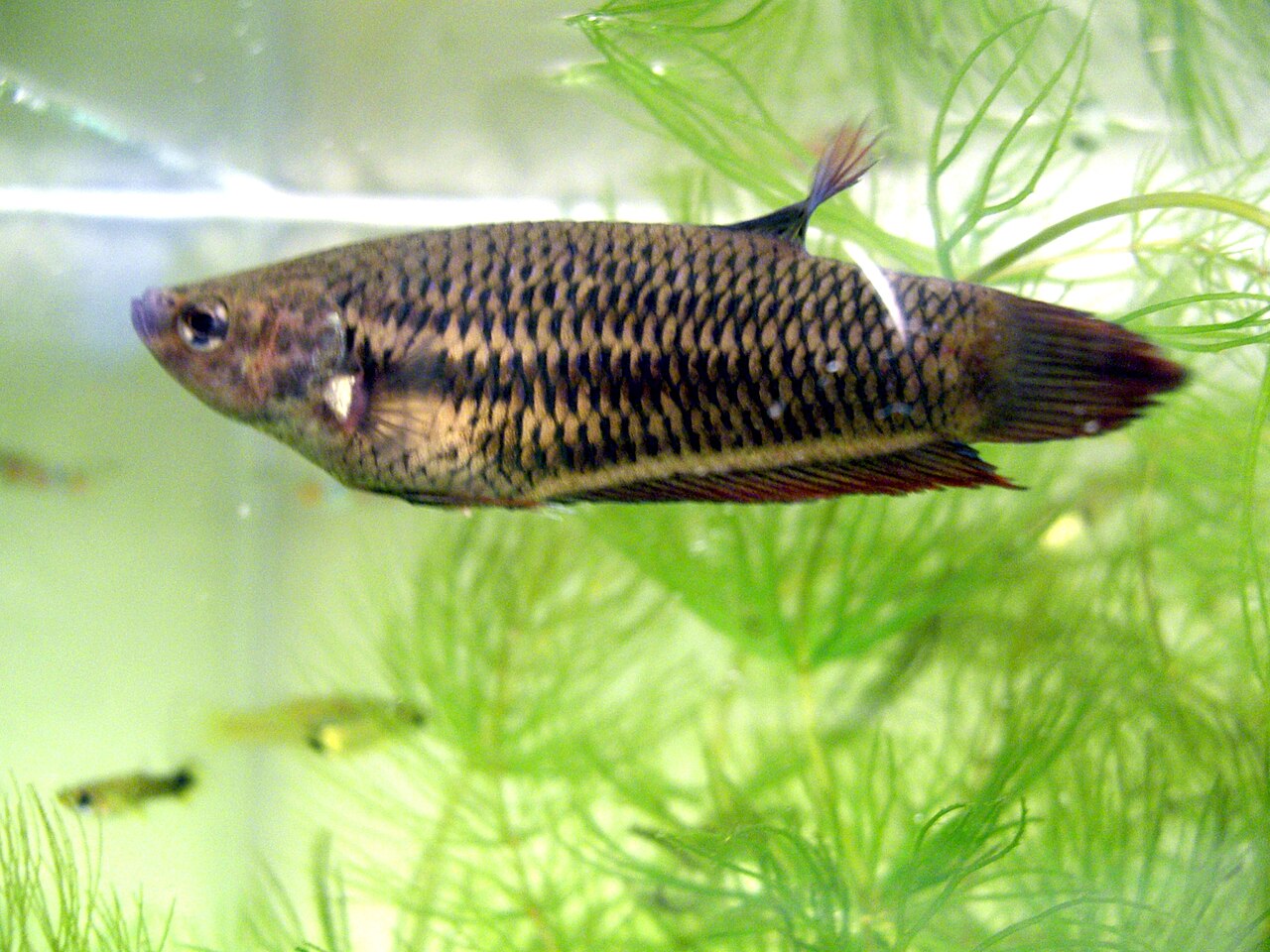
Female bettas have shorter fins, more muted colour and a visible white egg spot behind the ventral fins. They are calmer than males and can be kept together in a sorority of five or more, but only in a heavily planted tank of at least 20 gallons with plenty of sight breaks.
How to Identify a Female Betta
The clearest permanent marker on a female betta is the egg spot, or ovipositor, a small white dot visible between the pelvic and anal fins, present on essentially every mature female and absent on males; this single feature settles identification when color and fin length leave doubt, and pet store staff and online sellers rely on it heavily when labeling fish.
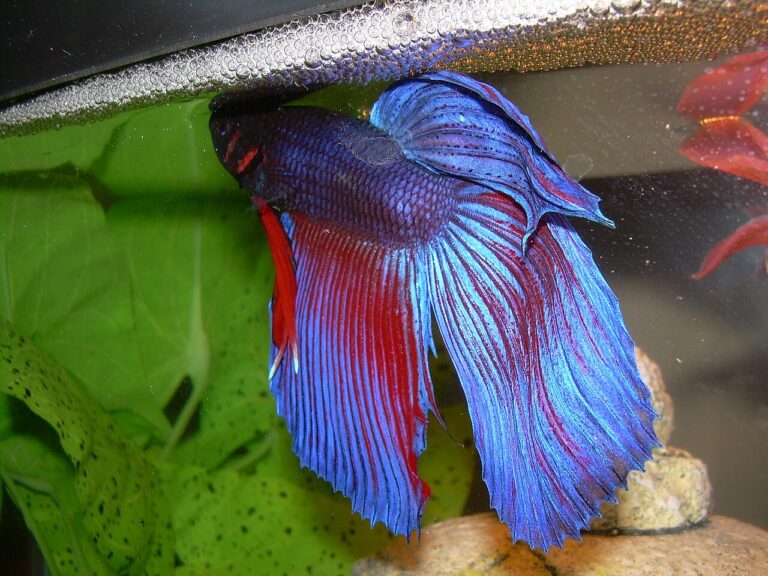
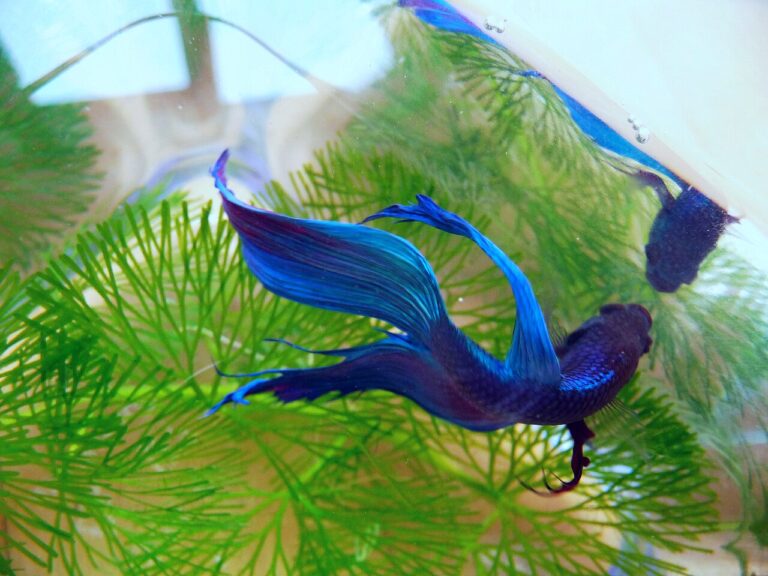
Fin length and color are the traits shoppers notice first but the least reliable alone, since selective breeding has produced female bettas (and even some male types) with unusually short or long fins depending on the strain. As a general rule, females of most common types (veiltail, plakat, halfmoon) carry shorter, less dramatically flowing fins than males of the same type, and colors run more muted, patterned, or marbled rather than the saturated solid colors bred into showy males.
Behavior in the store adds a final tell: females kept together in a communal tank typically establish a visible pecking order with occasional flaring and chasing but rarely serious injury, while two mature males in the same tank will fight to severe injury or death within hours, which is exactly why pet stores never house males communally the way they do females.
Temperament: Calmer, Not Peaceful
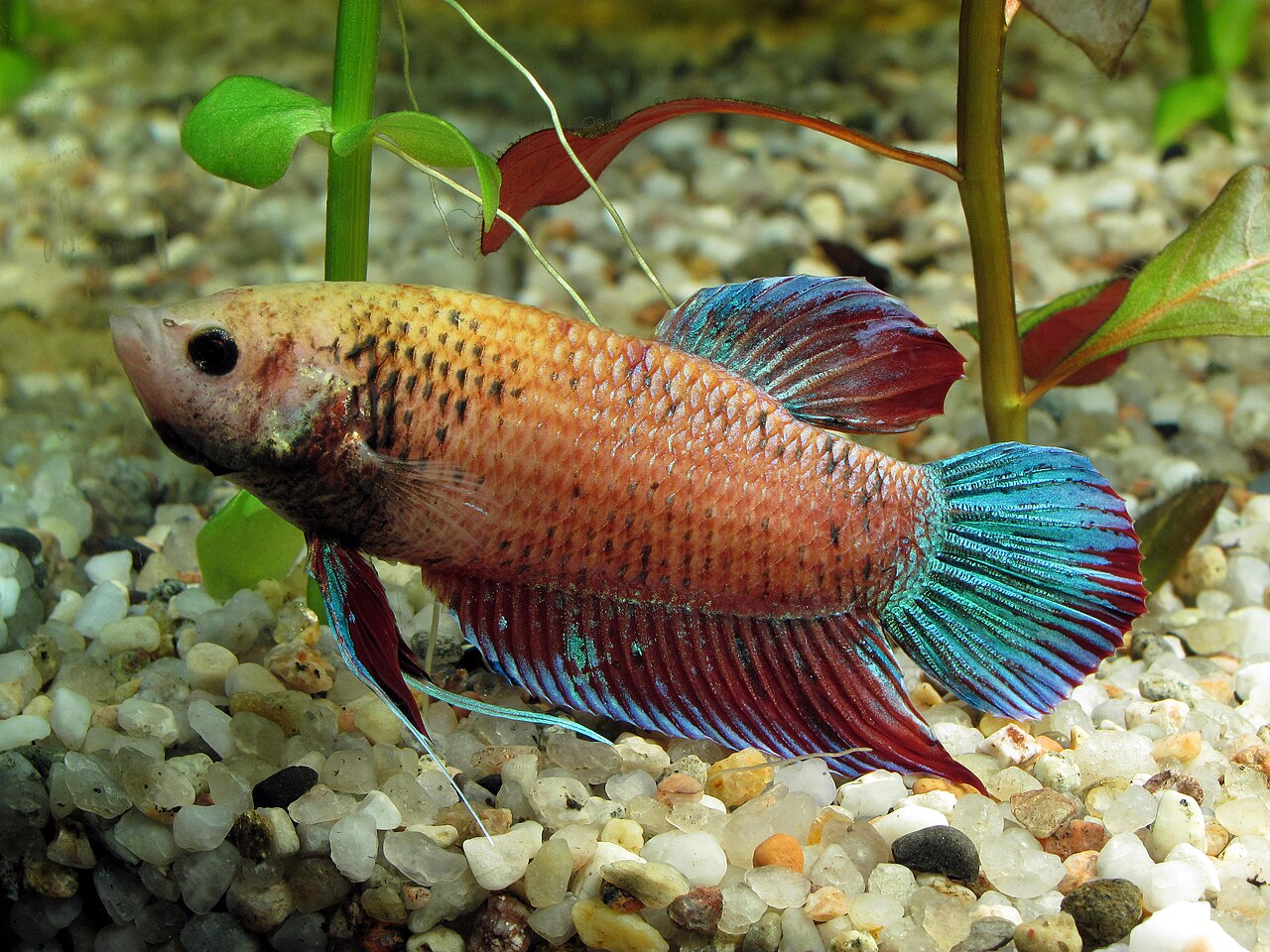
Female bettas are genuinely less aggressive than males on average, tolerating tankmates and even each other in ways males cannot, but “less aggressive” is a comparison, not an absence: females still flare their gills, chase, and nip fins, particularly toward newcomers, similarly patterned fish, or anything resembling competition for food and territory. A female betta alone in a community tank can still bully smaller, slower, or brightly colored tankmates.
Individual personality varies enormously and is not fully predictable from appearance; some females are shy and hide constantly, others are bold and investigate every corner of a new tank within minutes, and a handful turn out unexpectedly dominant even in a sorority, becoming the de facto alpha that keeps peace, or occasionally disrupts it, among the group.
This variability is why experienced keepers always recommend watching a specific fish’s behavior over relying purely on sex-based generalizations, and it is also why sorority setups, covered next, require a buffer of extra fish and hiding spots rather than a simple headcount, since a single unusually aggressive female can derail an otherwise calm group.
Sorority Tanks: How to House Females Together
A betta sorority is a group of female bettas kept in one tank, something never attempted with males, and it works because females establish a hierarchy through ritualized flaring, chasing, and fin-nipping rather than the fight-to-the-death aggression males show each other. Successful sororities require a minimum of 4 to 5 females (never just 2 or 3, which concentrates aggression on one target) in a tank of at least 20 gallons, heavily planted or decorated to break sightlines and provide retreat.
Introducing all females simultaneously as juveniles, ideally from the same source and similar size, produces the smoothest hierarchy formation, since adding a new female to an established group later often triggers renewed aggression as the pecking order resets. The first week after introduction typically shows the most flaring and chasing as rank gets settled; persistent, one-sided attacks that draw blood or trap a fish in a corner signal a failed sorority requiring removal of the aggressor or victim.
Even successful sororities need ongoing management: multiple feeding spots prevent food-guarding aggression, dense planting (live or silk, never sharp plastic that tears fins) gives losers somewhere to retreat, and a spare tank or divider on hand lets a keeper separate a fish quickly if hierarchy breaks down weeks or months in, since sorority dynamics can shift with age, illness, or a new addition. Compatible tankmates beyond the sorority itself follow standard betta community guidelines: peaceful, similarly calm species that avoid nipping fins or competing aggressively for food.
Breeding: Where Females Get Surprisingly Aggressive
Breeding flips the usual aggression script: during courtship and spawning, female bettas can be more aggressive than the males they are paired with, which is why breeders introduce a female to a male’s tank gradually, often behind a divider for days, watching for the male’s bubble nest-building and the female’s readiness signs (vertical barring on her body, interest in the nest) before allowing direct contact.
Spawning itself is a dramatic embrace in which the male wraps around the female beneath his bubble nest, and she releases eggs that he catches and places into the nest; immediately afterward, males often become aggressive toward the female to drive her away and protect the nest and fry alone, so females must be removed promptly post-spawning, both for her safety and because male bettas are the sole parent from egg to free-swimming fry in this species.
Breeding is a genuinely involved undertaking, not a casual add-on, requiring a dedicated spawning tank, careful water quality management for fry, and a plan for potentially dozens of surviving young; hobbyists considering it should research thoroughly through dedicated betta breeding resources before attempting a pairing, since a poorly managed spawn attempt risks injury or death to the female specifically.
Housing a Solo Female Betta
A single female betta thrives in the same basic setup recommended for males: a minimum of 5 gallons (ideally more), a heater keeping water at 76 to 80 degrees Fahrenheit, gentle filtration since bettas dislike strong current, and a lid, since bettas of both sexes are accomplished jumpers, unlike calmer bottom-dwellers such as the redear sunfish kept in larger community setups. Females housed alone show the same enrichment needs as males, plants, caves, and a varied diet of quality betta pellets supplemented with occasional live or frozen foods like bloodworms and brine shrimp, similar in principle to what different aquarium fish eat more broadly.
A solo female can often join a peaceful community tank more readily than a male could, tolerating calm tankmates like corydoras catfish, small tetras, or snails that a territorial male might harass, though individual temperament still governs outcomes and any new pairing should be watched closely for the first days. This flexibility is one of the practical reasons some keepers specifically seek out females when planning a community aquarium built around a betta centerpiece.
Lifespan and general care needs mirror males closely, typically 2 to 4 years with good care, similar water quality sensitivity, and the same susceptibility to fin rot, ich, and swim bladder issues that affect the species broadly; sex does not meaningfully change baseline husbandry beyond the social housing question. Our companion guides on betta fish care and betta fish lifespan cover the shared fundamentals both sexes need.
Health Considerations Specific to Females
Egg binding is a female-specific health issue worth knowing: an unbred female can develop a swollen abdomen from egg accumulation, sometimes accompanied by lethargy or a visibly protruding ovipositor, and while mild cases often resolve on their own, a persistently distended, unwell female may need a controlled release of eggs (sometimes achieved by adding a male briefly behind a divider to stimulate egg-laying without full spawning) or veterinary attention in severe cases.
Females in sororities face elevated stress-related health risks compared to solo-housed fish, since ongoing low-level hierarchy conflict can suppress immune function and make fin rot, ich, or fungal infections, the same water-quality-driven illnesses covered for the shubunkin goldfish, more likely to take hold, particularly in an undersized or under-planted tank where retreat options are limited. Regular water testing and prompt treatment at the first sign of clamped fins, lethargy, or torn fin edges heads off bigger problems.
Watching for injuries after any sorority introduction or reshuffling is essential, since torn fins or scale damage from establishing hierarchy can become infected if water quality slips even slightly, making the already-important routine of regular partial water changes even more critical in a multi-female tank than in a solo setup.
Choosing Between a Female and a Male Betta
The right choice depends mainly on housing goals rather than any meaningful difference in intelligence, hardiness, or overall care difficulty. A single betta in a modest tank works equally well as male or female, and personal preference for fin length and color intensity, generally more dramatic in males, is often the deciding factor for a solo pet.
Anyone wanting multiple bettas together, or a betta alongside other community fish, has a much easier path with females, since males require permanent solitary housing away from other bettas and often from many other species as well. A sorority also offers a different viewing experience entirely, watching social hierarchy and interaction rather than a single fish’s solitary display, which some keepers find more engaging than a lone male.
Whichever sex a keeper chooses, aquarium and fish welfare organizations, including guidance referenced by groups like the American Betta Congress, emphasize that adequate tank size, water quality, and enrichment matter far more to a betta’s wellbeing than sex-based generalizations, and a well-kept female or male betta in appropriate conditions will thrive equally well.
How Many Female Bettas Fit in a 10 Gallon Tank?
A 10 gallon tank is too small for a betta sorority. The working minimum is 20 gallons for a group of five or six females, and the reason is not water volume but floor space and sight lines: a sorority only holds together when individuals can break line of sight with each other, and a 10 gallon footprint cannot provide enough separation.
Groups smaller than five are the specific failure case, because aggression concentrates on one or two individuals instead of spreading across the group. Three females in a small tank reliably ends with one bullied fish, which is why the advice is either five or more in adequate space, or a single female kept alone.
A 10 gallon tank is a genuinely good home for one female betta, and a solo female is not a compromise. She gets stable water, room to patrol and no risk of injury, and most keepers see more natural behaviour from a single well-housed fish than from a crowded sorority. The species profile for Betta splendens gives the size, temperature and water parameters the species evolved for.
Frequently Asked Questions
How can I tell if my betta is female?
Look for the egg spot (ovipositor), a small white dot between the pelvic and anal fins, present on nearly all mature females and absent on males. Shorter fins and more muted color are common but less reliable secondary clues.
Can female betta fish live together?
Yes, in a group called a sorority, typically 4 to 5 or more females in a tank of at least 20 gallons with dense planting and multiple hiding spots. Groups of only 2 or 3 concentrate aggression and are not recommended.
Are female bettas less aggressive than males?
Generally yes toward other bettas, since females can be housed together while males cannot, but females still flare, chase, and nip, and individual temperament varies significantly regardless of sex.
Do female betta fish need a heater?
Yes, the same as males; bettas need stable water between 76 and 80 degrees Fahrenheit regardless of sex, since they are tropical fish sensitive to temperature swings.
Why is my female betta suddenly aggressive?
Often breeding readiness, sorority hierarchy shifts, or a new tankmate disrupting an established order. Females can also become notably aggressive during courtship and spawning with a male, more so than expected.
How long do female betta fish live?
Typically 2 to 4 years with good care, similar to males, though lifespan depends heavily on water quality, diet, and overall tank conditions rather than sex.
Can I keep a female betta with other fish?
Often more easily than a male, since females tend to tolerate calm community tankmates like corydoras catfish or small tetras better, though individual temperament still requires monitoring any new introduction.