Female Yellow Warbler: Identification Guide
A female yellow warbler is a plainer, greenish-yellow version of the male, lacking the chestnut breast streaks that males show. She is one of the yellowest of all warblers, with a plain face, a beady black eye, and soft yellow underparts. This guide covers how to identify a female yellow warbler, how she differs from the male, what she looks like, and where to see her.
| Feature | Female Yellow Warbler |
|---|---|
| Breast streaks | Absent or very faint (male has chestnut) |
| Overall color | Yellow to yellow-green |
| Face | Plain, beady black eye |
| Wings | Yellow feather edges |
| Underparts | Soft yellow |
| Tail | Yellow spots, short |
How to Identify a Female Yellow Warbler
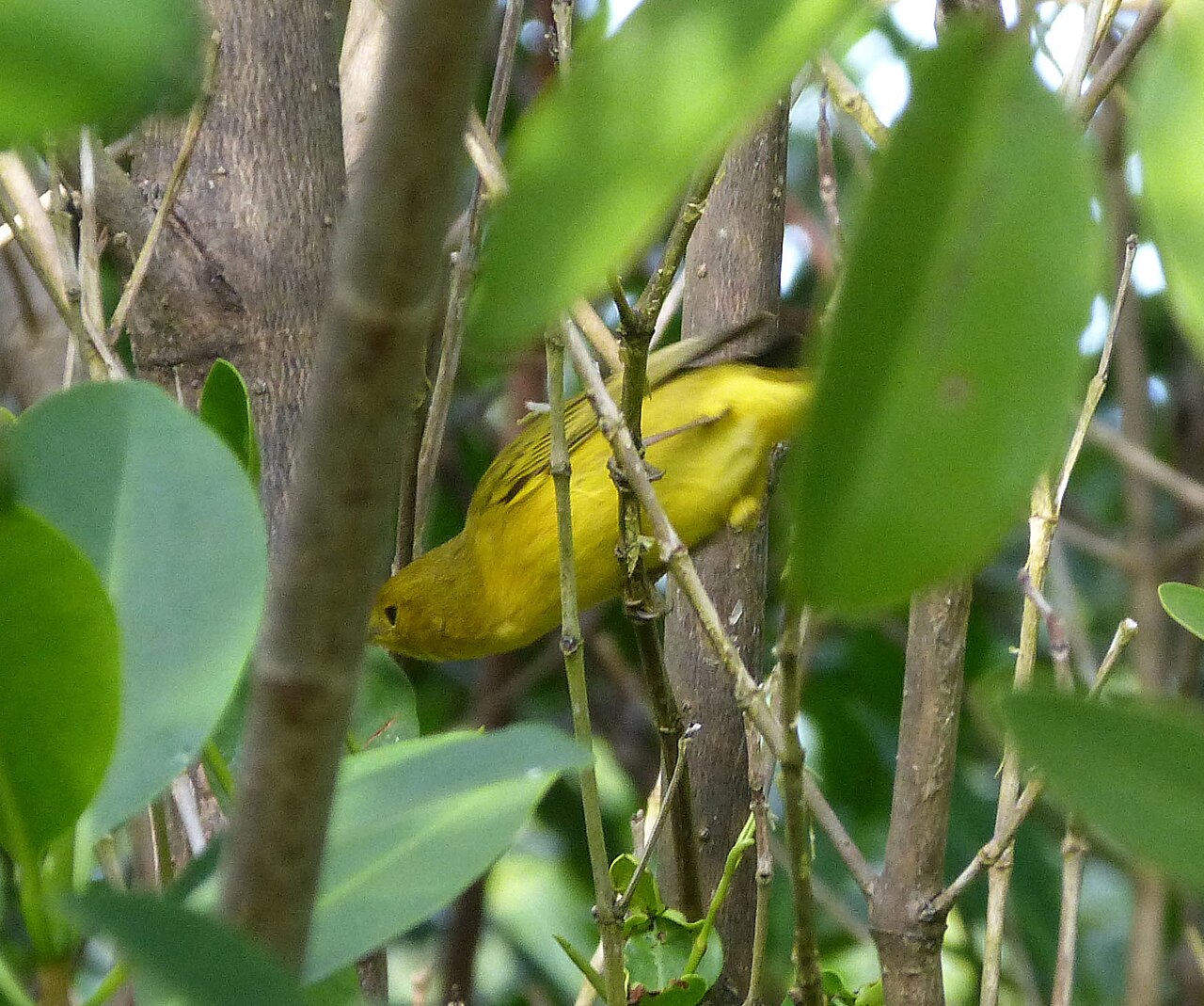
Identifying a female yellow warbler starts with her overall yellow color and plain face. The yellow warbler is one of the yellowest of all warblers, and the female is yellow to yellow-green overall, slightly duller and greener than the bright male. The key difference from the male is the lack of streaking, since the male shows distinct reddish-chestnut streaks on his yellow breast, while the female has plain, unstreaked or only faintly streaked underparts. Her face is plain and unmarked, with a large, dark, beady eye standing out against the yellow, and she lacks bold wing bars, instead showing yellow edges to the wing feathers. She also has yellow spots in the tail, unusual among warblers, which typically show white tail spots. This combination of overall yellow color, plain face, and lack of chestnut streaks identifies her, part of the wider group covered in our guide to types of warblers.
Female vs Male Yellow Warbler
The difference between a female and male yellow warbler comes down to color intensity and streaking. The male is a brilliant, uniform egg-yolk yellow, with distinct reddish-chestnut streaks running down his yellow breast, which give him his classic look. The female is duller and greener, a softer yellow to yellow-green, and she lacks the chestnut breast streaks, showing plain or only faintly marked underparts. Both sexes share the plain face with a beady black eye, the yellow wing edgings, and the distinctive yellow tail spots. Young birds and some females can be quite drab, even grayish, making them more challenging, but the overall yellow tones and yellow tail spots remain useful. This makes the yellow warbler relatively straightforward to sex when the chestnut streaks are visible on the male. Learning these differences helps with warbler identification generally, as explored in our guide to the female cardinal.
What Does a Female Yellow Warbler Look Like?
A female yellow warbler is a small, rounded, yellow songbird with a gentle, plain-faced expression. She is yellow to yellow-green overall, a little duller and greener than the vivid male, with soft yellow underparts that are plain or only faintly streaked. Her face is uniform and unmarked except for a large, dark, beady eye that stands out prominently, giving her a wide-eyed look. Her wings are darker with yellow edges to the feathers, and she lacks strong wing bars, while her short tail shows distinctive yellow spots rather than the white spots seen in many other warblers. She has a short, thin, straight bill typical of an insect-eating warbler, and a plump, compact shape. Some females and immatures are quite pale or grayish. This softly colored, plain-faced yellow warbler is a charming bird to see, as explored in our guide to the American goldfinch.
Where to See Female Yellow Warblers
Female yellow warblers can be found across much of North America during the breeding season, in a variety of shrubby, moist habitats. Yellow warblers favor wet, brushy areas such as willow thickets, streamsides, wetland edges, and overgrown fields, as well as gardens and woodland edges with dense shrubs. During spring and summer, a female may be seen flitting through willows and shrubs, gleaning insects from leaves and branches, often near water. Yellow warblers are among the most widespread warblers, breeding across Canada and much of the United States, and they migrate to the tropics for winter, so they are present in North America mainly in the warmer months. They are active and often forage fairly low in shrubs, making them easier to observe than many warblers. Because they favor accessible shrubby and wet habitats, female yellow warblers can be found by exploring willow thickets and streamsides in spring and summer, as detailed in our guide to types of orioles.
Yellow Warbler Behavior
The female yellow warbler shares the species’ active habits and some remarkable behaviors around nesting. According to the Cornell Lab of Ornithology, the yellow warbler is one of the most widespread warblers in North America, breeding across much of the continent in shrubby, wet habitats. A female builds a neat cup nest in the fork of a shrub or small tree, often in willows near water, and she does much of the work of raising the young. Yellow warblers are frequent hosts to brown-headed cowbirds, which lay their eggs in other birds’ nests, and female yellow warblers have a famous defense, since they will sometimes build a new nest floor directly over the cowbird eggs and start again, occasionally producing nests with several buried layers. She forages actively, gleaning caterpillars and other insects from leaves and twigs, often fairly low in shrubs. These active foraging and clever nesting behaviors make the female yellow warbler a fascinating bird, as explored in our guide to the female cardinal.
Telling Female Yellow Warblers From Other Yellow Birds
Female yellow warblers can be confused with other yellowish birds, so a few pointers help. Unlike the American goldfinch, the female yellow warbler lacks black wings and wing bars, showing plain wings with yellow edges instead, and she has a thin, straight warbler bill rather than the goldfinch’s conical seed-eating bill. Compared with female or immature orioles, she is much smaller and rounder with a fine bill. Other warblers can be trickier, but the yellow warbler’s overall plain yellow color, unmarked face with a big dark eye, and especially the yellow spots in the tail, rather than white, help separate her from most look-alikes. Some drab immature yellow warblers are quite gray and challenging, but even they usually show yellowish tones and the yellow tail spots. Learning these distinctions makes identifying yellow songbirds far easier, as explored in our guide to types of orioles.
Appreciating Female Yellow Warblers
Female yellow warblers are a rewarding bird to appreciate, both for their soft beauty and for the identification skills they build. Learning to recognize a female by her overall yellow color, plain face, big dark eye, and yellow tail spots, and to separate her from other yellowish birds, is a satisfying step in warbler watching, a branch of birding many find especially rewarding. Watching a female flit through willows and streamside shrubs in spring and summer, gleaning insects and tending her nest, is a lovely sight, and knowing her clever defenses against cowbirds adds interest. Because yellow warblers are widespread and often forage fairly low, they are among the more approachable warblers for a beginner. Taking the time to find and study a female yellow warbler makes spring and summer birding more engaging and connects you to the fascinating world of warblers.
Female Yellow Warblers Through the Seasons
The yellow warbler is a long-distance migrant, and knowing its seasonal rhythm helps you find females at the right times. In spring, yellow warblers return from the tropics to breed across much of North America, and females arrive to pair, build nests, and raise young in shrubby, wet habitats through the warmer months. By late summer and early fall, they begin their long migration back to Central and South America for the winter, so most of the continent sees them only from spring through early autumn. During migration, females and immatures may turn up in a wider range of habitats, including gardens and woodland edges, as they move south. Because they are absent in winter across nearly all of the United States and Canada, seeing a female yellow warbler is very much a warm-season pleasure. Timing your search for spring and summer gives the best chance to enjoy these lovely yellow songbirds.
Frequently Asked Questions
How can you tell if a yellow warbler is female?
A female yellow warbler is yellow to yellow-green overall with a plain face and lacks the chestnut breast streaks that males show. Her underparts are plain or faintly marked.
What is the difference between a male and female yellow warbler?
The male is bright yellow with reddish-chestnut breast streaks, while the female is duller and greener and lacks the streaks, showing plain yellow underparts.
What does a female yellow warbler look like?
She is a small, rounded, yellow to yellow-green bird with a plain face, a large dark beady eye, yellow wing edgings, plain underparts, and yellow tail spots.
Do female yellow warblers have streaks?
Female yellow warblers have plain or only faintly streaked underparts. The bold reddish-chestnut breast streaks are shown by the male, not the female.
What color are female yellow warblers?
Female yellow warblers are yellow to yellow-green overall, a little duller and greener than the bright egg-yolk yellow of the male. Some females are quite pale.
When are yellow warblers present?
Yellow warblers are present in North America mainly in spring and summer, breeding across much of the continent, then migrating to the tropics for the winter.
Where can you see a female yellow warbler?
Female yellow warblers favor wet, brushy areas such as willow thickets, streamsides, and wetland edges, where they glean insects from shrubs, often near water.