Female Praying Mantis: Size, Cannibalism, and Egg-Laying
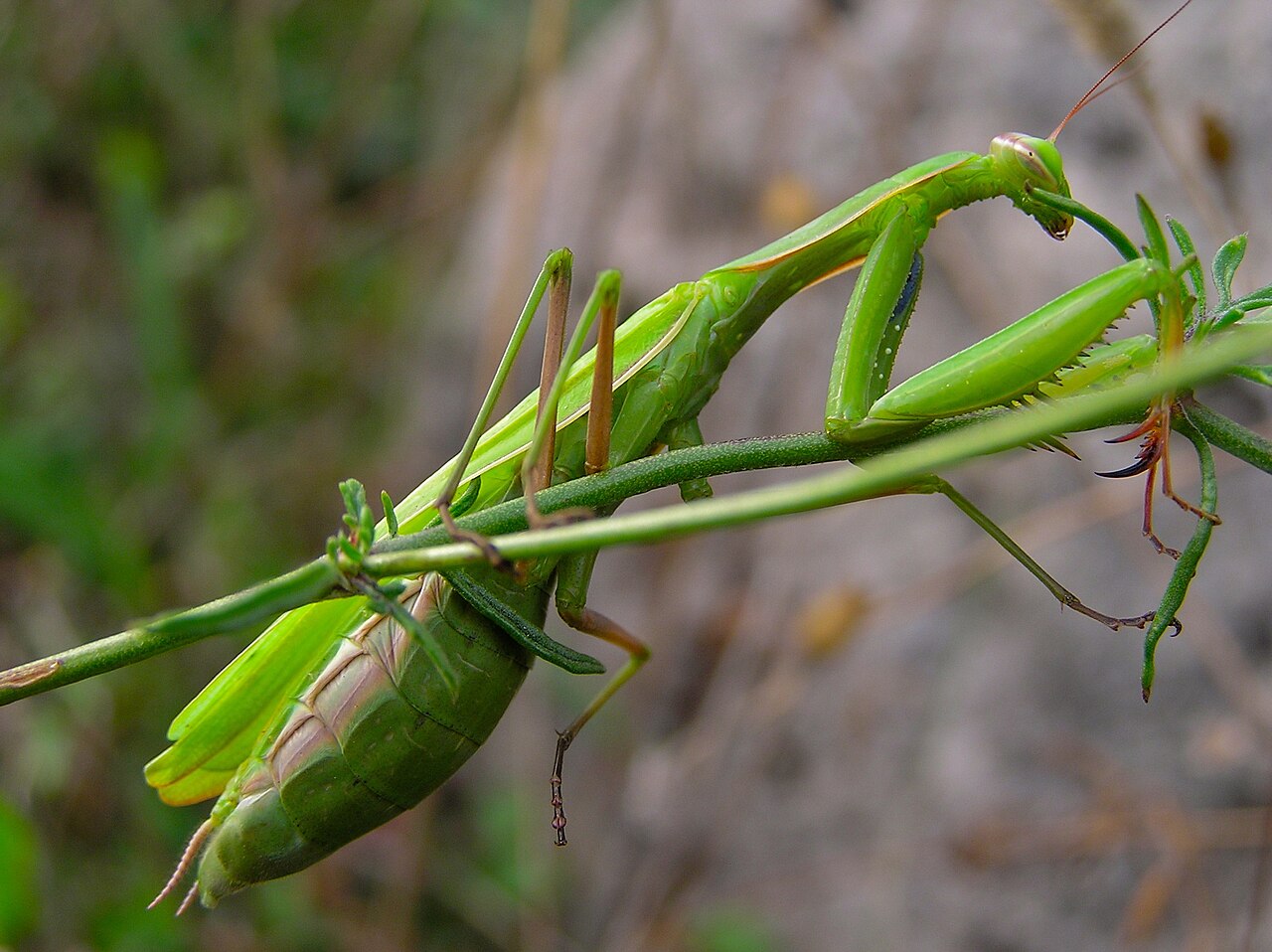
Female praying mantises are notably larger and heavier-bodied than males of the same species, typically running 20 to 30 percent longer with a considerably broader abdomen, a size difference directly connected to their role producing and laying eggs, and their infamous reputation for occasionally eating their mating partner during or after copulation, a behavior called sexual cannibalism that has made female praying mantises one of the most discussed examples of this phenomenon across the entire animal kingdom.
Beyond the size difference and the cannibalism behavior that dominates popular discussion of this species, female praying mantises show several other identifiable physical and behavioral distinctions from males worth understanding, particularly for anyone keeping mantises as pets, observing them in a garden setting, or simply curious about the genuine biology behind their fearsome reputation. This guide covers physical identification, the sexual cannibalism behavior in proper context, egg-laying biology, and practical considerations for anyone encountering or keeping female praying mantises specifically.
| Feature | Female | Male |
|---|---|---|
| Body size | Larger, 20-30% longer | Smaller, more slender |
| Abdomen | Broader, wider | Narrower, more tapered |
| Wings | Shorter relative to body | Longer, often fully cover abdomen |
| Flight ability | Limited or absent in many species | Generally stronger flier |
| Abdominal segments | 6 visible segments | 8 visible segments |
Physical Identification: Size and Body Shape
The most immediately noticeable difference between female and male praying mantises is overall size, with females typically running 20 to 30 percent longer than males of the same species and showing a considerably broader, heavier abdomen, a size difference that reflects the female’s biological role producing and carrying eggs, requiring meaningfully more body mass and internal capacity than the male’s comparatively slender, streamlined build.
Abdominal segment counting provides a more precise, though less immediately obvious, identification method: female praying mantises typically show six visible abdominal segments when viewed from below, while males show eight, a difference stemming from underlying reproductive anatomy that remains consistent across most commonly encountered mantis species regardless of the specific size or coloration variation between individuals.
Wing proportions offer a further useful distinguishing feature in many species, since males frequently possess proportionally longer wings relative to their body size, often fully covering the abdomen, while females in many species show comparatively shorter wings that may not fully cover their broader abdomen, a difference connected to the flight ability distinctions covered in more detail in the next section.
Flight Ability: Why Females Often Cannot Fly Well
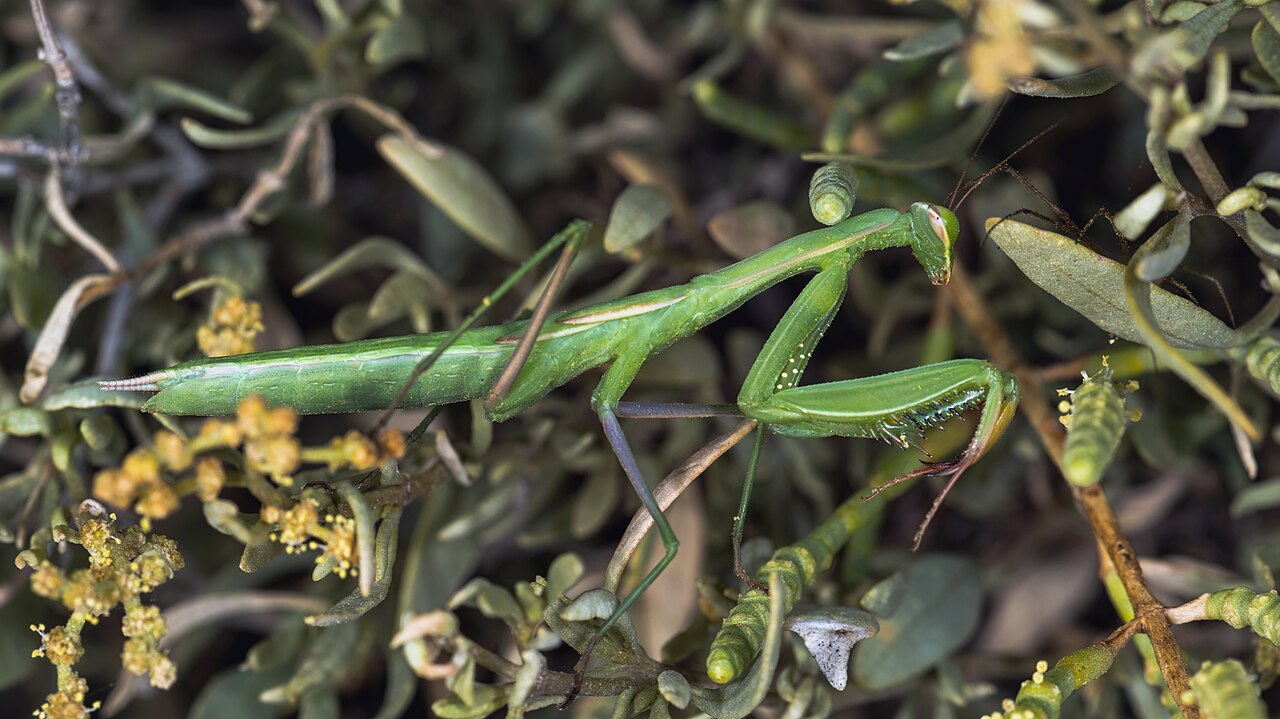
Many female praying mantises show meaningfully reduced flight capability compared to males of the same species, a limitation directly connected to their larger body size and the weight of developing eggs, since the additional mass females carry, particularly when gravid with a developing egg case, can make sustained flight genuinely difficult or impossible even in species where males fly readily and effectively.
This flight limitation varies considerably by species, with some female mantises retaining reasonable flight capability while others become almost entirely flightless, particularly notable in certain larger mantis species where the size difference between males and females runs especially pronounced, making the female’s terrestrial, ground-and-vegetation-based movement pattern considerably more limited in range compared to a flying male’s ability to actively search out and locate potential mates across a wider area.
This flight disparity connects directly to mating behavior more broadly, since males typically must actively fly or travel considerable distances to locate females, who tend to remain in a more fixed location due to their reduced mobility, a pattern that places the burden of active mate-searching disproportionately on males across most praying mantis species, setting up the risky approach behavior that factors into the sexual cannibalism dynamic covered next.
Sexual Cannibalism: What Actually Happens and Why
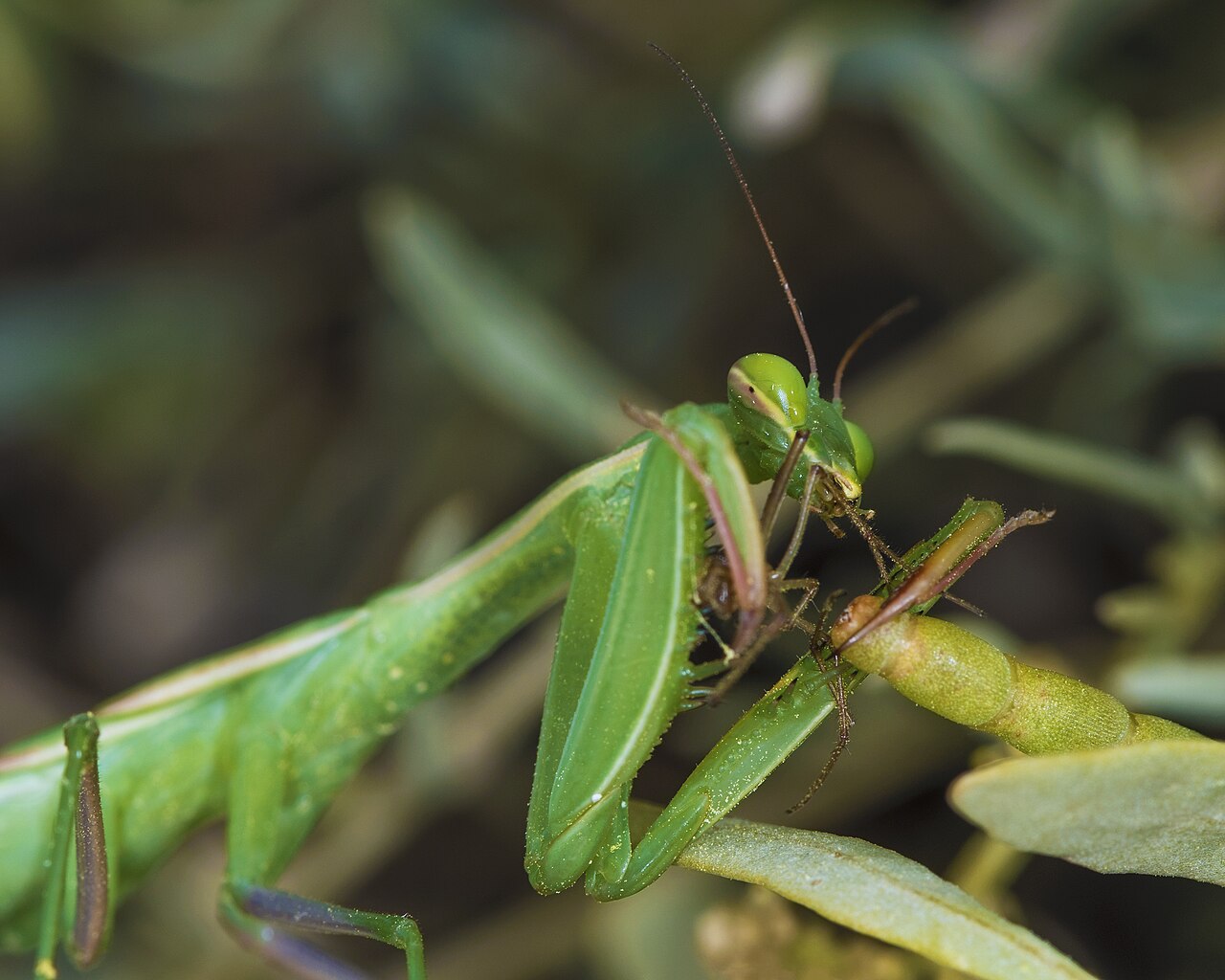
The behavior most commonly associated with female praying mantises, consuming the male during or after mating, does genuinely occur and has been well documented across multiple mantis species, a predatory precision similar in raw effectiveness to the hunting styles covered in our birds that eat mosquitoes guide, though the frequency and circumstances under which it happens are considerably more nuanced and variable than popular characterization often suggests, with cannibalism rates varying significantly depending on species, the female’s hunger level, and specific observational conditions.
Research into this behavior, including studies published through entomological research institutions, has found that cannibalism occurs considerably more frequently in captive or laboratory settings, where the female’s hunger level may be elevated and escape options for the male are limited, compared to wild observations, where males retain more room to approach cautiously and retreat if the female shows aggressive signals, suggesting the phenomenon may be somewhat exaggerated relative to typical wild mating encounters specifically.
From an evolutionary perspective, several theories attempt to explain why this behavior might actually benefit the species overall despite its apparent cost to individual males: consuming the male provides the female with a substantial nutritional boost that may improve egg production and offspring survival, meaning even a male that becomes a meal has still contributed genetically to the next generation, potentially with better resourced offspring than would otherwise result, a genuinely counterintuitive but scientifically supported perspective on behavior that initially seems purely detrimental to male mantises specifically.
Egg-Laying: The Ootheca
Female praying mantises produce a distinctive egg case called an ootheca, a frothy secretion that hardens around dozens to hundreds of eggs into a protective structure typically attached to twigs, stems, or other vertical surfaces, with the specific size, shape, and texture of the ootheca varying somewhat by species but generally providing substantial protection for developing eggs through the winter months in temperate regions where adult mantises themselves do not survive the cold season.
A single female can produce multiple oothecae over her lifetime, each containing anywhere from a few dozen to as many as 200 or more eggs depending on species, representing a substantial reproductive investment that, combined with the nutritional benefit some research suggests cannibalizing a mating partner may provide, connects directly back to the evolutionary explanations for sexual cannibalism covered in the previous section.
Unlike the parental care some insect species provide, including certain approaches documented among the baby dragonfly life cycle, female praying mantises generally do not guard or tend their oothecae after laying them, instead relying entirely on the egg case’s physical protection and, in many species, a degree of camouflage or textural resemblance to surrounding bark or vegetation to protect developing eggs through the winter until hatching produces a new generation of tiny nymphs the following spring, covered in more detail in our baby praying mantis guide, alongside general predatory insect diets covered in our broader lizard and insect diet resources.
Behavior and Hunting: Does Sex Affect Predatory Style?
Female praying mantises are generally considered somewhat more voracious and consistent predators than males, likely connected to their larger body size and correspondingly greater nutritional needs to support egg production, though both sexes share the same fundamental predatory hunting style characteristic of praying mantises overall: patient stillness followed by an extremely rapid strike using their specialized raptorial forelegs to seize prey.
This generally larger appetite and more substantial size also mean females can successfully tackle somewhat larger prey items than males of the same species typically attempt, occasionally including small vertebrates like hummingbirds or lizards in addition to the insects that form the primary diet for both sexes, a documented though relatively uncommon behavior that has drawn considerable public attention and concern among backyard bird enthusiasts specifically.
Despite this generally more voracious reputation, female praying mantises remain fundamentally beneficial predators in garden settings, consuming large numbers of common garden pest insects throughout the growing season, and gardeners specifically hoping to encourage mantis populations for natural pest control benefit from understanding that both sexes, but particularly the larger, more consistently predatory females, contribute meaningfully to reducing insect pest pressure in a garden setting.
Common Species and Regional Variation
Female size and behavioral tendencies, including the frequency of sexual cannibalism, vary meaningfully across the many praying mantis species found across North America, with the introduced Chinese mantis and European mantis, both common and widespread, showing somewhat different typical female sizes and documented cannibalism rates compared to native species like the Carolina mantis, meaning generalizations about female praying mantis biology sometimes need adjustment for the specific species actually being observed or kept.
Larger species generally show more pronounced size differences between females and males, along with correspondingly more documented instances of sexual cannibalism in both wild and captive observation, while smaller native species tend to show somewhat less dramatic size disparity and correspondingly lower reported cannibalism frequency, a pattern connecting body size difference itself to the likelihood of this particular mating behavior occurring across different species.
For anyone specifically trying to identify which species a particular female praying mantis represents, checking overall adult size, since introduced species like the Chinese mantis run notably larger than most native species, along with subtle color and pattern details on the wings and body, provides a starting point for species-level identification beyond the general female-versus-male distinctions covered throughout the rest of this guide, similar in approach to how young mantis nymphs are identified before reaching the more distinctly sized adult stage covered here.
Keeping Female Praying Mantises as Pets
Praying mantises have become increasingly popular exotic pets, and understanding sex-specific care considerations matters for anyone keeping them specifically, since female mantises generally require correspondingly larger enclosures given their bigger body size, along with meaningfully more frequent or substantial feeding to support their greater metabolic needs compared to smaller male mantises of the same species.
Keepers interested in breeding face the sexual cannibalism dynamic directly and practically, a risk calculus not unlike the careful introductions some keepers use when housing other predatory pets alongside the crested gecko‘s more solitary care needs, with most experienced mantis keepers recommending ensuring the female is well fed before any mating introduction specifically to reduce cannibalism risk, along with providing the male an escape route or removing him promptly after successful mating rather than leaving both mantises together indefinitely in a single enclosure without any means of separation.
Beyond breeding-specific considerations, general female praying mantis care follows the same basic principles as mantis keeping overall: an appropriately sized enclosure with adequate height for molting, appropriate temperature and humidity for the specific species being kept, and a regular feeding schedule of appropriately sized live prey, with the main sex-specific adjustment being scaling enclosure size and feeding quantity upward somewhat to match the female’s larger body size and correspondingly greater needs.
Why Female Praying Mantises Matter Ecologically
Female praying mantises, through their egg-laying capacity producing the next generation and their generally more substantial predatory pressure on garden pest insects, play a disproportionately important ecological role within mantis populations specifically, making their presence in a garden setting a genuinely valuable natural pest control asset that many gardeners specifically try to encourage through appropriate habitat provision.
The broader mantis life cycle, from overwintering ootheca through nymph development to adult reproduction, depends fundamentally on successful female reproduction each season, meaning garden practices that support female mantis survival and successful egg-laying, avoiding broad-spectrum insecticide use and providing appropriate overwintering habitat for oothecae specifically, help sustain mantis populations providing pest control benefits across multiple growing seasons rather than just a single year.
Understanding female praying mantis biology in its full context, including but not limited to the sexual cannibalism behavior that dominates popular discussion, provides a considerably more complete and scientifically grounded picture of these genuinely fascinating predatory insects than the simplified, often somewhat sensationalized characterization that circulates more broadly in popular culture and casual conversation about this species.
Frequently Asked Questions
How can I tell if a praying mantis is male or female?
Females are noticeably larger with a broader abdomen and typically show six visible abdominal segments compared to the male’s eight, along with generally shorter wings relative to body size.
Do female praying mantises really eat males during mating?
Yes, this does occur, though less frequently in the wild than popular characterization suggests. Research indicates cannibalism happens more often in captive settings, particularly when the female is especially hungry or the male has limited room to escape.
Why do female praying mantises eat their mates?
Several evolutionary theories suggest the nutritional benefit may improve egg production and offspring survival, meaning the behavior, despite its cost to the individual male, may actually benefit overall reproductive success for the species.
Can female praying mantises fly?
Many species show reduced flight capability in females compared to males, largely due to their larger body size and the weight of developing eggs, with some species becoming nearly flightless in females specifically.
What is a praying mantis egg case called?
An ootheca, a frothy secretion that hardens around dozens to hundreds of eggs, typically attached to twigs or stems, providing protection through winter until nymphs hatch the following spring.
Are female praying mantises more aggressive predators than males?
Generally yes, likely connected to their larger size and greater nutritional needs for egg production, allowing them to successfully tackle somewhat larger prey than males of the same species typically attempt.
Do I need to worry about cannibalism if I keep pet praying mantises?
If breeding, yes; ensuring the female is well fed beforehand and providing the male an escape route or removing him promptly after mating reduces this well-documented risk considerably.