Praying Mantis Symbolism: Meaning Across Cultures and Faiths
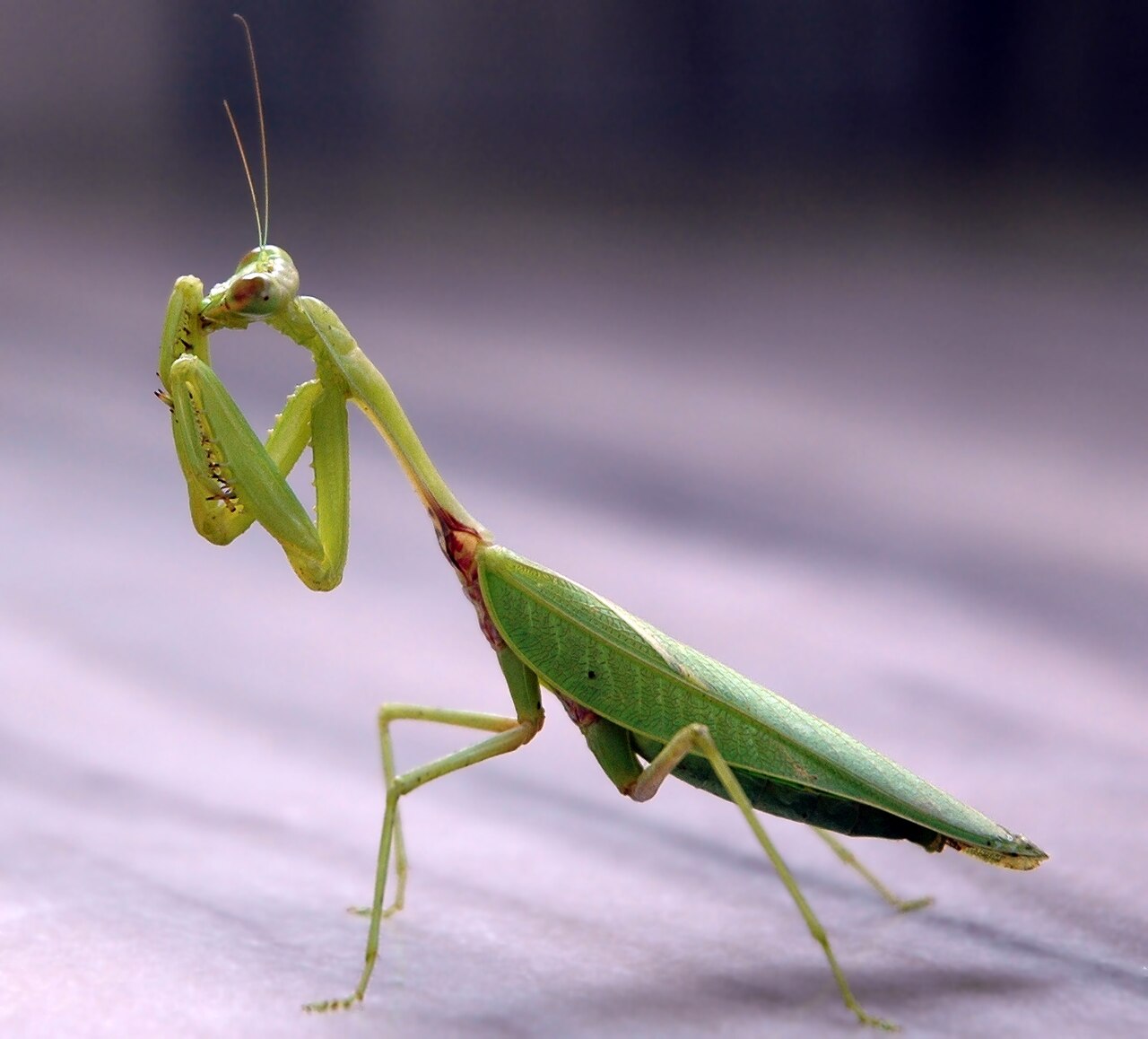
Seeing a praying mantis means, in nearly every tradition that noticed the insect, that you should slow down, pay attention and trust your own timing. Praying mantis symbolism grew out of one posture: the ancient Greeks named the insect with the clasped forelegs mantis, the prophet, Christians saw a creature at devotion, and the San people of southern Africa made it the trickster who created the world. In American yards the mantis you meet is a Carolina mantis (Stagmomantis carolina), a Chinese mantis (Tenodera sinensis) or a European mantis (Mantis religiosa), the last two introduced to this continent.
Every meaning below is belief, tied to the culture that holds it, and the insect itself is hunting rather than praying. The Bible does not mention the mantis and Native American lore barely does.
A praying mantis symbolizes stillness, patience, focus and prophecy. Greek tradition called it a seer, Chinese tradition made it an emblem of courage and the martial arts, and San mythology made Mantis the creator god. Seeing one is read as a good omen that asks you to wait, watch and strike only when the moment is right.
| Situation | Common interpretation | What is usually happening |
|---|---|---|
| Mantis in your garden | Luck and a blessing on the household | Hunting pollinators and pests on flowers in late summer |
| Mantis at your window or door | A message asking for calm and attention | Drawn to porch lights, where moths and flies gather |
| Mantis inside the house | Protection, a spirit guide visiting | Came in on plants or through a screen gap, seeking warmth |
| Green mantis | Growth, healing, new beginnings | Color matches leafy cover, set at the last molt |
| Brown mantis | Grounding, stability, endurance | Color matches dry stems and bark in autumn |
| Mantis seen repeatedly | A guide staying close through a decision | One mantis holds a hunting territory for weeks |
| Mantis in a dream | Patience rewarded, or a predator in disguise | Dream symbolism, personal to the dreamer |
What Does It Mean to Be Visited by a Praying Mantis?
Being visited by a praying mantis is read as a message to be still, and in American folk belief a mantis landing nearby is a blessing on the home or a sign that a loved one is thinking of you. Modern spiritual writers treat the visit as a prompt to slow a rushed decision, since the mantis can hold one position for hours and then strike faster than the eye can follow.
The mantis that lands on you is a separate and stronger sign, covered in what a praying mantis landing on you means. A visit to the porch or the garden is the gentler version, and the traditions agree on what to do about it: nothing.
Are Praying Mantises Good or Bad Omens?
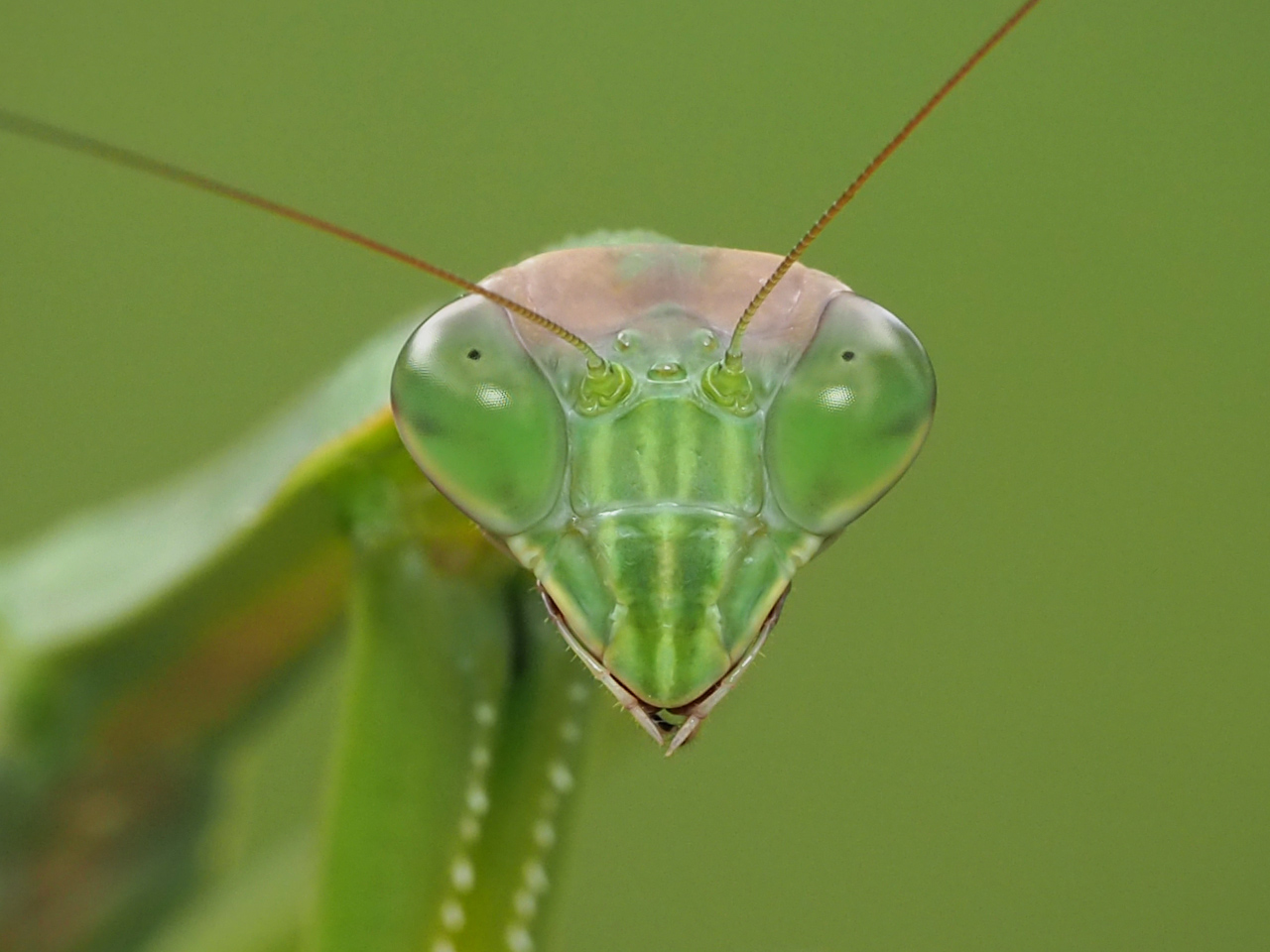
Praying mantises are good omens in almost every culture that assigned them one, with a single strand of warning that comes from the female’s habit of sometimes eating her mate. Chinese, Japanese, Greek and southern African traditions all treat the mantis as lucky, wise or sacred. The darker reading belongs to dream dictionaries and to Victorian natural history, which cast the mantis as a hypocrite that prays while it kills.
Whether a sighting is lucky in the everyday sense has its own answer in are praying mantises good luck. The short version is yes in the garden, where the insect takes grasshoppers, caterpillars and flies.
Praying Mantis Symbolism in Greek and Egyptian Tradition
In ancient Greece the mantis was a prophet, and the word mantis itself means seer, the same root behind the English word for a person who reads the future. Greek folk belief held that the insect pointed the way home for lost travelers and children, and its raised forelegs were taken as a gesture of foretelling rather than prayer.
In Egyptian funerary texts a small mantis-like insect appears as a guide that leads the dead through the underworld, alongside the scarab. Scholars still debate exactly which insect the texts mean, so the Egyptian mantis is a probable rather than a certain ancestor of the later guide and prophet symbolism.
The Mantis in China and Japan: Courage and Kung Fu

In Chinese tradition the praying mantis stands for courage, cunning and fearlessness, because it will raise its forelegs against an opponent many times its size. The proverb of the mantis trying to stop a cart mocks hopeless bravado, while the saying of the mantis stalking the cicada, unaware of the oriole behind it, warns against greed that forgets its own danger.
The Northern Praying Mantis style of kung fu, which tradition attributes to the Shandong master Wang Lang, copies the insect’s hooked grabs and sudden strikes. In Japan the mantis, kamakiri, is a symbol of autumn and of the warrior, and it appears on samurai helmet crests and in haiku about fading summer. Japanese folk belief adds that a mantis brings good fortune and should never be killed.
The San Creator Mantis and Other African Traditions
Among the San people of southern Africa the mantis is Kaggen, the creator and trickster who made the moon, the eland and the first people, and the richest body of mantis myth anywhere belongs to them. Kaggen takes many forms and is frequently foolish, greedy or unlucky in the stories, yet he is also the one who dreams the world into being.
Khoikhoi tradition treated the mantis as a bringer of luck whose arrival at a camp was welcomed, and in parts of East and West Africa a mantis on the body is read as favor from ancestors.
Praying Mantis Meaning in Christianity, the Bible and Islam
In Christian folk belief the praying mantis is a reminder to pray, and believers who find one on a windowsill or a church door take it as a prophetic sign from God that a prayer has been heard. Early modern European naturalists called it the “soothsayer,” and French peasants called it prie-Dieu, the prayer stool, and believed it pointed lost children toward home.
In Islamic folk tradition the mantis is said to face toward Mecca when it prays, a belief recorded in parts of the Middle East and North Africa, and killing one is considered unlucky there. Neither the Quran nor the hadith literature mentions the mantis, so the belief is a folk reading of the same posture Christians read as prayer. Among North American Indigenous nations the mantis appears only in scattered stories, since insect lore there centers on the spider, the dragonfly and the grasshopper, and grasshopper symbolism carries the related meanings of leaps and abundance.
Green or Brown Praying Mantis: Does Color Change the Meaning?
A green praying mantis is read as growth, healing, fresh starts and good luck in love, and a brown praying mantis as grounding, endurance and protection through a lean season. Spiritual writers treat the green mantis as a spring and summer sign and the brown one as a message to conserve energy.
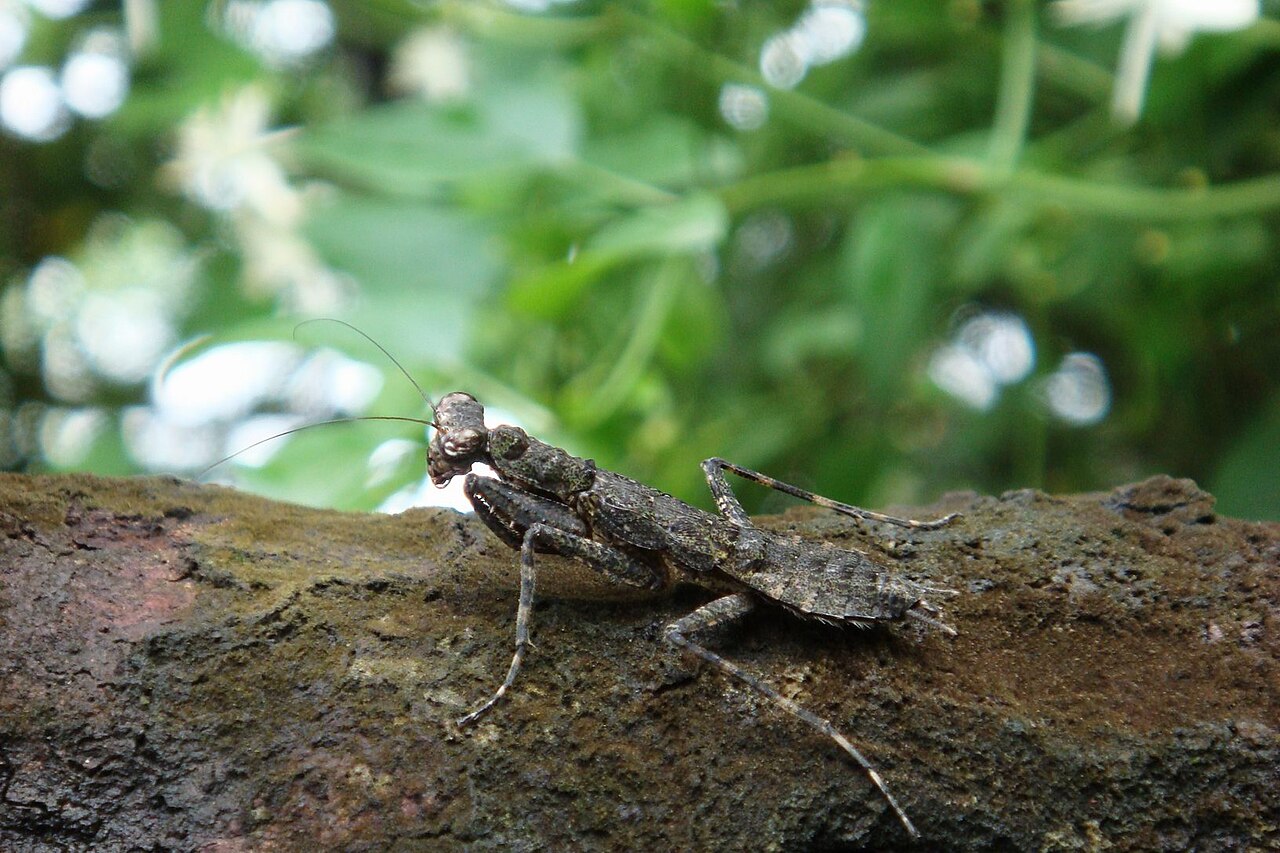
The insect’s color has a plainer cause. Mantises settle their adult color at the final molt and tend to match their surroundings, so a nymph that grew up on green foliage ends up green and one on dry stems ends up brown or tan. Both colors appear in the same species, and a Chinese mantis can be either.
Praying Mantis Symbolism of Death, Femininity and Pregnancy
Praying mantis symbolism around death comes from the female, who sometimes eats the male during or after mating, and from the insect’s stillness, which looks like a waiting executioner. The behavior is less common in the wild than in crowded lab cages, and it is one strategy among several for the female to fuel her eggs, so the folk reading exaggerates a real but occasional habit.
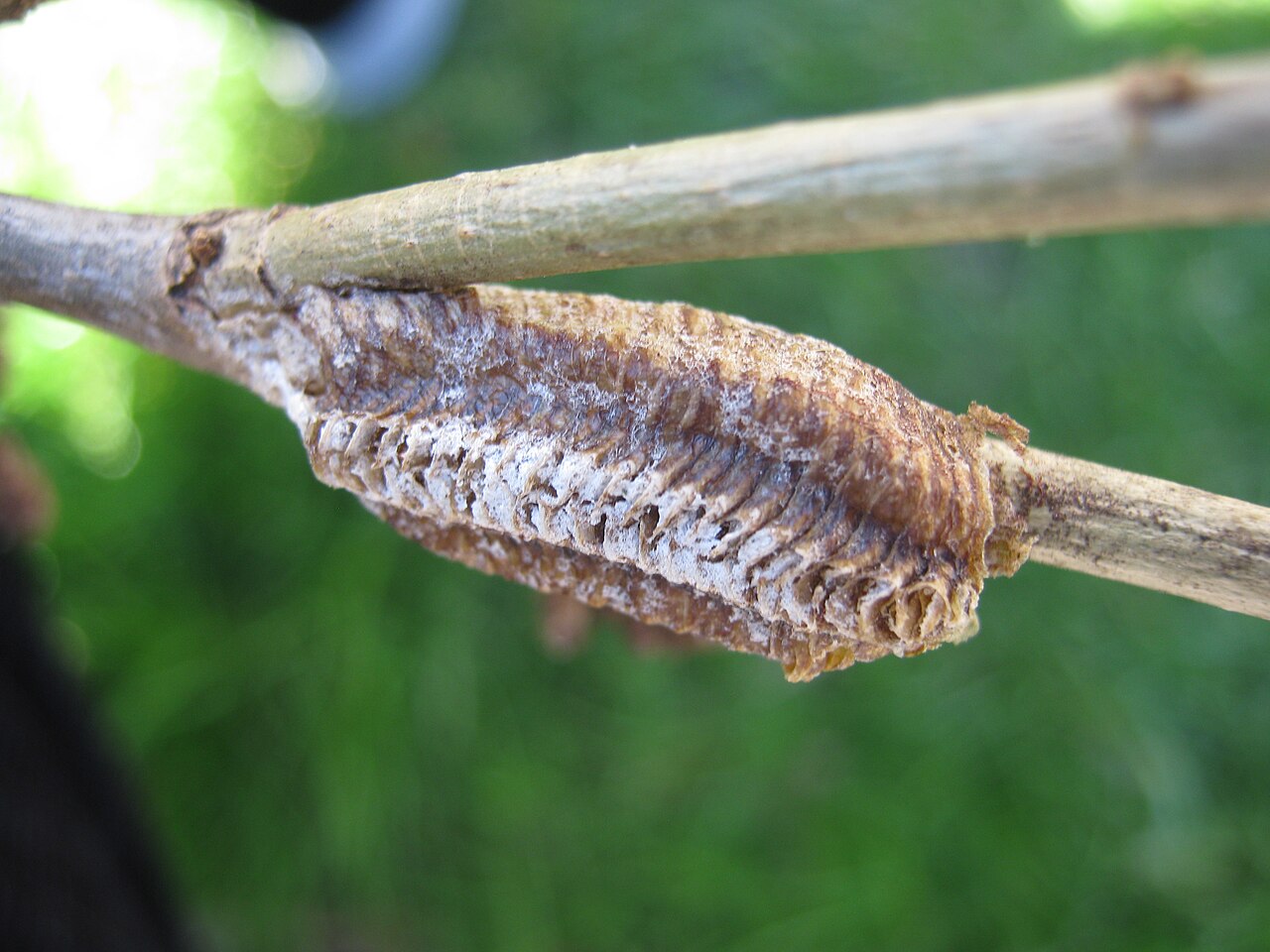
The same habit made the mantis a symbol of female power. The pregnancy reading runs the other way: because a female lays a large foam egg case that shelters her young through winter, the mantis is read as a sign of fertility and of a pregnancy that will be well protected. A mother watching a female praying mantis place her egg case on a fence rail in October is watching the source of that belief.
What Should You Do If You See a Praying Mantis?
If you see a praying mantis, leave it where it is and let it hunt, since it is harmless to people and useful to the garden. A mantis will not bite unless it is pinned, it carries no venom, and its grip, while startling, cannot break skin on an adult hand. If you want it off a doorframe, offer a finger or a stick below its front legs and let it climb, then set it on a shrub.
Folk tradition adds a few customs. Japanese and Chinese belief says make a wish or offer a quiet thank-you, and never kill it. The Chinese and European mantises arrived with nursery stock and gardeners who released them, and the US Fish and Wildlife Service groups such introductions under invasive species, since the large Chinese mantis takes native pollinators and even small hummingbirds. Gardeners who want the native Carolina mantis can leave the egg cases, described in praying mantis eggs, on the stems where they were laid.
Praying Mantis as Spirit Animal, Totem and Omen
As a spirit animal the praying mantis is said to appear for people who need to stop reacting and start observing, and it is read as the patron of meditation, martial arts and anyone whose timing matters more than their speed. The modern spirit animal framework gives the mantis stillness, precision, intuition and the willingness to be unseen.
As an omen the mantis is read by its approach. A mantis facing you is taken as a direct message, one turned away as a sign you are being watched over, and one that stays for days as a guide settling in for a decision you have not made. Among insect omens the mantis sits beside the dragonfly as a creature of change and clarity, and the two are among the few garden insects almost no tradition reads as evil.
Praying Mantis in a Dream
A praying mantis in a dream is commonly read as a call to patience, a warning that someone close is not what they seem, or a reminder that a long wait is about to pay off. A mantis that strikes in the dream is taken as a decision finally made, a mantis watching you as your own conscience, and a swarm of mantises as competing demands to be met one at a time.
Jungian readers treat the mantis as the observing self, the part of the mind that watches emotion without acting on it. The darker readings return here: a dream of being eaten by a mantis is read as a relationship that consumes, and a dead mantis as the end of a period of hesitation. The broader guide sits in insect spiritual meanings.
Frequently Asked Questions
Is it rare to see a praying mantis?
No, seeing a praying mantis is not rare in the United States from August through October, when adults are full grown and hunting on flowers and porch lights. They are hard to spot earlier in the year because nymphs are small and camouflaged. The sense of rarity behind the omen is a matter of timing.
Are you not supposed to touch a praying mantis?
No rule forbids touching a praying mantis, and it cannot hurt you, though Japanese and Chinese folk belief says handling or killing one brings bad luck. Let it climb onto a finger from below instead of grabbing it from above, which triggers a defensive strike. Wash your hands afterward as with any insect.
What month does praying mantis lay eggs?
Praying mantises lay eggs in September and October across the United States, attaching a foam egg case called an ootheca to a stem, fence or wall. The case hardens and shelters the eggs through winter. Nymphs emerge from mid spring to early summer, depending on how far north the garden sits.
Can praying mantises hear you?
No, a praying mantis cannot hear your voice, because its single ear, on the underside of the thorax between the hind legs, is tuned to ultrasound far above human speech. The ear evolved to detect hunting bats, and a flying mantis that hears a bat’s echolocation drops into a spiral dive to escape.
How long are praying mantises pregnant?
Praying mantises are not pregnant in the mammal sense, but a female typically lays her first egg case within a few weeks of mating and can produce several cases over the fall. Each case holds dozens to a few hundred eggs, which develop over the winter and hatch when spring temperatures rise.
What is the natural enemy of a praying mantis?
Bats are the chief natural enemy of adult praying mantises, and the mantis ear tuned to bat echolocation is the result. Birds, spiders, frogs, lizards and larger mantises take nymphs and adults by day. Parasitic wasps attack the egg cases, and a female mantis will eat a smaller male of her own species.