Baby Praying Mantis: Nymphs, Egg Cases, and Raising Them
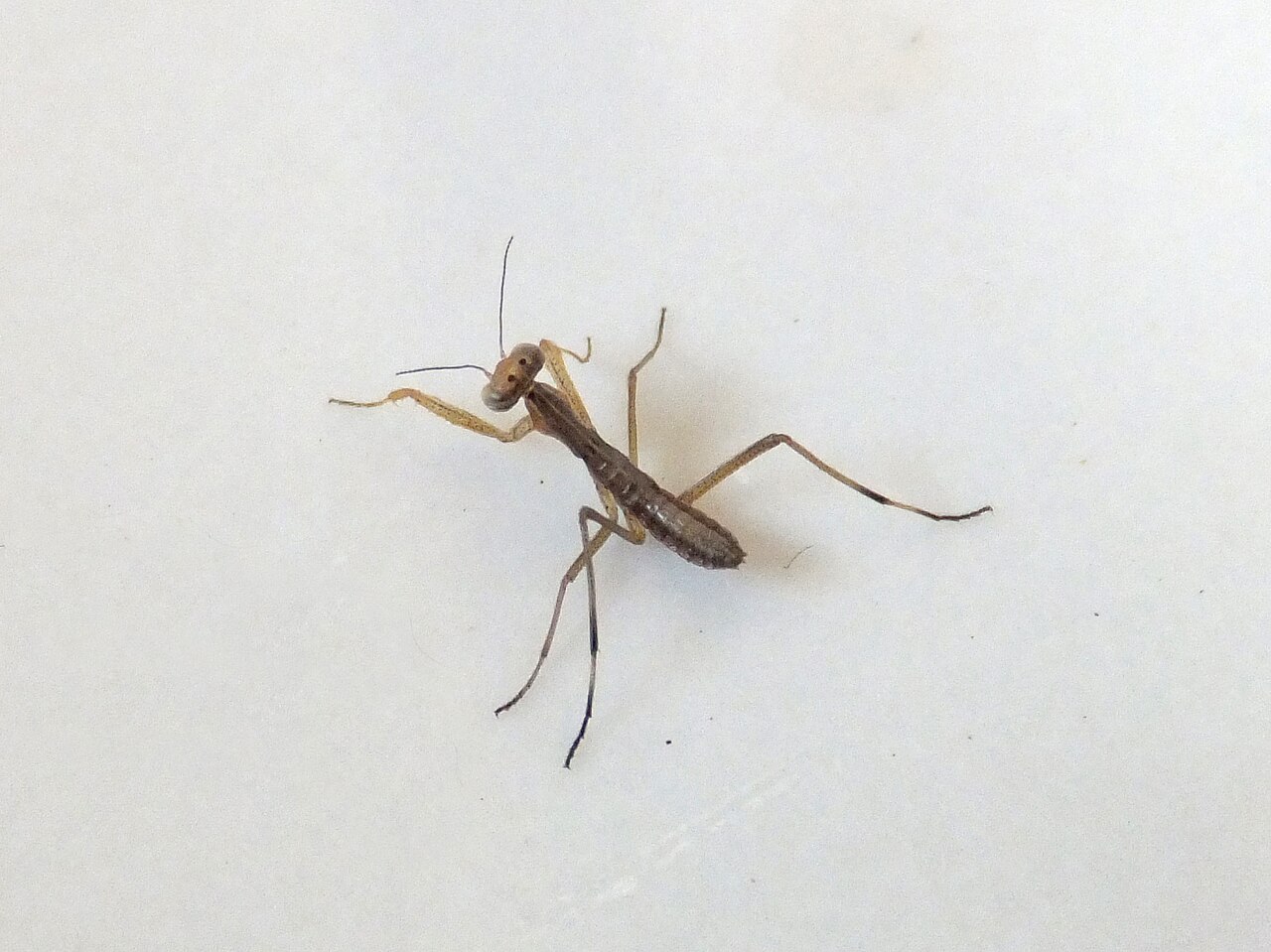
A baby praying mantis is called a nymph, and it emerges looking like a miniature adult with no wings. Between 50 and 400 of them hatch simultaneously from a foam egg case called an ootheca, dangling briefly on silk threads before dispersing, and they begin hunting within hours. They also begin eating each other within hours, which is why so few survive.
Mantises undergo incomplete metamorphosis, so there is no caterpillar stage, no cocoon, and no chrysalis. The nymph simply molts six to nine times, growing wing pads that enlarge with each stage until a final molt produces the winged adult. This guide covers the egg case, hatching, cannibalism, what nymphs eat, how to raise them, and what to do with an ootheca found in a garden.
| Quick Facts | Baby Praying Mantis |
|---|---|
| Called | Nymph |
| Egg case | Ootheca, hardened foam, overwinters |
| Nymphs per case | 50 to 400 depending on species |
| Size at hatching | About 0.2 to 0.4 in |
| Molts to adult | 6 to 9 depending on species and sex |
| Survival to adult | Very low, often a handful per case |
The Ootheca: Where Baby Mantises Come From
The female produces a frothy substance from glands at the tip of her abdomen and whips it into a foam with her ovipositor, laying eggs into it as she works. The foam hardens within hours into a tough tan or brown case that insulates and waterproofs the eggs inside.
Shape varies by species and is useful for identification. Chinese mantis oothecae are rounded and roughly the size of a walnut, European mantis cases are more elongated and tapered, and Carolina mantis cases are flatter and narrower, often attached lengthwise along a stem.
The case is built to survive winter. Eggs laid in autumn overwinter inside it attached to a stem, fence, or wall, enduring freezing temperatures that would kill the insects at any other stage, and they hatch when spring temperatures rise sufficiently. A single female may produce several oothecae over her final weeks before dying.
Hatching
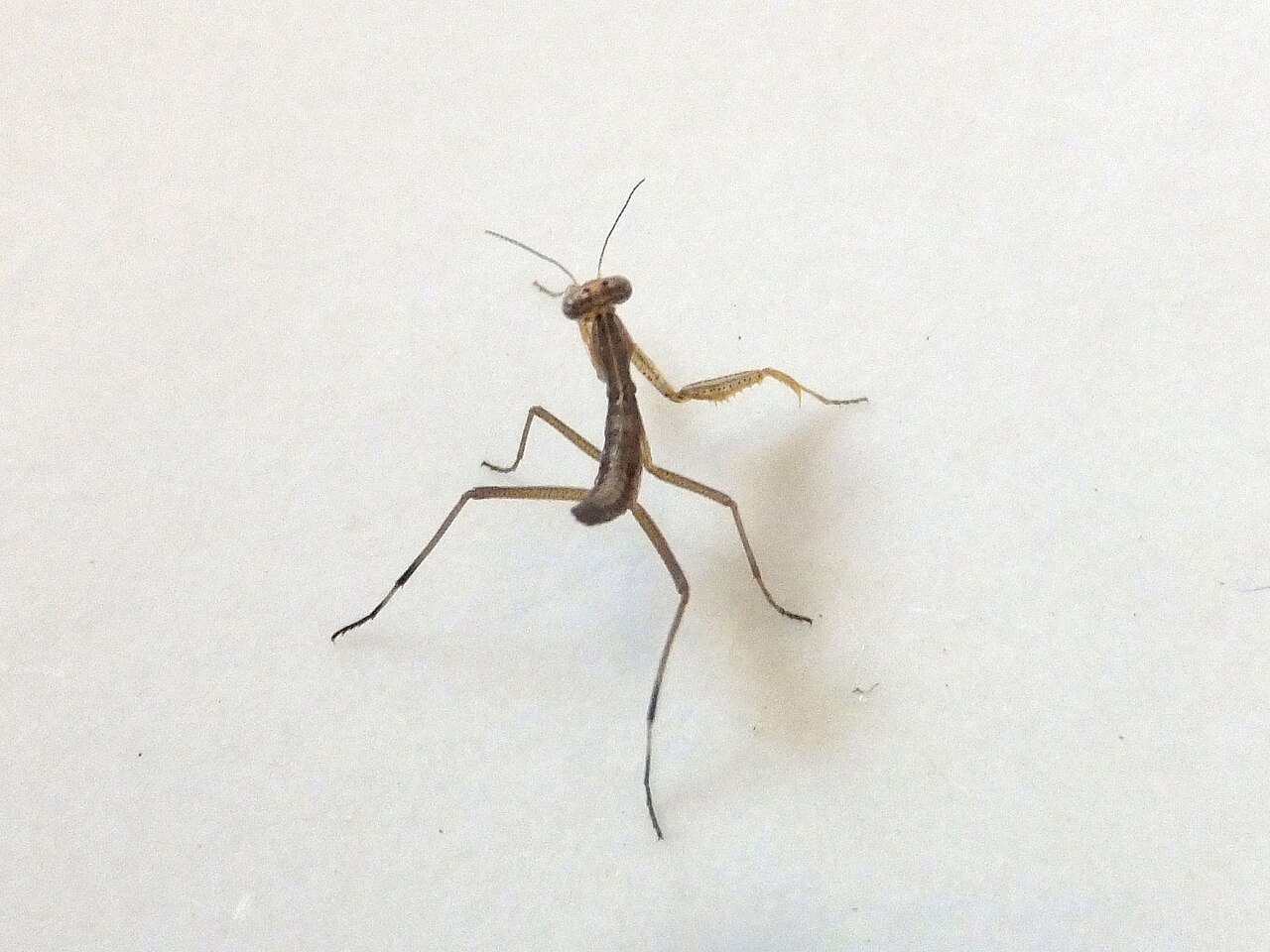
Emergence happens fast and all at once. Nymphs work their way out of chambers in the foam and typically dangle briefly from thin silk-like threads, hanging in a cluster beneath the case before dropping free and scattering into surrounding vegetation.
The whole event can take under an hour, and it is one of the more remarkable things to witness in a garden. A walnut-sized case suddenly producing 200 tiny insects looks disproportionate, and most people who find it happening assume something has gone wrong.
Timing depends on temperature rather than date. Most temperate species hatch in late spring when sustained warmth arrives, and this is precisely why an ootheca brought indoors in autumn is a problem: the warmth of a heated house triggers hatching in December, and several hundred nymphs emerge into a room with nothing to eat.
Cannibalism From the First Hour
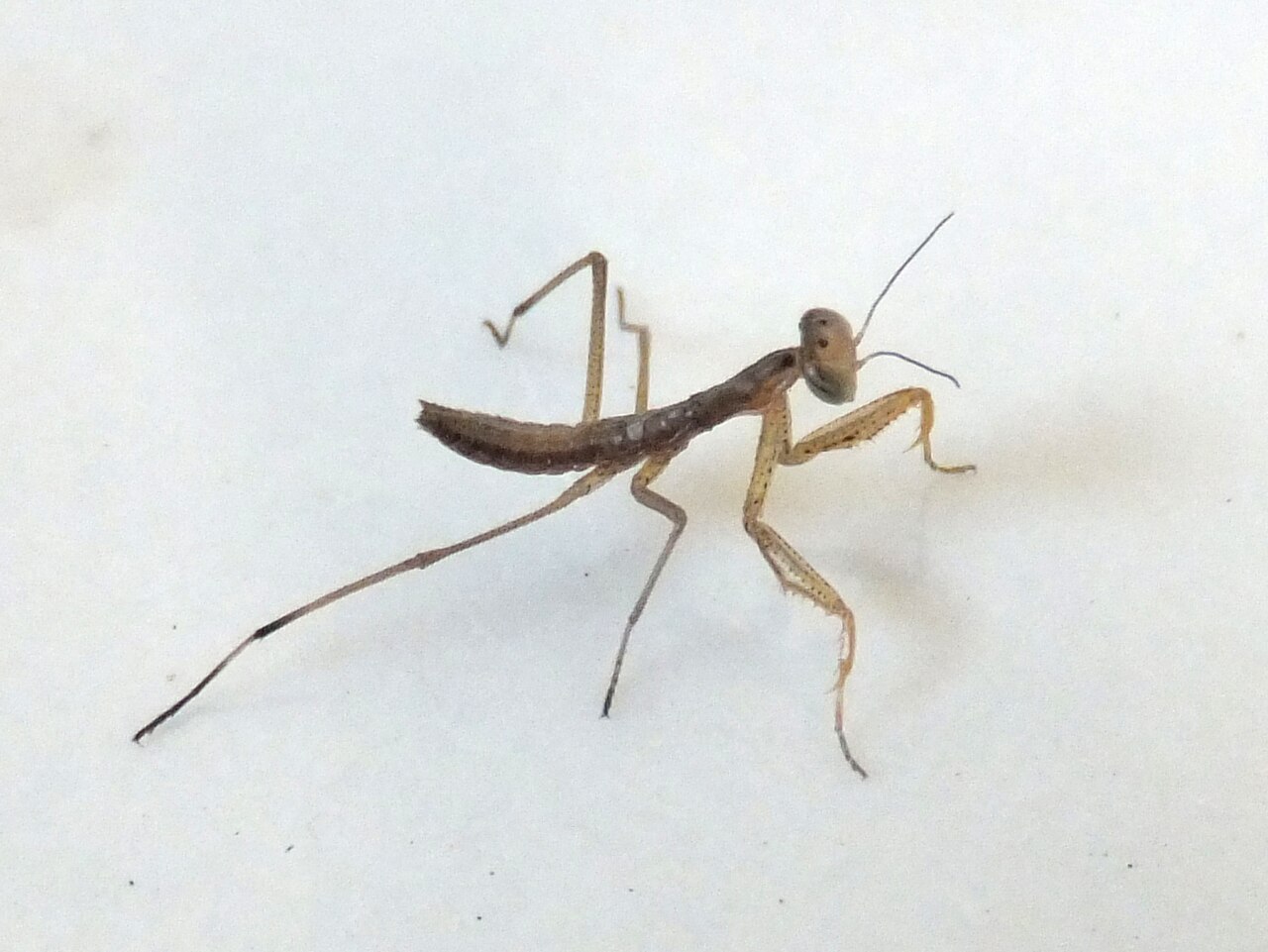
Mantis nymphs are predatory and undiscriminating from the moment they hatch, and their most immediately available prey is each other. Cannibalism begins within hours of emergence and is the primary reason survival rates are so low.
This is not a defect but a strategy. Producing hundreds of offspring where only a few will survive is a viable approach when the alternative is producing few offspring that face the same predation from birds, spiders, ants, and other insects. The dispersal that follows hatching exists largely to reduce sibling encounters.
Field survival is brutal. Of 200 nymphs from a single case, typically only a small handful reach adulthood, with the rest lost to cannibalism, predation, starvation, and failed molts. Anyone raising them in captivity must house nymphs individually after the first instar or accept the same outcome, and the same pattern shows up in our guide to the orchid mantis.
What Baby Mantises Eat
Nymphs eat live prey scaled to their size, and nothing else. Newly hatched mantises take fruit flies, springtails, aphids, small gnats, and thrips, hunting by the same sit-and-wait ambush the adults use.
Prey size increases with each molt. By the third or fourth instar a nymph takes houseflies, small crickets, and moths, and later instars handle full-sized crickets, roaches, grasshoppers, and other mantises. Large adults occasionally take small vertebrates including lizards and, in documented cases, hummingbirds at feeders.
They will not take dead prey. Mantises respond to movement, and a motionless insect is invisible to them, which is why captive nymphs need live feeders rather than anything prepared. Gut-loading those feeders raises the nutritional value passed on, as our guide to what crickets eat describes.
Molting and Growth
Growth happens in steps. A nymph feeds until its exoskeleton constrains it, then hangs upside down from a surface, splits the old cuticle, and works free, emerging soft and pale before hardening over several hours.
Molting is the most dangerous moment in a mantis’s life. It must hang freely with enough clearance beneath it, and a failed molt leaves the insect deformed or trapped in the old skin and usually kills it. Insufficient height in a captive enclosure is the single most common cause of death in raised mantises.
Species and sex determine the number of molts, typically six to nine, with females often requiring one more than males. Wing pads grow visibly larger at each stage, and the final molt produces functional wings. Total time from hatching to adult runs roughly three to six months depending on temperature and feeding, and adults then live a few months more.
Raising Mantis Nymphs
The core requirement is vertical space. Any enclosure should be at least three times the nymph’s body length in height so it can hang and molt safely, and this ratio matters more than floor area at every stage.
Separate them early. Nymphs can be kept communally for a short period immediately after hatching if fed heavily, but losses mount quickly, and individual housing from the second instar onward is the only reliable approach. Small deli cups with mesh lids work well for early instars.
Conditions are straightforward but need attention. Most species do well at 70 to 80 F with moderate humidity maintained by light misting rather than a wet substrate, since stagnant damp causes mold and respiratory problems while good ventilation prevents both. Feed every one to two days for young nymphs, and stop offering food entirely when a nymph is preparing to molt, because live prey can injure a soft freshly molted insect.
Finding an Ootheca in Your Garden
Leave it where it is. An egg case attached to a stem, fence, or wall is exactly where it should be, and the nymphs that hatch from it are useful garden predators taking aphids, flies, and caterpillars.
If it is on something you need to prune or move, cut the section of stem it is attached to and tie or wire it to a shrub in a sheltered spot at least a foot off the ground. Do not remove the case from its attachment point, since detaching it damages the structure and exposes the eggs.
Predation and parasitism take a heavy toll before hatching. Birds peck oothecae open, mice and squirrels chew them, and parasitoid wasps lay eggs inside them, so a proportion of cases never produce anything. That is normal and is part of why females produce several.
Telling a Mantis Nymph From Other Insects
Newly hatched nymphs are small enough to be mistaken for several other things, and the raptorial front legs are the feature that settles it. No other common garden insect holds a pair of folded, spined grasping legs beneath the head in that characteristic posture, and it is visible even at 0.2 in.
The head shape helps too. Mantis nymphs have a triangular head that swivels independently of the body, a trait shared with almost no other insect, and a nymph will turn to track a moving object in a way that looks unmistakably deliberate.
Two lookalikes cause most confusion. Assassin bug nymphs are also predatory with grasping forelegs, but their front legs are less obviously folded and they carry a curved beak rather than chewing mouthparts. Young stick insects are elongated and slow with ordinary walking legs and no grasping structure at all.
Native and Introduced Species
This is worth knowing before buying egg cases, which are widely sold as garden pest control. The two mantises most people encounter in North America are not native. The Chinese mantis was introduced in the 1890s and the European mantis around the same period, and both are now widespread.
Native species exist and are smaller. The Carolina mantis is the most widespread native across the southern and eastern states, reaching about 2.5 in against the Chinese mantis at 4 in or more, and evidence indicates the larger introduced species displace and prey on native mantises where they overlap.
The pest control claim also deserves scrutiny. Mantises are indiscriminate ambush predators that take beneficial insects including bees, butterflies, and other predators alongside pests, and the documented cases of large mantises killing hummingbirds at feeders are a real if uncommon consequence. They are fascinating animals worth having in a garden, but buying and releasing non-native egg cases is a different proposition from letting the ones already present do their thing. The predators they compete with are covered in our guides to the baby wolf spider, the jumping spider, and the southern house spider, and the prey they share appears in our guide to crickets versus grasshoppers.
Related reading: Female Praying Mantis.
Frequently Asked Questions
What is a baby praying mantis called?
A nymph. Mantises undergo incomplete metamorphosis, so there is no larval or pupal stage. The nymph hatches looking like a wingless miniature adult and molts six to nine times, growing wing pads that enlarge until a final molt produces the winged adult.
How many babies hatch from one egg case?
Between 50 and 400 depending on species, emerging almost simultaneously and often dangling on silk threads before dispersing. Survival is very low, and typically only a handful from each case reach adulthood.
Do baby mantises eat each other?
Yes, from within hours of hatching. Cannibalism is the main reason survival rates are so low, and it is why captive nymphs must be housed individually from the second instar. The rapid dispersal after hatching exists largely to reduce sibling encounters.
What do baby praying mantises eat?
Live prey only, scaled to size. Newly hatched nymphs take fruit flies, springtails, aphids, and small gnats, moving to houseflies and small crickets by the third or fourth instar. They respond to movement, so dead prey is invisible to them.
I found an egg case, what should I do?
Leave it outdoors where it is. If you must move it, cut the stem it is attached to and tie that to a sheltered shrub at least a foot off the ground rather than detaching the case. Never bring one indoors, since warmth triggers a winter hatch that kills every nymph.
How long does a praying mantis take to grow up?
Roughly three to six months from hatching to adult depending on temperature and feeding, through six to nine molts. Adults then live a few months more, with females typically outliving males and dying after producing their egg cases.
Are praying mantis egg cases good for pest control?
Less than advertised. Mantises are indiscriminate ambush predators that take bees, butterflies, and other beneficial insects alongside pests, and the commonly sold species are non-native Chinese and European mantises that displace smaller native species such as the Carolina mantis.