Blue Snake Identification: 6 Species and Which Ones Are Venomous
A blue snake in the United States is almost always a blue racer, an eastern indigo snake, or a garter snake with blue stripes. None of them is venomous. The electric blue snakes that fill image searches are Southeast Asian species, and one of those is genuinely dangerous.
True blue pigment does not exist in snake skin. Blue comes from structure, from the way stacked layers in the scales scatter light, which is why the same animal looks slate gray in shade and brilliant blue in direct sun.
Blue snakes in the US are all nonvenomous: the blue racer (Coluber constrictor foxii), the eastern indigo snake (Drymarchon couperi), and blue striped garter snakes. The only dangerous blue snakes, the blue Malayan coral snake and the blue insularis pit viper, live in Southeast Asia and not in North America.
| Species | Where it lives | Adult length | Venomous |
|---|---|---|---|
| Blue racer | Great Lakes states | 36 to 60 in (90 to 152 cm) | No |
| Eastern indigo snake | Florida, southern Georgia | 60 to 102 in (152 to 260 cm) | No |
| San Francisco garter snake | San Mateo County, California | 18 to 55 in (46 to 140 cm) | No |
| Blue striped garter snake | Gulf coast of Florida | 18 to 26 in (46 to 66 cm) | No |
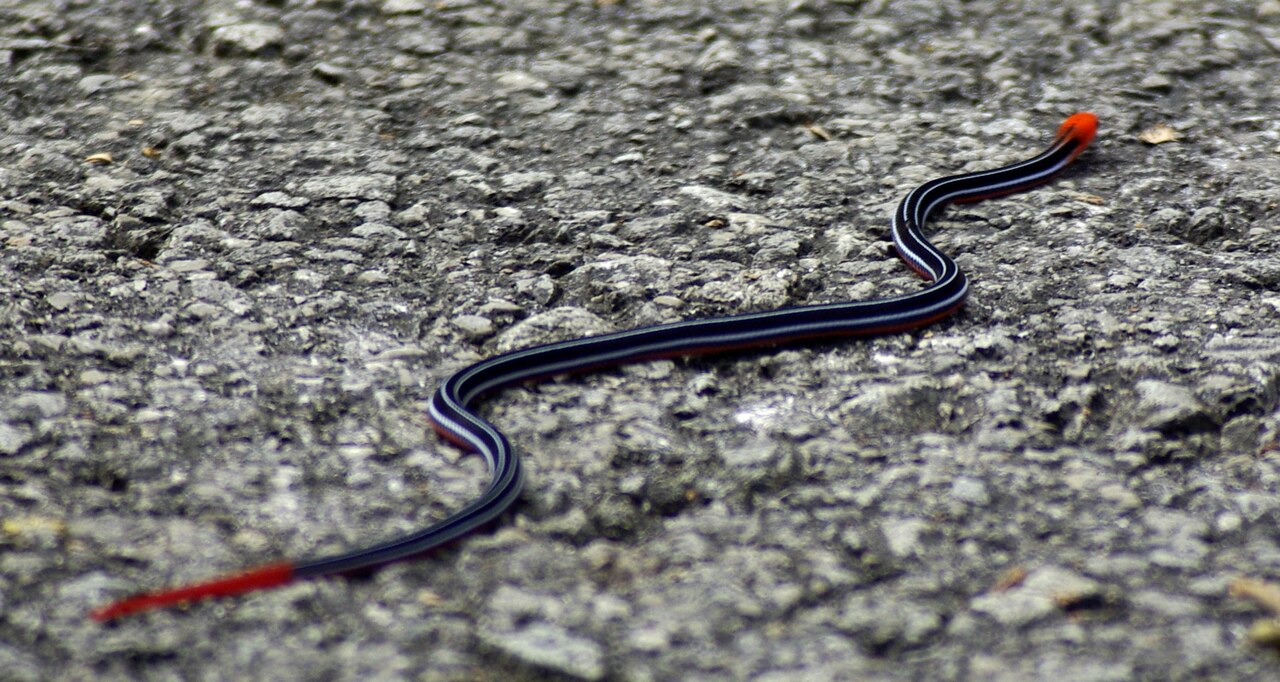
| Blue Malayan coral snake | Malaysia, Thailand | 50 to 70 in (127 to 178 cm) | Yes, highly |
| Blue insularis pit viper | Indonesian islands | 24 to 39 in (61 to 99 cm) | Yes |
Are Blue Snakes Venomous?
No blue snake native to the United States is venomous. The blue racer, the eastern indigo snake and every blue phase garter snake subdue prey without venom, so a bite is a scratch wound that needs soap and water.
Two blue species abroad are a different matter. The blue Malayan coral snake carries a fast acting venom that attacks nerve function, and the blue insularis pit viper has a hemotoxic bite. Neither occurs wild in North America. For a venom check on a banded snake, compare coral snake and king snake markings.
Which Snake Is Blue in Colour in the US?
The blue racer is the classic answer: a slender, fast, grayish blue snake of the Great Lakes region with a white chin, large eyes and a dark mask, reaching 36 to 60 in (90 to 152 cm). In bright sun the sides look almost turquoise.
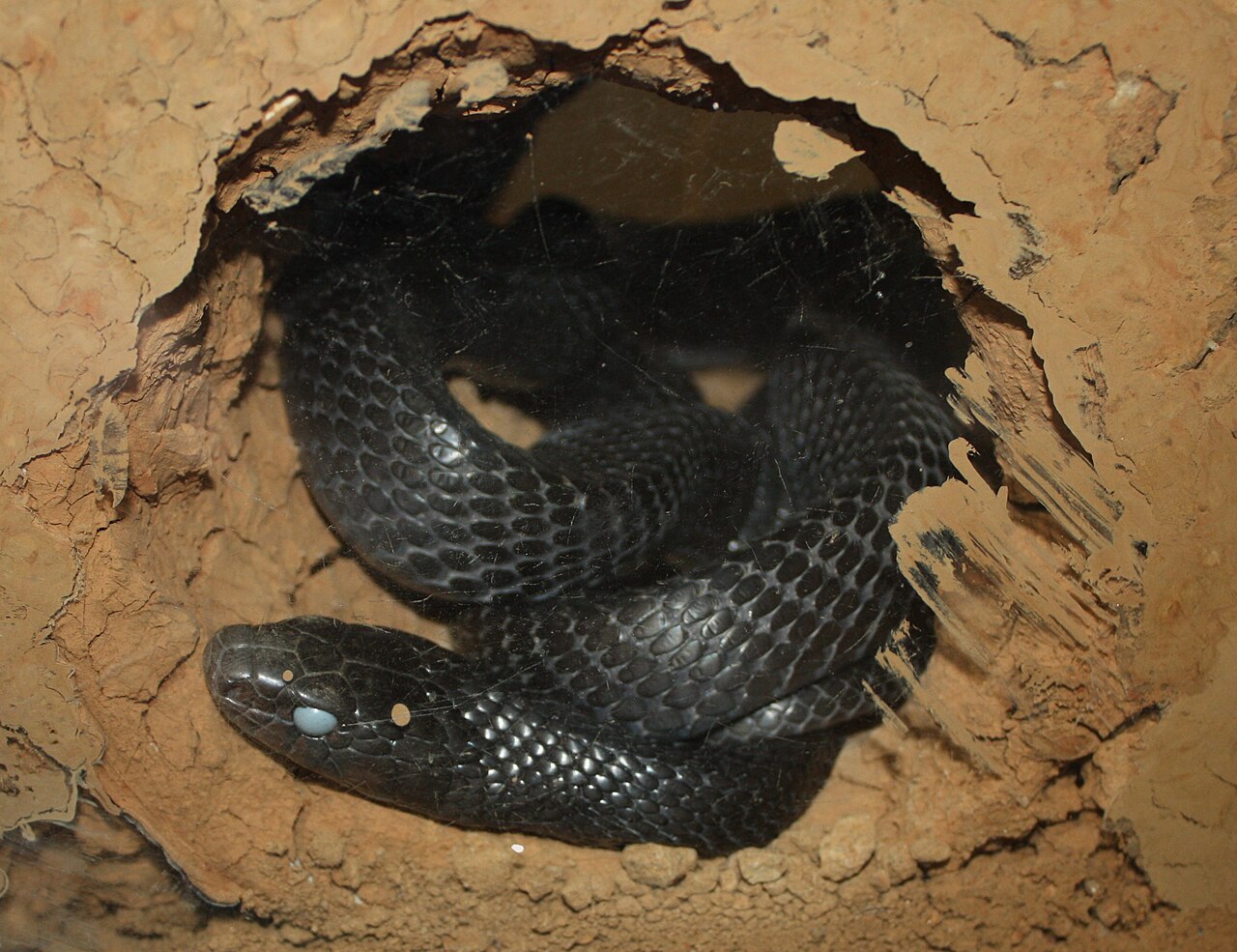
The eastern indigo snake is the longest native snake in the country at up to 102 in (260 cm), glossy blue black with an orange chin. It is federally threatened and may not be handled. Darker individuals are easy to confuse with the harmless constrictors in our black snake identification guide.
Garter snakes round out the list. The San Francisco garter snake wears a turquoise stripe between red and black bands and is endangered. Along the Florida Gulf coast, blue striped garter snakes swap the usual yellow stripe for pale blue.
Are There Naturally Blue Snakes?
Yes, though the color is optical rather than pigment based. Breeders also select axanthic morphs, animals that lack yellow pigment, and a green snake without yellow reads as blue. The same loss explains why rough green snakes often turn blue after death.
That optical trick drives color in other animals too, from the blue spotted salamander to blue birds, none of which carry blue pigment either.
Blue Racer vs Eastern Indigo Snake
Size settles most cases. An adult indigo is thick bodied and well over 5 ft (152 cm), while a racer is pencil thin by comparison. Range settles the rest, since racers hold the upper Midwest and indigos are restricted to Florida and a sliver of Georgia.
Behavior is the third clue. A blue racer bolts, often straight past your feet toward cover. An indigo moves slowly and openly. For other two tone confusions, compare black and white snakes and black and yellow snakes.
Frequently Asked Questions
Is a blue snake rare?
Blue snakes are uncommon but not rare in the right place. Blue racers are locally common across the Great Lakes states, while the San Francisco garter snake is endangered and the eastern indigo snake is federally threatened, as listed by the US Fish and Wildlife Service.
Are blue snakes poisonous?
No snake is poisonous to touch, and no US blue snake is venomous either. Poisonous means harmful when eaten, venomous means it injects venom through a bite. Blue racers, indigo snakes and blue striped garter snakes are neither.
Will a blue runner snake chase you?
No. Blue racers, sometimes called blue runners, flee rather than attack, and they often take the shortest line to cover even when that line runs toward you. It looks like a charge and is not one.
Can you give me a list of blue snakes?
The practical list is six: blue racer, eastern indigo snake, San Francisco garter snake, blue striped garter snake, blue Malayan coral snake and blue insularis pit viper. The first four are North American and harmless, the last two are Asian and venomous.