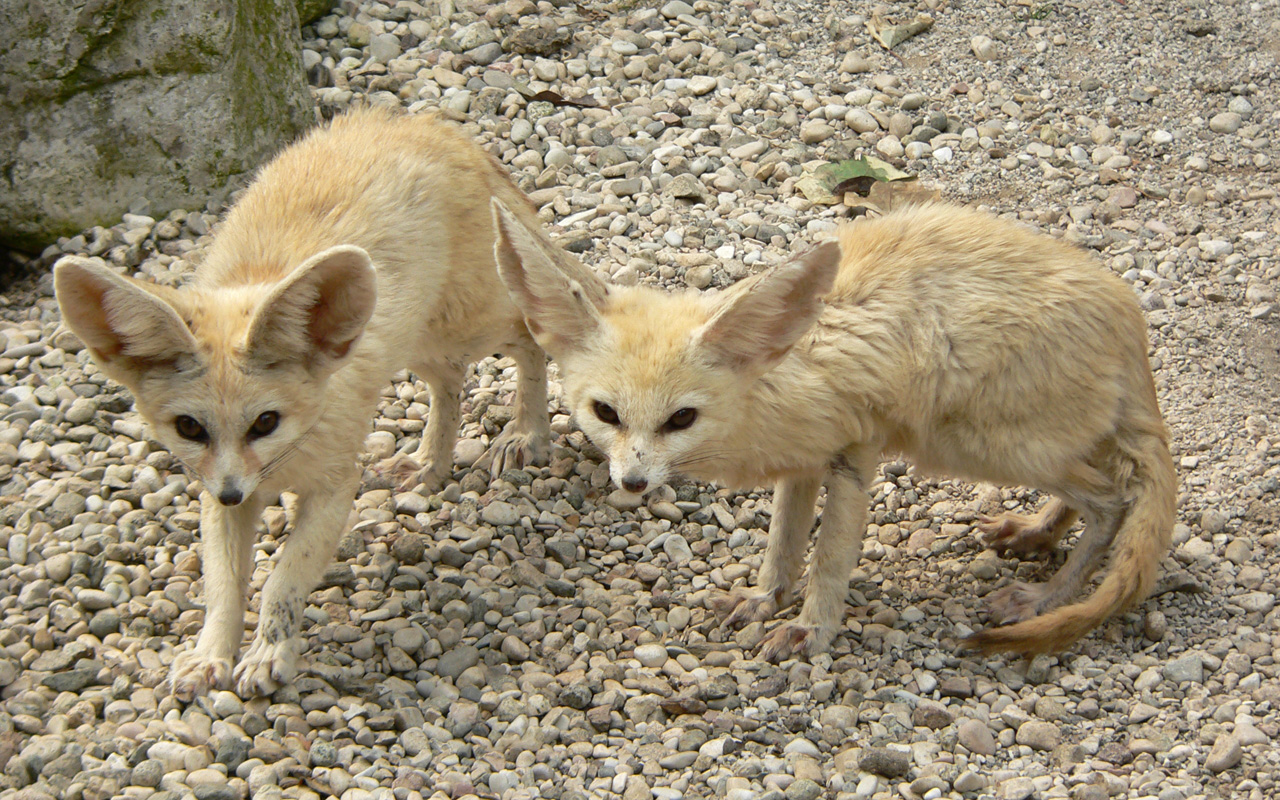
Fennec Fox Lifespan: 10 to 14 Years in Captivity, 6 in the Wild
The fennec fox lifespan runs about 10 to 14 years in captivity and roughly 6 to 8 years in the wild, and that gap is one of the widest of any fox. A well kept fennec fox (Vulpes zerda) in a zoo or an experienced private home routinely outlives its Saharan cousins by half a decade, simply because nothing hunts it, food never runs short, and a veterinarian catches kidney and dental trouble before it turns fatal.
Wild numbers for this species are thinner than most care sheets admit. Fennecs are nocturnal, they live in burrow systems under open desert, and no one has run a long term marked population study on them. The wild figure is an estimate built from related small foxes and from the handful of animals that have been tracked, so treat it as a working range rather than a measured average.
Fennec foxes live 10 to 14 years in captivity, with documented individuals reaching 16, and an estimated 6 to 8 years in the wild. Predation, heat stress and food scarcity drive the wild figure down. In captivity, kidney disease, dental disease and obesity from an incorrect diet are the three problems that shorten the lifespan most.
| Measure | Fennec fox |
|---|---|
| Captive lifespan | 10 to 14 years, up to 16 recorded |
| Wild lifespan (estimated) | 6 to 8 years |
| Adult weight | 1.5 to 3.5 lb (0.7 to 1.6 kg) |
| Body length | 9 to 16 in (24 to 41 cm) |
| Ear length | 4 to 6 in (10 to 15 cm) |
| Sexual maturity | 9 to 11 months |
| Litter size | 2 to 5 kits, one litter per year |
How Long Do Fennec Foxes Live in the Wild?
Most wild fennec foxes that survive their first year go on to live roughly 6 to 8 years. The first twelve months are the bottleneck: kits emerge from the den at about four weeks, and that is when eagle owls, jackals and caracals take the heaviest toll. An animal that clears its first dry season has already passed the hardest test the Sahara sets.
The burrow is the reason any of them make it at all. Fennecs dig extensive dens in sand and soft soil, sometimes shared between family groups, and those tunnels hold moisture and stay tens of degrees cooler than the surface. A fox that can retreat underground through the hottest eight hours of the day spends far less water and energy than one that cannot.
Field data remains scarce enough that any wild figure carries a wide error bar. The Smithsonian’s National Zoo fennec fox profile is candid about this: captive longevity is documented, wild longevity is inferred. If you see a confident wild average quoted to one decimal place, it was not measured.
How Long Do Fennec Foxes Live as Pets?

Pet fennec foxes typically live 10 to 14 years, the same band as zoo animals, provided the owner gets three things right: a taurine rich carnivore diet, annual veterinary care from someone who treats exotics, and an enclosure the animal cannot escape. Miss any of those and the realistic expectation drops into the 6 to 8 year range, which is where badly kept pets tend to land.
Escape is the single most common cause of early death in private homes. A fennec that gets out at night in a North American suburb faces traffic, dogs and cold it has no adaptation for, and recovery rates are poor. Owners who lose one usually lose it in the first year, before the animal has learned the property.
The other hard truth is veterinary access. Many small animal clinics will not see a fennec at all, and the nearest exotics vet may be a two hour drive. Anyone weighing this species should read our guide to keeping a fennec fox as a pet before buying, because the care burden, not the purchase price, is what ends most placements.
Fennec Fox Lifespan Compared to Other Foxes

Fennecs outlive nearly every other fox in captivity, and the reason is size. Small bodied carnivores usually burn out faster than large ones, but foxes break that pattern in human care because the small species face almost no predation risk once protected. Red foxes average 10 to 12 captive years, arctic foxes similar, and fennecs sit at the top of the range.
In the wild the ranking inverts sharply. A wild red fox averages 3 to 4 years, a wild arctic fox lifespan lands near 3 to 6, and the fennec’s 6 to 8 looks strong by comparison. Desert life is harsh but it is not crowded: fennecs face fewer competitors, fewer diseases and less vehicle traffic than foxes living near people.
For the full picture across the genus, including why the captive and wild figures diverge so much more in some species than others, see our overview of fox lifespan by species. The short version is that human contact is the variable that matters most, and it cuts both ways.
What Shortens a Fennec Fox’s Lifespan in the Wild?

Heat and water are the first constraints. Fennecs get nearly all their water from food and from metabolic processes, and a bad insect year forces them to range further across open sand in daylight temperatures that can exceed 110 F (43 C). Exposure during those forced daytime movements kills animals that would otherwise be healthy.
Human pressure is the second. Fennecs are trapped for the exotic pet trade across parts of North Africa, and the animals taken are usually young. Trapping also disturbs denning family groups, which depresses the survival of kits left behind. Habitat loss at the desert margin adds pressure at the edges of the range.
Disease plays a smaller role than it does in foxes living near towns. Sarcoptic mange and canine distemper devastate red fox populations at the urban edge, but fennecs live at low density in country with few domestic dogs, so those outbreaks rarely reach them.
What Is a Fox’s Worst Enemy?

For a fennec fox, the worst enemy is the Pharaoh eagle owl (Bubo ascalaphus), a nocturnal hunter that works the same hours the fox does and is heavy enough to take an adult. Because fennecs are active at night, most of their predators are night hunters too, which is a very different threat profile from that of a diurnal species.
On the ground, striped hyenas, jackals and caracals take fennecs where ranges overlap, and domestic dogs kill them near settlements. Saluki style hunting dogs have historically been used to run them down, and a fennec caught above ground has almost no chance: its defense is speed to the nearest burrow, not fighting.
Kits are vulnerable to a longer list, including monitor lizards and large snakes at the den mouth. This is why vixens move litters between burrows and why the male stays close to the den through the nursing period, bringing food and standing guard. Our piece on the baby fennec fox covers that first vulnerable year in detail.
Diet and Its Effect on Longevity
Fennec foxes are omnivores with a strong insect bias, and the captive diets that fail are the ones that ignore this. Wild animals eat locusts, beetles, termites, small rodents, lizards, birds, eggs, and fruit and tubers for moisture. The protein comes with chitin, bone and organ tissue, none of which a bowl of dog kibble supplies.
Taurine deficiency is the classic captive mistake. Fennecs fed a low quality dry food without taurine supplementation can develop heart and eye problems years before their time. Experienced keepers run a base of high protein commercial food plus whole prey, insects and a vegetable or fruit component, with taurine added deliberately.
Obesity is the other end of the same problem. A three pound animal fed like a small dog gains weight fast, and overweight fennecs develop the same joint and organ disease that shortens life in any overfed carnivore. Adults should stay lean enough that the waist is visible from above.
Health Problems That Cut Captive Lifespans Short
Kidney disease is the leading cause of death in older captive fennecs. Signs are easy to miss in a nocturnal animal: increased drinking, weight loss and a dull coat often appear months before anything dramatic. Bloodwork from about year seven onward catches it early enough to manage with diet.
Dental disease is second and almost entirely preventable. Soft diets leave tartar that progresses to periodontal infection, and a fennec with a painful mouth stops eating properly, which compounds every other problem. Whole prey and appropriately sized bone help; annual dental checks help more.
Stress related illness rounds out the list. Fennecs are loud, nocturnal and easily startled, and one kept in a busy daytime household without a dark quiet retreat shows chronic stress that suppresses immune function. The fix is environmental, not medical.
Housing That Supports a Full Lifespan
Enclosure design does more for fennec longevity than any supplement. The minimum for a pair is a secure outdoor run with a dig proof floor, because fennecs tunnel and will excavate under a fence in a single night. Wire buried 24 to 36 in (60 to 90 cm) deep or a concrete pad under sand is standard practice.
Temperature matters in both directions. These are desert animals with thick insulating fur, which means they tolerate heat well but suffer in prolonged cold and wet. In most of the United States they need heated indoor quarters from autumn through spring, and permanent outdoor housing only works in the far south.
Enrichment prevents the boredom behaviors that lead to injury. Sand for digging, hides at multiple heights, and food that has to be worked for all reduce pacing and fence chewing. A fennec that repeatedly attacks its enclosure damages teeth and feet, and both shorten life.
Can a Fennec Fox Be a Good Pet?
A fennec fox can be a good pet for a narrow group of people and a poor one for almost everyone else. They are not domesticated, they do not reliably litter train, they are loud at three in the morning, and they will scent mark indoors. None of that is a behavior problem to be fixed; it is the species.
The people who succeed with them treat them as a demanding exotic rather than a small dog. They build the enclosure first, line up an exotics vet before purchase, buy from a licensed breeder rather than an importer, and accept a fourteen year commitment to an animal that may never want to be held.
Anyone whose main appeal is the look of the animal should keep walking. The fennec’s ears and size make it one of the most impulse purchased exotics in the country, and the rescue system absorbs the consequences. A wild sourced fennec in particular carries parasites, trauma and a survival rate that does not justify the trade.
In What States Is It Legal to Own a Fennec Fox?
Legality varies by state and often by city, and it changes. Fennecs are broadly prohibited or effectively unobtainable in California, Hawaii, Nevada, Washington, Colorado, Minnesota, Missouri and New York City, while states including Florida, Texas, Indiana, Nebraska and Arkansas permit ownership outright or under a permit. Several states allow them only with USDA paperwork or a wildlife license.
Local rules override state rules more often than buyers expect. A state may allow fennecs while the county bans all canids other than domestic dogs, and homeowner insurance policies increasingly exclude exotic mammals regardless of legality. Check the municipal code, not just the state statute, and get it in writing.
Enforcement usually arrives after an escape or a bite report, which is the worst moment to discover you are out of compliance. Confiscation ends well for almost no one, and a seized adult fennec is difficult to place. Sort the paperwork before the animal arrives, the same way you would for any restricted species alongside more conventional backyard wildlife such as the gray fox that may already share your property.
Frequently Asked Questions
Are fennec foxes aggressive?
Fennec foxes are not aggressive by temperament, but they are defensive and they bite when frightened or cornered. Bites are quick and puncturing rather than crushing, and handling a startled fennec is the usual trigger. Hand raised animals are calmer, though even those rarely tolerate restraint, so most keepers work around the fox instead of holding it.
Can fennec foxes be cuddly?
Some hand raised fennec foxes seek contact with a trusted keeper and will sleep against a person, but this is individual rather than typical. Most adults enjoy proximity and dislike restraint, so they will sit near you and object to being picked up. Expect an animal that tolerates affection on its own schedule, not one that wants a lap.
Are fennec foxes deaf?
Fennec foxes are not deaf. They have some of the sharpest hearing of any carnivore, and those oversized ears let them locate insects and rodents moving under sand. The myth likely comes from confusion with congenitally deaf white coated domestic animals. A fennec that ignores you is choosing to, not failing to hear.
Can a fennec fox bark?
Fennec foxes bark, and they also chatter, squeak, whimper, growl and produce a piercing scream. Their vocal range is wide for such a small animal, and the volume surprises new owners. Most calling happens at night, which is the main reason fennecs do not suit apartments or houses with shared walls.
What is the IQ of foxes?
Foxes have no measurable IQ, since the scale is built for humans. On problem solving tests, foxes perform in the same broad range as dogs and cats, with strong spatial memory for cached food. Fennecs learn routines, recognize individual people and defeat simple latches, which is a practical measure that matters more than any number.
How old is the oldest recorded fennec fox?
The oldest documented fennec foxes reached about 16 years in zoo collections, a few years beyond the 10 to 14 year norm. Records that long are rare and depend on decades of consistent veterinary care. For comparison across small mammals, longevity records generally exceed typical lifespans by 20 to 30 percent, as with the groundhog lifespan.