Waxy Monkey Tree Frog: Care, Toxicity, and Tank Size
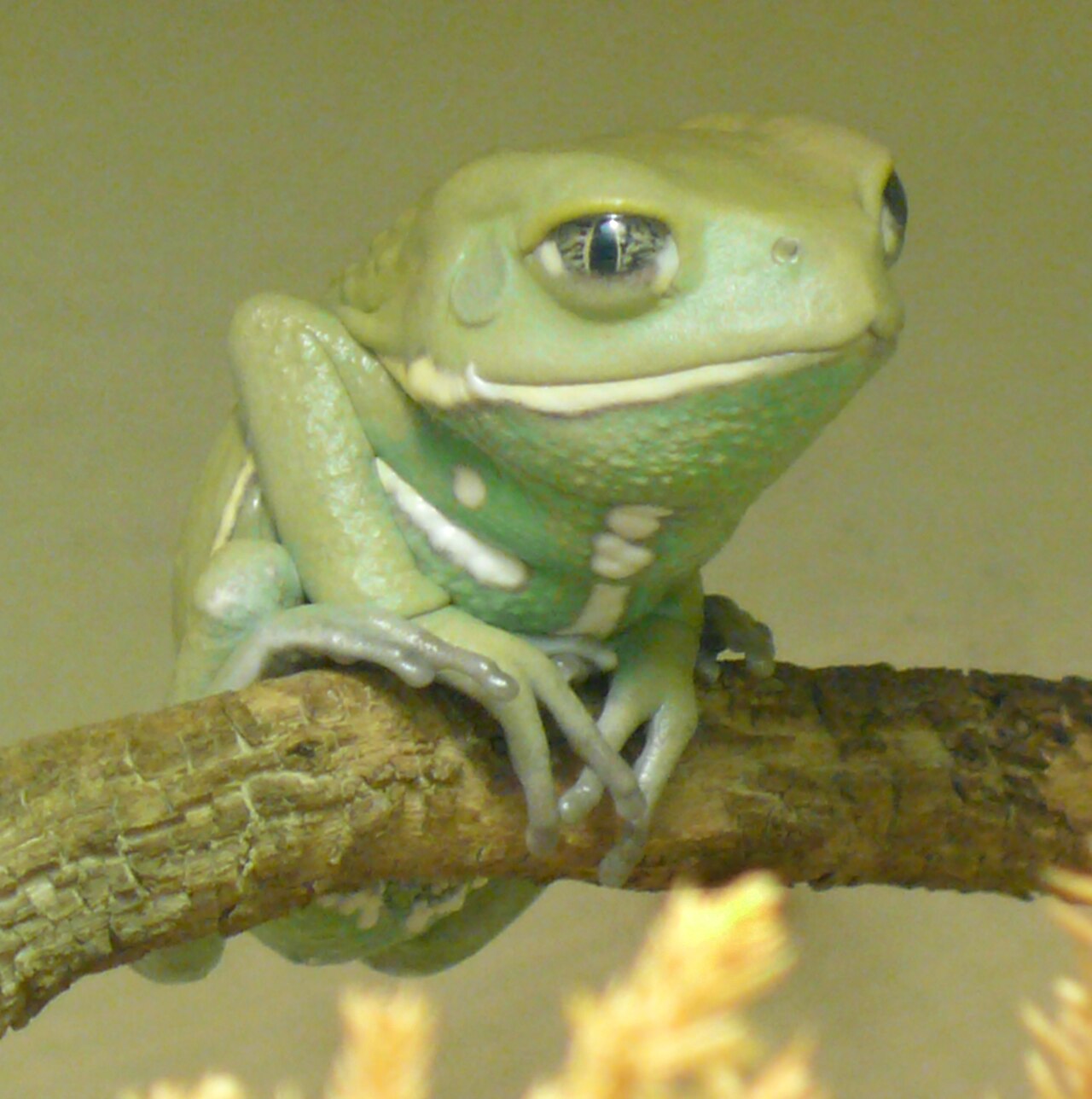
The waxy monkey tree frog (Phyllomedusa sauvagii) is a lime-green South American frog that survives dry air by coating itself in a waxy, self-made lipid secretion. It walks hand over hand instead of hopping, it lives in one of the driest habitats any tree frog tolerates, and its skin chemistry is potent enough that you should wash your hands after any contact.
That combination also makes it one of the most commonly mismanaged amphibians in the pet trade. Keepers who set it up like a rainforest frog lose it, because this species needs heat, light, and air far drier than its relatives.
The waxy monkey tree frog is a 2 to 3 in (5 to 7.5 cm) arboreal frog from the dry Gran Chaco of Argentina, Bolivia, Paraguay, and Brazil. It wipes a waxy lipid secretion over its body to prevent water loss. Its skin secretions contain active opioid peptides and are toxic if ingested, so it should not be handled casually.
| Quick Facts | Waxy Monkey Tree Frog |
|---|---|
| Scientific name | Phyllomedusa sauvagii |
| Size | 2 to 3 in (5 to 7.5 cm), females larger |
| Range | Gran Chaco: Argentina, Bolivia, Paraguay, Brazil |
| Activity | Nocturnal, arboreal, walks rather than hops |
| Lifespan | 8 to 12 years in captivity |
| Care level | Advanced, dry and hot setup, not a beginner frog |
What Is a Waxy Monkey Tree Frog?
It is a leaf frog in the genus Phyllomedusa, built for seasonally arid thorn scrub rather than rainforest. The body is soft lime green with a cream belly and small white flank spots, the pupils are vertical, and the hands have opposable first digits. Those grasping hands are why it climbs one branch at a time instead of leaping like a red-eyed tree frog.
The name comes from behavior you can watch. Glands along the back produce a lipid-rich secretion, and the frog wipes it across its skin with all four limbs, sealing in moisture the way sunscreen seals a surface. Almost no other tree frog manages water loss this way.
Are Waxy Monkey Tree Frogs Poisonous?
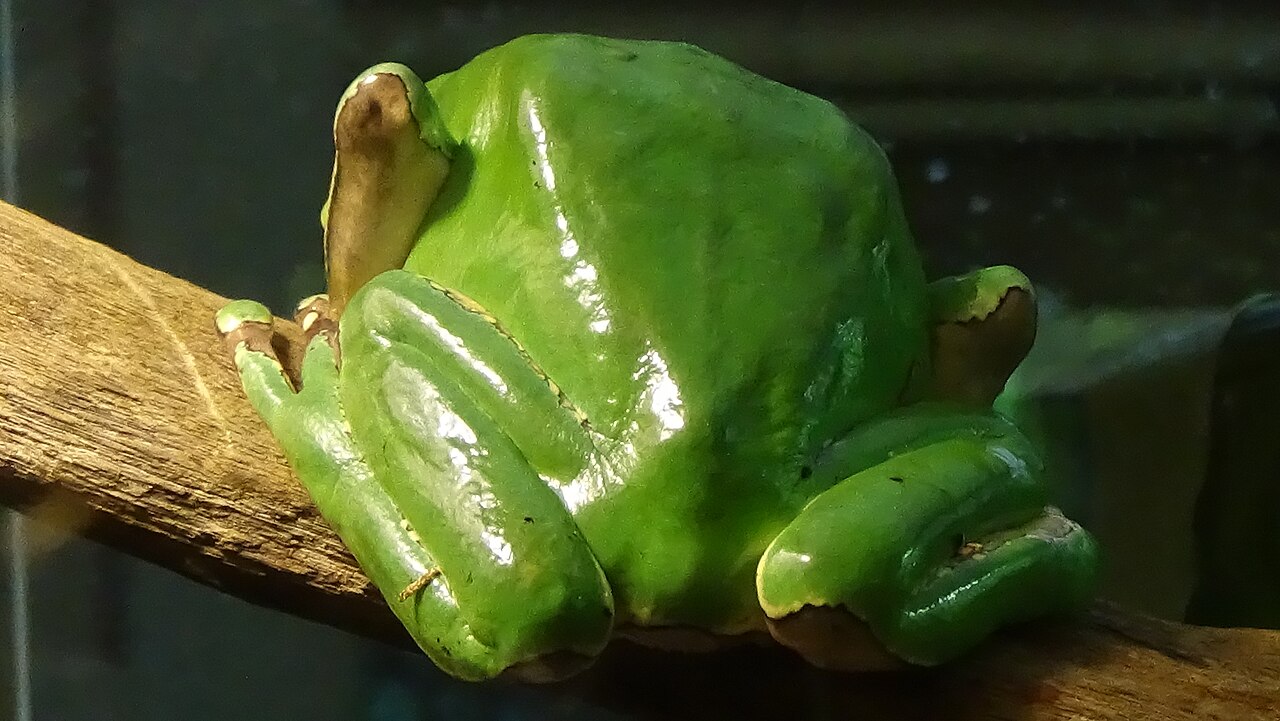
Yes, in the sense that matters: the skin secretions are toxic if they reach your mouth, eyes, or an open cut, so the frog should never be handled with bare hands. It cannot poison you through intact skin during a brief touch, and it has no venom or bite.
Phyllomedusa skin contains dermorphin and deltorphin, opioid peptides far stronger by weight than morphine, plus antimicrobial compounds under ongoing pharmaceutical study through the National Center for Biotechnology Information. Related species are used in kambo rituals that have caused serious human poisonings. Wash your hands immediately after contact, and keep the frog away from children and pets.
How Do I Care for a Waxy Monkey Frog?
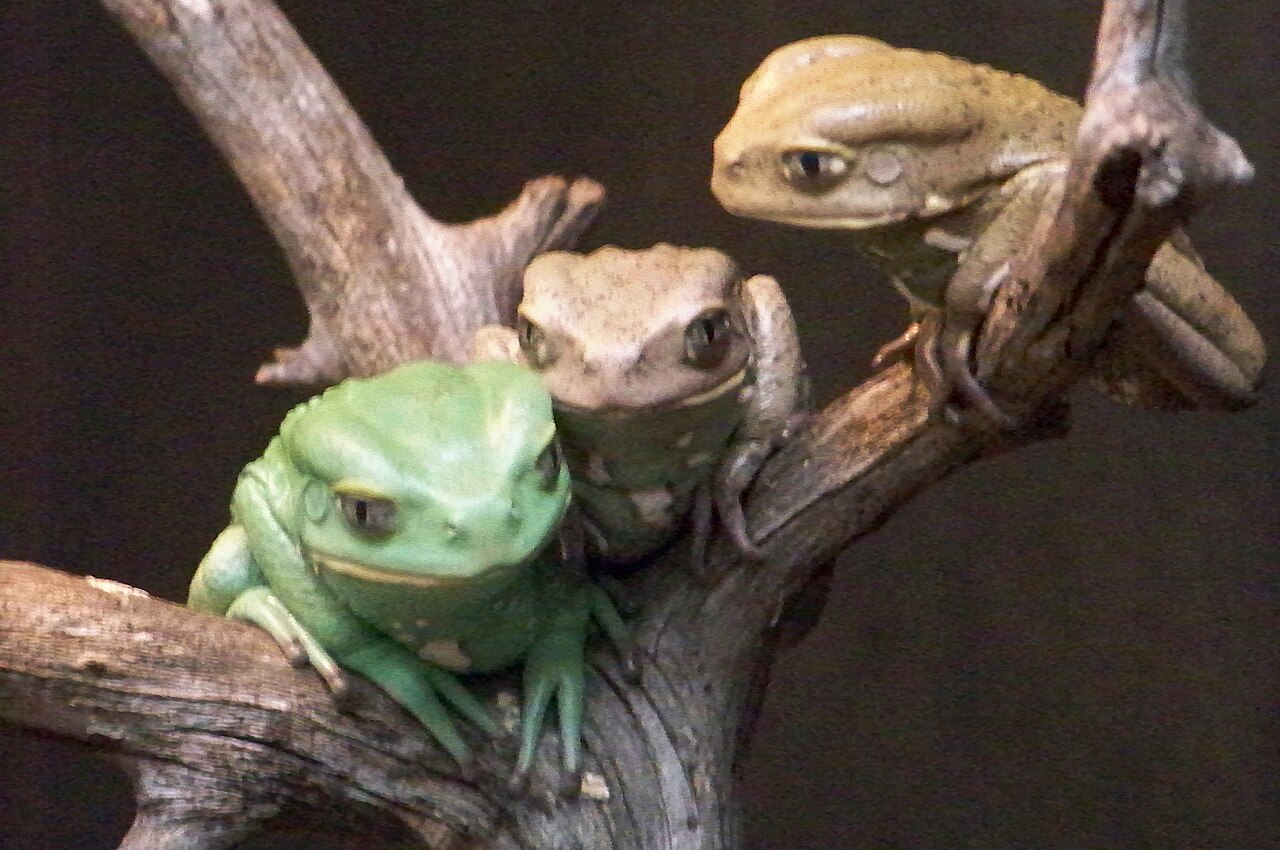
Care for a waxy monkey frog by reversing every instinct you have about frogs: keep it warm, bright, and dry. Target 80 to 88 F (27 to 31 C) by day with a basking spot near 90 F (32 C), a night drop into the low 70s F (around 22 C), and humidity of 50 to 70 percent with good ventilation. Standing damp substrate causes skin infections fast.
Give it UVB lighting, which this species uses more than most amphibians, sturdy horizontal branches at basking height, and a shallow water dish. Mist lightly in the evening only, and feed dusted crickets or roaches every two to three days.
Are Waxy Monkey Frogs Good Pets?
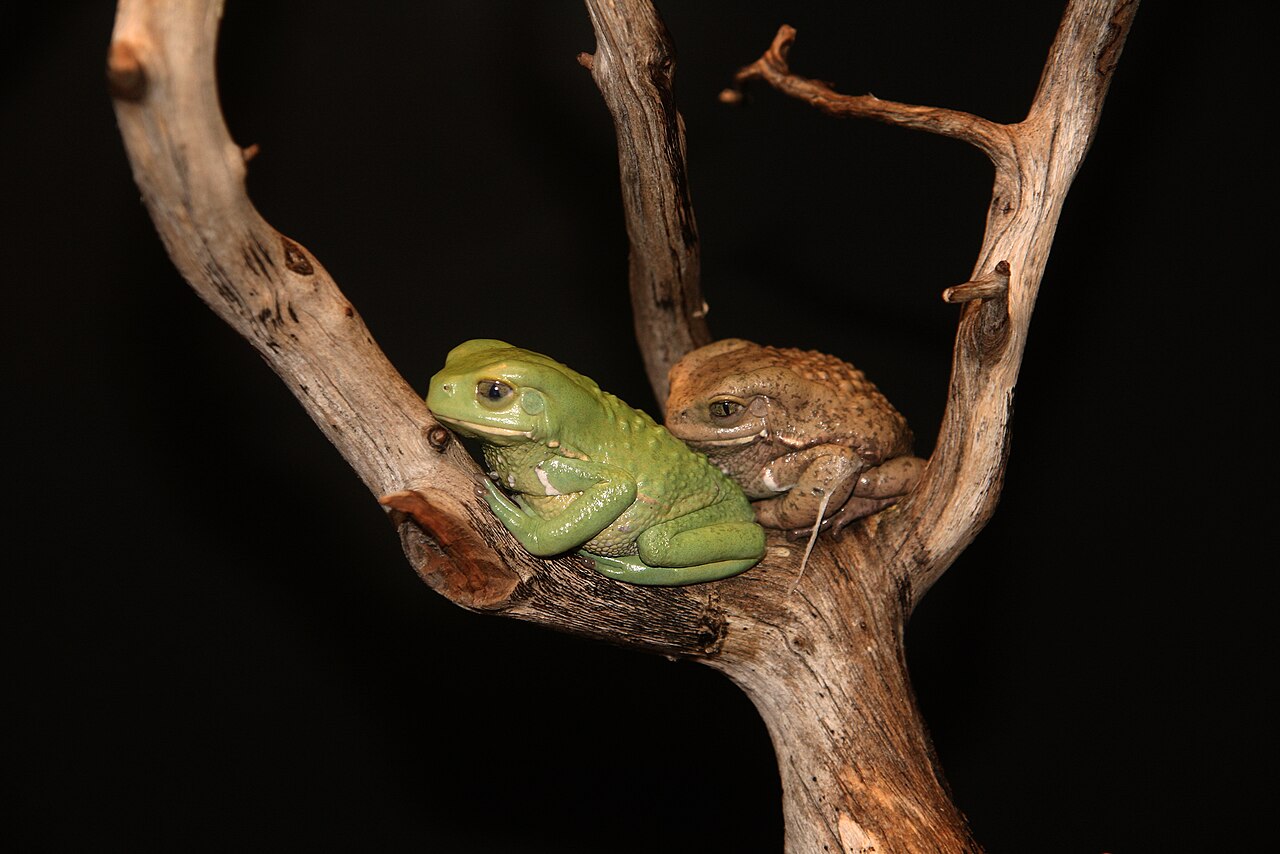
They are good display animals for experienced keepers and poor pets for everyone else. Nothing about them is forgiving: the heat and ventilation requirements conflict with standard frog equipment, the toxic secretions rule out handling, and wild-caught imports often arrive with parasite loads. Buy captive-bred.
What you get in return is a frog that behaves visibly, grooming and walking branches in slow motion. Beginners who want that arboreal look with less risk should start with White’s tree frog care or an Australian green tree frog.
Frequently Asked Questions
What size tank does a waxy monkey tree frog need?
A single adult needs at least 18 by 18 by 24 in (45 by 45 by 60 cm), and a pair does better in 18 by 18 by 36 in. Height beats floor space because the frog climbs and basks. Front ventilation plus a screen top is essential; a sealed glass tank traps humidity this species cannot tolerate.
What is the hardest frog to take care of?
The waxy monkey tree frog and the black-eyed tree frog are usually named as the hardest commonly sold species. The difficulty is the combination: high heat with low humidity, UVB, and a frog that hides stress until it collapses.
Are tree frogs high maintenance?
Most are not. Evening misting, weekly spot cleaning, and feeding every other day covers White’s and green tree frogs. The waxy monkey is the exception, as is the glass frog with its narrow humidity window.
What is the friendliest pet frog?
White’s tree frog, by a wide margin. It tolerates brief handling, feeds readily from tongs, and stays calm around people. No frog enjoys contact, but White’s objects least.