Australian Green Tree Frog: Size, Lifespan and Care Facts
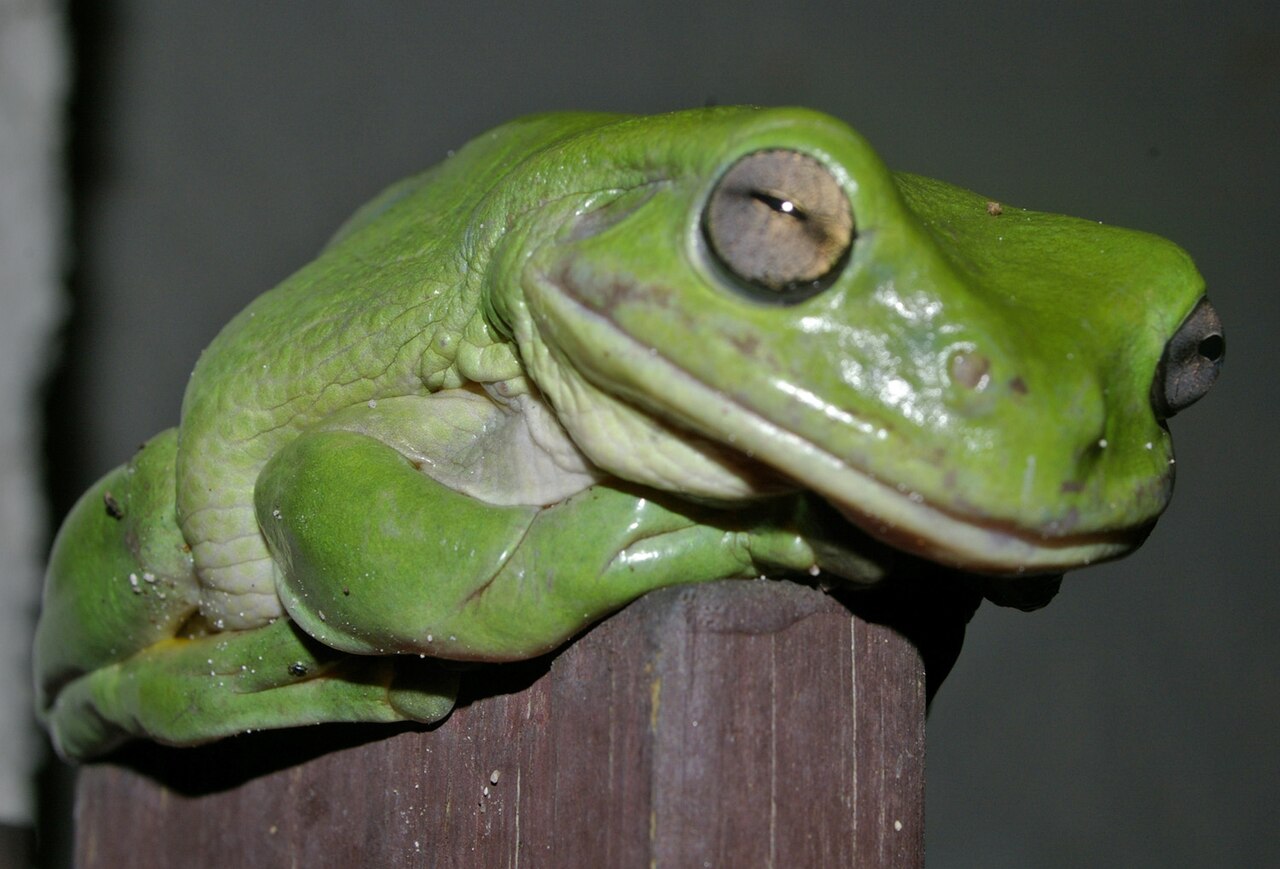
The Australian green tree frog (Litoria caerulea) is a large, blunt-nosed frog from eastern and northern Australia that grows to about 4 in (10 cm) and lives 16 years or more in captivity. It is the frog most Americans meet in a pet store rather than a backyard, sold there under the trade name White’s tree frog, and it is one of the calmest amphibians in the hobby.
In the wild it turns up on bathroom windows and water tanks across Queensland and the Northern Territory, so Australians treat it as a household neighbor rather than a rare find. Its waxy skin holds water far better than most frogs, and that one adaptation explains its size, its tolerance for dry air and its long life.
The Australian green tree frog is a 3 to 4 in (7.5 to 10 cm) tree frog native to Australia and southern New Guinea. It eats insects, calls with a low barking croak, and lives 16 to 20 years in captivity against about 10 in the wild. It is not poisonous to humans, but its skin secretions can irritate eyes.
| Quick fact | Detail |
|---|---|
| Scientific name | Litoria caerulea |
| Adult size | 3 to 4 in (7.5 to 10 cm), females larger |
| Weight | Up to 2.5 oz (70 g) |
| Range | Northern and eastern Australia, southern New Guinea |
| Lifespan | About 10 years wild, 16 to 20 in captivity |
| Diet | Crickets, roaches, moths, spiders, occasionally small mice |
| Activity | Nocturnal, calls loudest before rain |
What Is the Australian Green Tree Frog?
It is a member of the Australian tree frog family Pelodryadidae, recognizable by a broad head, a fat fold of skin above the eye and horizontal golden irises. Color runs from emerald to olive to a dull teal, and the same animal shifts shade with temperature and mood. Some individuals carry scattered white spots on the back, which is normal variation and not a sign of illness.
Two relatives cause most of the confusion. The white-lipped tree frog (Litoria infrafrenata) is bigger, leaner and has a clean white stripe along the lower jaw. The dainty green tree frog (Litoria gracilenta) is slimmer, brighter and shows orange on the thighs. In the United States the species also gets mixed up with the American green tree frog, which is a much smaller Hyla with a bold white flank stripe.
Are Australian Green Tree Frogs Good Pets?
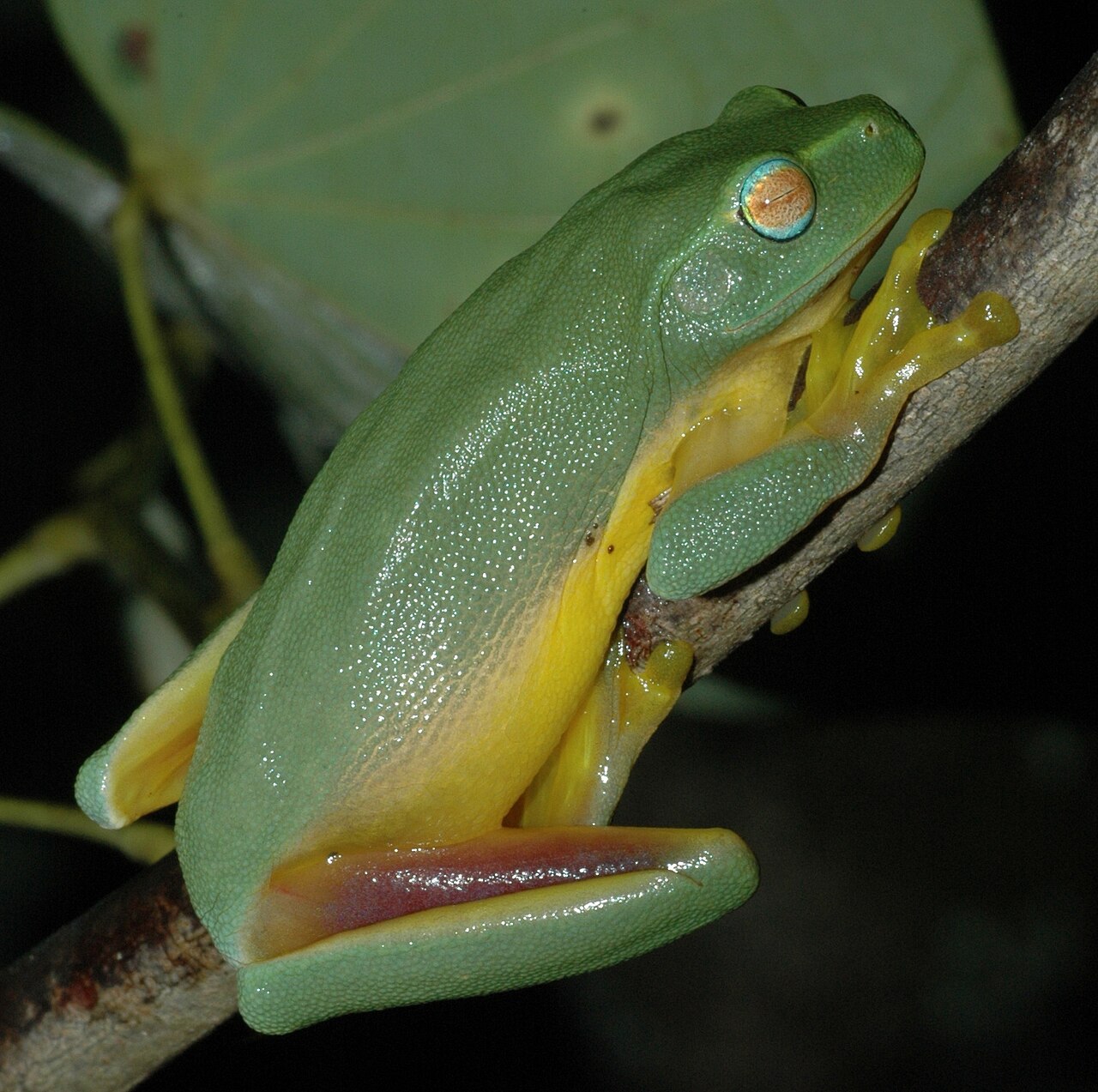
Yes, and they are usually the first amphibian recommended to beginners. They tolerate a dry-ish room, they are active at the front of the glass instead of buried, and they eat readily from tongs. A single adult needs an 18 in tall (45 cm) vertical enclosure, temperatures of 75 to 82 F (24 to 28 C), humidity near 50 to 60 percent and a shallow water dish big enough to sit in.
The one real risk is obesity. Captive frogs of this species are famously fed too much, and a well-fed adult develops heavy skin folds that hang over the eyes. Adults do fine on two to three appropriately sized insects every second or third day. If you want a pet-keeping walkthrough rather than a species profile, the trade-name version of this frog is covered under White’s tree frog care.
Is It Okay to Touch a Green Tree Frog?
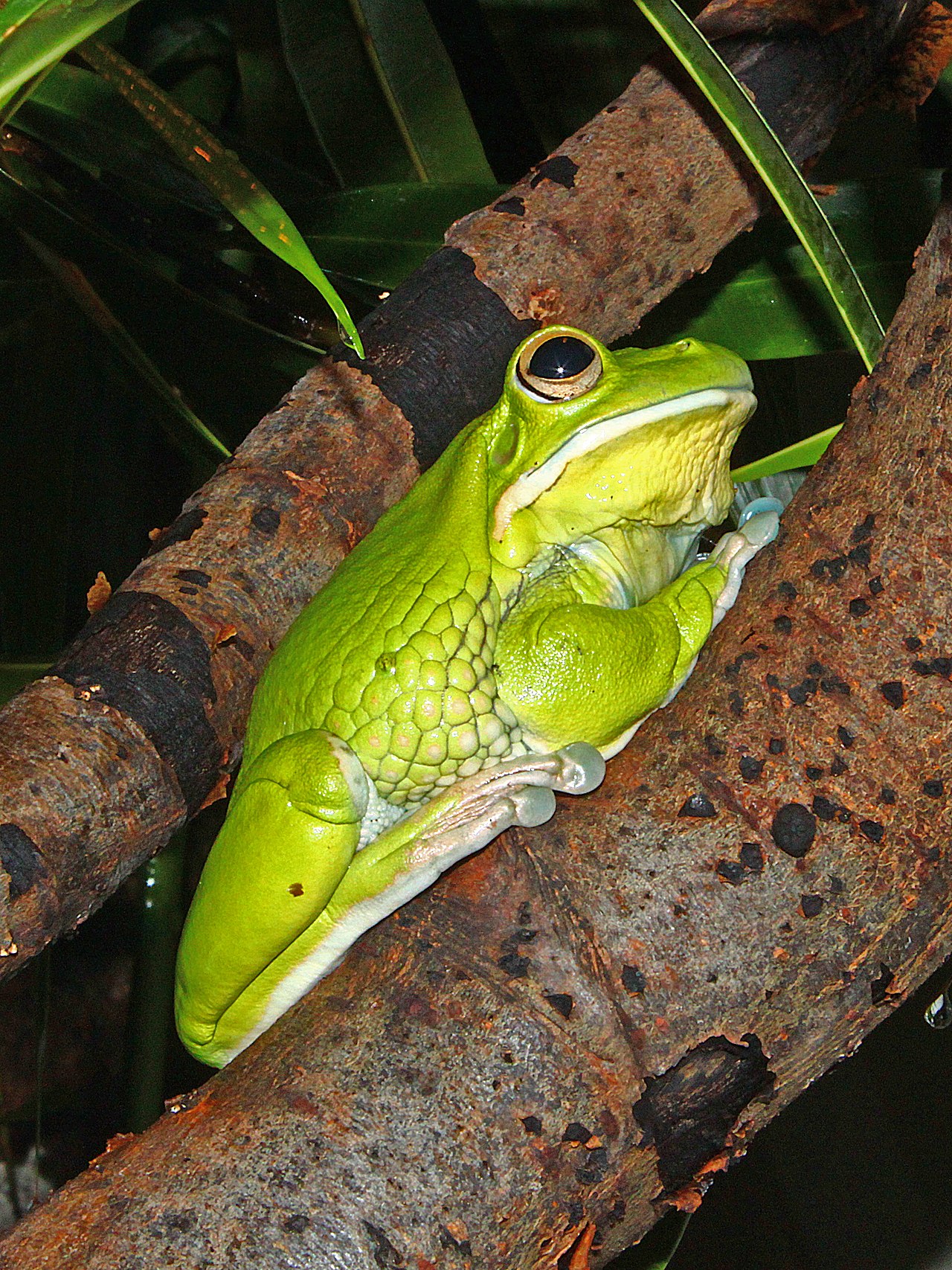
Briefly and with clean, wet hands, yes. The danger runs in both directions: soaps, lotions and salts on human skin pass straight through a frog’s permeable skin, and the frog’s own secretions contain caerin and caerulein peptides that sting badly if they reach your eyes or mouth. Wash before and after every contact, and never handle a frog with hand sanitizer residue on your fingers.
Are Australian green tree frogs poisonous? Not in any sense that matters to a person. They carry no venom, but the skin film is an antimicrobial defense and it is genuinely unpleasant on mucous membranes. Do Australian tree frogs like to be held? No frog does; this one only tolerates it better than most. Keep sessions under a few minutes and stop when the frog pulses its throat rapidly or climbs your arm looking for cover.
What Is the Lifespan of an Australian Green Tree Frog?
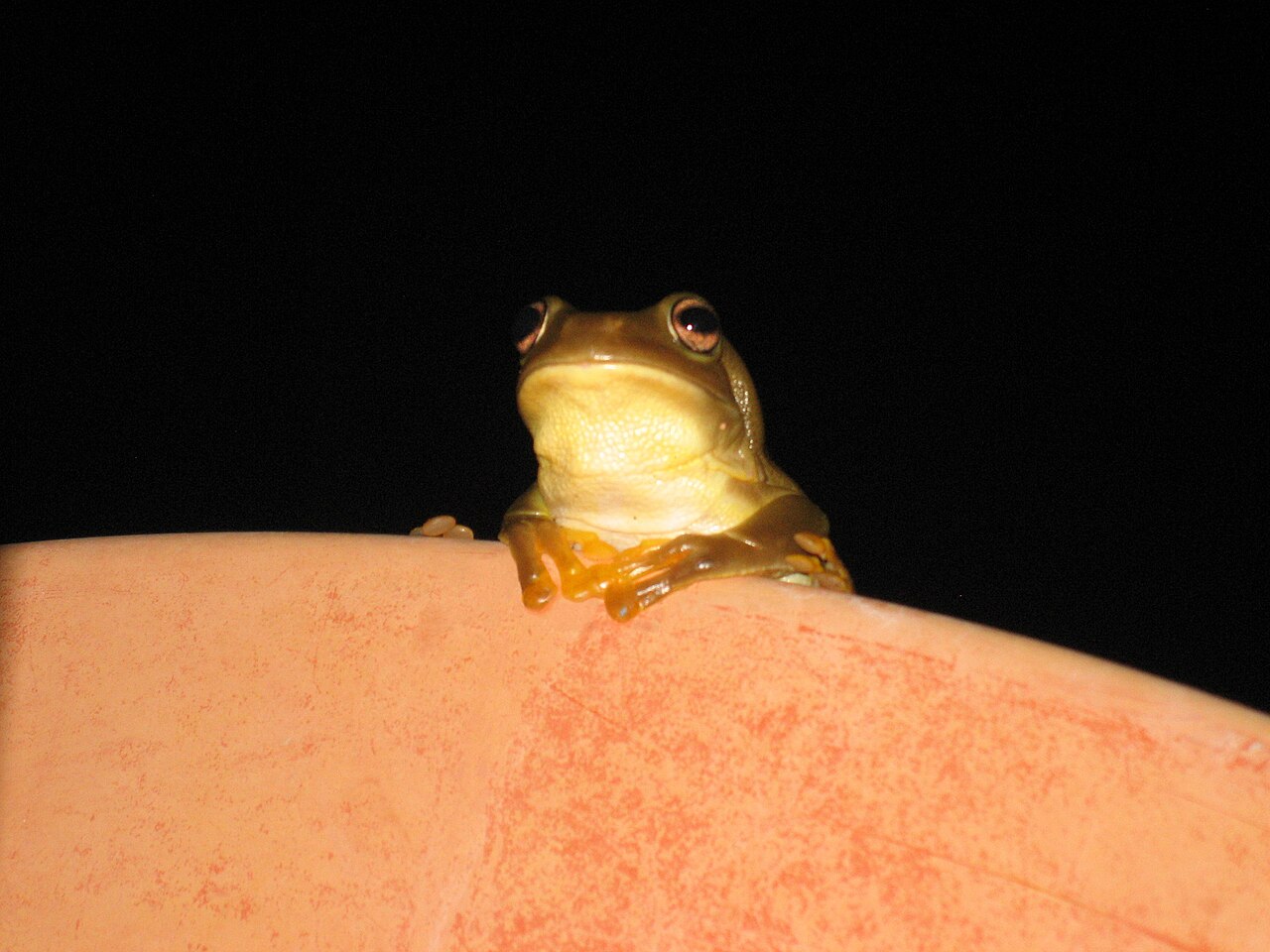
Wild animals average close to 10 years, and captive animals commonly reach 16 years with documented individuals passing 20. That is exceptional for a frog and comes down to skin that loses water slowly, a body big enough to deter most predators, and a willingness to sit out bad weather inside a drainpipe instead of migrating.
When a captive frog falls short it is diet and hygiene, not genetics: overfeeding, stale water, and chytrid fungus brought in on wild-caught tank mates. The species also shuts down in shelter through cool weather, much like the North American frogs in do frogs hibernate.
What Are Some Interesting Facts About the Australian Green Tree Frog?

Its call is a low, repeated crawk crawk that carries several hundred feet and rises into a chorus before rain, which earned it the nickname rain frog in parts of Queensland. A second, very different sound is the distress scream, a short high shriek produced when something grabs the frog. Recordings of related species are collected in tree frog sounds.
Peptides from its skin, the caerins, have been studied for antibacterial activity, which is rare for a pet-trade amphibian. Blue individuals appear when the yellow pigment layer is missing, the mechanism behind blue tree frogs, and escapees have been recorded in Florida, where the Cuban tree frog already showed how fast an introduced tree frog spreads. The USGS Nonindigenous Aquatic Species database tracks those records.
Related reading: White’s Tree Frog Care.
Frequently Asked Questions
What is a frog’s worst enemy?
For adults, tree snakes and kookaburras take the most animals in Australia. For eggs and tadpoles, fish and predatory insects do the damage. Across the species as a whole the worst enemy is chytrid fungus, which has wiped out populations of other Australian frogs.
Why can’t frogs drink water?
Frogs do not swallow water through the mouth. They absorb it through a patch of thin, vascular skin on the belly and thighs, the drink patch. That is why a shallow dish or damp substrate matters more to a frog than any bowl it could sip from.
What smell do frogs hate?
Irritants repel them: vinegar, citrus oils, coffee grounds and cleaning products. Never use these near a captive frog, because permeable skin absorbs solvents and essential oils. For unwanted yard frogs, removing standing water works and scent deterrents rarely do.
Which frog is the friendliest?
Among pet frogs the Australian green tree frog is the usual answer, with the Pacman frog second for people who want a sit-still animal. Friendly here means tolerant of brief handling, not affectionate. Species such as the red-eyed tree frog are far more nervous.