Mouse Sounds: What Squeaks, Chirps and Wall Noises Mean
Mouse sounds fall into four groups: audible squeaks, ultrasonic calls above human hearing, pup cries, and the mechanical noises a mouse makes while moving, chewing and nesting. In a house, the mechanical set gives the animal away first. Scratching behind drywall, a dry gnawing that stops when you knock, and a light scurry across the ceiling at 2 a.m. are heard far more often than any actual squeak.
House mice (Mus musculus) are built for quiet. They weigh 0.5 to 1 oz (14 to 28 g), move along walls, and do most of their talking in frequencies between 30 and 110 kHz, which no adult can hear. Knowing which sounds are social, which are distress, and which simply mean an animal is wearing a hole through a joist tells you whether you are listening to one mouse passing through or a breeding colony in the insulation.
Mice squeak, chirp, scratch, gnaw and scurry. The audible squeak sits around 2 to 4 kHz and signals distress or a social encounter, while courtship songs and most other calls run ultrasonic at 30 to 110 kHz. In houses, scratching and gnawing from walls, attics and ceilings at night are the usual giveaway, not squeaking.
| Sound | How it sounds | When | What it means | Confused with |
|---|---|---|---|---|
| Squeak | Thin, sharp eek | Any time, mostly night | Distress, conflict, handling | Bird chick, dry hinge |
| Chirp or chatter | Fast, soft, run together | Night, in nest | Social contact, grooming | Cricket, young birds |
| Ultrasonic song | Silent to humans | When a female is near | Courtship | Nothing, needs a detector |
| Pup call | Faint cheeping, wavering | Day and night | Pups separated from nest | Insects in the wall |
| Scratching | Light, irregular, brief | Dusk to dawn | Travel along runways | Birds, squirrels, roof rats |
| Gnawing | Dry, steady grinding | Night | Chewing wood, wire, plastic | Insects boring timber |
What Is the Mouse Sound Called?
The mouse sound is called a squeak, and the verb for it is squeaking. Biologists use narrower words: audible calls are squeaks or squeals, the rapid soft series exchanged inside a nest are chirps or chatter, and the ultrasonic output is written up as ultrasonic vocalization, often shortened to USV. Older natural history writing also calls the sustained male performance a song, which is literal rather than poetic.
None of those terms covers the noises most people actually report. Scratching, rustling and gnawing are not vocalizations at all, they are the sound of claws, teeth and bedding material. Pest control reports lump them together as rodent activity noise, and they are the reliable evidence of mice in a building.
Squeaking: The Everyday Audible Call

An audible mouse squeak is a thin, pure eek lasting a fraction of a second, pitched around 2 to 4 kHz, which is roughly the top octave of a piano. It carries surprisingly well through a cavity wall and sounds closer than it is. Single squeaks mean a brief encounter. Rapid strings of them, five or more in a couple of seconds, mean two mice are fighting or one is trapped.
Volume is low. A mouse squeak measured at 4 in (10 cm) reaches about 70 dB, but through plasterboard and insulation it drops to the edge of audibility, which is why people hear mice in a quiet bedroom and never in a kitchen with the fridge running.
Why Does My Mouse Make a Squeaking Noise?
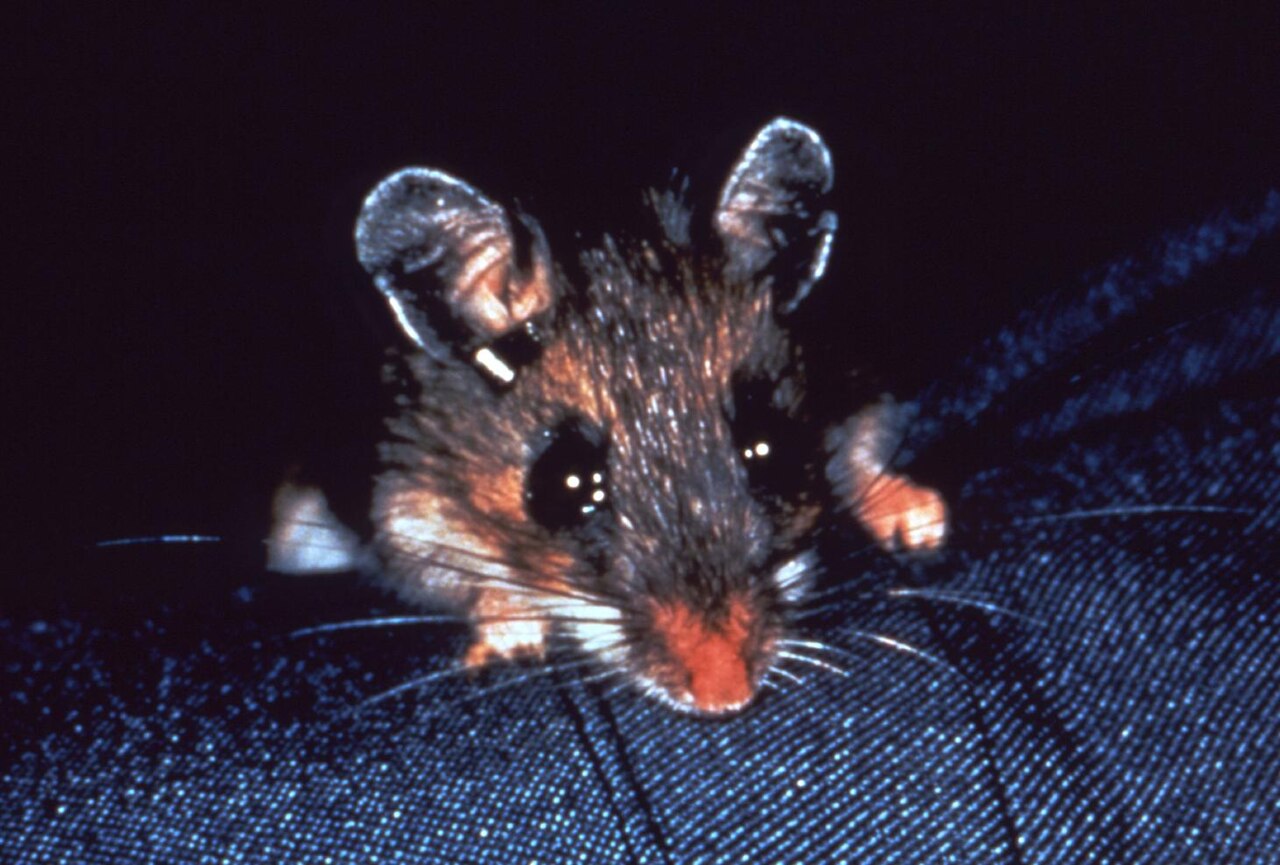
A pet mouse that squeaks is communicating something specific. Squeaking during handling means fear or pain, so check for a trapped foot or a sore spot. Squeaking at a cage mate is a dispute over food or space, usual between males and worth watching in case it escalates. Squeaking when you open the door, from a mouse that then comes forward, is anticipation and nothing to fix.
There is one medical pattern to rule out. A clicking or wheezing noise, rather than a clean squeak, together with a snuffly nose and reduced grooming, points to the respiratory infections mice are prone to. That needs a vet with rodent experience, because mycoplasma pneumonia in mice progresses quickly.
The Ultrasonic Courtship Song You Cannot Hear
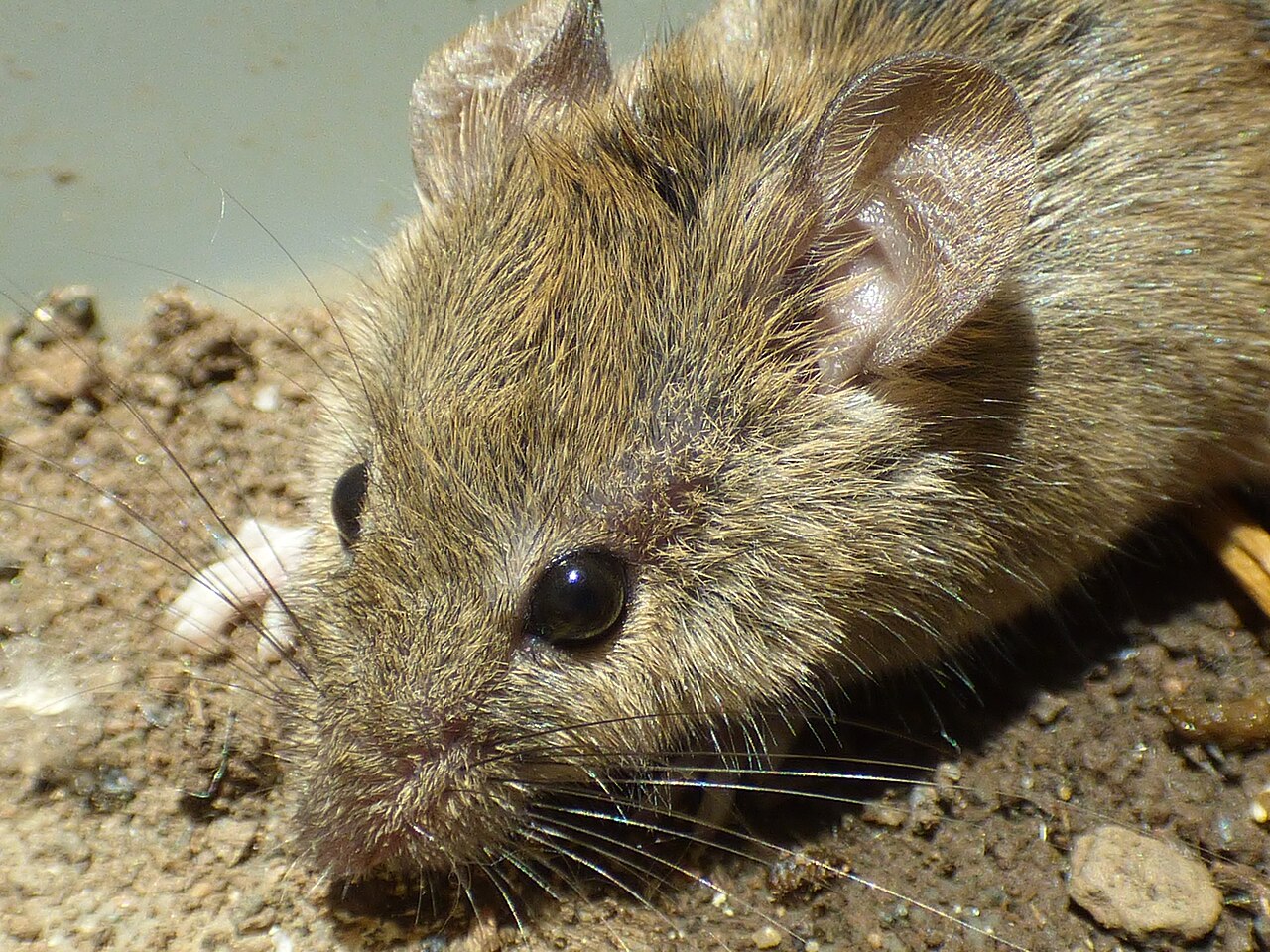
Male house mice produce elaborate ultrasonic songs when they smell a female or her urine. The songs run 30 to 110 kHz, consist of repeated syllables arranged into phrases, and shift in structure over a session in ways that laboratory recordings compare to birdsong. Females prefer the more complex singers, and the behavior has made the house mouse a standard model for studying how vocal communication works.
For a homeowner the relevance is simple. A great deal of mouse communication is happening in your walls that you will never hear, so silence is not evidence of absence. Bat detectors tuned to 40 kHz pick these songs up, which is how the same device serves both the attic and the bat sounds overhead.
Pup Calls: What Baby Mice Sound Like
Mouse pups call when they get cold or drift out of the nest, and those cries are mostly ultrasonic too, with a faint audible component that reads as a wavering cheep. Mothers respond by retrieving the pup within seconds, so bursts of faint cheeping from one spot in a wall, repeating over several days, usually mean a nest with a litter rather than a single wanderer.
That matters for timing. A female house mouse produces five to ten litters a year of three to fourteen pups each, and pups are weaned at three weeks. Pup noise is the point at which a mouse problem is already a colony, and waiting a week makes the job meaningfully harder.
Alarm and Distress Squeals
Mice have no dedicated alarm call in the way ground squirrels do. What they produce under threat is a loud, drawn out squeal, repeated as long as the pressure lasts, paired with freezing or a dash for cover. A cat cornering a mouse behind the stove will trigger it, and so will a glue board. Outdoors the squeal rarely helps, since the main nocturnal predator hunts by ear; the barn owl locates a mouse in total darkness from the rustle alone.
Their real defense is silence and odor. Mice mark runways with urine, and other mice read stress compounds in it, which spreads a warning without a sound. This is one reason snap traps in a well used runway stop producing after a few nights: the colony has learned the location without ever hearing anything. For a louder mammal under pressure, compare the screams and growls of a bobcat.
Scratching, Gnawing and Scurrying in the Walls
This is the group that gets mice discovered. Scratching is light, irregular and brief, a second or two at a time, as claws grip timber or paper. Gnawing is steadier and drier, a slow grinding on wood, wire sheathing or plastic pipe, and it stops dead if you tap the wall and resumes in about a minute. Scurrying reads as a rapid patter crossing a ceiling, lasting one to three seconds.
Mouse incisors grow about 0.3 in (0.8 cm) a month and need constant wear, so gnawing is not optional for the animal. It is also the reason rodents cause an estimated share of house fires through damaged wiring, and the reason a gnawing sound near a junction box deserves priority over everything else on this list.
What Mouse Sounds at Night Mean in an Attic
House mice are nocturnal with activity peaks shortly after dusk and again before dawn, so noise concentrated in those windows fits mice well. In an attic, listen for the scale of the sound. Mice weigh under 1 oz (28 g) and are nearly weightless on a ceiling, producing patter rather than thumps. Anything that makes the drywall creak or rolls a nut across a joist is heavier than a mouse.
Direction helps as well. Mice follow wall tops and wiring runs, so the sound tracks along a line and returns the same way. Scattered movement across the open attic floor, or digging in insulation, points to rats or squirrels. For the identification from droppings, rat poop versus mouse poop is the quickest test available.
Mouse Sounds vs Rat and Squirrel Sounds
Rats are louder in every respect. Their gnawing is coarse and slower, their movement makes audible thuds, and their audible squeaks drop lower, around 1 to 2 kHz, with harsh hisses and tooth chattering when they fight. Rats also move in straighter, heavier runs along joists, and their tracks confirm it; rat tracks in snow, mud and sand show the tail drag that mice rarely leave.
Squirrels are different again: heavy rolling and dragging, bursts of activity at first light, and loud chattering or barking that carries through a ceiling. Birds nesting in a soffit produce scratching plus chirping confined to daylight. If the noise only happens in the dark and never weighs anything, mice are the best fit.
Do Mice Make Noise When Trapped?
Yes, and the type tells you which trap you are hearing. A snap trap that fires correctly produces one sharp clack and then nothing, because the kill is immediate. Repeated squealing and a dragging, rattling noise means the animal is caught but alive, usually on a glue board or by a limb in a poorly placed snap trap, and it needs dealing with at once on welfare grounds.
Live catch traps rattle intermittently as the mouse explores the box. Check them every few hours and release at least 2 mi (3 km) away, or the same mouse will be back in your wall by the following night.
How Do I Get a Mouse to Stop Making Noise?
Removing the mouse is the only method that reliably works. Set snap traps perpendicular to the wall in the runway where you hear the noise, bait with peanut butter or a chocolate crumb, use six to twelve traps rather than two, and keep them in place a week past the last catch. Then seal entry points: mice pass through gaps of 0.25 in (6 mm), so steel wool and sealant around pipe penetrations is the work that prevents a repeat.
Ultrasonic repellers are the popular shortcut and the evidence against them is consistent. Mice habituate within days, and sound does not pass through the walls the animals live in. Sound based deterrents for birds fail for much the same reason. For the underlying biology of the species, the University of Minnesota Extension publishes practical rodent exclusion guidance for homes.
Frequently Asked Questions
What repels mice immediately?
Nothing repels mice immediately in any proven way. Peppermint oil, mothballs and ultrasonic devices show no lasting effect in controlled tests, and mice habituate to all three. The fastest reliable result comes from trapping in the active runway and sealing gaps larger than 0.25 in (6 mm).
Will mice stay away if they hear noise?
Only briefly. Mice avoid a new sound for a few hours to a few days, then resume normal routes once nothing bad follows it. Houses with televisions, radios and dogs still get mice. Habituation is why noise based deterrents fail as a standalone plan.
What is the number one thing mice hate?
Open space with no cover. Mice are prey animals that travel within a few inches of walls and rarely cross a bare floor. Removing clutter, pulling stored boxes 6 in (15 cm) off the wall and clearing cover beside the foundation reduces activity more than any scent.
What is the 5 day mouse rule?
It is the trapping guideline that traps stay untouched in place for five days before you judge them. Mice are wary of new objects, and many take two to four nights to approach. Moving traps daily is the most common reason a mouse keeps making noise.
What time of year is worst for mice?
Fall, from roughly September to November, when falling night temperatures push mice indoors to find a warm nest site. A second smaller wave follows in late winter when outdoor food runs short. Summer complaints are usually ongoing infestations rather than new arrivals.
Can you hear mice during the day?
Sometimes, and it is worth noting. A quiet house, a nest with pups, or a heavy population all produce daytime noise. Persistent daylight activity suggests crowding, which means the colony is larger than a few animals and deserves a full trapping program.