Red Dragonfly: 5 Common US Species and What They Mean
A red dragonfly is almost always a mature male of one of five common North American species, and not one of them can sting or bite you. The flame skimmer (Libellula saturata) and the cardinal meadowhawk dominate sightings in the West, while the autumn meadowhawk takes over in the East from late summer into November.
The red belongs to adult males; females and young males are tan, amber, or olive. That is why a pond can hold dozens of one species and only a few red ones.
Red dragonflies are harmless. They have no stinger and no venom, and their jaws are built for mosquitoes, not skin. The five species seen most often in the United States are the flame skimmer, neon skimmer, cardinal meadowhawk, autumn meadowhawk, and red saddlebags, all of them males in breeding color.
Are Red Dragonflies Dangerous or Do They Sting?
No dragonfly stings. There is no stinger at all, and the long abdomen that looks like one is where the male’s clasping appendages sit. A large one can pinch with its mandibles, but it will not break adult skin. One adult takes dozens of mosquitoes a day, unlike the red wasp in the same garden.
| Species | Red shade | Wingspan | US range | Peak |
|---|---|---|---|---|
| Flame skimmer | Orange red body and wings | 3 to 3.5 in (9 cm) | Southwest to N. California | May to Sept |
| Neon skimmer | Crimson, clear wings | 3 to 3.5 in (9 cm) | Texas to S. California | June to Sept |
| Cardinal meadowhawk | Deep cardinal red | 2 to 2.4 in (6 cm) | Pacific states, Rockies | April to Sept |
| Autumn meadowhawk | Red abdomen, yellow legs | 2 to 2.3 in (6 cm) | East and Midwest | Aug to Nov |
| Red saddlebags | Red body, red wing patches | 3.3 to 3.7 in (9.5 cm) | Southern, central US | May to Oct |
Flame Skimmer
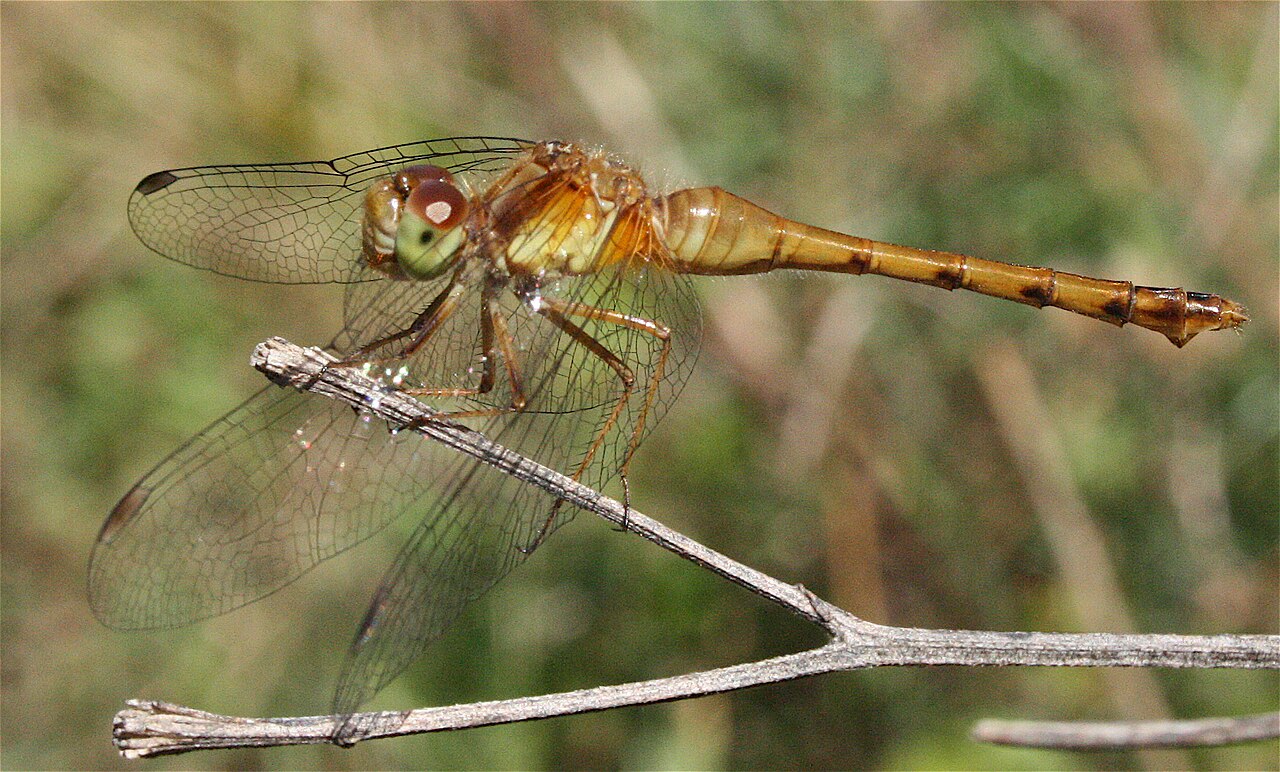
The heavyweight of the group and the one most often photographed. Males are uniformly orange red, including the leading half of each wing, which separates them from every other red species at a glance. They hold one perch above warm, slow water and return after each sortie.
Neon Skimmer
Similar in size but a cleaner, more saturated red, with only a small amber smudge at the wing base. Common along desert streams and irrigation ditches from Texas west.
Cardinal Meadowhawk
A compact western species with a stocky, blood red abdomen and two pale spots on the side of the thorax. It perches flat and low, often on gravel, and is one of the earliest red dragonflies in spring.
Autumn Meadowhawk
The last dragonfly flying across much of the East. Slimmer than the skimmers, with a red abdomen, brown thorax, and yellow brown legs where other meadowhawks have black. It flies after the first frosts, so November sightings are routine.
Red Saddlebags
Named for the dark red blotches at the base of the hind wings, which look like saddlebags in a glide. It rarely perches, patrolling ponds instead, so photos are hard to get. The blue dragonfly group shares the same water.
How Rare Is It to See a Red Dragonfly?
Not rare in the right season. Red ranks with blue and brown among the commonest adult dragonfly colors in North America, and meadowhawks appear by the dozen at one pond in September. Timing makes it feel special: red species concentrate in late summer and fall, when other insects fade, so a crimson dragonfly stands out the way a red butterfly does. The US Fish and Wildlife Service manages many of those wetlands.
What Does It Mean If a Red Dragonfly Lands on You?
Biologically it means your shirt is warm and still: dragonflies pick perches by temperature and stability, and a motionless person beside water is a good lookout post.
Folklore reads it differently. In Japan the red dragonfly, or akatombo, stands for late summer, harvest, and remembrance, and several cultures tie dragonflies to change and to visits from the dead. Red adds courage in Western symbolism, so the landing is often taken as encouragement after a loss. Those are cultural meanings, much like the beliefs people hold about red birds.
Frequently Asked Questions
What is the rarest color of dragonflies?
Pure white and pink are the rarest. The roseate skimmer shows pink, and desert males of some skimmers develop a chalky white coating called pruinosity. Red, blue, and brown are the everyday colors.
Do red dragonflies bite?
Only if you hold one, and then barely. The mandibles can pinch a fingertip without breaking the skin, and no venom is involved. They do not feed on blood, so they bring none of the trouble a red ant colony does.
Where do red dragonflies live?
Near standing or slow moving fresh water, since the larvae are aquatic. Ponds, marshes, ditches, and garden water features all qualify. Adults hunt well away from water in meadows, then return to breed.
Is seeing a dragonfly a good omen?
Most traditions treat it as positive, linked to transformation and luck with water or harvest, and farmers welcomed swarms because they follow insect blooms. The omen has no evidence behind it, but the ecological signal is real: many dragonflies means clean water and plenty of prey, the same logic that makes a red and black beetle count useful to a gardener.