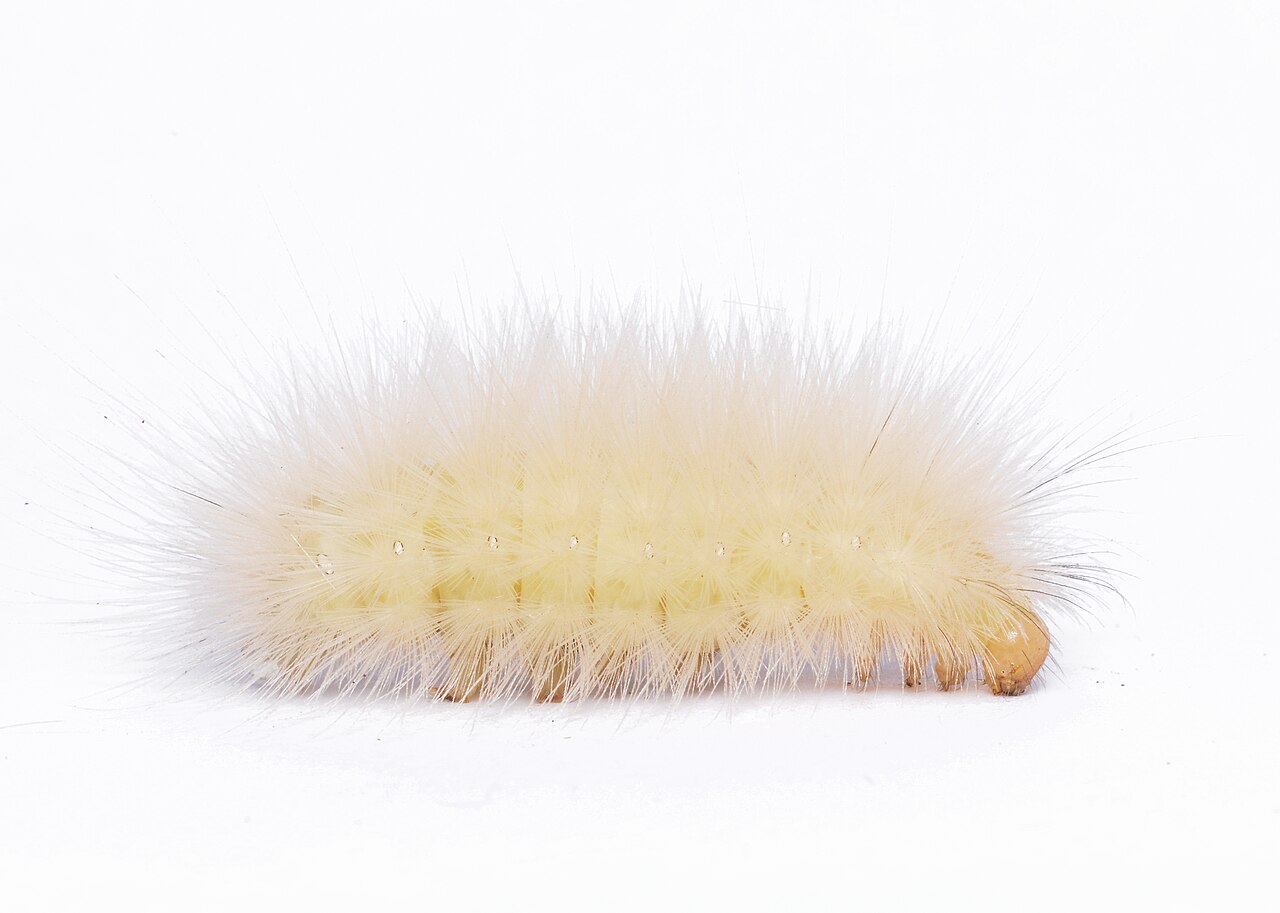
Yellow Caterpillar: Identification, Safety, and What It Becomes
A yellow caterpillar in a US yard is usually one of three species: the yellow woolly bear, the American dagger moth caterpillar, or a young black swallowtail caterpillar that has not yet developed its green and black bands. Each turns into a completely different adult insect, so the species matters more than the color when it comes to knowing what to expect next.
Fuzziness is the fastest way to sort between them. A caterpillar covered in dense, soft-looking hair is either a yellow woolly bear or an American dagger moth caterpillar, while a smooth-bodied yellow caterpillar found near dill, parsley, or fennel is almost always a young swallowtail. The sections below cover identification, safety, and the specific swallowtail questions that come up constantly around garden herbs.
Most yellow caterpillars in US yards are yellow woolly bears, American dagger moth caterpillars, or young black swallowtail caterpillars. None are dangerous to touch, though the dagger moth’s hairs can cause mild skin irritation. Each species turns into a different moth or butterfly after pupating.
| Species | Body Type | Host Plants | Adult Form | Handling Risk |
|---|---|---|---|---|
| Yellow woolly bear | Dense pale yellow fuzz | Wide range of low plants and weeds | Virginia tiger moth | Low, mild itch possible |
| American dagger moth caterpillar | Pale yellow with long black tufts | Maple, oak, willow | American dagger moth | Moderate, hairs can irritate skin |
| Black swallowtail (young) | Smooth, black with a white or yellow saddle band | Dill, parsley, fennel, carrot family | Black swallowtail butterfly | None |
| Black and yellow caterpillar | Smooth, bright bands | Varies by species | Varies | None |
What Is a Yellow Caterpillar?
A yellow caterpillar is a color description that applies to several unrelated species rather than one specific insect. The three most commonly reported in US gardens are the yellow woolly bear, the American dagger moth caterpillar, and the earliest growth stage of the black swallowtail, which starts out mostly black and yellow before turning green.
Texture and location narrow the identification quickly. A soft, evenly fuzzy caterpillar belongs to one of the moth species below, while a smooth caterpillar spotted on garden herbs almost always belongs to the swallowtail group. Host plant is one of the most reliable clues available, since each species feeds on a fairly narrow range of plants.
None of the yellow caterpillars regularly seen in the US carry venom capable of causing serious harm to a person. The worst outcome from contact with any of them is mild, temporary skin irritation.
Yellow Woolly Bear (Spilosoma virginica)
The yellow woolly bear is a pale yellow to cream caterpillar covered in short, dense, uniform hair, giving it a soft rather than spiky appearance. It is the larval stage of the Virginia tiger moth, a plain white moth that is far less recognizable than its caterpillar.
This species is a generalist feeder found on a wide variety of low-growing plants, weeds, and garden vegetables, which is part of why it turns up in so many different yards. It is most active from midsummer through early fall, curling into a tight ball when disturbed rather than fleeing.
Handling a yellow woolly bear briefly is generally safe, though some people develop a mild itch from the fine hairs, similar to a light allergic reaction rather than a sting. Washing the area with soap and water resolves any irritation quickly.
American Dagger Moth Caterpillar (Acronicta americana)
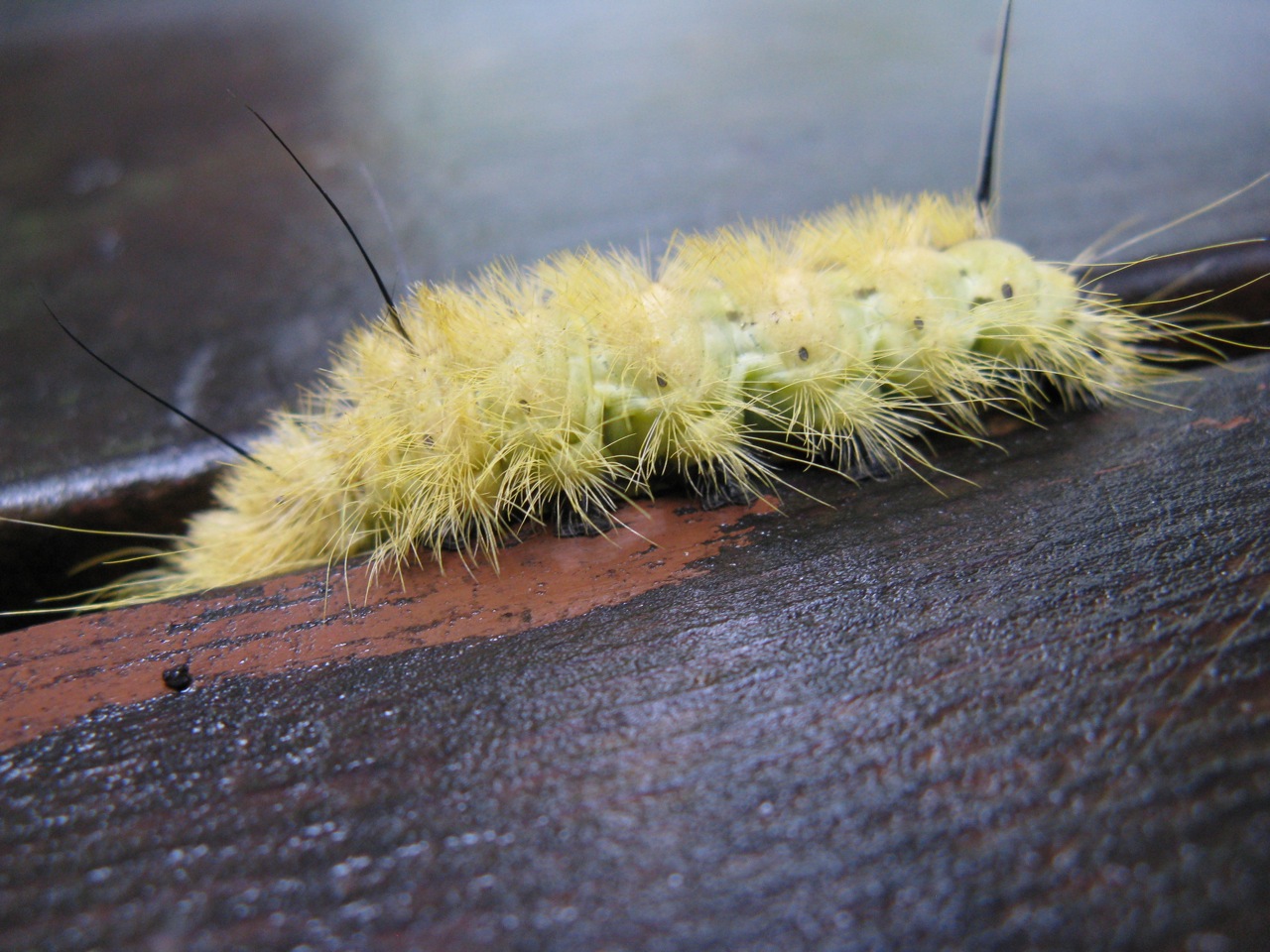
The American dagger moth caterpillar is a larger, pale yellow caterpillar marked by several long black tufts of hair rising from its body, distinguishing it from the more uniformly fuzzy woolly bear. It feeds primarily on the leaves of maple, oak, and willow trees.
Unlike the yellow woolly bear, this species carries hairs with mild urticating properties, meaning contact can cause a stinging or itching sensation in sensitive individuals. The reaction is comparable to touching stinging nettle and is not considered medically serious.
This caterpillar is most often found on tree trunks or fallen leaves in late summer as it searches for a place to pupate. It is a good example of why any hairy yellow caterpillar is best observed rather than handled bare-handed.
Black Swallowtail Caterpillar (Early Stage)
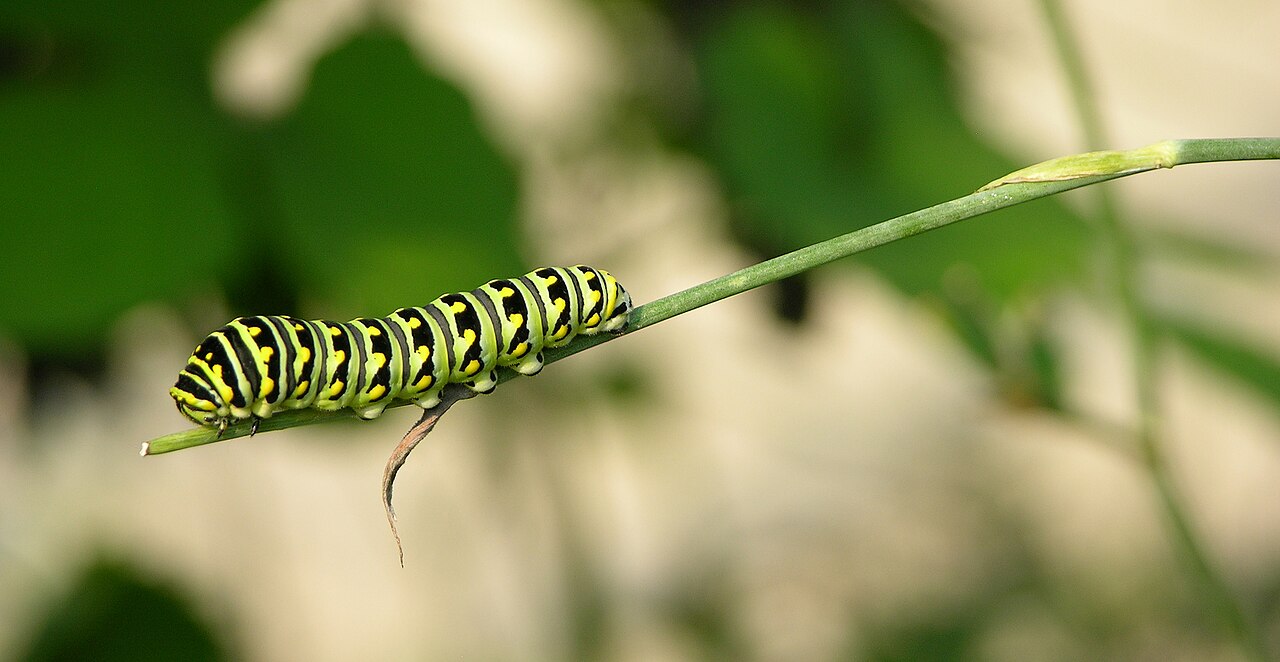
A young black swallowtail caterpillar is smooth-bodied with a yellow and black banded pattern, which is often what people mean when they search for a yellow caterpillar found on dill, parsley, or fennel. As it grows through later instars, the pattern shifts toward the more familiar bright green body with black and yellow spotted bands.
This species feeds exclusively on plants in the carrot family, making an herb garden containing dill or parsley one of the most reliable places to encounter it. Its coloring functions as camouflage against the flower heads and stems of its host plants during the earliest growth stages.
Unlike the two fuzzy species above, the black swallowtail caterpillar is completely smooth and poses no skin irritation risk at any stage of its life cycle.
Is a Yellow Caterpillar Venomous?
No yellow caterpillar commonly found in US yards is venomous in a medically significant sense. The yellow woolly bear and American dagger moth caterpillar can cause mild skin irritation from their hairs, but neither injects venom the way a stinging caterpillar like the puss moth caterpillar does.
The black swallowtail caterpillar has no hairs or spines at all and poses no irritation risk whatsoever, even with direct handling. Its only defense is a forked orange organ called an osmeterium that releases a foul odor when the caterpillar feels threatened.
For anyone unsure which species they are looking at, avoiding prolonged bare-handed contact with any hairy caterpillar is a reasonable precaution, since a small percentage of people react more strongly to urticating hairs than others.
What Does a Yellow Caterpillar Turn Into?
A yellow caterpillar’s adult form depends entirely on which species it is. The yellow woolly bear becomes a plain white Virginia tiger moth, the American dagger moth caterpillar becomes a grayish brown moth with dagger-like wing markings, and the black swallowtail caterpillar becomes a large black butterfly with blue and orange markings on its hindwings.
All three species pass through a pupal stage before emerging as adults, though the timing and appearance of that pupa differ. Moth species typically spin a cocoon incorporating their own hairs, while the swallowtail forms a hardened chrysalis attached to a stem or nearby structure.
Because the adult forms look nothing alike, most people never connect a yellow caterpillar they found in the yard with the moth or butterfly they see weeks later in the same garden.
What Do You Do If You Find a Swallowtail Caterpillar?
The best action after finding a swallowtail caterpillar is usually to leave it undisturbed on its host plant, since it needs continued access to dill, parsley, or fennel leaves to complete its growth. Moving it to a different plant species will cause it to starve, since it cannot switch host plants.
If the caterpillar is on a plant you need to protect, transplanting a small pot of the same host species nearby and relocating the caterpillar to it preserves both the plant and the caterpillar. Handling it gently by letting it walk onto a leaf or stick avoids stressing the animal.
Watching a swallowtail caterpillar through its final instars offers a reliable, low-effort way to observe a full metamorphosis, since the process from caterpillar to butterfly typically completes within a few weeks.
Should I Bring a Swallowtail Caterpillar Inside?
Bringing a swallowtail caterpillar inside is optional and mainly useful for people who want to observe pupation up close or protect it from garden predators. Success depends on providing a steady supply of fresh host plant leaves daily, since the caterpillar will not eat wilted or substitute foliage.
A simple mesh enclosure or ventilated container with room to move and pupate works well, and the caterpillar should be returned to a sheltered outdoor spot once it has emerged as a butterfly. Indoor rearing without proper host plants often ends with the caterpillar starving rather than completing its cycle.
For most people, leaving the caterpillar outside on its host plant produces the same result with far less effort and risk of accidental harm.
Are Swallowtail Caterpillars Bad for My Garden?
Swallowtail caterpillars cause only minor, localized damage to a narrow group of plants and are not considered a garden pest in any meaningful sense. Their feeding is limited to dill, parsley, fennel, and other carrot family plants, and even a heavy caterpillar population rarely kills an established plant.
Many gardeners intentionally plant extra dill or parsley specifically to support swallowtail populations, treating the minor herb loss as a worthwhile tradeoff for hosting a native pollinator species. The adult butterflies also contribute to pollination once they emerge.
Removing swallowtail caterpillars is rarely necessary from a plant health standpoint and mainly comes down to personal preference about shared herb harvests.
How Long Does a Swallowtail Take to Become a Butterfly?
A black swallowtail typically takes three to four weeks to progress from egg to adult butterfly under normal summer conditions, according to general life cycle references such as Encyclopaedia Britannica. The caterpillar stage itself lasts roughly two to three weeks across five growth stages, followed by a pupal period of one to two weeks.
Temperature has a strong effect on this timeline, with warmer conditions speeding development and cooler weather slowing it down. Caterpillars that pupate late in the season may overwinter as a chrysalis and emerge the following spring instead of completing the cycle the same year.
This extended timeline is one reason gardeners can track the same generation of swallowtails from caterpillar sighting through to adult butterfly if they check the same host plants regularly.
Where Did All My Swallowtail Caterpillars Go?
A sudden disappearance of swallowtail caterpillars is almost always predation rather than a mystery, since birds, wasps, and stink bugs all target this species heavily at every growth stage. Parasitic wasps in particular can wipe out a large portion of a local population without any caterpillars visibly dying on the plant.
Some caterpillars also leave the host plant deliberately to find a pupation site, wandering onto fences, walls, or nearby structures once they reach their final instar. A caterpillar missing from its dill plant may simply be pupating a few feet away rather than gone entirely.
Checking nearby vertical surfaces for a green or brown chrysalis before assuming a total loss often turns up at least some of the missing caterpillars in their next life stage.
Frequently Asked Questions
Is a yellow caterpillar venomous?
No common yellow caterpillar in the US is venomous in a medically serious way. The fuzzy species can cause mild skin irritation, while the smooth black swallowtail caterpillar poses no irritation risk at all.
What does a yellow caterpillar turn into?
The adult form depends on the species: a yellow woolly bear becomes a Virginia tiger moth, an American dagger moth caterpillar becomes a grayish moth, and a young black swallowtail caterpillar becomes a black and blue swallowtail butterfly.
What are these yellow caterpillars?
Most yellow caterpillars reported in yards are yellow woolly bears, American dagger moth caterpillars, or early-stage black swallowtail caterpillars found on dill or parsley.
Should I bring a swallowtail caterpillar inside?
It is optional and mainly useful for closely observing pupation, provided you can supply fresh host plant leaves daily. Leaving it outdoors on its host plant works just as well with less effort.
Are swallowtail caterpillars bad for my garden?
No, they cause only minor damage limited to dill, parsley, fennel, and related plants, and many gardeners plant extra herbs specifically to support them.
How rare is a swallowtail butterfly?
Black swallowtail butterflies are common across most of the eastern and central United States and are not considered rare, though sightings vary by season and region.
Related reading: black and yellow caterpillars, the woolly bear caterpillar, monarch caterpillars, green caterpillars, fuzzy caterpillars, and birds that eat caterpillars.