Purple Lizard: 5 US Species With Real Violet Color
No lizard in the United States is purple from nose to tail, but five species carry real violet on the throat, belly, or spine, and none is venomous. The animal most people photograph and call a purple lizard is the granite spiny lizard (Sceloporus orcutti), whose breeding males wear a broad purple band down the back.
The color is structural, produced by light scattering inside the skin rather than by pigment, so the same lizard reads slate blue in shade and clear violet in sun. Pattern and range identify it; the remembered shade does not.
Five US lizards regularly show purple: the granite spiny lizard, Peters’s rock agama, the western fence lizard, the eastern fence lizard, and the ornate tree lizard. In every case the violet belongs to adult males and sits on the belly, throat, or spine. None is venomous, and none bites hard enough to break skin.
| Species | Where the purple shows | Adult size | US range | Risk |
|---|---|---|---|---|
| Granite spiny lizard | Band down the back, blue throat | 3 to 4.5 in body (7.5 to 11 cm) | Southern California | None |
| Peters’s rock agama | Whole body of breeding males | Up to 12 in total (30 cm) | Peninsular Florida | None |
| Western fence lizard | Belly panels and throat | 2 to 3.5 in body (5 to 9 cm) | Pacific states to Idaho | None |
| Eastern fence lizard | Paired belly patches | 4 to 7 in total (10 to 18 cm) | East to central Texas | None |
| Ornate tree lizard | Throat fan and belly spots | 1.8 to 2.3 in body (4.5 to 6 cm) | Desert Southwest | None |
Are Any Lizards Purple?
Yes, but not uniformly and not in both sexes. No North American lizard is purple the way a purple butterfly is, with pigment across the whole animal. What exists is violet on specific panels of adult males, switched on by hormones in the breeding season and brightest right after basking.
Granite Spiny Lizard
The closest thing to a true purple lizard in the country. Breeding males have a wide purple to magenta stripe the length of the back, framed by turquoise scales, with a blue violet throat and belly. They live almost only on granite boulders from Riverside County south into Baja California.
Peters’s Rock Agama
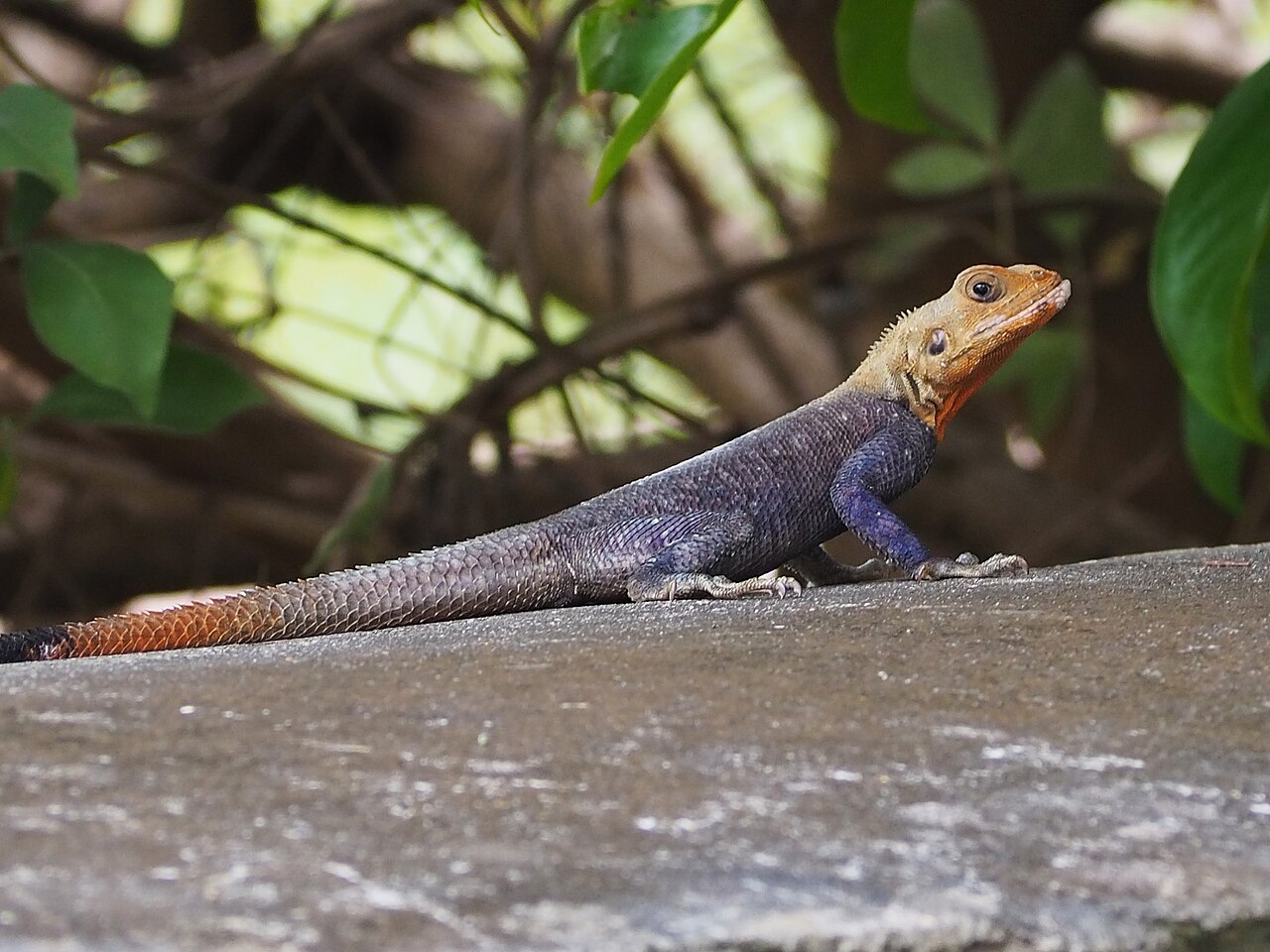
Introduced from West Africa and now established across peninsular Florida, this is the lizard behind nearly every Florida purple lizard sighting. Dominant males turn deep violet to indigo with an orange or brick red head, reach about 12 in (30 cm) including the tail, and perch openly on walls and curbs. The University of Florida’s IFAS Extension tracks it as non native.
Western Fence Lizard
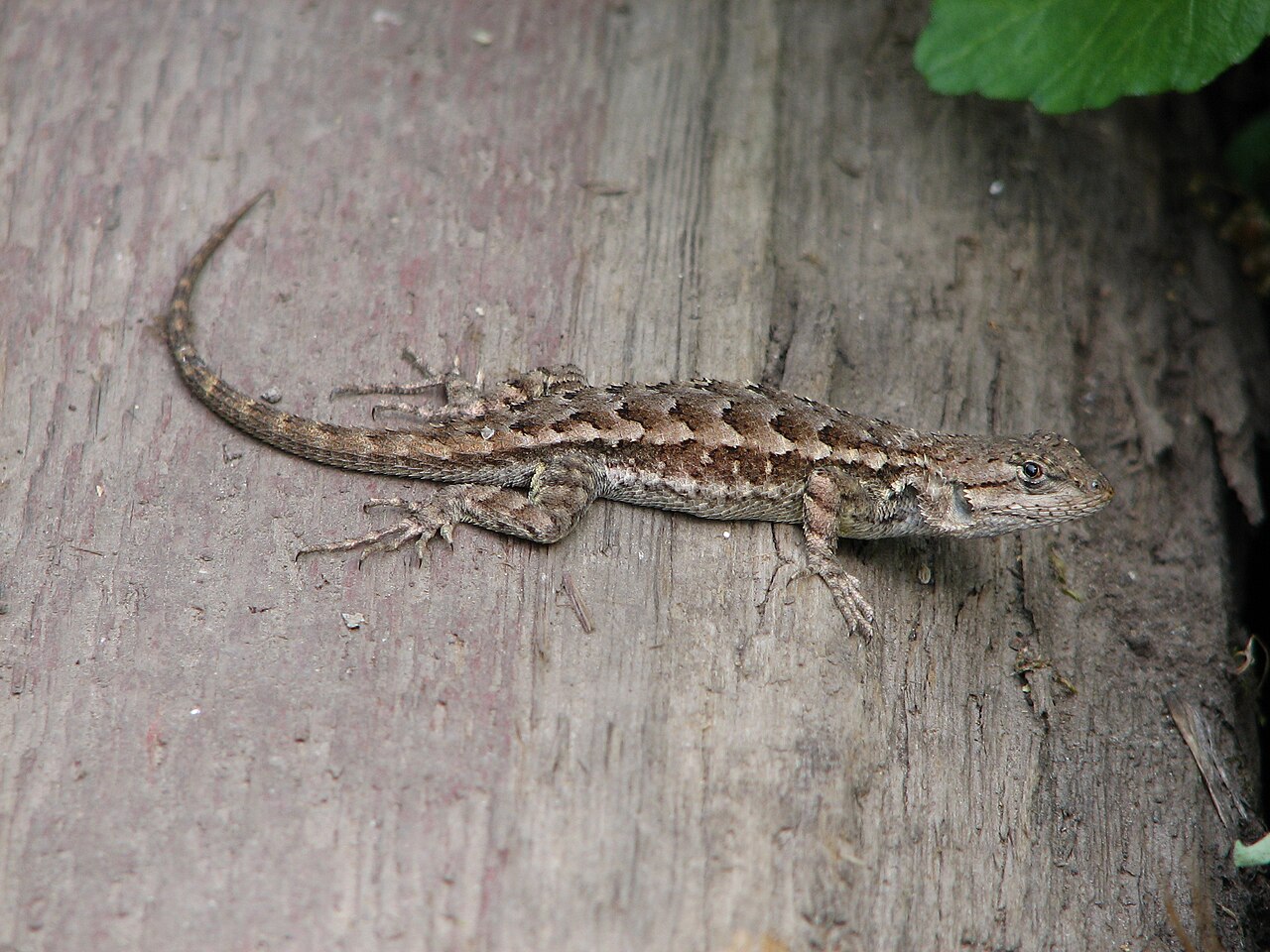
Known as the blue belly, it shows metallic blue panels on belly and throat that shade to violet in strong light. This is the lizard most often called purple in California yards, and it shares fences and woodpiles with the alligator lizard.
Eastern Fence Lizard
The eastern counterpart carries two blue violet belly patches and a smaller pair on the throat, visible only when a male flattens sideways at a rival. Gray brown above, from New Jersey to central Texas.
Ornate Tree Lizard
Small, flat, and fast, with the most variable throat color of any US lizard: blue, green, orange, or a blue violet fan. Look on cottonwood trunks near the desert horned lizard in Arizona and West Texas.
Purple or Blue? Telling the Sheen Apart
Almost every purple lizard report resolves into one of two animals. Color that shows only when the lizard tips sideways means a fence lizard. Full body violet with a contrasting warm head means an agama, which stands higher on its legs and will not let you close.
Are Purple Lizards Dangerous?
None is venomous and none has a bite that matters. A cornered fence lizard or agama may nip if grabbed, producing a pinch at most. Wash your hands afterward, since lizards can carry Salmonella on the skin. Droppings on a patio are harmless and easy to separate from rodent waste, which we cover in lizard poop.
Frequently Asked Questions
Where can I see a purple lizard in Florida?
Peters’s rock agama is widespread in south and central Florida, especially around Miami, Fort Lauderdale, and Tampa. Look on sunlit concrete walls and bridge abutments in late morning. Breeding males are the violet ones; females and juveniles are mottled brown.
What is a lizard’s enemy?
Snakes, hawks, roadrunners, shrikes, and domestic cats take the most US lizards, and larger lizards eat smaller ones. Fence lizards also lose eggs to ground squirrels and ants. That pressure is why they drop their tails so readily.
How many fingers do lizards have?
Lizards have five toes on each foot, twenty in total, though the front toes are often called fingers. A few burrowing lineages have reduced or lost them. All five species here have the standard five, with the ornate tree lizard showing long hind toes for climbing.
Are there purple lizard species kept as pets?
No wild species is reliably purple in captivity, but lavender leopard geckos and some bearded dragon lines show a violet cast, and juvenile blue tailed skinks read purple under warm bulbs. Captive color is bred for, much as with a purple bird in aviculture. For yellow relatives, see our yellow lizard guide.