Ferret Poop: What Healthy Stool Looks Like and 7 Warning Colors
Healthy ferret poop is a smooth, soft brown coil about 1 to 2 inches long (2.5 to 5 cm) and roughly a quarter inch (6 mm) thick, dropped in a corner four to six times a day. Anything black and tarry, green and slimy, mustard yellow, or studded with seed like grains means the gut is moving too fast, failing to absorb food, or bleeding, and that makes the litter box the cheapest health monitor a ferret owner has.
Ferrets run a high protein carnivore diet through a very short digestive tract in about three to four hours. Stool therefore reacts within half a day to a diet change, a swallowed piece of foam rubber, or the first hours of an illness. That speed cuts both ways: one odd dropping after a treat is usually nothing, while two days of the same abnormal stool is a vet appointment.
Normal ferret poop is a smooth brown log 1 to 2 inches long (2.5 to 5 cm), soft but holding its shape, with no mucus or blood. Ferrets go four to six times a day, usually in a corner within 15 minutes of waking. Green, black, yellow or seedy stool needs a vet.
What Normal Ferret Poop Looks Like
The baseline is a short, smooth cylinder with slightly tapered ends, the texture of soft serve ice cream: it holds its shape when scooped but flattens where it landed. Color runs from light tan to medium chocolate brown depending on the food. Kibble fed ferrets produce darker, firmer stool than raw fed ferrets, whose droppings are paler, drier and far less smelly.
Size is remarkably consistent for an animal that weighs only 1.5 to 4 pounds (0.7 to 1.8 kg). Most droppings measure 1 to 2 inches (2.5 to 5 cm), and a well fed adult produces a total volume roughly the size of a tablespoon per day. Surface should be matte and even, not glossy with mucus.
| Feature | Ferret poop |
|---|---|
| Length | 1 to 2 in (2.5 to 5 cm) per dropping |
| Diameter | About 0.2 to 0.3 in (5 to 8 mm) |
| Shape | Smooth coil or short log, tapered ends, no segments |
| Color | Light tan to medium brown when healthy |
| Contents | Uniform paste, no fur, bone or seeds in pet ferrets |
| Where you find it | Corners, litter pan edges, behind furniture, inside tunnels |
| Frequency | 4 to 6 times a day, first one soon after waking |
Ferret Poop Color Chart and What Each Color Means
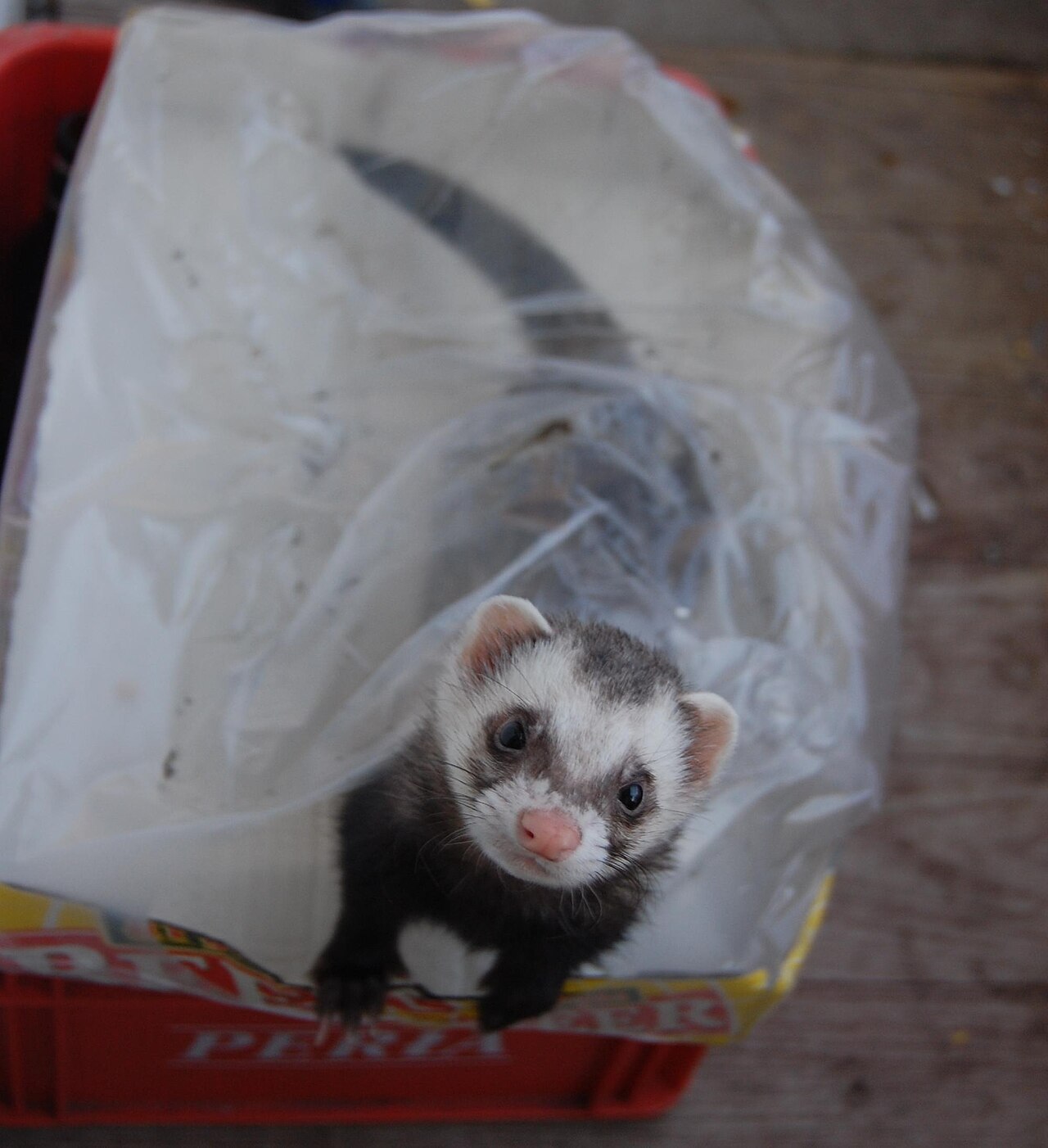
Color is the fastest read on a ferret’s gut, and most owners learn it after their first scare. Brown is normal. Everything else is a statement about transit speed, bile, or blood, and the two urgent colors are black and bright red.
| Color | Likely meaning | Urgency |
|---|---|---|
| Light to dark brown | Normal digestion | None |
| Green, often slimy | Food passing too fast, bile not reabsorbed, classic with viral enteritis | Vet within a day |
| Mustard yellow or tan liquid | Rapid transit or poor absorption, common after a diet switch | Watch 24 hours |
| Seed like grains in liquid | Undigested food, malabsorption, often seen with chronic gut disease | Vet appointment |
| Black and tarry | Digested blood from the stomach or upper gut, often an ulcer | Emergency |
| Bright red streaks | Fresh blood from the lower gut or a strained anus | Vet within a day |
| Thin, stringy, pencil lead width | Narrowed gut, partial blockage from swallowed rubber or foam | Emergency |
Do Ferret Poop Smell? Why the Odor Is So Strong

Do ferret poop smell is the question every new owner asks, and the honest answer is yes, more than cat or rabbit droppings. The reason is diet: a carnivore digesting 32 to 38 percent protein produces sulfur rich waste, and ferrets add scent from anal glands when they are startled. The smell peaks within a minute of the dropping and fades once it dries.
Two things cut it sharply. A scoop twice a day beats any deodorizer, and a lower ash, higher meat food produces less volume and less odor. Raw fed ferrets are the quietest of all, with small, chalky droppings that barely register, which is one of the reasons raw feeders swap poop photos as proudly as they do.
How Often Ferrets Poop and Where They Go
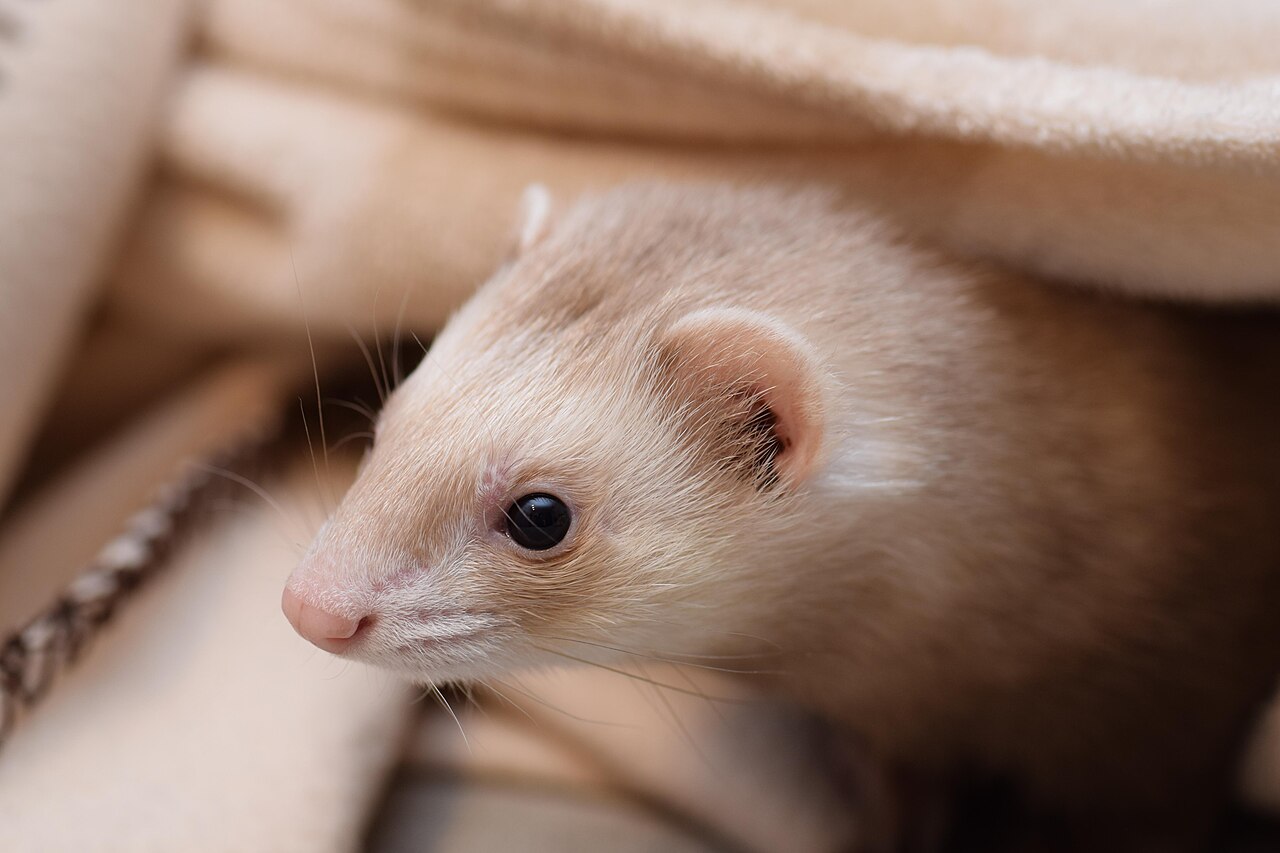
A healthy adult goes four to six times a day, and the first of the day lands within about 15 minutes of waking. Kits go more often, up to ten times, because they eat more often relative to their size. Anything above ten droppings a day, or fewer than two, is worth a note in a log.
Placement is predictable: ferrets back into a corner and lift the tail, which is why litter pans with two high sides work and open trays do not. They will also claim a corner far from the food dish, so a cage with four corners needs two pans. A ferret that suddenly poops in its sleeping hammock is usually ill, not rude.
What You Find Inside Ferret Scat
Pet ferret droppings are a uniform paste with nothing visible in them. That absence is itself an identification clue, because the wild mustelids a ferret gets confused with eat whole prey and their scat shows it: fur, feather barbs, tooth sized bone chips, and insect shells pressed into a twisted rope.
In a pet, visible material means a problem. Clear jelly is mucus from an irritated colon. Grainy specks are undigested food. Threads of carpet, foam or rubber band are a warning that the ferret is eating the house, and the piece that passed is rarely the only piece swallowed. The same logic applies when you read droppings from two rodents side by side: contents separate species faster than size does.
Ferret Poop vs Cat Poop
Cat droppings are the most common mix up, since both animals are obligate carnivores using a litter pan. Cat poop is thicker, 0.4 to 0.6 in (10 to 15 mm) across, firmer, segmented like a small sausage, and comes in one or two pieces a day. Ferret poop is thinner, softer, unsegmented and far more frequent.
Smell separates them too. Cat feces smell sour and ammoniacal, ferret feces smell musky and sweetish. Volume is the clincher in a shared household: a single cat produces more waste in one sitting than a ferret produces all day.
Ferret Poop vs Rat Poop
Rat droppings are pellets, not coils: 0.5 to 0.75 in (12 to 19 mm) long, dark, firm, with blunt or slightly pointed ends, and they appear scattered along runways in dozens. Ferret poop is a single soft coil per visit, concentrated in a corner. If you find 20 dark pellets behind the dryer, nothing in the ferret cage explains them.
The confusion usually runs the other way, with a loose rat or mouse blamed on the pet. The quick test is squash resistance: rodent pellets stay firm for days, ferret stool dries into a crumbly flake. For the rodent side of that comparison, pellet shape and taper does most of the work.
Ferret Poop vs Mink and Polecat Scat
Outdoors, the lookalikes are wild mustelids. American mink (Neogale vison) and European polecat (Mustela putorius) leave scat that is 2 to 3 in (5 to 8 cm) long, twisted like a rope, strongly tapered at one end, and packed with fur, bone and sometimes fish scales. It is left in the open on rocks, logs and culvert entrances as a territory marker, never tucked into a corner.
Escaped pet ferrets, which are the same species as the polecat in domesticated form (Mustela putorius furo), switch to this twisted, fur filled scat within days of eating wild prey. A smooth paste coil in a shed is a recently escaped pet. A hard, hairy rope on a log is a wild hunter, closer in signature to droppings that crumble to insect parts than to anything from a litter pan.
Diarrhea, Seedy Stool and Other Warning Signs
One loose stool after a new treat means little. A pattern means something. Watery green diarrhea with mucus, often called green slime by owners, spreads fast between ferrets and dehydrates kits and seniors within a day. Seed like grains suspended in liquid point to malabsorption and show up in chronic gut inflammation.
Count the signals that come with it. Grinding teeth, pawing at the mouth and drooling suggest an ulcer. Straining with nothing produced, a hunched posture and refusing food suggest a blockage, which is the emergency behind most sudden stool changes in ferrets under two years old.
Health Risks and How to Clean Up Safely
Ferret feces can carry Salmonella, Campylobacter jejuni, Giardia and Cryptosporidium, all of which pass to people by hand to mouth contact, and the risk is highest for children under five, pregnant women and anyone immunocompromised. Public health guidance from the Centers for Disease Control and Prevention treats small pet mammals the same way it treats reptiles: assume the enclosure is contaminated and wash accordingly.
Wear disposable gloves, scoop into a sealed bag, then wash the pan with hot soapy water and disinfect it. Wash hands afterward even though you wore gloves. Keep litter scooping away from the kitchen sink, and never rinse a pan where food is prepared. The same rule covers droppings found loose in a pantry, where the pathogens differ but the hand to mouth route does not.
What the 3-3-3 Rule for Ferrets Actually Refers To
What is the 3-3-3 rule for ferrets gets asked constantly, and it is borrowed, not native. The phrase comes from shelter dog adoption, where three days, three weeks and three months mark settling in stages, and ferret groups repeat it for new arrivals. It says nothing about digestion.
The number that does matter is gut transit: roughly three to four hours from bowl to litter pan. That is why a food switch shows up in the stool the same afternoon, and why vets ask what the ferret ate three hours ago rather than yesterday. Anyone citing a 3 to 3 poop rule is usually reaching for that transit time. Owners tracking it alongside droppings from other small pets notice how unusually fast it is.
Frequently Asked Questions
Do ferret poop smell?
Yes. Ferret droppings smell stronger than cat or rabbit waste because a high protein carnivore diet produces sulfur rich waste, and startled ferrets add anal gland scent. The odor spikes immediately and fades as the stool dries. Scooping twice daily and feeding a high meat, low ash food cuts it noticeably.
What is the 3-3-3 rule for ferrets?
It is the shelter adoption guideline of three days, three weeks and three months of settling in, repeated for new ferrets. It is not a digestive rule. The relevant digestive number is transit time, about three to four hours from meal to dropping, which is why stool reflects diet changes the same day.
How often should a ferret poop?
Four to six times a day for a healthy adult, with the first dropping within about 15 minutes of waking. Kits can go up to ten times. Fewer than two droppings a day, or a sudden jump above ten, deserves a log entry and a vet call if it lasts more than 24 hours.
What does seedy ferret poop mean?
Seed like grains suspended in loose stool are undigested food particles, a sign that the gut is not absorbing properly. It shows up with viral enteritis and with chronic intestinal inflammation. One seedy stool after a diet change can resolve on its own; two days of it needs a fecal exam.
Can I leave my ferret alone for 8 hours?
Yes, with a clean litter pan, water and a safe cage. Ferrets sleep 14 to 18 hours a day and will use a corner pan while you are out. Expect two to four droppings in that window. Returning to stool smeared through a hammock usually signals illness, not boredom.
What’s the downside of owning a ferret?
The waste. Four to six droppings a day per animal, a musky odor that bedding holds onto, and corner pans that need scooping twice daily. Add a genuine risk of gut blockage from chewed rubber, which makes stool watching less of a hobby and more of a routine chore.