What Does a Wasp Nest Look Like? 4 Types and How to Tell
A wasp nest looks like a gray or tan papery structure built from chewed wood fiber, and its shape tells you which species you are dealing with. Open umbrella shaped combs hanging under an eave are paper wasps, a gray football sealed in a bubbly envelope is a bald faced hornet, and a hole in the lawn with wasps streaming in and out is a yellowjacket colony. Mud tubes stuck to a wall are a different thing entirely and are harmless.
Getting the identification right matters before you get close. Yellowjackets and bald faced hornets defend their nests aggressively and can sting repeatedly, while mud daubers and most solitary wasps will not. The sections below cover each nest type with size, location, season and the risk it carries.
Most wasp nests are made of gray papery material and fall into three shapes: an open comb of hexagonal cells hanging from a stalk (paper wasps), a fully enclosed gray ball up to 24 in (61 cm) tall (bald faced hornets), or a hidden nest in a ground hole, wall void or attic (yellowjackets). Mud tubes on walls are solitary mud daubers and are not dangerous.
What Does an Active Wasp Nest Look Like?
An active nest has visible traffic. Watch from at least 20 ft (6 m) for two minutes: if wasps are entering and leaving in a steady stream, or one or two sentries sit motionless at the entrance, the colony is live. Active paper wasp combs usually have adults clinging to the comb face even at night.
Color and texture give the second clue. An active nest looks clean and intact, with sharp edges and fresh gray or brown paper. Capped cells, which appear as flat white or tan lids over the cell openings, mean developing pupae and an established colony. Peak colony size in most of the United States runs from midsummer into early fall, and that is also when wasps are most defensive.
Paper Wasp Nests: The Open Umbrella Comb
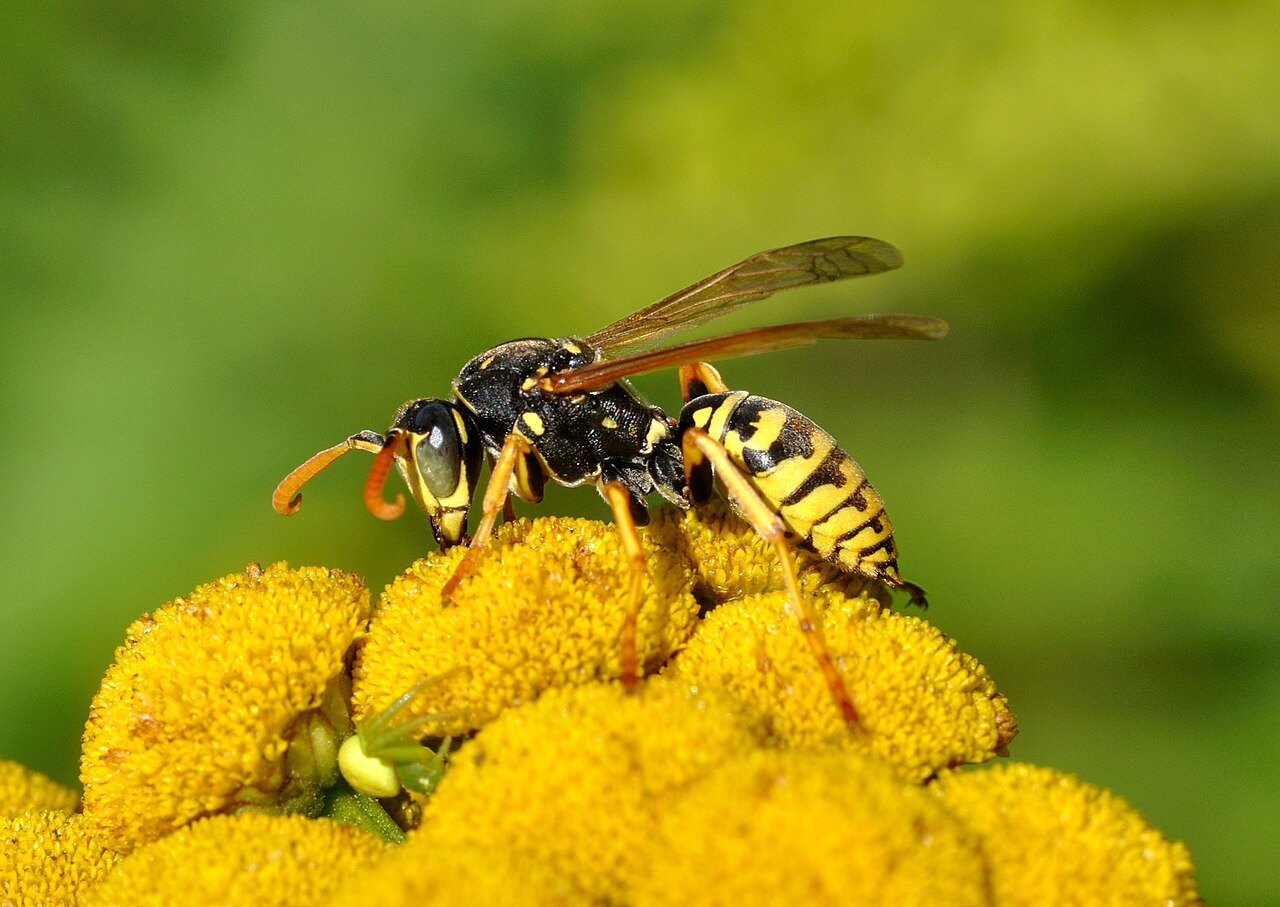
Paper wasp nests (Polistes species) are the ones most people picture. They are a single open layer of hexagonal cells hanging from a short stalk, with no outer covering, so you can see straight into every cell. Size runs from a 1 in (2.5 cm) starter comb in spring to 6 to 8 in (15 to 20 cm) across by late summer, holding 20 to 200 cells.
Look under eaves, porch ceilings, deck railings, grill lids, mailboxes and inside unused garden equipment. The nest is gray to light brown and has a dry cardboard texture. Paper wasps are the least aggressive of the social wasps but will sting if the comb is jarred. Several species build these, including the red wasp common across the South.
Yellowjacket Nests: Hidden in the Ground and in Walls
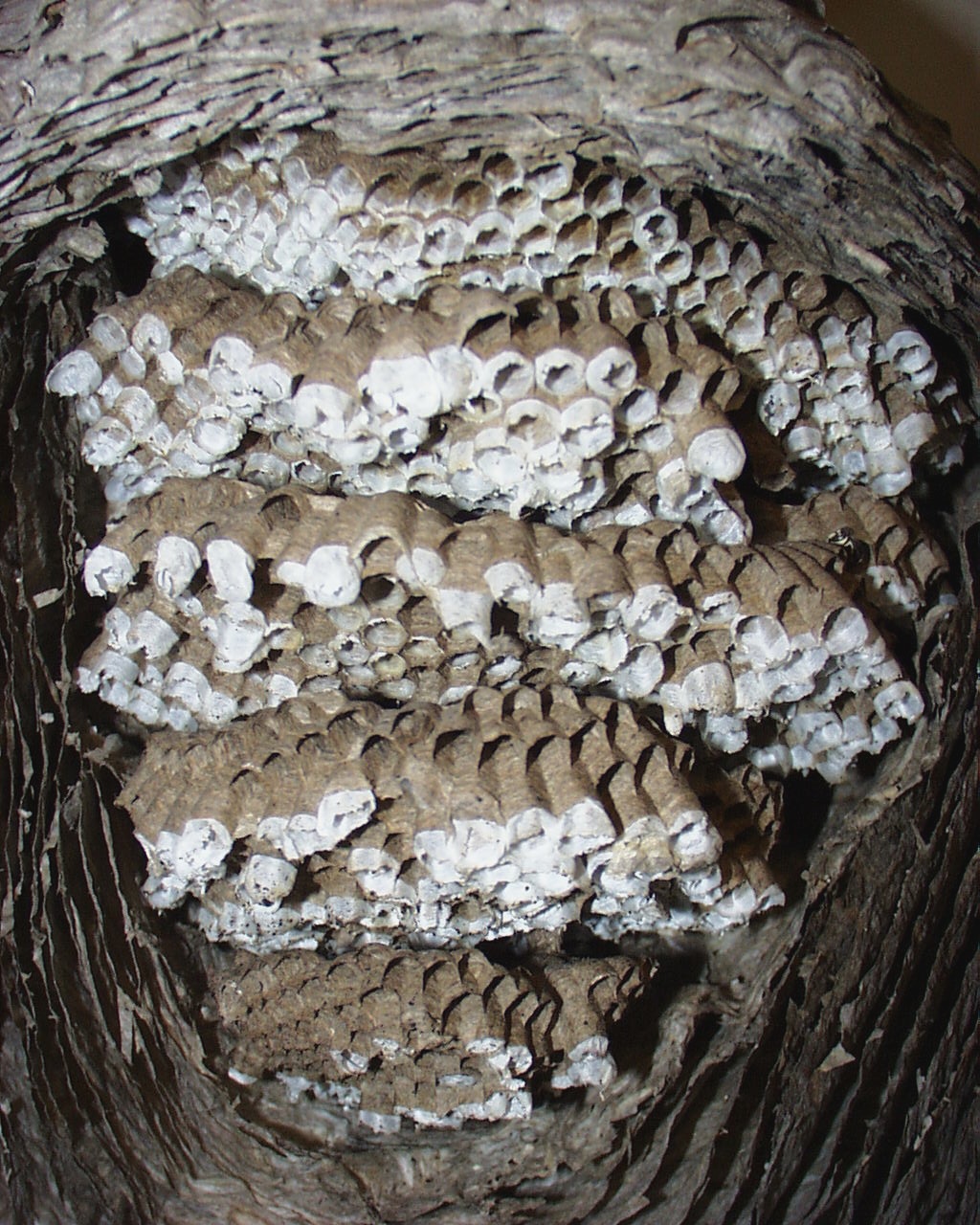
Yellowjacket nests (Vespula species) are enclosed and almost always concealed, which is why people usually find them by accident. The most common site is an abandoned rodent burrow in a lawn or bank, where the only visible sign is a 1 to 2 in (2.5 to 5 cm) hole with constant insect traffic.
Indoors and in structures they fill wall voids, soffits, attics and the gaps behind siding. A mature colony can hold 2,000 to 5,000 workers and reach the size of a basketball inside the cavity. These are the most dangerous nests to disturb: yellowjackets defend in numbers, pursue for a distance, and are responsible for most late summer stings in the United States. Mowing over a ground nest is the classic trigger.
Bald Faced Hornet Nests: The Gray Football
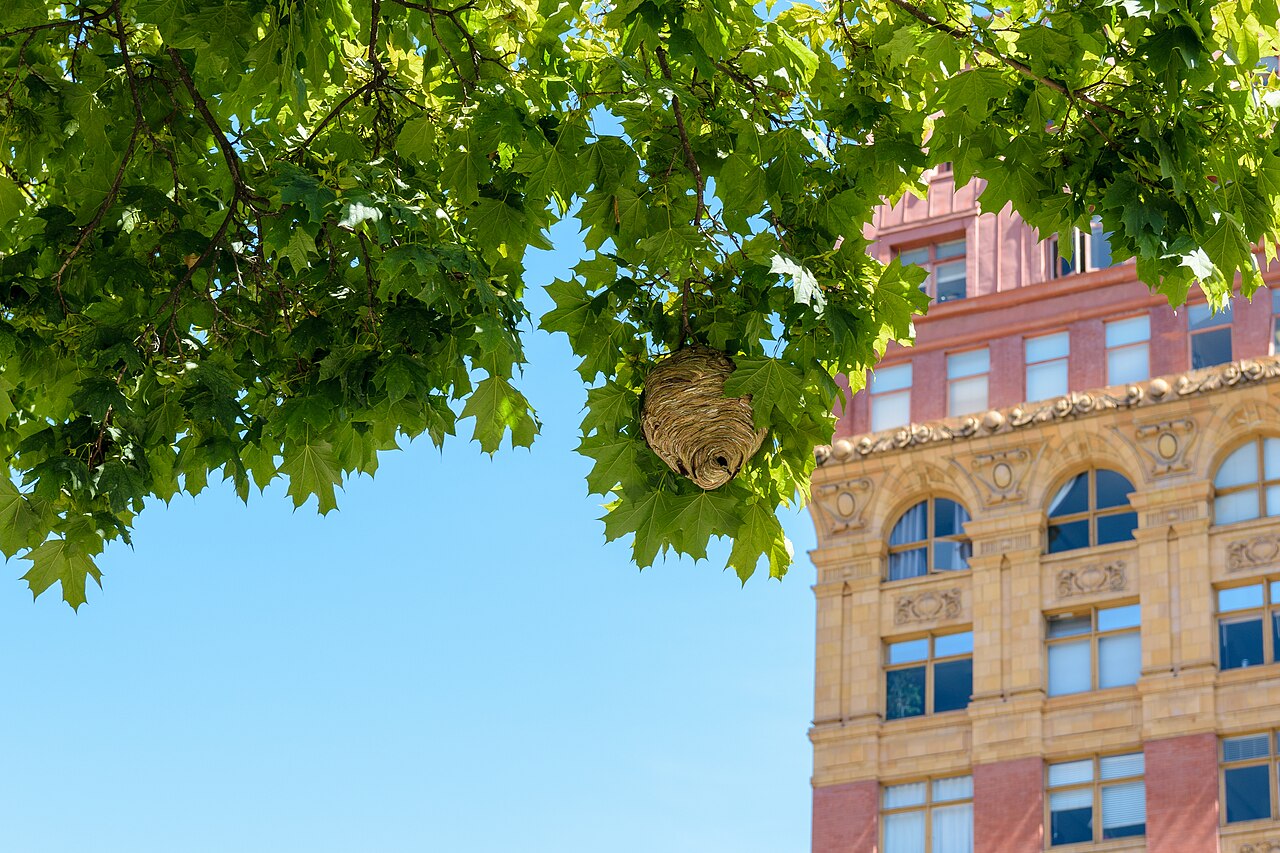
The large gray teardrop or football hanging in a tree is a bald faced hornet nest (Dolichovespula maculata), which despite the name is a type of yellowjacket rather than a true hornet. A finished nest runs 14 to 24 in (36 to 61 cm) tall and holds several stacked combs inside a layered paper envelope.
They hang in trees, large shrubs, on building overhangs and occasionally under decks, usually 3 ft (1 m) or more off the ground. The surface has a swirled gray and tan banding from the different wood sources the workers chewed. Approach distance matters here more than with any other species, and the detail is covered further in our guide to the bald faced hornet nest.
Mud Dauber Nests: Tubes and Lumps, Not Paper
Mud dauber nests look nothing like paper. Organ pipe mud daubers build parallel mud tubes 2 to 4 in (5 to 10 cm) long on walls, under eaves and in sheds, while black and yellow mud daubers build irregular mud lumps that look like dried clay smears.
These are solitary wasps. One female builds, provisions each cell with paralyzed spiders, seals it and leaves. There is no colony to defend, no guard behavior and effectively no sting risk. Old mud nests with round exit holes are empty and can be scraped off with a putty knife. A black and yellow wasp seen carrying mud rather than hovering at a comb is almost always one of these.
| Feature | Paper wasp | Yellowjacket | Bald faced hornet | Mud dauber |
|---|---|---|---|---|
| Shape | Open umbrella comb | Hidden, enclosed | Enclosed gray football | Mud tubes or lumps |
| Cells visible | Yes | No | No | No |
| Typical size | 3 to 8 in (8 to 20 cm) | Basketball in cavity | 14 to 24 in (36 to 61 cm) | 2 to 4 in (5 to 10 cm) |
| Usual location | Eaves, railings, grills | Ground holes, wall voids | Trees, overhangs | Walls, sheds, garages |
| Colony size | 20 to 100 | 2,000 to 5,000 | 400 to 700 | Solitary |
| Sting risk | Moderate | High | High | Very low |
What Does a Wasp Nest Look Like at the Start?
A new nest in spring is tiny and easy to miss. A founding queen builds a stalk the size of a pencil lead and attaches two to six cells, giving a structure smaller than a quarter. For the first few weeks a single queen tends it alone, and you will see one wasp rather than many.
This is the cheapest moment to deal with a nest. A starter comb can be knocked down with a stick in the early morning when the queen is sluggish, and she will usually relocate rather than rebuild in the same spot. Check eaves, patio umbrellas and shed corners in April and May, since a nest that goes unnoticed in spring is a full colony by August.
What Does a Wasp Nest Look Like Inside?
Cut open an enclosed nest and you find horizontal combs stacked like floors in a building, connected by short pillars and wrapped in several layers of paper envelope with an air gap between them. A mature bald faced hornet nest has three to five such combs; a large yellowjacket colony can have more.
The cells all open downward, and each holds one egg, then a larva, then a capped pupa. The insulating envelope is why these nests hold a stable internal temperature. Never open a nest you have not confirmed is dead, and even then do it outdoors: old nests often harbor carpet beetles and other scavengers.
What Does a Dead or Abandoned Wasp Nest Look Like?
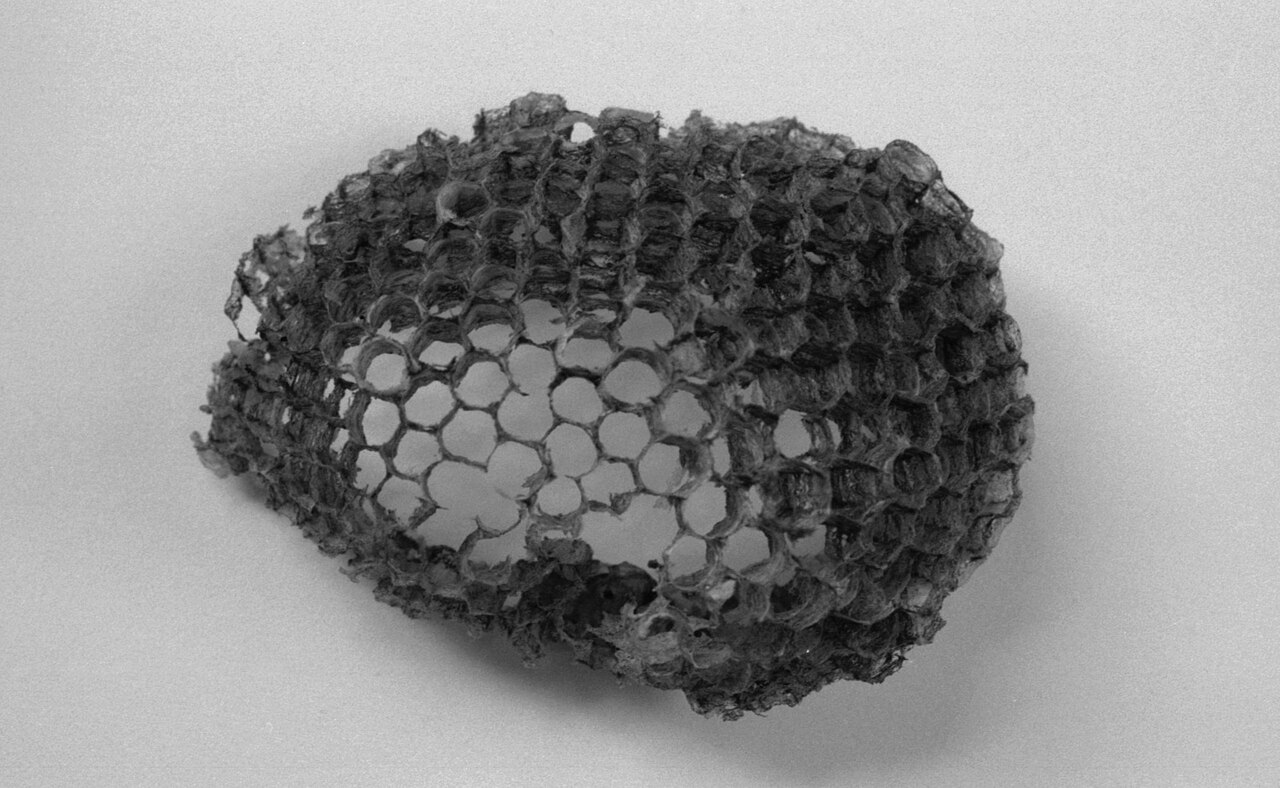
An abandoned nest looks weathered rather than clean. The paper goes dull and brittle, the outer envelope tears open, rain stains streak the surface, and the bottom opening widens as birds and insects tear into it for larvae. No traffic over a warm afternoon is the clearest signal.
In most of the country the entire colony except next year’s queens dies at the first hard frost, and the nest is never reused. That means a nest you find in winter is empty, and a paper nest still hanging in March is simply old. Birds pull them apart for nesting material, which is one reason nest remnants show up in bird nest identification photos.
Wasp Nest, Hornet Nest or Bee Hive: Telling Them Apart
The difference between a wasp nest and a hornet nest is mostly a naming question in the United States, since the bald faced hornet is a yellowjacket and the only true hornet here is the European hornet (Vespa crabro), which nests in hollow trees and wall voids with a loose papery covering. Both build from paper; a full comparison is in our guide to hornet nest vs wasp nest.
Honey bees are easier to separate. Their comb is made of pale yellow wax, not gray paper, and it hangs in long vertical sheets inside a cavity, often with visible honey. Honey bee colonies should be removed by a beekeeper, not killed. Bumble bees nest in small fuzzy clumps underground and are docile. If the material is wax, it is a bee; if it is paper, it is a wasp.
Frequently Asked Questions
How do I get rid of a wasp nest?
Treat at night or just before dawn when all workers are home and inactive, wear long sleeves, and use a pressurized wasp spray rated for the distance from a planned escape route. Ground nests and nests inside walls should go to a professional. Always follow the product label, which the EPA treats as legally binding instructions.
If I destroy a wasp nest, will they come back?
Not to the same nest, but often to the same place. Wasps do not rebuild on a destroyed nest, and foragers that were out during treatment usually disperse within a day or two. However, the site features that attracted the queen, a sheltered overhang or an unused cavity, are still there, so a new queen may found a nest nearby the following spring.
What do wasps absolutely hate, and what keeps wasp nests away?
Wasps avoid peppermint, clove, lemongrass and geranium oils in several university trials, and they avoid sites that are already occupied. Sealing wall gaps, capping chimneys, keeping bins closed and removing spring starter combs weekly does more than any repellent. Decoy nests have mixed evidence at best and work only for territorial paper wasps.
Do dryer sheets really keep wasps away?
There is little real evidence. Dryer sheets contain linalool and other compounds with mild insect repellent properties, and a few small studies found a short term effect on fungus gnats, but nothing demonstrates that they prevent nest building. They are harmless to try and not a substitute for sealing entry points.
What does WD-40 do to wasps?
Sprayed directly, it coats the insect and suffocates it, and some people spray it under eaves to discourage nest building. It is not registered as an insecticide, it is flammable, and using it against wasps is off label. A purpose made wasp spray reaches farther, works faster and is legal for the job.
What is a wasp’s worst enemy?
Bald faced hornets and yellowjackets lose whole nests to black bears and skunks, which dig out ground colonies for the larvae. Birds, dragonflies, robber flies, praying mantises and parasitic flies take adults, and raccoons raid combs at night. Our guide to animals that eat wasps covers the full list.