Black and White Beetle: 3 Species and What to Do About Each
A black and white beetle is usually one of three very different insects: the eastern eyed click beetle, the invasive Asian longhorned beetle, or the tiny varied carpet beetle found indoors. Size is the fastest way to sort between them, since these three range from a large outdoor beetle the size of a thumb to an indoor pest smaller than a grain of rice.
Where the beetle was found matters just as much as its size. A large black and white beetle on a tree trunk or woodpile outdoors is a completely different situation from a tiny speckled beetle crawling across a windowsill or closet shelf. The sections below cover identification for all three, plus what to do about each one.
Most black and white beetles are the harmless eastern eyed click beetle, the invasive Asian longhorned beetle, or the tiny varied carpet beetle found indoors. The first two are outdoor species and pose no direct danger to people. The carpet beetle is a fabric pest, not a health risk.
| Species | Size | Where Found | Concern Level | Action Needed |
|---|---|---|---|---|
| Eastern eyed click beetle | 1 to 1.75 in | Tree trunks, woodpiles, porches | None, harmless | None |
| Asian longhorned beetle | 0.75 to 1.5 in | Hardwood trees, especially maple | High, invasive pest | Report to authorities |
| Varied carpet beetle | 0.1 in | Closets, rugs, stored fabric | Moderate, fabric damage | Clean and monitor |
| Ten-lined June beetle | 1 to 1.4 in | Soil, lawns, tree foliage | Low, different species entirely | None |
What Is a Black and White Beetle?
A black and white beetle is a color description that applies to at least three unrelated species commonly encountered in the US. The largest and most dramatic is the eastern eyed click beetle, a harmless species with two prominent fake eyespots on its back. A second, much more serious species is the Asian longhorned beetle, an invasive wood-borer that state and federal agencies actively track.
The third is the varied carpet beetle, a tiny indoor pest whose mottled black, white, and orange scales can read as black and white from a distance. Despite being unrelated, all three get reported under the same search term because of their shared coloring.
None of these beetles bite or sting people, and only the Asian longhorned beetle poses a genuine concern, which is directed at trees rather than at humans or pets.
Eastern Eyed Click Beetle (Alaus oculatus)
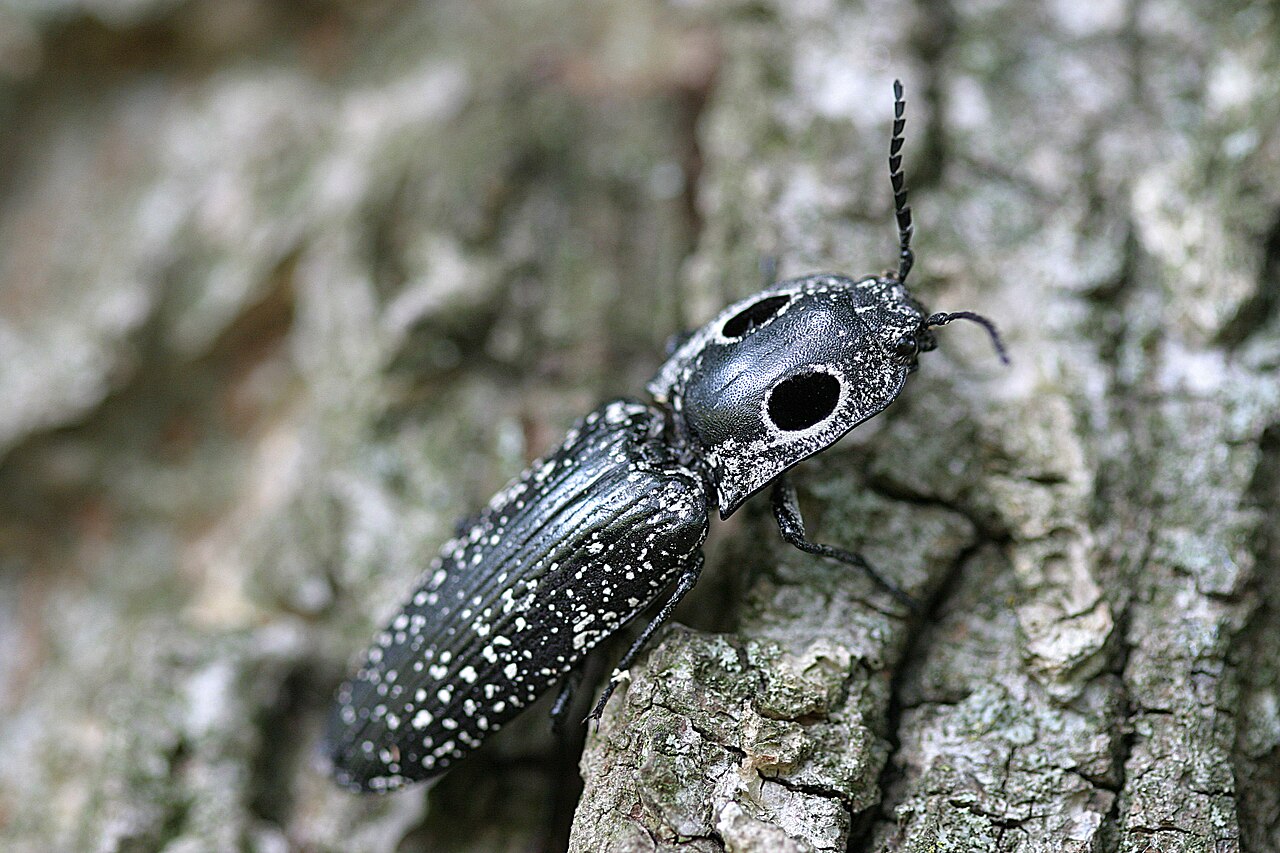
The eastern eyed click beetle is a large, harmless beetle covered in fine black and white speckles, with two prominent black eyespots ringed in white on its back that mimic the eyes of a much larger animal. This bluffing pattern is meant to startle predators rather than to threaten people.
True to its name, this species can snap its body with an audible click to flip itself upright if it lands on its back, a mechanism that also helps it briefly escape predators by launching into the air. It is most often found on tree trunks, woodpiles, and porches during summer.
This beetle causes no damage to structures, plants, or people, and its larvae live in decaying wood, where they help break down dead trees rather than attacking healthy ones.
Asian Longhorned Beetle (Anoplophora glabripennis)
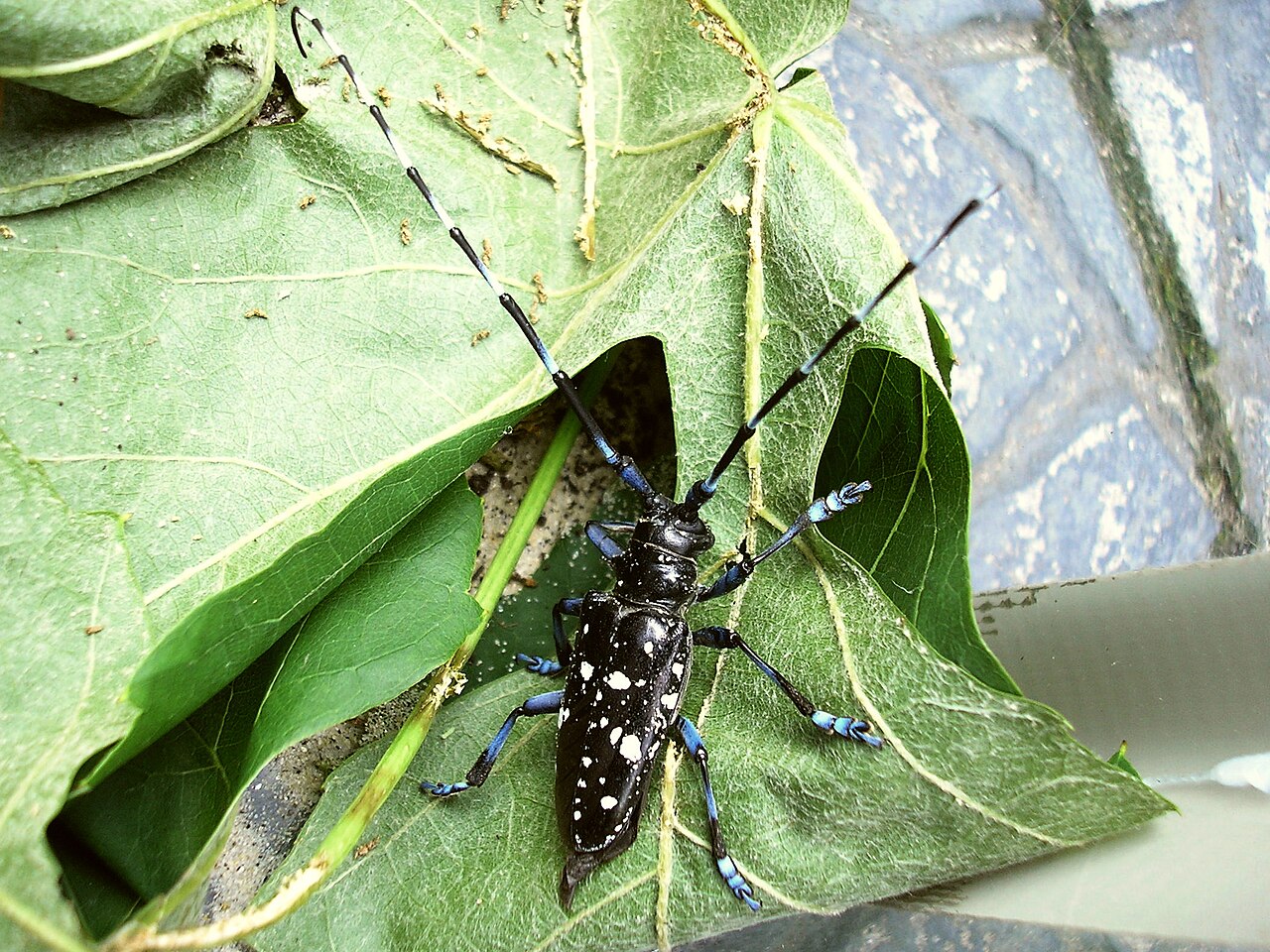
The Asian longhorned beetle is a shiny black beetle marked with irregular white spots and extremely long, banded antennae, and it is the one black and white beetle in this group that warrants real concern. It is an invasive species that bores into hardwood trees, particularly maples, and can kill them over several years of repeated infestation.
Unlike the harmless click beetle, this species has no natural predators keeping its US populations in check, which is why agricultural agencies treat new sightings as a priority. USDA APHIS maintains active monitoring and reporting programs for this species in affected states.
Confirmed infestations often result in the removal of affected trees to stop the beetle from spreading, since there is currently no effective treatment that saves a heavily infested tree.
Varied Carpet Beetle (Anthrenus verbasci)
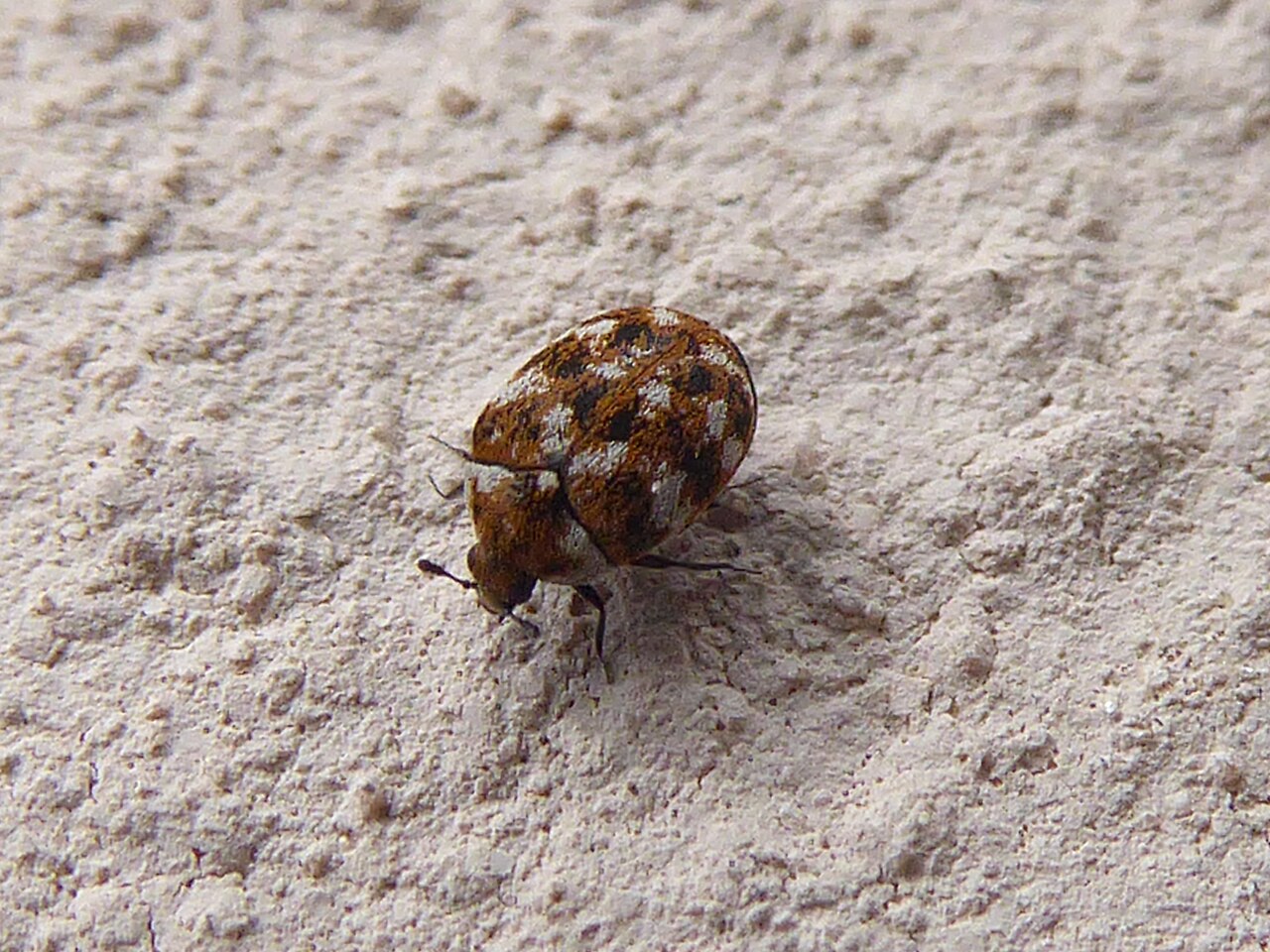
The varied carpet beetle is a tiny, rounded beetle covered in a mottled pattern of black, white, brown, and yellow scales, small enough to be mistaken for a piece of debris at first glance. It is the species most people mean when they describe finding small black and white beetles indoors.
Adults are harmless and feed on pollen outdoors, but their larvae are the real concern, since they feed on wool, silk, fur, feathers, and other natural fibers found in closets, rugs, and stored clothing. Infestations often go unnoticed until damage appears on stored garments.
This species does not bite, sting, or transmit disease, and its impact is limited entirely to fabric and stored organic material rather than to human health.
What Are the Small Black and White Beetles in My House?
Small black and white beetles found indoors are almost always varied carpet beetles rather than either of the two outdoor species above. Their tiny size and mottled scale pattern are the main identifying features, along with a tendency to appear near windows, closets, and stored fabric.
Adults are frequently drawn indoors by sunlight through windows and may appear in groups on windowsills in spring, which is often the first sign of an indoor population before any fabric damage is noticed.
Finding a few adult beetles on a windowsill does not automatically mean an active infestation, but it is a reasonable cue to check nearby closets and stored textiles for larvae or damage.
Are Black and White Beetles Harmful?
None of the three black and white beetles covered here are harmful to people directly. The eastern eyed click beetle and Asian longhorned beetle do not bite, sting, or carry disease, and the varied carpet beetle’s only real impact is on fabric rather than health.
A small percentage of people report mild skin irritation from handling carpet beetle larvae due to their bristly hairs, similar to a mild allergic reaction rather than a bite or sting. This is uncommon and resolves quickly.
The Asian longhorned beetle’s harm is directed entirely at hardwood trees rather than at people, which is why it is treated as an agricultural and forestry concern rather than a household safety issue.
Should I Worry If I Found a Carpet Beetle?
Finding a single varied carpet beetle is rarely a reason for serious concern, since adults wander indoors from outdoor flowers without necessarily establishing a population. A pattern of repeated sightings alongside visible damage to wool, fur, or silk items is a stronger signal of an active infestation worth addressing.
Checking stored clothing, rugs, and upholstered furniture for small irregular holes or shed larval skins is the most reliable way to confirm whether an infestation is actually present. Larvae themselves are bristly and slightly larger than the adult beetles.
Routine vacuuming, laundering seasonal fabrics before storage, and sealing stored items in airtight containers prevent most infestations before they start.
What Attracts Black and White Beetles Indoors?
Varied carpet beetles are drawn indoors primarily by natural fibers such as wool, silk, feathers, and fur, along with pet hair and dead insects trapped in vents or wall voids. Sunlight through windows also attracts adult beetles searching for a place to lay eggs.
Homes with wool rugs, natural-fiber upholstery, or stored winter clothing offer more food sources for larvae than homes furnished mostly with synthetic materials. Bird or rodent nests in attics and wall cavities can also serve as a hidden food source that sustains a population unnoticed.
Reducing available food sources through regular cleaning and proper fabric storage is more effective long term than trying to eliminate every adult beetle that wanders indoors.
Are Ten-Lined June Beetles the Same Thing?
Ten-lined June beetles are not the same species and are only loosely similar in coloring, since they are tan to brown with white stripes rather than truly black and white. They belong to the scarab beetle family and are unrelated to any of the three species covered above.
This species is harmless to people, though its grub stage feeds on plant roots and can occasionally damage lawns or garden beds in large numbers. Adults are attracted to lights at night and are sometimes mistaken for a black and white beetle due to their bold striped pattern.
Confusion between this species and true black and white beetles usually clears up once the beetle is seen in good lighting, since the base color is clearly brown rather than black.
What Is the Most Toxic Beetle?
The most medically significant beetles in North America are blister beetles, which release a caustic compound called cantharidin that can cause severe skin blistering on contact. None of the black and white beetles covered in this guide belong to that group or produce any comparable defensive chemical.
Blister beetles are typically elongated and soft-bodied with a distinct narrow neck, looking quite different from the compact, hard-shelled click beetle, longhorned beetle, or carpet beetle discussed here. Confusing the two groups is unlikely once the body shape is compared side by side.
For practical purposes, none of the beetles a person is likely to identify as black and white carry any meaningful toxicity risk to skin or health.
What Does It Mean If You See a Black Beetle?
Various folk traditions treat a black beetle sighting as a symbol of protection, transformation, or minor good luck, drawing loosely on the beetle’s association with resilience and hard outer armor. These interpretations are cultural rather than scientific.
Biologically, a beetle sighting simply reflects the presence of a suitable food source or habitat nearby, whether that is decaying wood, a stressed tree, or stored fabric indoors. The timing and location of a sighting are driven entirely by the beetle’s own biology.
Whatever symbolic weight is attached to the encounter, it has no bearing on whether the specific beetle involved needs any kind of response or action.
Frequently Asked Questions
Should I worry if I found a carpet beetle?
A single sighting is not usually a cause for concern. Repeated sightings alongside fabric damage are a stronger signal that an active larval population is present and worth addressing.
What are the small black and white beetles in my house?
They are almost always varied carpet beetles, a tiny mottled species whose larvae feed on wool, silk, fur, and other natural fibers.
Are ten-lined June beetles harmful?
They are harmless to people, though their grubs can occasionally damage lawn roots in large numbers. They are a different species from true black and white beetles.
Are black and white beetles harmful?
The eastern eyed click beetle and Asian longhorned beetle pose no risk to people, and the varied carpet beetle only affects fabric rather than health. The Asian longhorned beetle is a serious risk to hardwood trees specifically.
What is the most toxic beetle?
Blister beetles are the most medically significant beetle group in North America due to a skin-irritating compound they release. None of the common black and white beetles belong to this group.
What does it mean if you see a black beetle?
Various folk traditions associate a black beetle with protection or good luck, though this is a cultural interpretation rather than a scientific fact. Biologically, it simply indicates a nearby food source or habitat.
Related reading: black beetles, carpet beetle vs bed bug, carpet beetle larvae, carpet beetle rash, the Hercules beetle, and getting rid of Japanese beetles.