Shrew Poop vs Mouse Poop: How to Identify Tiny Droppings
Shrew poop is a tiny dark pellet, roughly 0.08 to 0.25 in (2 to 6 mm) long and only about 0.06 in (1.5 mm) thick, usually curved or slightly corkscrewed, with tapered ends and glittering insect fragments visible in the surface. Shrews drop it in small clusters at the same spots along their runways rather than scattering it the way mice do.
That combination of thread-thin shape, insect content and latrine habit separates shrew droppings from mouse droppings, which is the call almost everyone needs to make. In North America the northern short-tailed shrew (Blarina brevicauda) is the species most often found in basements, garages and crawl spaces, and its droppings sit at the larger end of that range.
Shrew droppings are 0.08 to 0.25 in (2 to 6 mm) long, very thin, dark brown to black, often curved with pointed ends, and packed with shiny insect parts. They appear in small heaps at fixed latrine spots along walls. Mouse droppings are thicker, granular and scattered, with seed and grain fragments instead.
What Does Shrew Poop Look Like?
Picture a short piece of dark thread rather than a pellet. Fresh shrew droppings are moist, almost black and slightly shiny, and they dry to a dull dark brown that crumbles into gritty flakes. The ends taper, and many pellets hold a distinct curve or a half twist from the narrow gut they came through.
Under a hand lens the surface is the giveaway. Beetle wing cases, ant heads, legs and other chitin shards catch the light, so the dropping looks speckled with mica. Shrews eat 50 to 100 percent of their body weight in invertebrates every day, and almost nothing of that passes through unrecognizable.
Shrew Droppings Size, Shape and Color
Measure before you decide. The size overlap with mouse droppings is real at the large end, so thickness and curvature carry more weight than length alone. A pellet that is six times longer than it is wide is a shrew; a pellet three times longer than wide is a rodent.
| Feature | Shrew droppings | House mouse droppings |
|---|---|---|
| Length | 0.08 to 0.25 in (2 to 6 mm) | 0.1 to 0.25 in (3 to 6 mm) |
| Thickness | About 0.06 in (1.5 mm) | About 0.1 in (2.5 mm) |
| Shape | Thin, curved or twisted, tapered ends | Thicker rod, blunt or one pointed end |
| Color | Dark brown to black, slightly shiny | Gray brown to black, dull |
| Content | Shiny insect parts, chitin shards | Granular, seed and grain fragments |
| Placement | Small heaps at fixed latrines | Scattered along runways and food sources |
| Daily output | Dozens, concentrated | 50 to 75, spread out |
What Is Inside Shrew Scat
Shrews are insectivores, not seed eaters, and the scat shows it. Expect ground beetles, ants, spiders, centipedes, earthworm bristles, snail shell chips and the occasional tiny bone or tooth from a vole, since larger shrews take small vertebrates. Short-tailed shrews also cache snails and use venomous saliva to subdue prey.
What you will not see is plant material in bulk. No chewed grain, no sawdust-like fiber, no seed hulls. If the droppings break down into pale plant fiber instead of glinting chitin, you are looking at a rodent or a herbivore, and porcupine droppings show that woody end of the spectrum clearly.
Where You Find Shrew Droppings in and Around a House
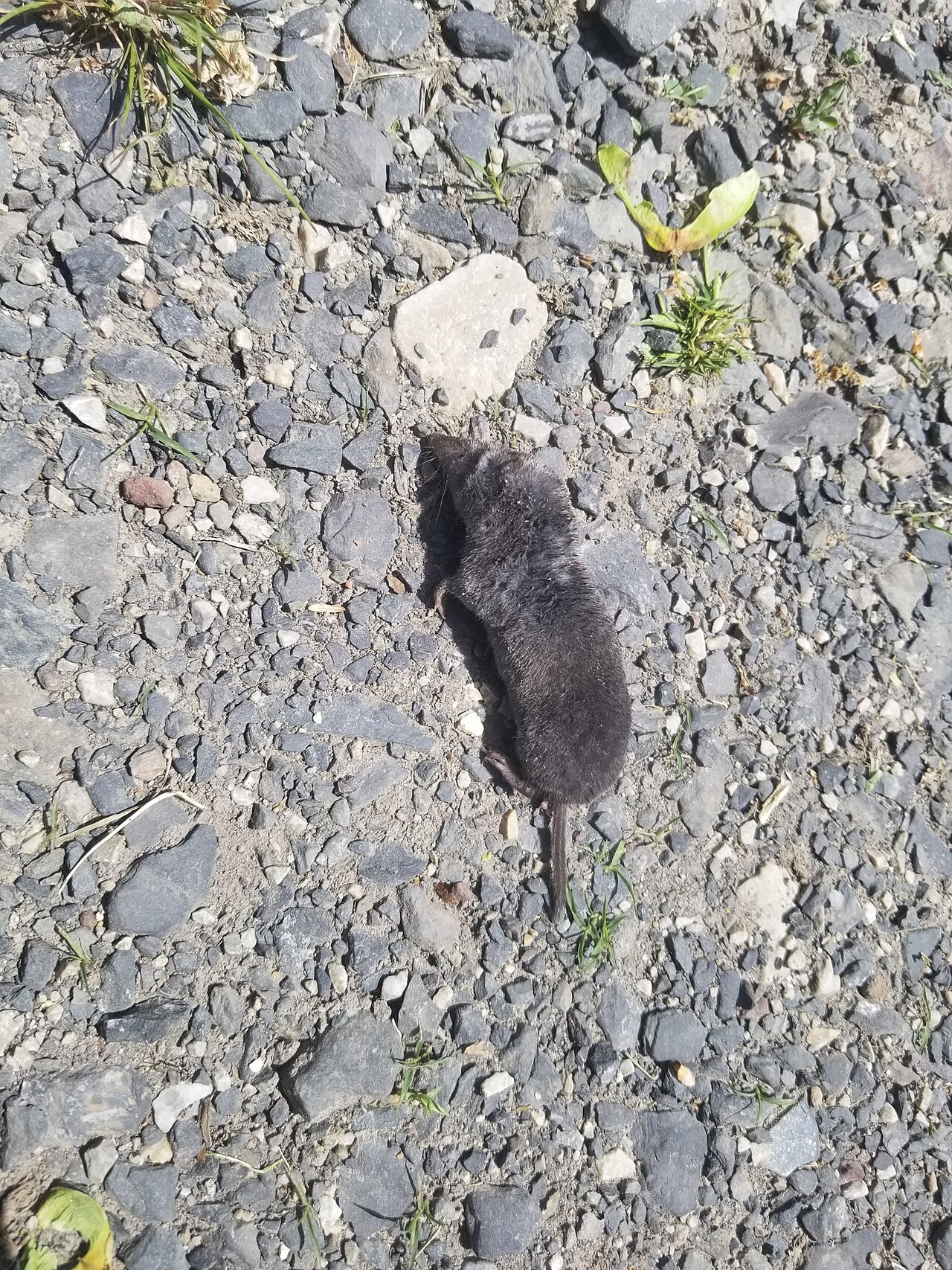
Shrews hug edges. Look along foundation walls, behind stored boxes, in window wells, under basement stairs, inside garages, beneath woodpiles and along the mulch line of a garden bed. Outdoors they use surface runways in leaf litter and the tunnel systems of voles and moles.
They are also creatures of routine, so droppings pile up in the same few spots instead of appearing everywhere. A pea-sized heap of dark thin pellets in a corner, with none in the pantry, suggests a shrew. Droppings along countertops and inside food packaging point to mice, as our rat and mouse dropping comparison explains.
Shrew Poop vs Mouse Poop
This is the comparison that matters, because the treatment differs. Mouse droppings are thicker, more uniform, granular when crushed, and scattered in the dozens wherever the animal travels and feeds. Shrew droppings are narrower, often curved, insect-filled, and concentrated at latrines.
Supporting sign helps. Mice leave gnaw marks, shredded nesting material and greasy rub lines along walls; shrews gnaw nothing, nest in grass-lined chambers and leave a sharp musky odor from flank glands. A shrew in a basement is also usually a single accidental visitor, while mouse droppings almost always mean several animals.
Shrew Poop vs Bat Poop
Both contain insect parts, so content alone will not separate them. Bat guano is larger, 0.25 to 0.5 in (6 to 13 mm), and it crumbles to glittering dust between your fingers, while shrew droppings stay firm and break into chunks.
Location does the rest. Guano accumulates in cones below a roost, in attics, soffits, chimneys and barn rafters, often with staining on the wall beneath. Shrew droppings sit at floor level along walls. Our guide to bat and mouse droppings covers the crumble test in detail.
Shrew Poop vs Roach Poop
Cockroach droppings are the smallest of this group. American cockroach droppings run about 0.08 in (2 mm) with blunt ends and visible ridges along the sides, and German cockroach frass looks like coarse ground pepper or dark smears rather than discrete pellets.
Run your eye along the length. Ridged sides with square ends mean roach; a smooth tapered curve means shrew. Roach frass also clusters inside cabinets, behind appliances and in warm cracks near water, whereas shrew droppings stay on open floor edges. The roach and mouse dropping comparison shows the ridges up close.
How to Identify Rodents by Feces
Size sorts the group, content confirms it. Rat droppings are 0.5 to 0.75 in (13 to 19 mm) and capsule shaped, mouse droppings 0.1 to 0.25 in (3 to 6 mm) and rod shaped, vole droppings short and greenish from grass, and squirrel droppings slightly barrel shaped with rounded ends.
Then add placement and freshness. Soft shiny droppings are hours old, hard dull ones are days or weeks old, and a mix of both means ongoing activity. Pellets of two clearly different sizes in one area usually mean two species, which is why squirrel and mouse droppings are worth learning as a pair. Herbivore pellets such as deer and rabbit droppings sit in a different size class entirely.
Are Shrews Considered Rodents?
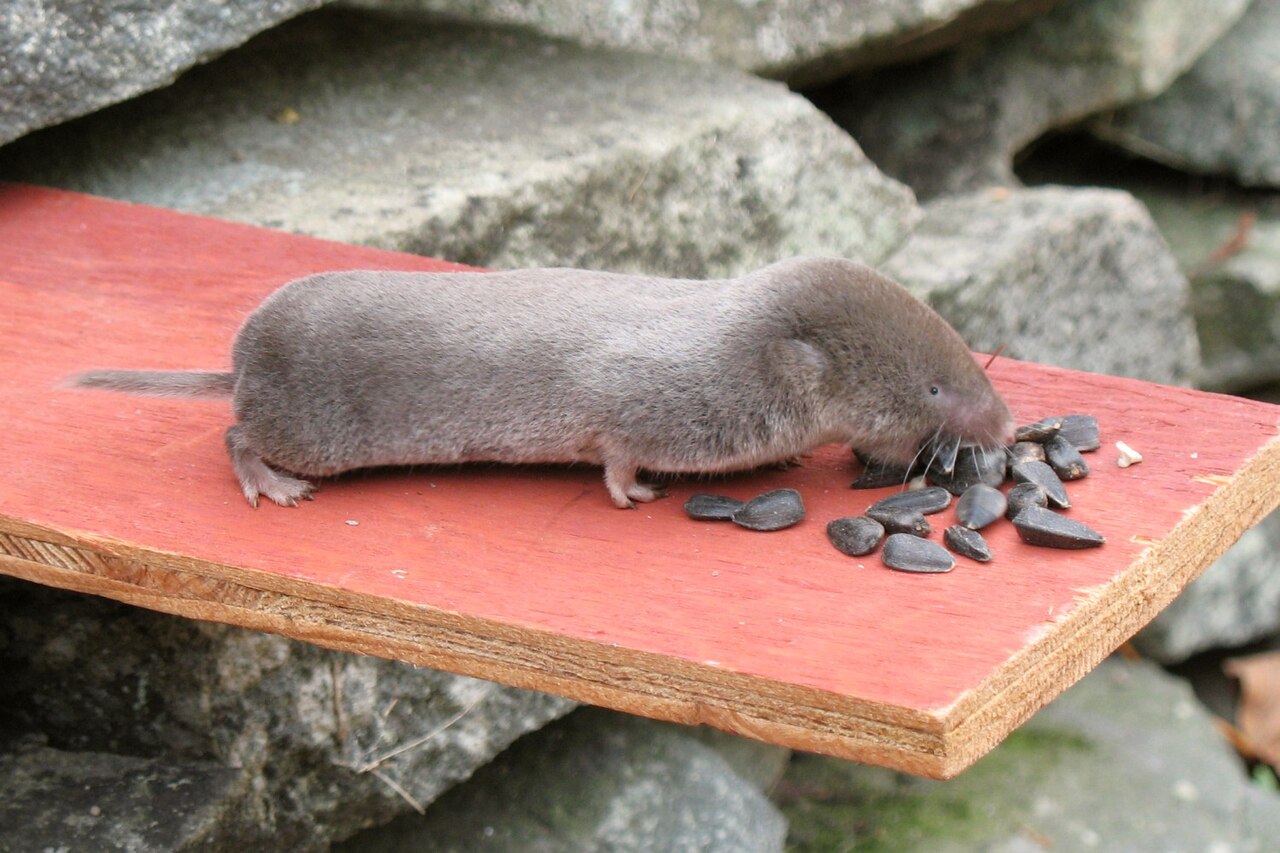
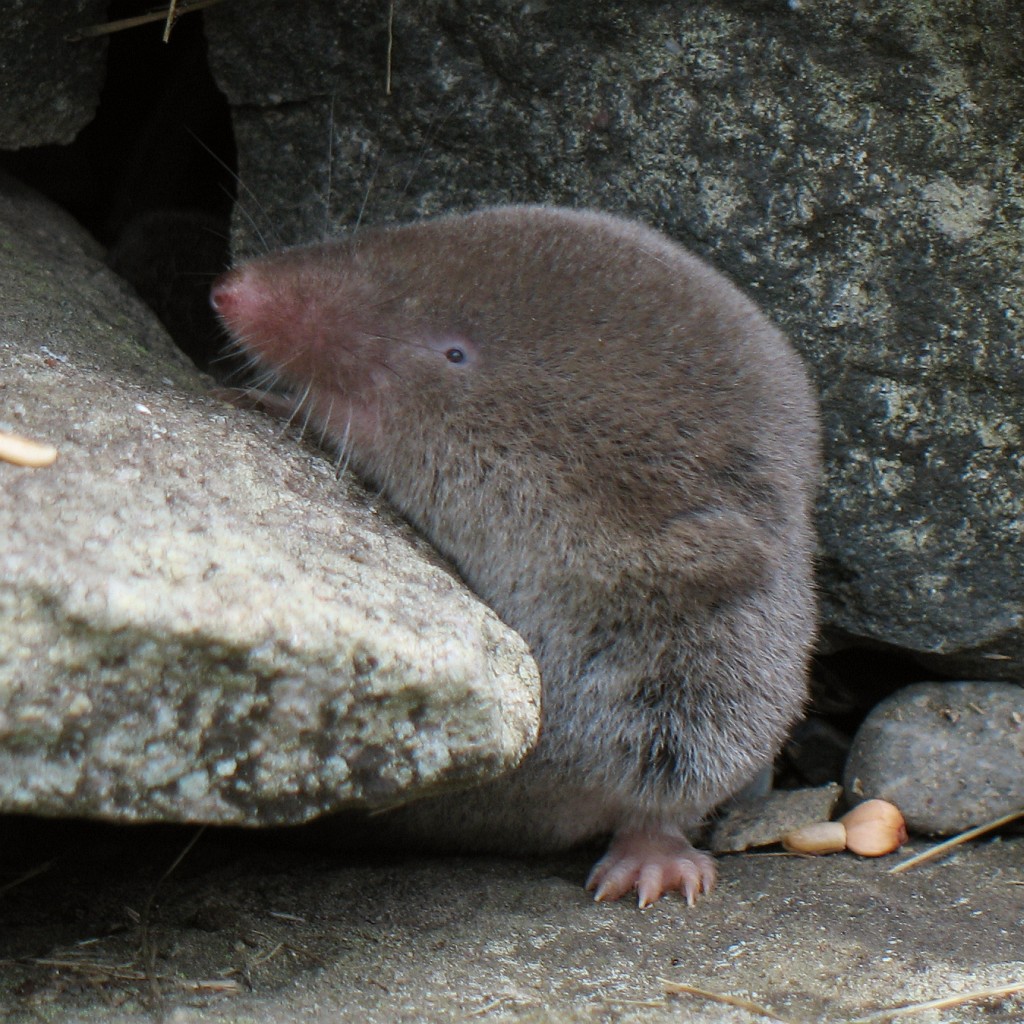
No. Shrews belong to the order Eulipotyphla alongside moles and hedgehogs, not to the rodents. They have long pointed snouts, tiny eyes, five clawed toes on each foot and a mouth full of sharp spike-like teeth, often pigmented red brown at the tips, instead of the two chisel incisors of a rodent.
The distinction has practical weight. Shrews do not gnaw wood or wiring, they cannot survive long on bait meant for grain eaters, and they starve within hours without food. Snap traps baited with canned meat or peanut butter and sealed entry points work; rodenticide strategies largely do not.
Are Shrew Droppings Dangerous? Diseases and Safe Cleanup
The honest answer is that the risk is low but not zero, and the evidence is thinner than for mice. Shrew feces can carry Salmonella, Leptospira and parasite eggs, and shrews host ticks and fleas that matter more than the droppings. Researchers have found hantaviruses in North American shrews, but no human cases have been traced to them; the hantavirus risk in a basement comes from deer mice sharing the space.
Clean up the way the Centers for Disease Control and Prevention advises for rodent droppings. Wear gloves, ventilate the room, spray the droppings with disinfectant or a diluted bleach solution and let them soak for five minutes, wipe with a paper towel instead of sweeping or vacuuming, then double-bag the waste and wash your hands.
Other Signs of a Shrew Besides Droppings
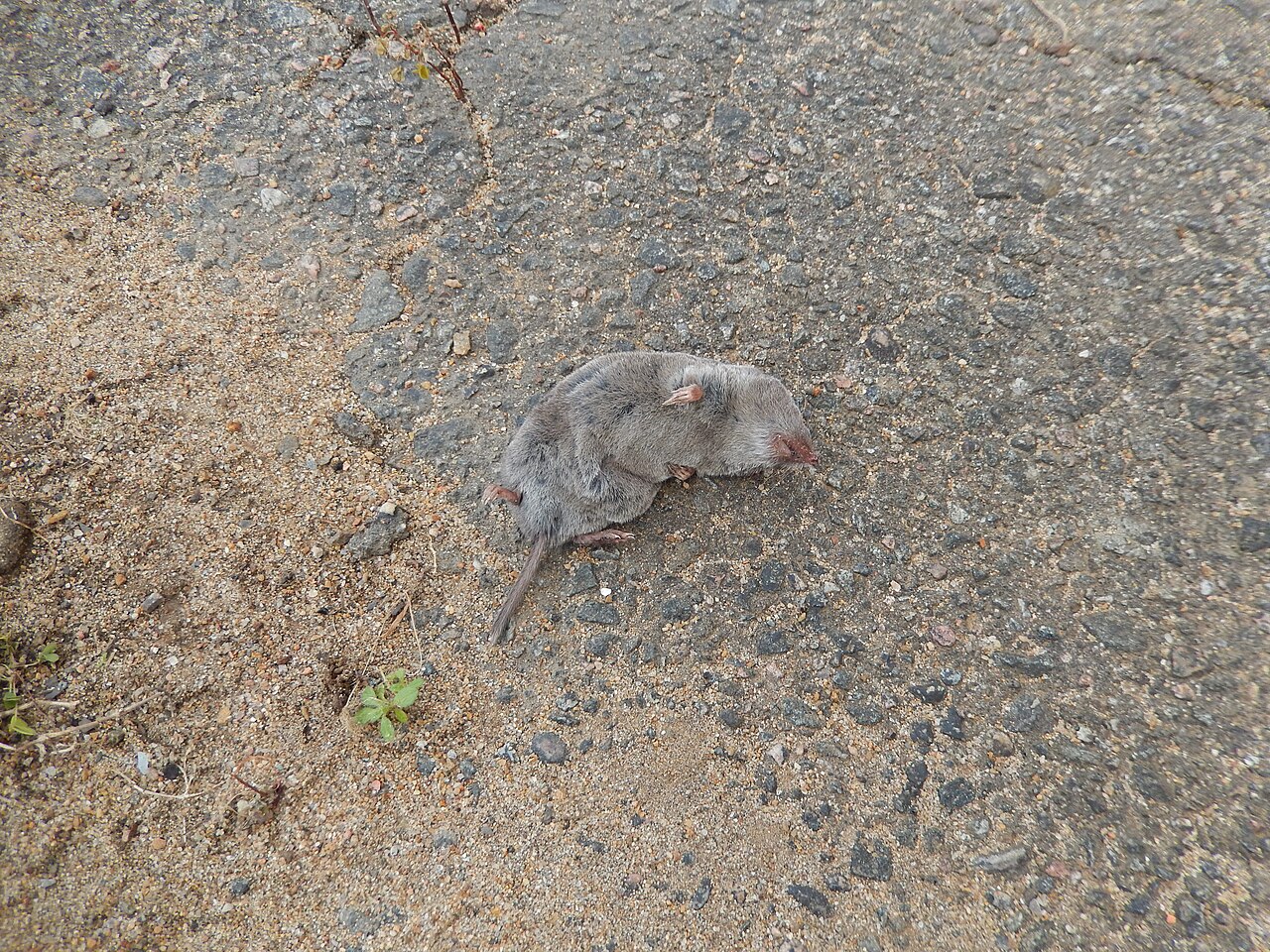
Smell comes first for many people. Shrews produce a strong musky odor that lingers in a confined space, and dead shrews are common finds because cats and dogs kill them and refuse to eat them, a reaction to the scent glands.
Look also for pencil-width surface runways in grass and leaf litter, small round holes about 1 in (2.5 cm) across at the base of walls, gnawed snail shells near a foundation, and shallow divots in a garden bed where the animal hunted grubs. Lawn damage blamed on moles is sometimes shrews using existing mole tunnels.
Frequently Asked Questions
Can shrews climb walls?
They climb far better than their build suggests. Shrews scale rough masonry, brick, stacked firewood and wire mesh, and they reach basement windows and low vents without difficulty. Smooth painted drywall stops them, which is why droppings turn up at floor level and in window wells rather than on shelves.
Is it bad if a shrew is in your house?
It is unpleasant rather than serious. A shrew eats insects, not your food stores, and does no structural damage, but it leaves a musky smell, may die indoors within a day or two without prey, and will bite if handled. Most indoor shrews are single accidental entries through a gap in the foundation.
What time of day are shrews active?
Around the clock. Their metabolism forces them to feed every few hours, so they alternate short bursts of hunting with brief rests day and night, with somewhat more activity at dusk, after dark and before dawn. There is no quiet period to exploit when you set traps.
What eats a shrew?
Owls are the main predators, because their weak sense of smell makes them tolerant of the musk that puts off mammals. Hawks, snakes, foxes, weasels, bobcats, raccoons and large bullfrogs also take shrews. Barn owl pellets in particular are full of shrew skulls, which is how researchers survey local populations.
How to keep shrews out?
Seal every gap wider than 0.25 in (6 mm) in the foundation, around pipes, vents and sill plates with steel wool and caulk or hardware cloth. Then cut the habitat at the wall: move woodpiles and compost away from the house, thin dense mulch and ground cover, keep grass short and clear leaf litter.
What is the lifespan of a shrew?
Short. Most shrews live 12 to 18 months in the wild, and few survive a second winter. They are born in spring and summer litters of four to seven, reach adult size in about a month, breed in their first year, and burn out from a heart rate that can top 700 beats per minute.
Can AI identify animal poop?
Photo identification apps give a usable first guess for common droppings, but they misjudge scale constantly, which is exactly the measurement that separates a shrew from a mouse. Put a coin or a ruler in the frame, and treat the app result as a shortlist to check against content and placement yourself.