Iguana Food: The Greens to Feed and 12 Foods to Never Feed
Iguana food is simpler than the pet store aisle suggests: a green iguana (Iguana iguana) is a strict herbivore, and roughly 80 percent of what it eats should be dark leafy greens. No insects, no eggs, no cat food, no commercial pellets as a staple. Most of the health problems that land pet iguanas at the vet trace back to a diet that broke one of those rules.
The stakes are higher than with most reptiles. An iguana fed the wrong greens for a year develops metabolic bone disease, and an iguana fed animal protein develops kidney damage that cannot be reversed. What follows is the working food list, the calcium ratio that decides whether those greens help or hurt, and the specific items that do real damage.
Feed an iguana 80 to 90 percent dark leafy greens such as collard, mustard, turnip, and dandelion greens, 10 to 15 percent other vegetables like squash and green beans, and under 10 percent fruit. Never feed animal protein, insects, spinach, lettuce, or commercial iguana pellets as a staple.
| Food group | Share of diet | Best choices | Feed how often |
|---|---|---|---|
| Staple greens | 80 to 90 percent | Collard, mustard, turnip greens, dandelion | Daily |
| Vegetables | 10 to 15 percent | Butternut squash, green beans, parsnip, bell pepper | Daily, chopped in |
| Fruit | Under 10 percent | Papaya, mango, fig, prickly pear | 2 to 3 times a week |
| Limited greens | Occasional only | Kale, bok choy, broccoli leaf | Once a week at most |
| Never | Zero | Insects, meat, dog or cat food, spinach, iceberg lettuce | Never |
What Does an Iguana Eat?
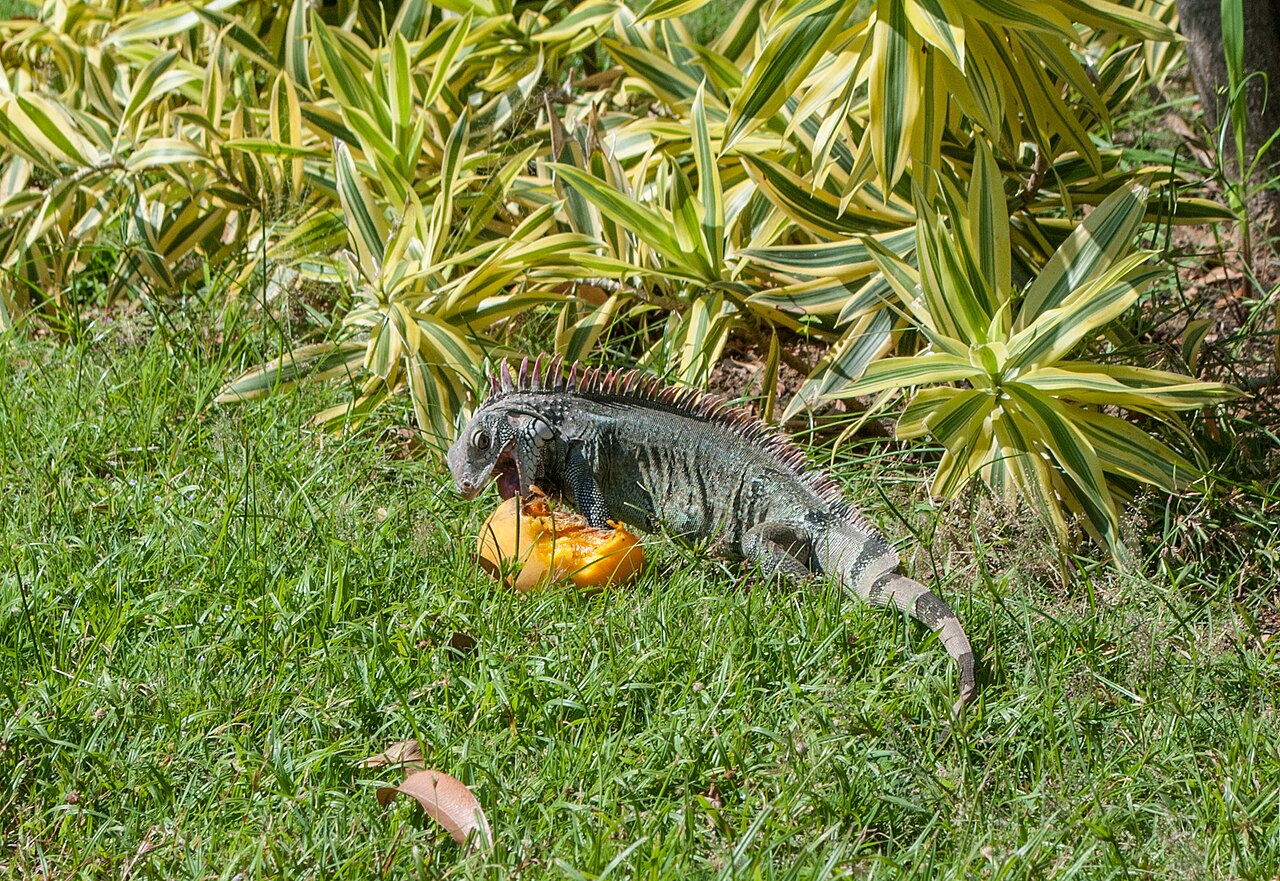
A wild green iguana eats leaves, flowers, and fruit from the tree canopy, and almost nothing else. Field studies across its Central and South American range find plant material in essentially every stomach examined, with the occasional insect swallowed by accident along with foliage. The species evolved a long fermenting hindgut for exactly that job, and hindgut fermentation is what makes leaves usable at all.
In captivity the diet should mirror that. Chop a mix of at least three greens fine enough that the animal cannot pick out a favorite, add a smaller volume of chopped vegetables, and offer it fresh each morning while the basking lamp is on. Iguanas eat when they are warm, so food placed in a cold enclosure sits untouched and spoils.
The Best Staple Greens
Collard greens, mustard greens, turnip greens, dandelion greens, escarole, and endive form the backbone of a good iguana diet. All six carry a favorable calcium to phosphorus ratio and enough fiber to keep the gut moving. Rotating between them week to week protects against both nutrient gaps and the boredom that makes an iguana refuse a single repeated green.
Hibiscus leaves and flowers, mulberry leaves, and nasturtium are excellent additions if you can source them unsprayed. Iguanas take flowers readily, and offering them is the easiest enrichment there is. Anything gathered outdoors must come from ground that has never seen pesticide or herbicide, which usually rules out yards, roadsides, and park edges.
The Calcium to Phosphorus Ratio Explained
Iguana food should average at least 2 parts calcium to 1 part phosphorus, and this single number decides whether a diet works. Phosphorus binds calcium in the gut, so a green that is high in phosphorus effectively takes calcium away rather than adding it. Collard greens sit near 14 to 1 in favor of calcium. Iceberg lettuce sits near 1 to 1 and delivers no usable minerals at all.
Calcium alone is not enough, because the animal needs vitamin D3 to absorb it, and it makes D3 by sitting under UVB light. An iguana with perfect greens and no UVB tube still develops metabolic bone disease: soft jaw, bowed legs, swollen limbs, eventually fractures. Replace UVB bulbs every 6 to 12 months, because they stop emitting useful output long before they stop glowing.
What Should You Not Feed Iguanas?
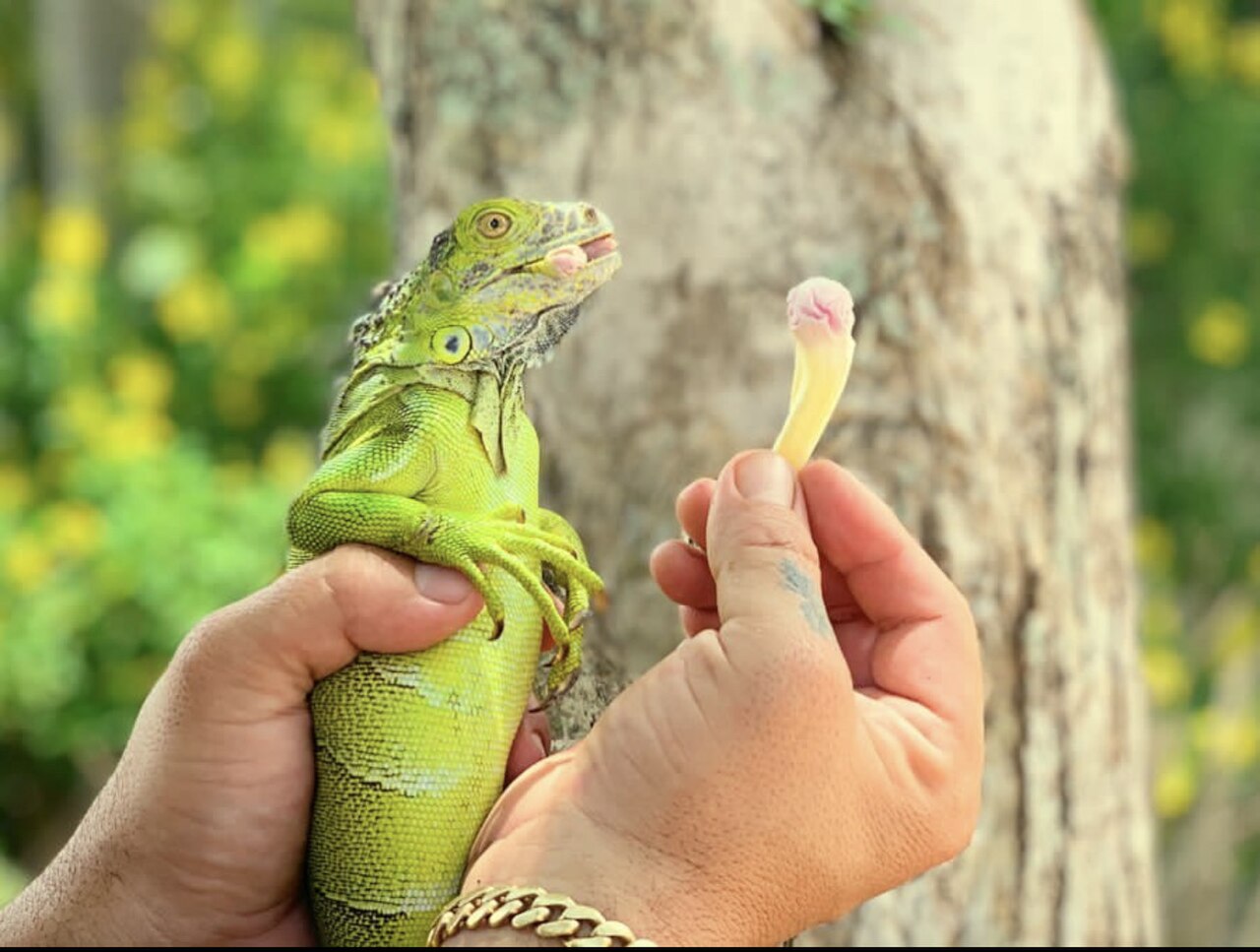
Never feed an iguana animal protein of any kind. No crickets, no mealworms, no boiled egg, no dog or cat food, no cheese. Iguanas cannot process the uric acid load, and a protein fed iguana develops kidney failure and gout, often years before the owner sees a symptom. The old pet trade advice to feed monkey biscuit or puppy chow for growth caused a generation of dead animals.
Also off the list: spinach, beet greens, Swiss chard, and rhubarb, all of which are loaded with oxalates that lock up calcium. Iceberg lettuce is water with no nutrition. Avocado is toxic. Onion, garlic, and citrus cause digestive irritation. Bread, rice, and pasta ferment badly in a hindgut built for leaves.
Are Bananas Good for Iguanas?
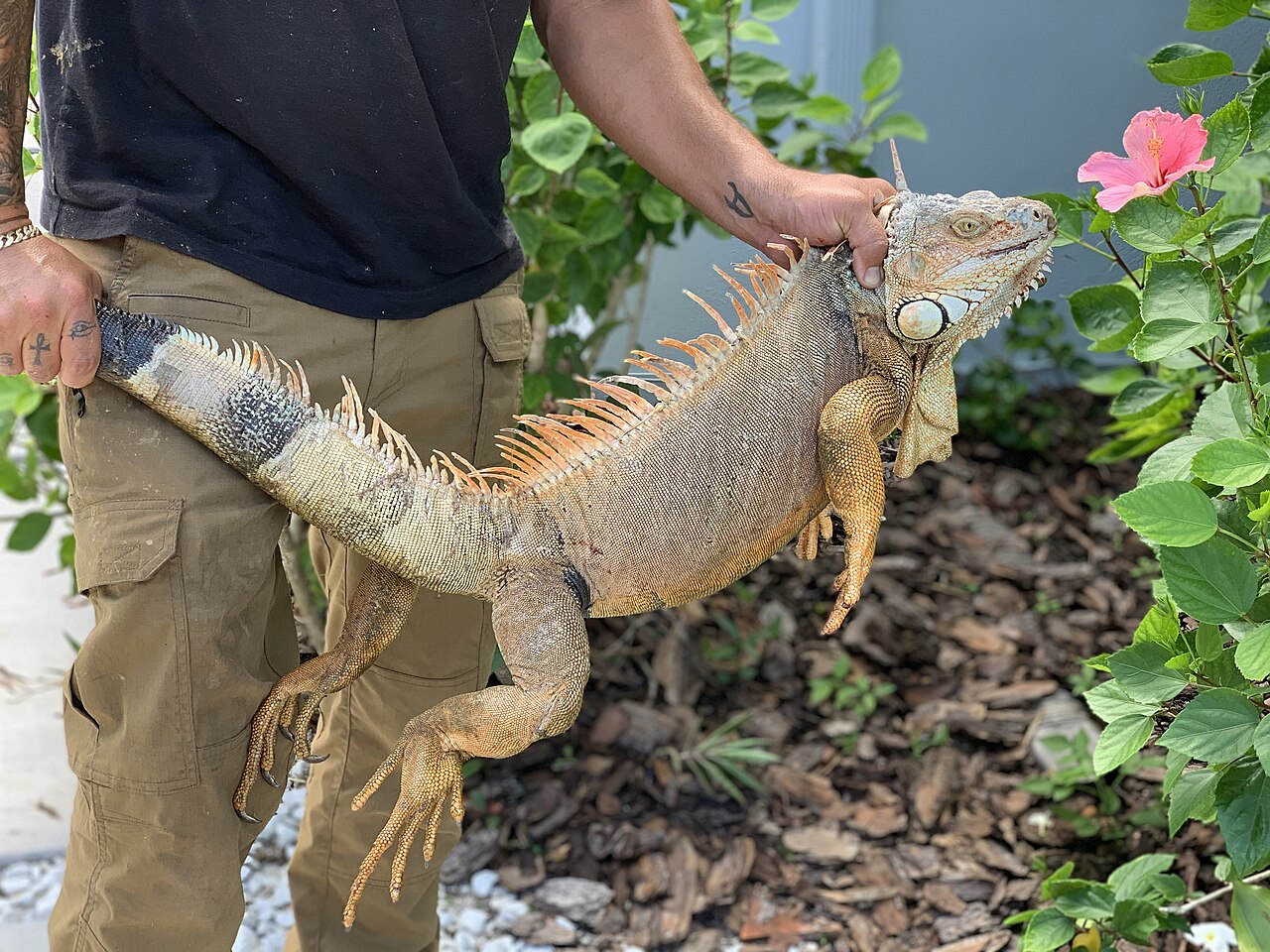
Bananas are not good for iguanas as a regular food, though a small piece as an occasional treat does no harm. The problem is the ratio: bananas contain far more phosphorus than calcium, so frequent feeding works directly against the mineral balance the animal needs. They are also high in sugar, which encourages gut flora imbalance.
Keep bananas to a thin slice once every couple of weeks, and only alongside a full plate of greens. Many keepers use them as the vehicle for a calcium supplement or a medication, which is a fair use of a food that is otherwise mediocre. If you want a fruit the animal will chase just as hard, use papaya instead.
What Fruit Do Iguanas Love?
Papaya, mango, fig, prickly pear fruit, and blackberries are the fruits iguanas take most eagerly, and all five are better nutritional choices than banana or grape. Prickly pear in particular carries a calcium ratio good enough that it can be fed more freely than most fruit, and its deep pigment is popular with keepers of an orange iguana morph.
Fruit should still stay under 10 percent of the diet. Too much sugar causes loose stools and shifts hindgut fermentation, which you will notice in the droppings before you notice anything else. Our guide to iguana poop covers what healthy output looks like and which changes mean the diet needs adjusting.
Feeding a Baby Iguana
Hatchlings and juveniles eat the same plant based diet as adults, just chopped finer and offered twice daily instead of once. The growth phase is where protein myths do the most damage, because a keeper sees a fast growing lizard and assumes it needs meat. It does not: hatchling iguanas in the wild are already eating leaves within days of emerging.
Young animals need calcium supplementation more than adults do, typically a light dusting on the greens 4 to 5 times a week, tapering to 2 or 3 times as the animal matures. For housing, temperature, and handling through that first year, see our dedicated guide to the baby iguana, which covers what happens outside the food bowl.
How Many Days Can an Iguana Go Without Eating?
A healthy adult iguana can go 1 to 2 weeks without food and survive, and some fast far longer during breeding season or brumation. That tolerance is normal for a large ectotherm with a slow metabolism, and a few skipped days are not an emergency. Water is different: dehydration becomes dangerous within days.
A fast that runs beyond 2 weeks in an animal that is not breeding needs investigation. The common causes are enclosure temperatures that are too low to drive digestion, impaction, mouth rot, or parasites. Check the basking temperature first, since an iguana below about 85 F (29 C) will not eat regardless of what you put in front of it.
Do Iguanas Recognize People?
Iguanas do recognize individual people, primarily by sight and movement, and a hand fed animal learns quickly who the food comes from. Keepers consistently report that their iguana calms for one household member and stays defensive with visitors. That recognition is the practical reason feeding should be done by the same person during a taming period.
Recognition is not affection, though. A sexually mature male may behave predictably toward his keeper for most of the year and turn aggressive during breeding season regardless of history. Adult iguanas are strong animals with serious jaws, and our guide to the iguana bite explains what that means for handling.
Do Iguanas Like to Be Petted?
Most iguanas tolerate rather than enjoy petting, and the ones that appear to like it are usually responding to warmth and to a routine they have learned is safe. Gentle contact along the back and the side of the neck is accepted by many tame animals. Touching the head, the dewlap, or the tail base is far more likely to provoke a defensive response.
Build tolerance around feeding, since a hungry iguana approaching food is an iguana approaching you. Short sessions, no grabbing from above, and always supporting the body rather than holding the tail. An iguana can drop part of its tail under stress, and although it regrows, the replacement is shorter and differently colored for life.
What Smells and Sights Do Iguanas Hate?
Iguanas avoid strong citrus, garlic, and capsaicin scents, which is why those ingredients turn up in commercial yard repellents aimed at Florida’s feral population. They also react strongly to overhead movement and to anything resembling a raptor silhouette, since hawks are a genuine predator of iguanas in their native range and in Florida.
In practice that means enclosure placement matters. A cage under a ceiling fan, beside a doorway with constant overhead traffic, or across from a window where birds pass keeps the animal in low grade alarm. Wild iguanas sit in the same relationship to predators as any other mid sized prey animal, which our overview of what eats what in the backyard food chain lays out for temperate species.
Commercial Iguana Pellets and Supplements
Commercial iguana pellets are acceptable as a small fraction of the diet, never as the base. Most brands are grain heavy, many are formulated with more protein than an iguana should ever see, and dry pellets leave an animal that already struggles with hydration worse off. If you use them, moisten them and mix them into the greens rather than serving a bowl of pellets.
Supplements are the more useful purchase: a plain calcium carbonate powder without phosphorus, plus a reptile multivitamin containing D3 used sparingly, perhaps once a week. Oversupplementing vitamin D3 is its own toxicity risk. The same principle applies across insectivorous and herbivorous reptiles, as our notes on crested gecko food show from the opposite end of the diet spectrum.
Wild and Invasive Iguanas in Florida
Feral green iguanas in South Florida eat ornamental landscaping, hibiscus, bougainvillea, orchids, and fallen fruit, and they occasionally strip vegetable gardens. They are established, non native, and destructive to seawalls and canal banks through burrowing. Florida encourages removal on private property, and the U.S. Fish and Wildlife Service tracks the broader cost of invasive reptiles in the region.
The feeding lesson from those populations is a practical one for homeowners: do not put food out. Feeding wild iguanas concentrates them, raises local density, and teaches animals to approach people, which turns a landscaping nuisance into a bite risk. Removing fallen fruit and fencing off young plants works better than any repellent spray.
Frequently Asked Questions
What is a good iguana food list for a beginner?
Start with collard greens, mustard greens, and dandelion greens as the daily base, add chopped butternut squash and green beans, and offer papaya or mango twice a week. Dust with plain calcium three to four times weekly. That combination covers a healthy adult with no exotic sourcing required.
Can iguanas eat lettuce?
Iceberg lettuce should never be fed, because it is almost entirely water with no usable calcium or fiber. Romaine is marginally better but still poor, and it should not replace real greens. Escarole and endive look like lettuce, belong to a different group nutritionally, and are genuinely good staples.
Do iguanas need to drink water?
Yes. Provide a shallow bowl large enough to soak in and mist the enclosure daily, since many iguanas drink droplets from leaves rather than from standing water. Soaking also supports shedding and digestion. Chronic dehydration is a leading contributor to the kidney problems that shorten captive lifespans.
How much should an adult iguana eat per day?
Offer a volume roughly equal to the size of the animal’s head and body combined, fresh each morning, and remove uneaten food after several hours. Adults typically eat once daily. Appetite rises and falls with temperature and season, so track weight monthly rather than judging by any single meal.
Why is my iguana not eating?
Check basking temperature first, since an iguana that cannot reach about 95 F (35 C) will not digest and therefore will not eat. Other causes include a spent UVB bulb, mouth rot, impaction from substrate, parasites, or breeding season in mature males. A fast beyond 2 weeks warrants a reptile vet.
Can iguanas eat insects if they catch them?
An iguana that swallows an insect crawling across its greens is fine, and that happens in the wild too. The danger is deliberate, repeated protein feeding, which overloads the kidneys over months and years. Never stock an enclosure with feeder insects or treat crickets as part of the diet.