Yellow Fly Bite: Why It Hurts So Much and How to Treat It
A yellow fly bite hurts immediately and out of all proportion to the insect’s size, because the fly cuts the skin open with blade-like mouthparts instead of piercing it with a needle. The wound bleeds, swells into a red welt within minutes, and itches for days.
The culprit across Florida and the Gulf states is Diachlorus ferrugatus, a golden orange horse fly relative about 10 mm long with green eyes. Only females bite.
A yellow fly bite is a painful, bleeding cut that turns into a red, swollen, intensely itchy welt lasting 3 to 7 days. It hurts more than a mosquito bite because the fly slices the skin with scissor-like mouthparts. Treat it with cold packs, an antihistamine, and hydrocortisone, and watch for infection from scratching.
| Feature | Yellow fly | Deer fly | Mosquito |
|---|---|---|---|
| Species | Diachlorus ferrugatus | Chrysops species | Many species |
| Size | 10 mm, golden orange | 7 to 10 mm, banded wings | 3 to 6 mm |
| Pain on biting | Sharp and immediate | Sharp and immediate | Usually unnoticed |
| Welt size | Up to 2 in (5 cm) | Up to 1 in (2.5 cm) | Under 0.5 in (1.3 cm) |
| Duration | 3 to 7 days | 2 to 5 days | 1 to 2 days |
What Does a Yellow Fly Bite Look Like?
It starts as a bright red spot with a small bleeding point at the center, often a visible nick rather than a clean puncture. Within 15 to 30 minutes it becomes a raised welt, and on sensitive skin that welt can spread to 2 in (5 cm) across with a pale center and a red halo.
Bites land on exposed skin: ankles, the back of the neck, the backs of the arms, and the scalp along the hairline. Unlike bed bug bites, which appear in tidy rows overnight, yellow fly bites arrive one at a time while you are outdoors.
Why Do Yellow Fly Bites Hurt So Bad?
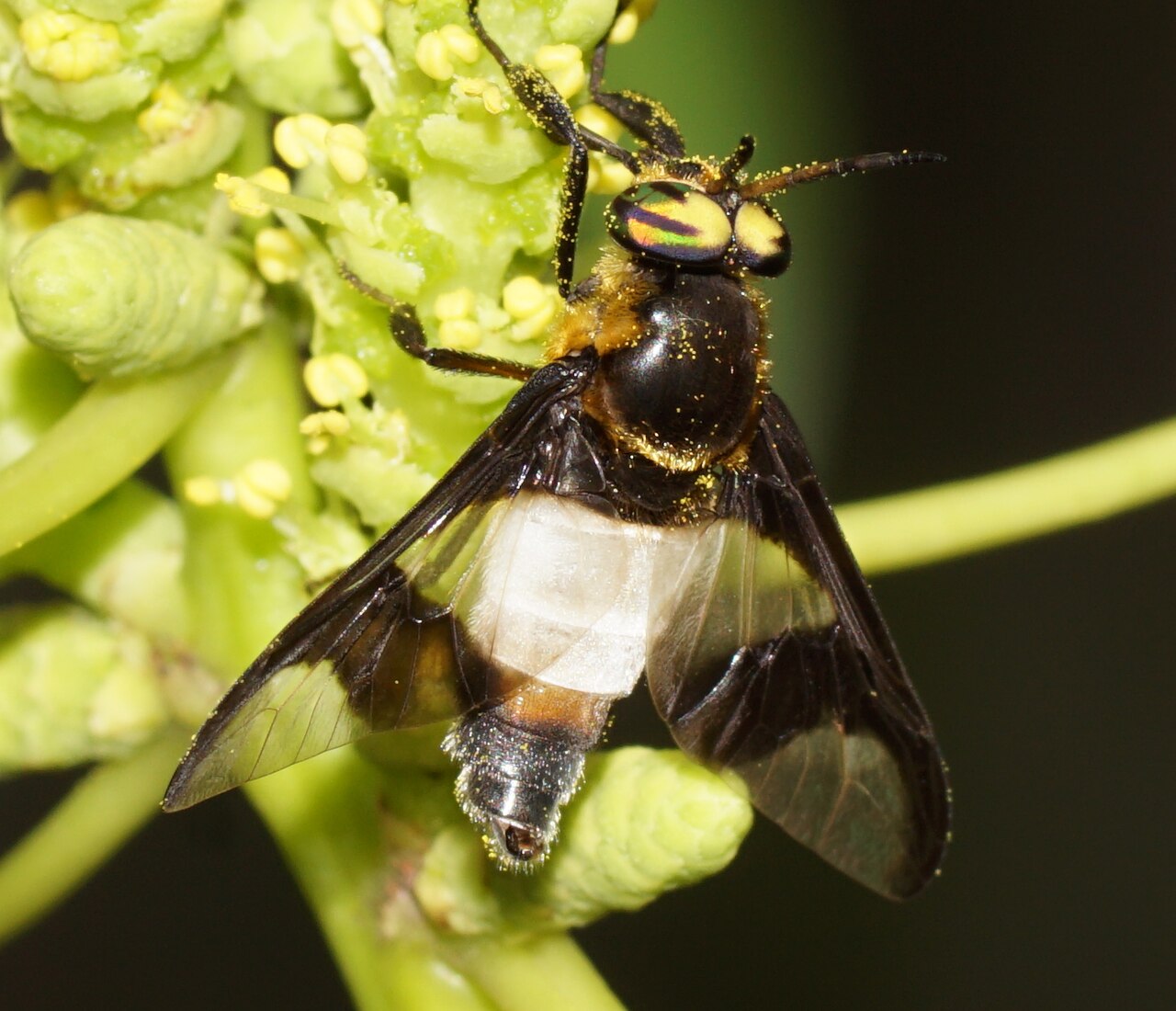
Mosquitoes have a fine proboscis and inject an anesthetic saliva, so their bite goes unnoticed. Yellow flies belong to the family Tabanidae, and the female’s mouthparts work like small blades that slash the skin, after which she laps up the blood that pools in the cut.
No anesthetic is involved, so you feel the cut as it happens. Her saliva carries anticoagulants that keep the wound bleeding, and those proteins drive the histamine reaction and the days of itching. A bot fly causes trouble by a different route, but every painful bite from a horse fly relative traces back to this cutting design.
How Long Does a Yellow Fly Bite Last?
Expect 3 to 7 days. The pain fades within an hour, the swelling peaks at 12 to 24 hours, and the itch is worst on days two and three. A firm lump can linger for two weeks in people who react strongly.
Growing redness past a week, with warmth, pus, or a red streak running away from the bite, means a secondary bacterial infection and needs a doctor. The bite transmits no disease to humans in the United States, so infection from scratching is the realistic complication.
What Is the Best Medicine for Yellow Fly Bites?
Wash the bite with soap and water first, since the fly cut the skin open. Then use a cold pack for 10 minutes to blunt the swelling, an oral antihistamine such as cetirizine or diphenhydramine for the itch, and 1 percent hydrocortisone cream twice a day on the welt.
Ice and an antihistamine in the first hour make the biggest difference, because they work before the histamine response is established. A bad local reaction is common and a systemic one is not, the same distinction that matters with a carpenter ant bite or a chigger or flea reaction.
Do Yellow Flies Bite Dogs and Horses?
They bite anything warm blooded, and livestock take the worst of it. Horses and cattle lose weight and stop grazing during a heavy emergence, which is why control research in Florida has focused on pasture traps rather than on protecting people.
Dogs get hit on the ears, the muzzle, and the thin skin of the belly. Signs are a sudden yelp outdoors, head shaking, and a bleeding spot. Cool water and a vet approved antihistamine dose handle it.
What Attracts Yellow Flies, and How to Stop Them Biting
Yellow flies hunt by sight and by carbon dioxide. They are drawn to movement, to dark blue and dark clothing, to warm shiny surfaces, and to the CO2 plume of someone breathing hard, which is why they find joggers and yard workers first.
Light colored clothing helps more than people expect, long sleeves help most, and DEET works but wears off fast in Florida humidity. Sticky blue barrel traps thin a yard population over a season. Regional control guidance comes from the University of Florida Department of Entomology and Nematology. Harmless look-alikes such as the crane fly and the ladybug get blamed constantly, so identify before you spray.
Frequently Asked Questions
What is the yellow fly that bites?
It is Diachlorus ferrugatus, a horse fly of the family Tabanidae found from Florida through the Gulf Coast into Central America. Adults are about 10 mm long, golden orange, with bright green eyes and dark wing tips. Only the female bites.
What happens if a yellow fly bites you?
You feel a sharp cut, the spot bleeds briefly, and a red welt rises within half an hour. Itching builds over two days and the welt stays firm for most of a week. Healthy adults need no care beyond cold packs, antihistamines, and a clean wound.
Are yellow fly bites dangerous?
For most people, no. They are painful and slow to heal but carry no disease to humans in the United States. The two real risks are a secondary bacterial infection from scratching and, rarely, a systemic allergic reaction with hives or breathing difficulty.
What smell do yellow flies hate?
They avoid DEET and picaridin, and lemon eucalyptus oil gives shorter but genuine protection. Yellow flies hunt mainly by sight and carbon dioxide rather than by scent, so repellent plus light colored covering clothing beats any scent based approach on its own.
How long do fly bites take to heal?
A yellow fly bite closes in 3 to 7 days, longer than a mosquito bite because the skin was cut rather than punctured. Deer fly and horse fly bites follow the same curve. A bite scratched open can leave a visible mark for a month.
When is yellow fly season?
In Florida the season runs roughly April through June, with a sharp peak in late April and May. Activity is highest in the two hours after sunrise and again before sunset, and the flies are worst along shaded, humid edges near water.