Birds with Long Beaks: Species Identification Guide
A long beak is rarely just decoration, it’s a tool shaped by exactly what and how a bird eats, probing mud for worms, spearing fish, sipping nectar, or sorting tiny prey from a mouthful of water. The species below span nearly every US habitat, coastline, prairie, backyard, and marsh alike, and the shape of the beak itself is often the fastest way to guess what the bird actually does with it.
This guide covers the most recognizable long-beaked birds found across the US, grouped loosely by habitat and feeding style, along with the specific job each beak shape is built to do.
Birds with notably long beaks in the US include wading and probing species like the long-billed curlew, American woodcock, and great blue heron, fishing specialists like the belted kingfisher and brown pelican, and even small birds like hummingbirds, whose thin long beak is built for nectar rather than size.
| Species | Beak Built For |
|---|---|
| Long-Billed Curlew | Probing deep mud for burrowing invertebrates |
| American Woodcock | Probing soil for earthworms, flexible tip |
| Wilson’s Snipe | Probing soft mud for invertebrates |
| Ruby-Throated Hummingbird | Sipping nectar from tubular flowers |
| Great Blue Heron | Spearing fish and amphibians |
| Roseate Spoonbill | Sweeping shallow water to filter small prey |
| Belted Kingfisher | Diving to grab fish underwater |
| Brown Pelican | Scooping fish in an expandable throat pouch |
| Sandhill Crane | Foraging on grain, roots, and small animals |
How Beak Length Reflects a Bird’s Diet
Beak length and shape track diet closely enough that an experienced birder can often guess a species’ feeding habits before ever seeing it eat. Long, straight or slightly curved beaks belong to probers, birds that push into mud or soil searching for buried prey by feel rather than sight. Long, dagger-like beaks belong to spear-fishers that strike fast and hard. Flattened, spoon-shaped beaks belong to filter feeders sweeping through shallow water, and thin, needle-like beaks belong to nectar specialists reaching deep into tubular flowers. Length alone rarely tells the whole story, the specific shape at the tip usually matters more than raw size. The Cornell Lab of Ornithology tracks this kind of beak-to-diet relationship across thousands of species, and it’s one of the most consistent patterns in bird evolution worldwide, not just among the US species covered here.
Long-Billed Curlew
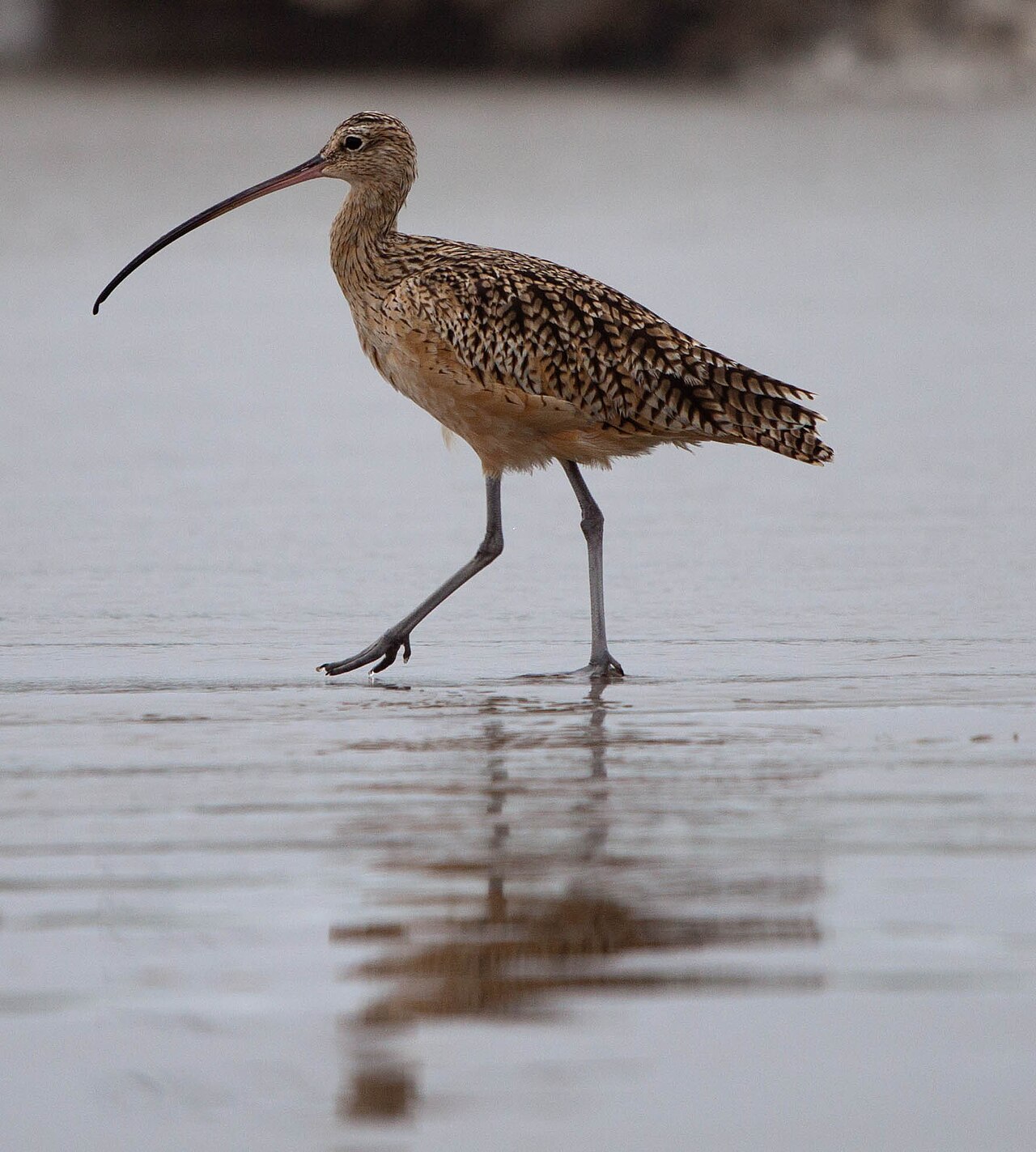
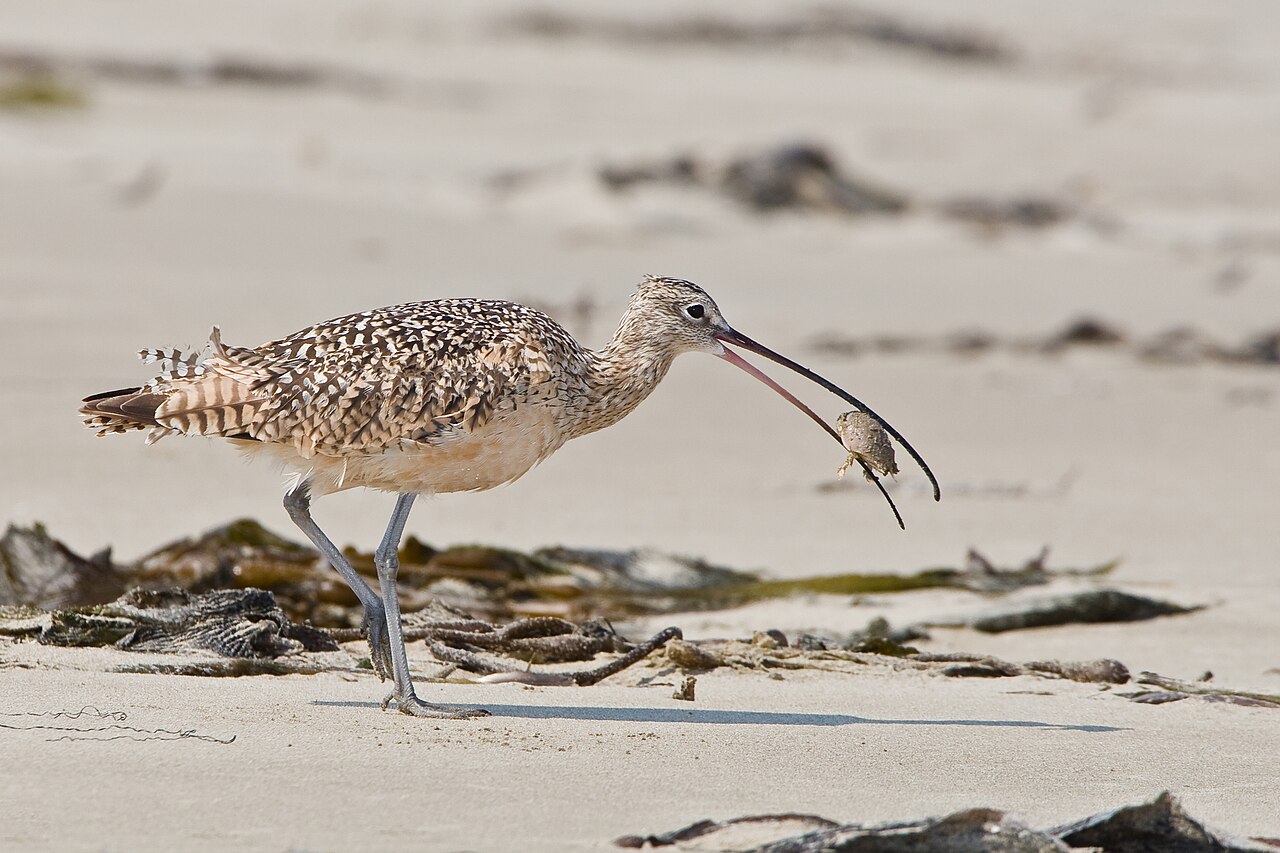
The long-billed curlew carries the longest beak, relative to body size, of any North American shorebird, a dramatically down-curved bill that can reach seven inches on the largest females. That curve is a precision tool for reaching deep into burrows after invertebrates like ghost shrimp, prey most other shorebirds can’t access at all. It breeds on grasslands and prairies rather than directly on the coast, a habitat choice that surprises people expecting a beak this specialized to belong to a strictly coastal bird. Outside the breeding season it does move to coastal mudflats and estuaries, where that same curved bill probes for burrowing crabs and worms buried well below what a shorter-billed shorebird could ever reach.
American Woodcock
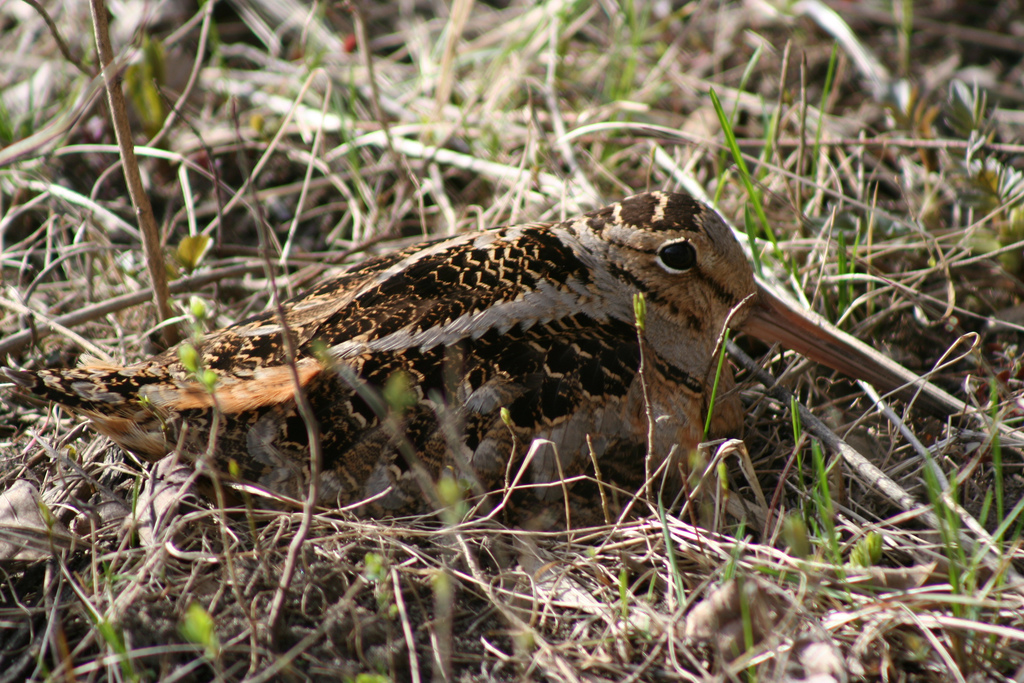
The American woodcock carries a long, straight beak with a genuinely unusual trick: a flexible, sensitive tip that can open independently of the rest of the bill while still buried in soil, letting the bird grab an earthworm without having to first pull its whole beak back out. Woodcocks are mostly nocturnal and famous for an elaborate spring courtship flight, a spiraling display performed at dusk that draws birders specifically hoping to witness it. Their eyes sit unusually high and far back on the skull, giving them nearly 360-degree vision to watch for predators while the beak stays buried in soil searching for food, a rare combination that lets the bird feed and stay alert at the same time.
Wilson’s Snipe
Wilson’s snipe looks similar to a woodcock at a glance, a long straight beak on a stocky, well-camouflaged body, but it favors open wetlands and marsh edges rather than the woodcock’s preferred brushy woodland. Its beak shares the same sensitive, prey-detecting tip, allowing it to feel for invertebrates in soft mud without needing to see them directly. The species is also known for a distinctive winnowing sound produced not vocally but by air rushing through its tail feathers during a diving courtship display, a sound many people hear on a spring evening without realizing it comes from a bird at all rather than some kind of mechanical noise. Despite its excellent camouflage, a snipe flushed from cover flies in an erratic, zigzagging pattern that’s often the first clear sign of the bird before it settles back into hiding.
Ruby-Throated Hummingbird
The ruby-throated hummingbird shows that a long beak doesn’t require a large bird at all, its thin, needle-like bill is proportionally long relative to its tiny body and built specifically to reach deep into tubular flowers for nectar. A long, grooved tongue does the actual nectar collection, with the beak mainly serving as a precise delivery tube to reach flowers other pollinators can’t access as efficiently.
Belted Kingfisher
The belted kingfisher’s long, heavy, dagger-like beak is built for a completely different hunting method than the wading species above, plunge-diving directly into water from a perch or hover to grab fish, then returning to a perch to stun and swallow the catch. Unlike most of the birds on this page, the female is more brightly colored than the male, showing an extra rust-colored band across the belly that the male lacks entirely.
Great Blue Heron
The great blue heron’s beak is a heavy, dagger-shaped spear built to strike fast and hold onto slippery prey, fish, frogs, and even small mammals, in a single fast thrust from a motionless standing position. Herons hunt by patience rather than pursuit, standing statue-still in shallow water for long stretches before striking, and the beak’s design reflects that ambush strategy, built for a single decisive grab rather than repeated pecking. Other heron and egret species share the same basic dagger-beak design, though body size, color, and preferred habitat vary considerably across the group.
Roseate Spoonbill
The roseate spoonbill takes beak shape in a completely different direction, flat and rounded at the tip like a spoon, swept side to side through shallow water to feel for small fish and crustaceans by touch. Its striking pink plumage, similar in tone to flamingos, comes from the same source, pigments in the crustaceans it filters out with that spoon-shaped bill. It’s found mainly along the Gulf Coast and Florida, with occasional wandering individuals showing up well outside that core range, sometimes prompting excited reports from birders in states far removed from its usual haunts.
Brown Pelican
The brown pelican combines a long beak with an enormous expandable throat pouch, together forming a scoop capable of holding far more water and fish than the bird’s stomach could ever process at once. It hunts by plunge-diving from considerable height, folding its wings back at the last moment before hitting the water beak-first, then draining the scooped water out before swallowing the fish left behind. The species nearly disappeared from much of its range due to DDT thinning eggshells before a ban and recovery effort brought numbers back, one of the clearer conservation success stories among US coastal birds.
Sandhill Crane
The sandhill crane pairs a long beak with an equally long neck, giving it reach for foraging across open grassland and wetland alike, probing for roots, grain, insects, and small animals rather than specializing narrowly the way several other species on this page do. That generalist diet is part of why cranes gather in such large numbers at traditional stopover sites during migration, since a varied diet supports a much bigger concentration of birds than a narrow specialist feeding strategy could sustain in one place. Some stopover sites host tens of thousands of cranes at once during peak migration, a spectacle that draws birders from well outside the immediate region specifically to witness it.
Why Beak Shape Matters More Than Length Alone
Two birds with beaks of similar length can hunt in completely different ways depending on shape and texture at the tip. A curlew’s curved probe, a heron’s straight dagger, and a spoonbill’s flattened scoop all solve a different feeding problem, and none would work well doing another species’ job. This is also why beak shape is one of the more reliable field marks for identification even at a distance, since silhouette alone, without any color detail, is often enough to sort a wading bird into roughly the right group before other features come into view. Beak color adds a second layer of identification on top of shape, and combining the two, a long dagger-shaped beak that’s also brightly colored, narrows a sighting down considerably faster than either clue alone. Even young birds still growing into adult plumage often show the correct beak shape well before their feather colors settle, making beak silhouette one of the earliest reliable clues available to an observer.
Attracting Long-Billed Birds to Your Yard
Most of the species covered here won’t visit a typical backyard feeder, but a few will under the right conditions. Creating habitat that attracts a wider range of birds generally starts with water access, even a small pond or water feature can draw a heron or kingfisher if fish are present, while nectar feeders placed correctly remain the most reliable way to draw in hummingbirds specifically. A yard bordering open grassland or wetland has a real chance at an occasional woodcock or snipe sighting during migration, though these species are far less feeder-dependent than typical backyard birds, and patience over a full season matters more than any single feeder setup or product.
Frequently Asked Questions
What is the name of the bird with the long beak?
Several species qualify, but the long-billed curlew has the longest beak relative to body size of any North American shorebird, while herons and pelicans have the longest beaks in absolute terms among common US birds, sometimes exceeding six inches.
What looks like a quail but has a long beak?
The American woodcock is often mistaken for a quail-like bird given its plump, rounded body, but its unusually long, straight beak and nocturnal habits set it apart immediately on closer inspection, along with its preference for damp woodland rather than open ground.
What kind of small bird has a long beak?
Hummingbirds are the clearest example, a thin, needle-like beak proportionally long relative to their tiny body, built specifically for reaching nectar deep inside tubular flowers other pollinators can’t access as efficiently.
What bird looks like a sparrow but has a long beak?
Wilson’s snipe is sometimes mistaken for an oversized sparrow at a glance due to its streaky brown camouflage, but its long, straight probing beak immediately separates it from any true sparrow species once you get a clear look.
What kind of bird has a long beak and long legs?
Wading birds like the great blue heron and roseate spoonbill pair a long beak with long legs, an adaptation that lets them hunt in deeper water than short-legged species can safely access while keeping their body dry.
Are birds with long beaks more likely to be found near water?
Many are, since probing and spearing beak shapes are especially useful in mud and shallow water, though notable exceptions like hummingbirds and the grassland-nesting long-billed curlew show the pattern isn’t universal across every species with a long bill.