Spiders That Look Like Black Widows: 9 Lookalikes and How to Tell Them Apart
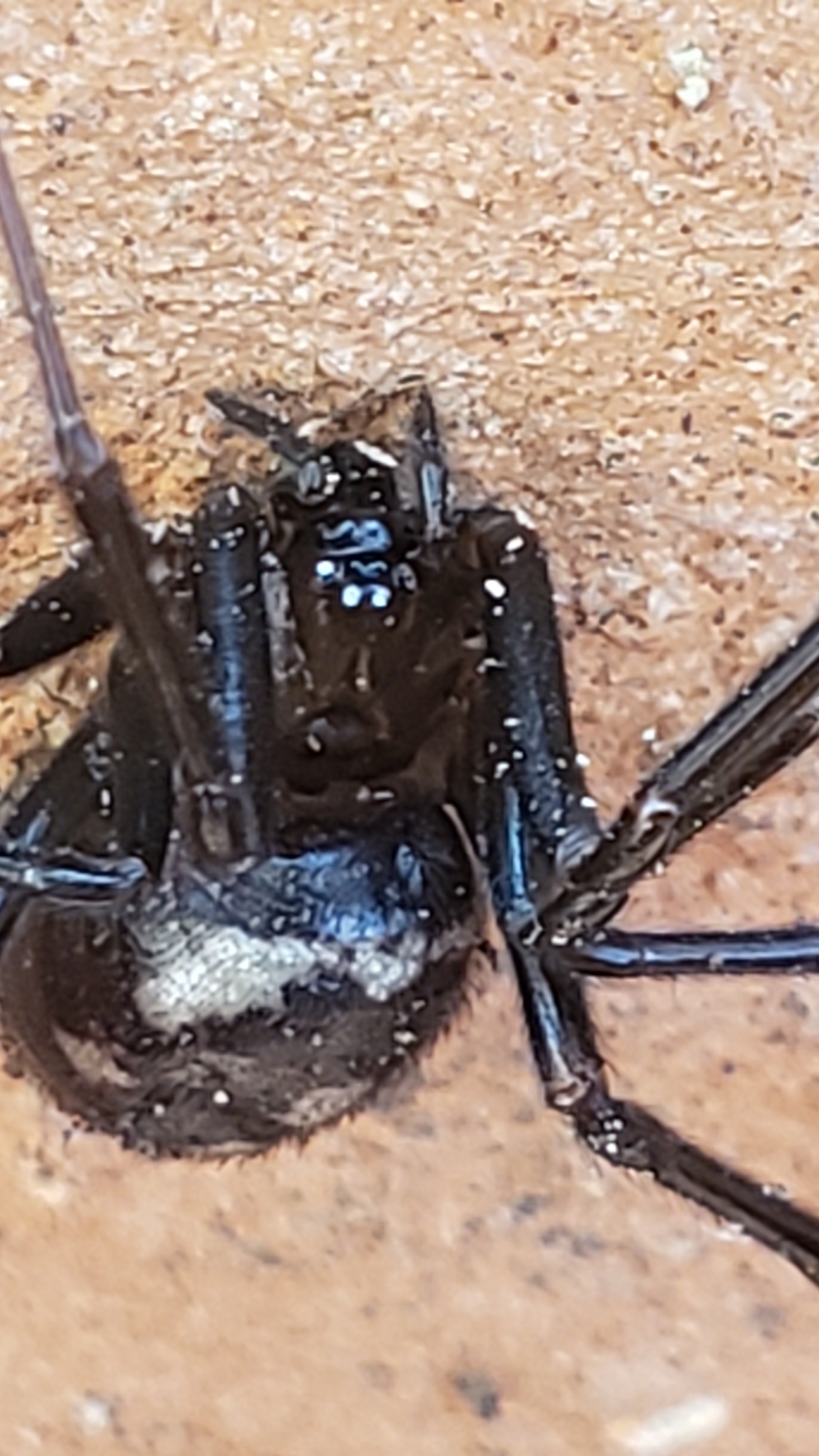
Most spiders that look like black widows are false widows, and the fastest way to tell them apart is the underside of the abdomen: a true black widow carries a red or orange hourglass there, and its lookalikes do not. In the United States, the spiders people mistake for widows are almost all harmless house spiders in the genera Steatoda and Parasteatoda, plus young or male widows that have not yet turned solid black.
That distinction matters because the response differs. This guide covers the nine spiders most often confused with black widows in US homes and yards, what separates each one, and how to check a spider safely.
Spiders that look like black widows include the false black widow, brown widow, common house spider, rabbit hutch spider, northern cupboard spider, cellar spider, bold jumping spider, and both male and juvenile widows. Only true widows in the genus Latrodectus show a red or orange hourglass on the underside of a glossy, round abdomen.
| Feature | True black widow | False black widow (Steatoda) |
|---|---|---|
| Underside mark | Red or orange hourglass, or two red bars | None, or a faint cream crescent on top |
| Body color | Glossy jet black, almost lacquered | Purplish brown, chestnut, or dull black |
| Body length (female) | 0.4 to 0.6 in (10 to 15 mm) | 0.2 to 0.43 in (5 to 11 mm) |
| Abdomen shape | Round and taut, like a bead | Round but softer, often slightly oval |
| Legs | Long, thin, shiny, held tucked under | Shorter, stockier, often faintly banded |
| Bite severity | Painful, can cause cramping and sweating | Local pain and swelling, usually minor |
| Where you find it | Woodpiles, meter boxes, crawl spaces, sheds | Baseboards, cupboards, garages, window frames |
Which of these spiders can actually hurt you
Only the true widows in the genus Latrodectus carry medically significant venom in the United States: the southern black widow (Latrodectus mactans), the western black widow (Latrodectus hesperus), the northern black widow (Latrodectus variolus), and the introduced brown widow (Latrodectus geometricus). Their venom is a neurotoxin, and a bite from a mature female can cause muscle cramping, sweating, and abdominal pain that peaks within a few hours.
Every other spider here is a false alarm in medical terms. A Steatoda bite produces a sore red patch and some swelling, with no cramping cascade and no antivenom need. Treat any glossy black round spider as a widow until you see the underside, then relax if there is no hourglass. Before you reach for a shoe, read whether killing a black widow is the right move.
What a true black widow actually looks like
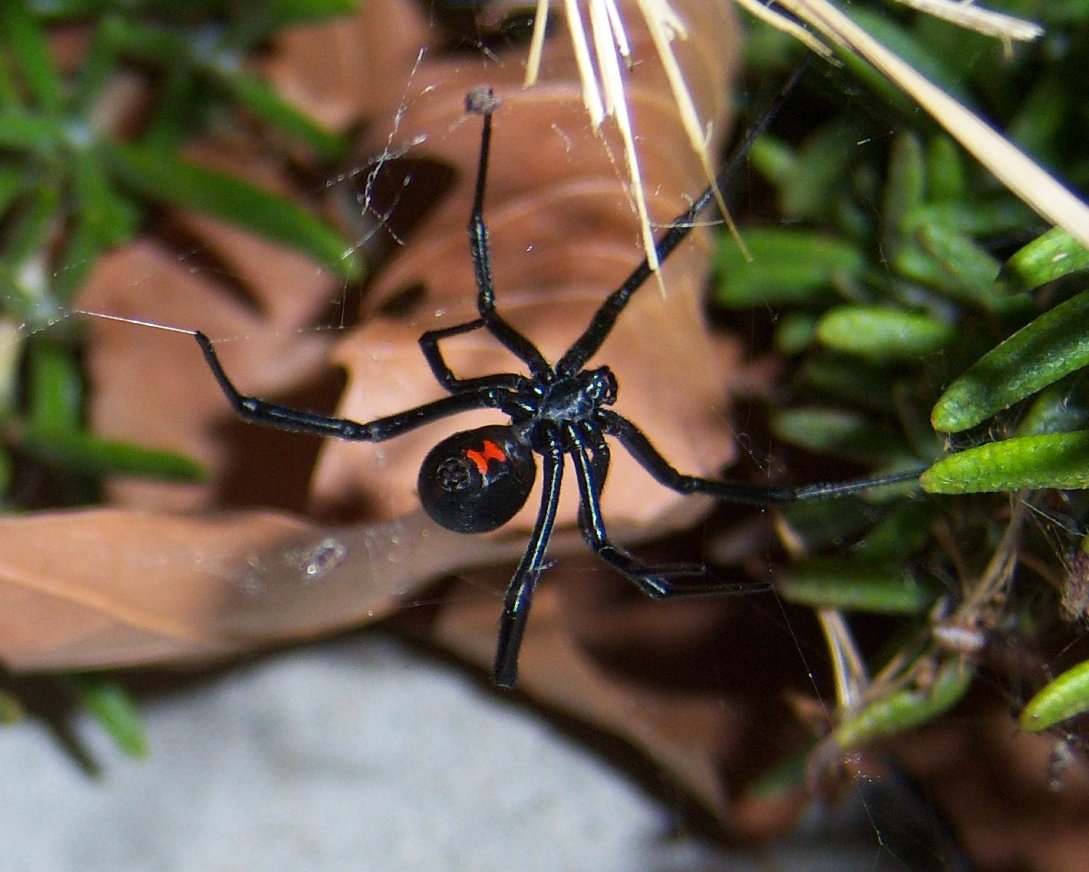
A mature female southern black widow has a body about 0.5 in (13 mm) long and spans roughly 1.5 in (38 mm) with legs extended. The abdomen is close to spherical and so smooth it reflects light like enamel. That lacquered shine is the most useful field mark after the hourglass, because no Steatoda in North America matches it. The hourglass sits on the belly, not the back, and you see it when the spider hangs upside down in its web.
Northern black widows often show the hourglass split into two red bars plus red spots along the top of the abdomen, which is why people searching for a spider that looks like a black widow without red on the back are frequently looking at an ordinary widow from above. The web helps too: a tangled, patternless cobweb built within 12 in (30 cm) of the ground, with silk strong enough to hear tearing. For other dark bodied house spiders, see our guide to the black house spider.
False black widow (Steatoda grossa)
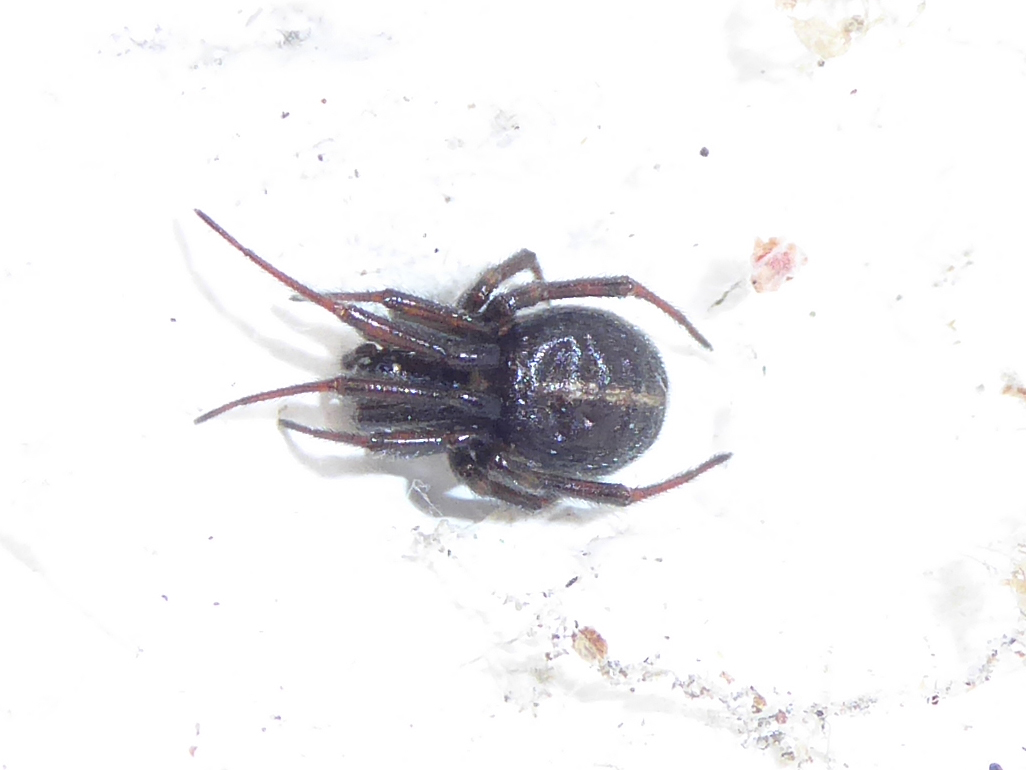
This is the lookalike people meet most often, and the reason the name cupboard spider exists. Steatoda grossa is purplish brown to nearly black, 0.24 to 0.43 in (6 to 11 mm) in the body, and builds the same tangled cobweb in the same dark corners a widow would choose. In poor light, a mature female reads as a small widow.
Three things separate it. The abdomen is matte rather than glossy, often with a faint cream crescent across the front edge. There is no hourglass underneath, ever. And the legs are shorter relative to the body, giving a squat look instead of the widow’s long legged sprawl. Usefully, this species preys on true black widows and has displaced them from garages across parts of California.
Brown widow (Latrodectus geometricus)
The brown widow is a true widow that most people fail to recognize as one. It is tan to dark brown with a mottled cream and black pattern on the upper abdomen, banded legs, and an orange rather than red hourglass underneath. Females run 0.3 to 0.6 in (8 to 15 mm) in the body, and the species has spread across the southern states from Florida to Southern California since the 1990s.
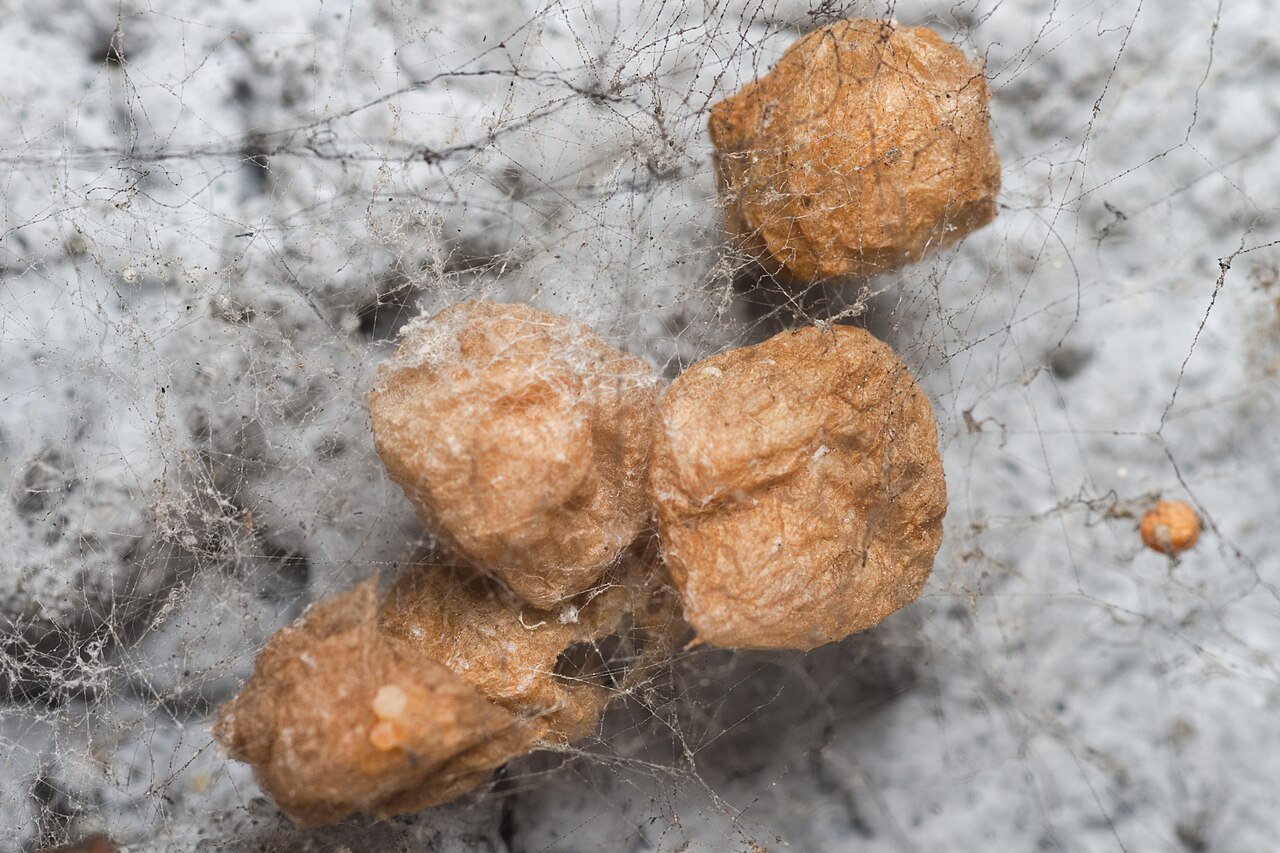
Its egg sac is the easiest identification in this guide: a pale ball covered in blunt silk spikes, like a tiny sea mine. Nothing else in a US yard produces that. Brown widow venom is potent but delivered in small amounts by a shy spider, so bites usually stay limited to pain and redness at the site. For a closely related question, see our guide to 5 spiders that look like brown recluses. For a closely related question, see our guide to 5 spiders that look like brown recluses. For a closely related question, see our guide to 5 spiders that look like brown recluses.
Common house spider (Parasteatoda tepidariorum)
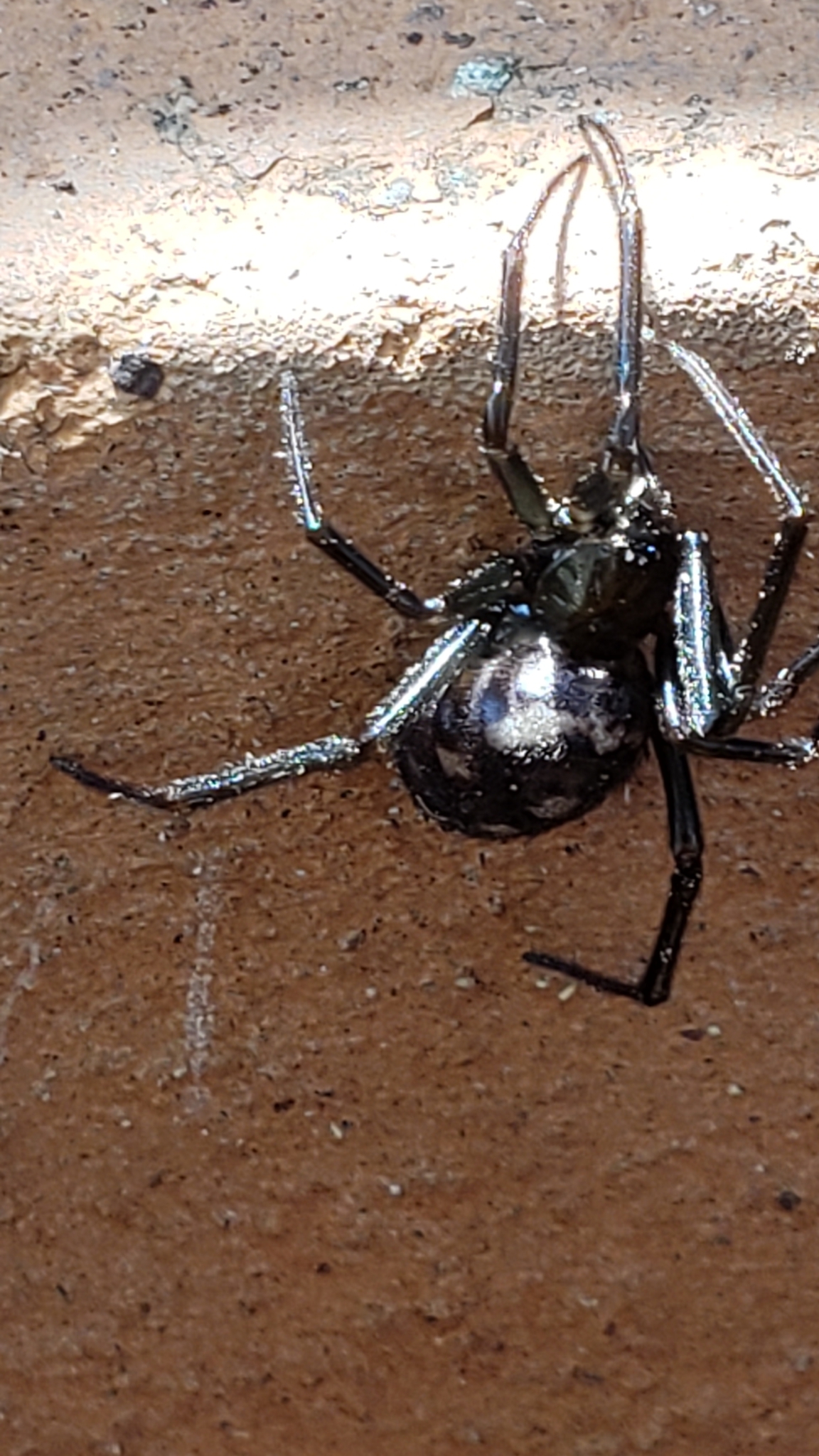
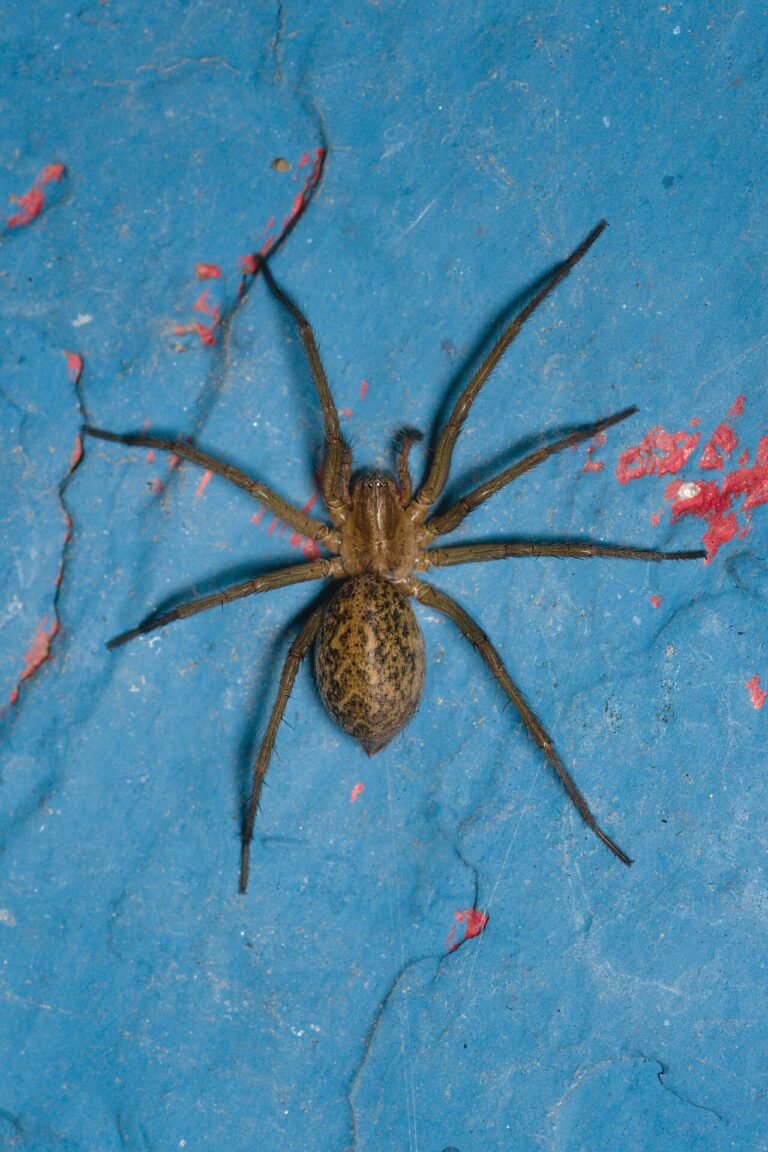
The common house spider shares the family Theridiidae with widows, so it builds the same messy cobweb and hangs upside down in it. The body is 0.2 to 0.24 in (5 to 6 mm), the abdomen high and rounded, the color a mottled dull tan to grayish brown with darker chevrons. Dark individuals in a shadowed corner get reported as widows constantly.
Look for the pattern. A widow is one uniform color with a single bright mark; a common house spider is speckled all over, never glossy, and its legs are faintly banded. It is the most abundant spider inside North American houses and entirely harmless. Not every eight legged thing indoors is even a spider, as our list of bugs that look like spiders shows.
Rabbit hutch spider (Steatoda bipunctata)
Smaller than Steatoda grossa at 0.16 to 0.28 in (4 to 7 mm), this spider is shiny reddish brown to chocolate with a distinct pale line down the middle of the abdomen and a light band around its front edge. The shine suggests a widow, which is why it makes the list, but the stripe does not: widows never carry a dorsal midline stripe.
It turns up in outbuildings, sheds, animal pens, and around window frames across the northern United States and southern Canada. The name comes from its habit of colonizing rabbit hutches and chicken coops to hunt flies drawn to the animals. It is harmless and, like its larger cousin, eats other spiders including young widows.
Northern cupboard spider (Steatoda borealis)
Across the northern states and into Canada, Steatoda borealis fills the same niche. It is dark reddish brown to blackish, 0.16 to 0.26 in (4 to 6.5 mm), and carries a pale T shaped or Y shaped mark on the front of the upper abdomen. In a dim basement, the impression is a small, dull widow.
The T mark is reliable, so check the top of the abdomen first on any dark spider found in a cold climate basement. This species is far more common in those rooms than a true black widow north of roughly the 42nd parallel, because northern black widows are woodland animals that rarely come indoors. Its bite compares to a wasp sting at worst.
Cellar spider (Pholcus phalangioides)
The cellar spider, often called daddy long legs, gets mistaken for a widow for one reason: it builds a loose tangled web in exactly the same basement corners and hangs upside down in it. Nothing else matches. The body is pale tan at 0.24 to 0.35 in (6 to 9 mm), the legs are thread thin, and there is no dark coloring anywhere.
The claim that cellar spiders have the most powerful venom of any spider but fangs too short to bite is folklore with no supporting data. They are worth leaving alone: they invade other spiders’ webs and eat the occupants, including young widows, so a basement full of them stays relatively widow free.
Bold jumping spider (Phidippus audax)
A compact, fuzzy, jet black spider with a bright white or orange triangle on the abdomen and metallic green chelicerae, the bold jumper gets reported as a widow almost entirely on color. The body is 0.3 to 0.6 in (8 to 15 mm) and the overall black is genuinely widow like at a glance.
Everything else differs. Jumping spiders build no webs, hunt in the open, move in quick bursts, and turn to face you with two enormous forward facing eyes. A widow freezes or drops. If the spider looked back at you, it was not a widow. See our guide to the black spider with white spots for the full set of marked jumpers.
Male and juvenile black widows
A male black widow looks almost nothing like the female. He is about half her size at 0.1 to 0.2 in (3 to 5 mm), tan to gray brown, with white or cream streaks along the sides of the abdomen and often red spots on the back. Males are harmless to people and their fangs struggle to break human skin.
Juvenile females pass through the same coloring, starting cream and orange with dark bands and darkening over successive molts until the pattern vanishes under glossy black. They already have functional venom at that stage. This explains most brown spiders that look like black widows reports: a brown, boldly marked spider in a tangled cobweb under a deck in Arizona or Georgia is more likely a young widow than any Steatoda.
Is there a spider that mimics a black widow?
No North American spider is a true mimic of the black widow, meaning none has evolved widow coloring specifically to borrow its reputation. The resemblances on this list come from shared ancestry within the cobweb spider family Theridiidae, which produces round abdomens and glossy dark bodies again and again.
One partial exception is worth knowing. The redback spider (Latrodectus hasselti) of Australia is frequently posted in US identification groups and looks like a black widow with a red stripe down the back instead of an hourglass. It is not a mimic; it is a genuine widow and a close relative, and it does not live in the United States outside accidental shipping introductions.
What attracts black widow spiders
Widows need three things: insect prey, a dark cavity with one open side, and no disturbance. That combination comes from stacked firewood, cinder block walls, meter boxes, irrigation valve covers, upturned flowerpots, crawl space vents, and outdoor furniture that never gets moved. Outdoor lighting makes it worse by drawing the moths and beetles they eat.
Reduce those and the population drops. Move woodpiles off the ground and away from the house, seal gaps around vents and utility penetrations, and swap white porch bulbs for warm or yellow ones. Sweeping webs out of cavities every few weeks beats any spray, because widows will not rebuild where they keep getting disturbed.
How to check a suspected widow safely
Work with light and distance, never fingers. A bright flashlight held at an angle shows the gloss of a true widow instantly, while Steatoda absorbs the light and stays dull. If you need the spider contained, drop a clear jar over it and slide a stiff card underneath. Widows are not aggressive: nearly all documented bites happen when a spider is pressed against skin inside a glove, a boot, or bedding.
If a bite does occur, clean the site, apply a cold pack, and seek medical care if cramping, sweating, or severe abdominal pain develop. The Centers for Disease Control and Prevention maintains guidance on venomous spiders for outdoor workers. Bring the spider if you have it safely contained.
Related reading: spiders that look like brown recluses.
Related reading: spiders that look like scorpions.
Frequently Asked Questions
Is a black widow bite 100% fatal?
No. Black widow bites are very rarely fatal, and deaths in the United States are now close to zero in a typical year. Most verified bites resolve with pain management alone. Risk is highest for small children, older adults, and people with heart conditions. Severe cases involve cramping and sweating rather than tissue damage, and antivenom exists when it is needed.
How long do false widow spiders live?
Female Steatoda grossa commonly live one to three years as adults, and individuals in stable indoor conditions have been recorded surviving up to six years. Males live considerably shorter lives, usually under a year, and often die within weeks of maturing. That longevity is why the same false widow can occupy one cupboard corner for several seasons.
What animal kills black widows?
Mud dauber wasps are the main predator, and the blue mud dauber (Chalybion californicum) specializes in widows, stocking its nest cells almost entirely with them. Spider wasps, praying mantises, centipedes, and false widows in the genus Steatoda also take them. Several birds eat them opportunistically; see our guide to birds that eat spiders.
What do black widows hate the most?
Disturbance. A widow abandons a site where the web is repeatedly swept or where vibration is constant, because she cannot afford to rebuild. Bright open spaces with no cavity and no insect traffic are avoided entirely. Claims about peppermint or eucalyptus oil repelling them are not supported by field data, so physical disruption is the reliable tool.
What kills black widows instantly?
Direct physical crushing, or a contact insecticide sprayed straight onto the spider. Residual perimeter sprays do not kill on contact and often fail entirely, because widows sit in webs rather than walking across treated surfaces. Soapy water in a spray bottle works on direct hits. Nothing applied to the web alone reaches the spider quickly.
Why shouldn’t you squish a wolf spider?
A female wolf spider carries her spiderlings on her back, so crushing her can scatter dozens of young across the floor instead of solving anything. Wolf spiders also hunt the insects and smaller spiders you want gone, and they are not dangerous. Cup and release outdoors instead; see our notes on the black and white spider group for other harmless hunters.