Alaskan Wood Frog: The Frog That Freezes Solid for 7 Months
The Alaskan wood frog (Lithobates sylvaticus) spends up to seven months of the year frozen solid, with no heartbeat, no breathing, and no measurable brain activity, and then hops away in spring as if nothing happened. It is the northernmost amphibian in North America, living well above the Arctic Circle in a place where the ground stays frozen for most of the year.
That sounds like an internet exaggeration, and it is not. Researchers at the University of Alaska Fairbanks have tracked these frogs through entire winters in the leaf litter near Fairbanks and recorded body temperatures far below anything a southern wood frog survives. Here is what actually happens inside the animal, how cold it can go, and why the frog’s kidneys are as remarkable as its blood.
The Alaskan wood frog is a real, common frog of interior and arctic Alaska that survives winter by freezing. Up to 60 percent of its body water turns to ice, its heart stops, and glucose and urea act as antifreeze inside its cells. Field animals have survived temperatures near 0 F (minus 18 C) for six to seven months.
| Quick Fact | Alaskan Wood Frog |
|---|---|
| Scientific name | Lithobates sylvaticus (formerly Rana sylvatica) |
| Length | 1.4 to 3.25 in (3.5 to 8 cm) |
| Range | Alaska to Labrador, north of the Arctic Circle |
| Time frozen | Up to 7 months per year |
| Body water frozen | Up to 60 percent |
| Antifreeze compounds | Glucose and urea |
| Lifespan | 3 to 5 years, longer in the far north |
Is the Alaskan Wood Frog Real?
Yes. The Alaskan wood frog is not a separate species but the far northern population of the wood frog, the same animal found in woodlands from Georgia to Labrador. What makes the Alaskan population remarkable is not its taxonomy but its performance: these frogs endure a winter that would kill a wood frog from Ohio several times over.
It is also the only amphibian in much of interior Alaska, and one of only six that occur in the state at all. In a landscape with no salamanders and almost no other frogs, this single small brown animal fills the entire niche. The wood frog profile covers the species across its whole range; this article is about what the Arctic version does differently.
What an Alaskan Wood Frog Looks Like

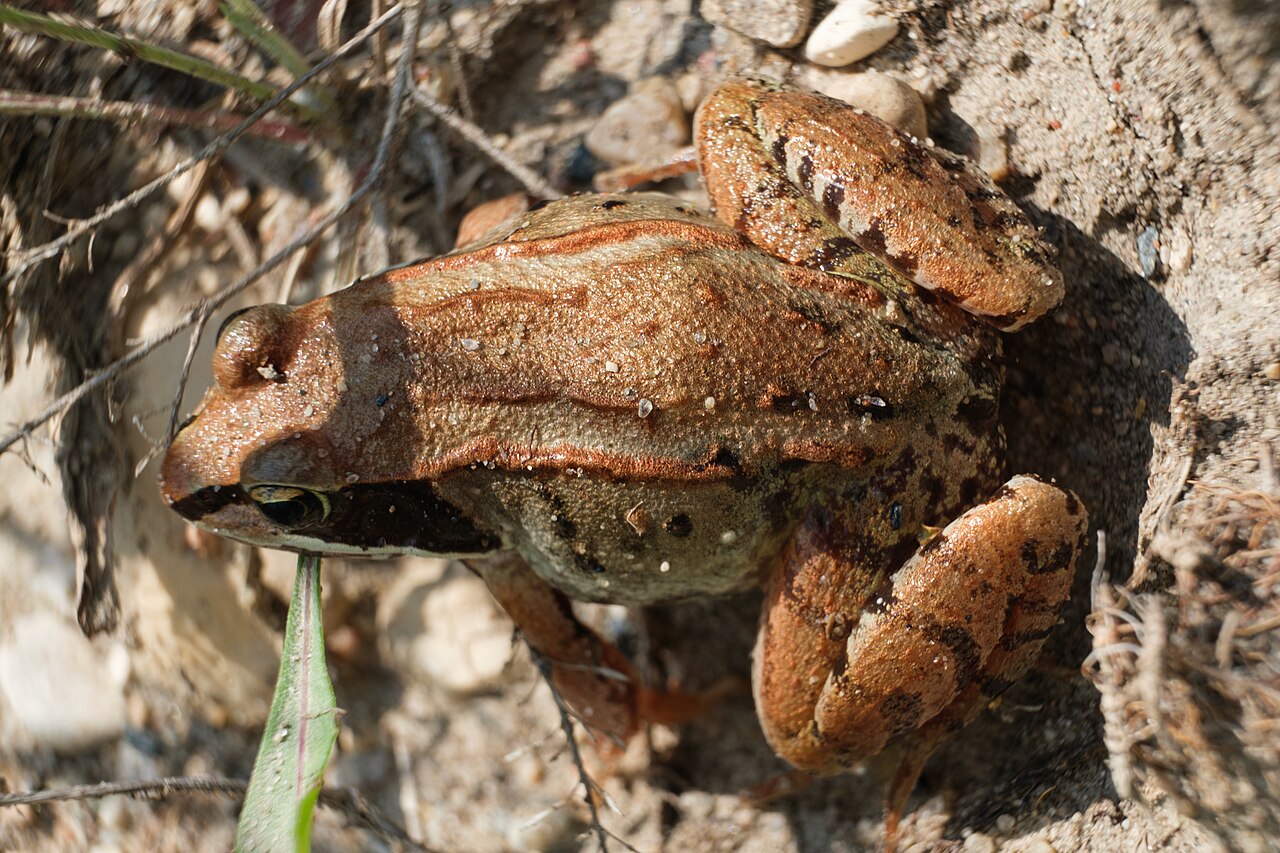
Wood frogs are small, 1.4 to 3.25 inches (3.5 to 8 cm) long, in shades of tan, copper, rust, or dark brown, with females larger and usually redder than males. The field mark that settles every identification is the dark mask running from the snout through the eye and back past the ear, bordered below by a pale upper lip.
Two raised ridges, the dorsolateral folds, run down the back from behind each eye. Northern animals tend to be darker than southern ones, which helps them warm up fast in weak Arctic sunlight. They have no toe pads, so they cannot climb the way a gray tree frog can, and they move in long low hops across the forest floor.
Where Alaskan Wood Frogs Live
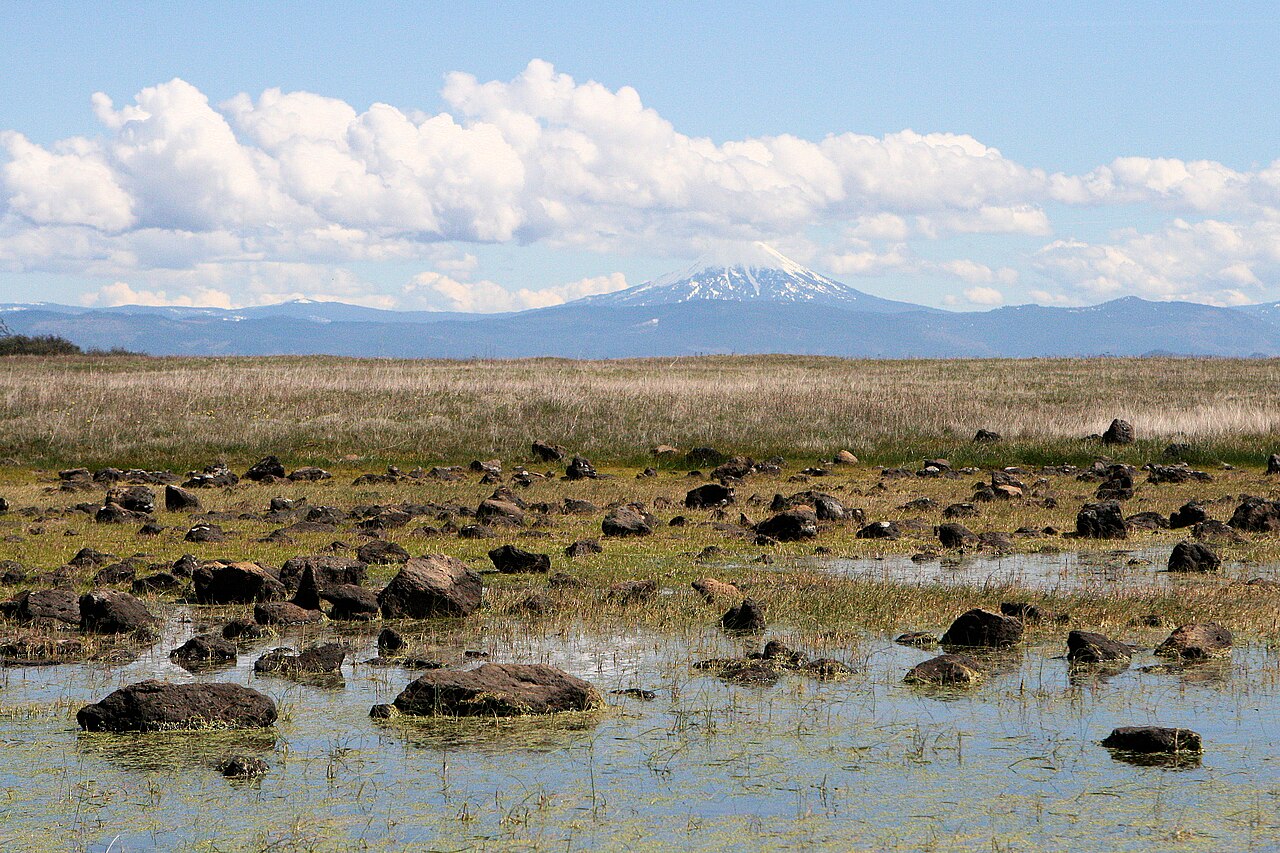
Wood frogs occupy boreal forest, muskeg, tundra edge, and the willow thickets along rivers across interior Alaska, and their range extends north of the Brooks Range, farther north than any other North American amphibian. The National Park Service records them inside Gates of the Arctic, well above the Arctic Circle.
Outside the breeding season they are terrestrial and easy to overlook, hunting insects in damp leaf litter and moss far from any pond. They need water only for a few weeks in spring, which is exactly why they can occupy country where permanent ponds are rare and where every water body freezes to the bottom.
Why Do Alaskan Wood Frogs Freeze?
They freeze because the alternative is not available. Frogs that overwinter underwater, such as leopard frogs and bullfrogs, need a pond deep enough to stay liquid and oxygenated all winter, and interior Alaska has almost none. Burrowing below the frost line is also off the table, since permafrost and frozen ground can extend far deeper than a small frog can dig.
So the wood frog does the only thing left: it settles under a few inches of leaf litter and moss in the fall and lets winter take it. Freezing is not an accident it survives, it is a strategy it prepares for. Read more about the range of overwintering tactics in how frogs hibernate.
What Happens Inside a Frozen Frog
Ice forms first in the body cavity and under the skin, and its arrival triggers the liver to dump stored glycogen into the bloodstream as glucose within minutes. Blood sugar levels rise to concentrations that would be a medical emergency in a mammal. That glucose floods into the cells, where it lowers the freezing point of the cell interior and props up cell structure as water leaves.
The result is an animal that is frozen between its cells but not inside them, which is the distinction that matters. Up to 60 percent of total body water becomes ice. The heart slows, then stops. Breathing stops. Brain activity becomes unmeasurable. By any clinical standard the frog is dead, and it stays that way for months.
How Cold Can They Survive?
Alaskan wood frogs tolerate far lower temperatures than their southern relatives. Field studies near Fairbanks recorded overwintering frogs at body temperatures averaging around 15 F (minus 9.5 C), with individuals reaching roughly 0 F (minus 18 C) and surviving. Wood frogs from temperate states generally die below about 21 F (minus 6 C).
Two things explain the gap. Alaskan animals go through repeated freeze and thaw cycles in autumn, and each cycle triggers another release of glucose, so they enter deep winter far better loaded with cryoprotectant than a frog that freezes once. They also accumulate urea over the long fall, which works alongside the glucose.
Can a Wood Frog Hold Its Pee for 8 Months?
Essentially yes, and it is not a party trick. Through the long subarctic fall and winter the wood frog stops excreting urea and lets it accumulate in its blood and tissues instead, over a period that can stretch close to eight months. Urea is a waste product, but it is also a cryoprotectant, so retaining it does double duty.
High urea levels lower the freezing point of body fluids and reduce how much ice forms at any given temperature, and they also help slow metabolism while the frog is frozen. Nitrogen the animal cannot afford to waste stays in the body until spring. A frog that urinated normally all autumn would enter winter with far weaker protection.
The Thaw and the Spring Chorus
Thawing runs from the inside out, with the heart restarting before the limbs regain movement, and a frog can go from frozen to hopping within a day or so of the ground warming. In interior Alaska this happens in late April or May, and the frogs move to melt ponds almost immediately, sometimes crossing snow to get there.
Breeding is explosive. Males call for a week or two, a low clucking chuckle that sounds much more like a duck or a distant flock of chickens than the whistle of a American green tree frog. Females deposit large communal egg masses in shallow, sun warmed water, and the whole event can be over in under two weeks.
What Is the Lifespan of a Wood Frog?
Most wild wood frogs live three to five years, and few survive past their first summer as a tadpole. In Alaska the pattern shifts: the active season is short, growth and maturity are slow, and individuals there may reach seven years or more, since so little of each year is spent burning energy.
Skeletochronology, which counts growth rings in bone, is how researchers put numbers on this, and the results vary by site and by study. Treat any single figure as an estimate. What is clear is that a frog which spends more than half its life frozen simply ages on a different schedule than one from Pennsylvania.
What Eats Wood Frogs?
Adults are taken by garter snakes, mink, otters, foxes, herons, cranes, gulls, and northern pike where the two overlap. Eggs and tadpoles face a wider list still: diving beetle larvae, dragonfly nymphs, caddisfly larvae, and other wood frog tadpoles, since Alaskan tadpoles in crowded pools have been documented eating each other.
Their defenses are modest. They rely on camouflage against leaf litter, long escape jumps, and sheer numbers, since a single female can lay well over a thousand eggs. Unlike a blue poison dart frog, the wood frog has no chemical weapon worth mentioning and survives by being hard to find and quick to leave.
Are Wood Frogs Safe to Touch?
Wood frogs are not poisonous and pose no real danger to people. Their skin secretions are mild, though they can irritate eyes, so wash your hands afterward and keep them away from your face. The greater risk runs in the other direction: amphibian skin absorbs whatever is on your hands, including soap residue, sunscreen, and insect repellent.
If you must handle one, wet your hands with clean pond water first, hold it briefly and low to the ground, and release it where you found it. Never move a frog between ponds. Amphibian diseases such as chytrid fungus and ranavirus spread on boots, nets, and hands, and moving animals around is how outbreaks travel.
Can I Keep a Wood Frog as a Pet?
It is a poor idea and often illegal. Wood frogs are native wildlife, and most states and Canadian provinces restrict collecting native amphibians, with Alaska in particular limiting what can be taken and kept. Check your state wildlife agency before touching that question at all, because the rules differ sharply from one state to the next.
Beyond the law, they make unrewarding captives. They need cool temperatures, a proper winter cooling period, and live insects, and they spend most of their time hidden under litter. Anyone who wants a frog to watch is far better served by a captive bred species, and anyone interested in the unusual is better off with a glass frog display animal.
Frequently Asked Questions
Which frog can survive being frozen?
The wood frog is the best known, and the Alaskan population is the most cold tolerant of all. Several other North American species freeze partially, including spring peepers, chorus frogs, and gray treefrogs, and they use a different antifreeze compound, glycerol, alongside glucose. None of them match the wood frog’s depth or duration of freezing.
What animal holds their pee the longest?
The Alaskan wood frog is a strong contender, retaining urea for close to eight months over winter. Arctic ground squirrels recycle urea through hibernation in a comparable way. In both cases the point is not bladder capacity but chemistry: the animal keeps a waste product because it is useful, not because it cannot pass it.
What does a wood frog sound like?
Males produce a short, low clucking or quacking call, and a full chorus is regularly mistaken for ducks or distant chickens rather than frogs. Calling starts within days of the ice going out and lasts only one to two weeks in the north, which is why many people who live alongside them have never heard one.
What is the Alaskan wood frog’s scientific name?
The current name is Lithobates sylvaticus, though much older literature and many field guides still use Rana sylvatica. The change came from a 2006 reorganization of the true frogs, and both names refer to exactly the same animal. There is no separate scientific name for the Alaskan population.
Is there a Siberian wood frog?
Siberia has its own freeze tolerant amphibians, most famously the Siberian salamander, which survives temperatures far below what any frog endures and has been revived after long periods in frozen ground. The Siberian wood frog (Rana amurensis) is a different species from the North American wood frog and tolerates near freezing, low oxygen conditions underwater.
What adaptations let Alaskan wood frogs survive winter?
Four work together: glucose released by the liver as ice forms, urea accumulated over autumn, repeated fall freeze and thaw cycles that build up both compounds, and proteins that control where ice crystals grow so they stay outside the cells. Remove any one of them and the frog does not make it to spring.