Komodo Dragon Teeth: Iron Coated, Hidden, and 60 Strong
Komodo dragon teeth are curved, blade like, serrated, and coated in iron at the tips, and you almost never see them because the gums grow up over each tooth until the animal bites. A Komodo dragon (Varanus komodoensis) carries around 60 of them, replaces them continuously through life, and uses them less for killing outright than for opening a carcass with backward pulls of the head.
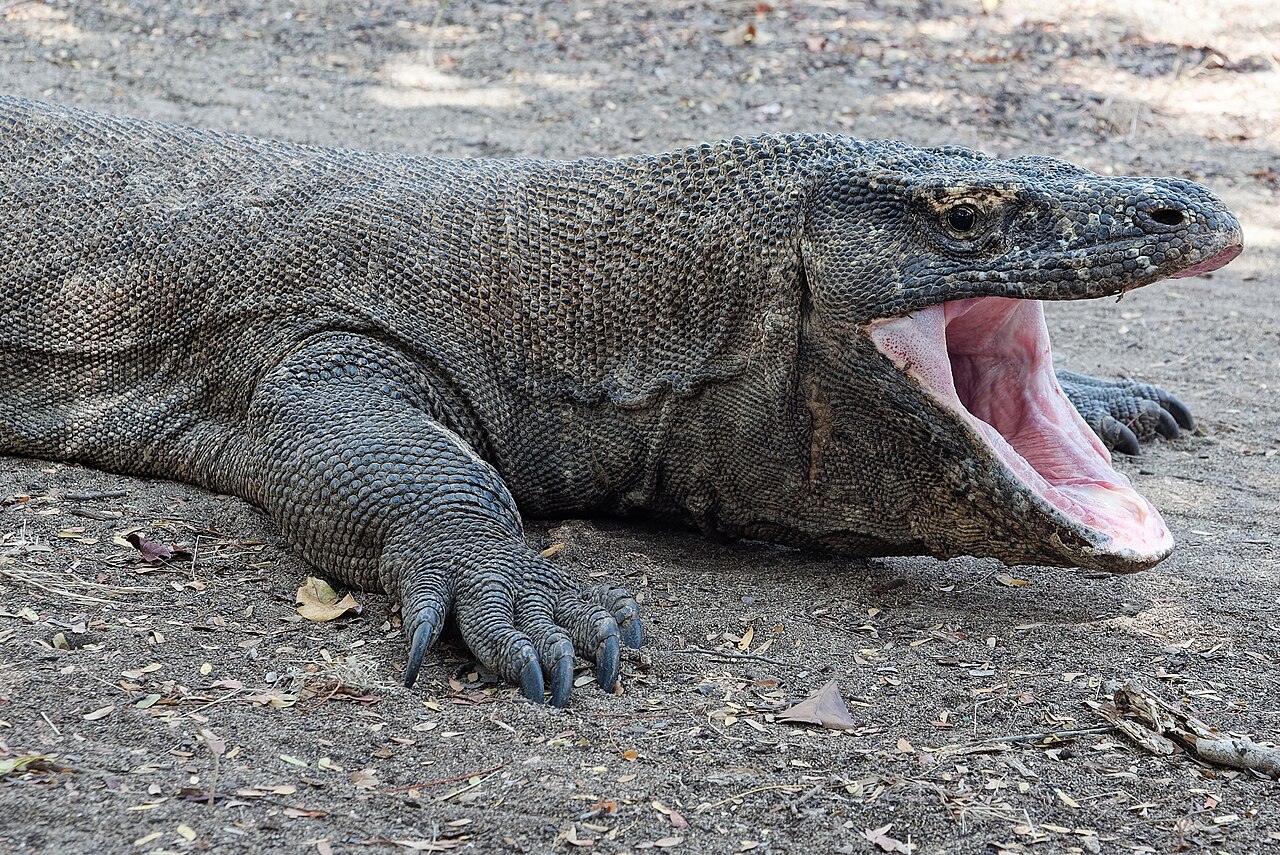
That combination of hidden teeth and metal reinforced cutting edges is why the 2024 iron coating study drew so much attention, and why a photo of a gaping Komodo dragon looks so much emptier than a photo of a crocodile.
A Komodo dragon has roughly 60 curved, serrated teeth up to about 1 in (2.5 cm) long, hidden under gum tissue that tears during feeding. The tips and serrations carry an iron rich coating that keeps the cutting edges sharp. Teeth are shed and replaced continuously, up to four or five sets a year.
| Feature | Detail |
|---|---|
| Tooth count | About 60, in a single functional row per jaw |
| Tooth length | Up to roughly 1 in (2.5 cm) |
| Shape | Recurved, laterally flattened, serrated on both edges |
| Coating | Iron rich layer concentrated on tips and serrations |
| Replacement | Continuous, up to four or five full sets per year |
| Visible when closed | No, gum tissue covers the crowns |
Why Aren’t Komodo Dragon Teeth Visible?
Because the gums cover them. Unlike a crocodile, whose teeth sit exposed in sockets, a Komodo dragon’s teeth are sheathed in soft tissue that grows over each crown, so a closed or even a gaping mouth shows mostly pink gum. The tissue tears when the animal bites into prey and heals afterward, which is why wild dragons often feed with bloody gums.
The setup also protects the teeth. Serrated edges are fragile against bone, and a gum sheath shields them between meals. The trade off is that Komodo dragons have visibly bloody mouths during feeding, which fed the old and incorrect story that their saliva is a bacterial weapon.
Are Komodo Dragon Teeth Made of Iron?
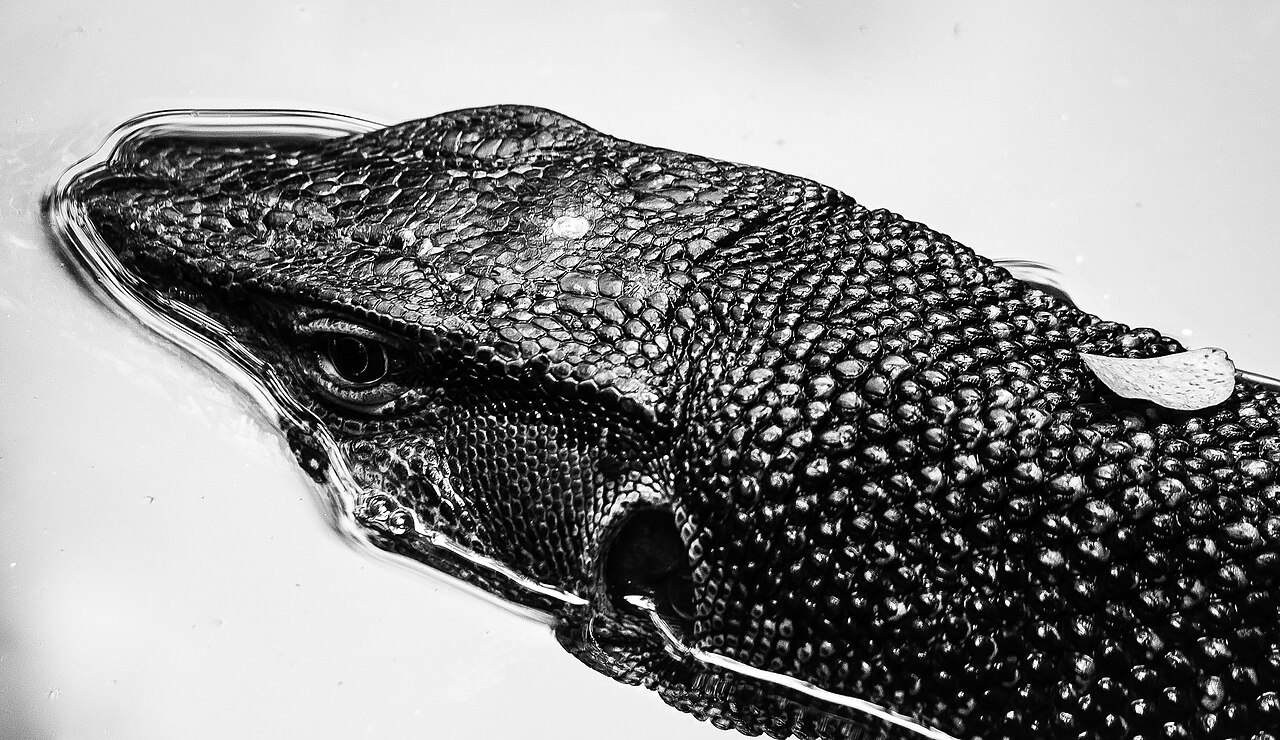
Not made of iron, but coated with it. A 2024 study of Komodo dragon skulls found an iron rich layer concentrated on the tooth tips and along the serrations, visible as an orange stain on fresh specimens, that hardens the exact surfaces doing the cutting. The underlying tooth is normal reptile enamel and dentine.
The finding matters beyond one lizard. The same iron enrichment appears in traces on some theropod dinosaur teeth, so the Komodo dragon gives paleontologists a living model for how serrated carnivore teeth stayed sharp. Zoos that keep the species, including the Smithsonian National Zoo, supplied much of the comparative material for work like this.
How Many Teeth Does a Komodo Dragon Have?
An adult carries about 60 functional teeth, and it will get through several complete sets in a single year. Teeth are shed as replacements push up from below, so a wild dragon’s feeding site is often littered with broken crowns, and a captive animal loses them into the enclosure floor.
Size scales with the animal. The largest teeth in a big adult reach roughly 1 in (2.5 cm), while a baby Komodo dragon has needle fine versions of the same shape suited to insects and small lizards. Constant replacement is the reptilian norm, and it is what separates this pattern from the fixed dentition of mammals. Among vertebrates the variations are wide: a Pacman frog has bony projections rather than true cutting teeth, a walleye has inward angled holding teeth, and birds have no teeth at all.
Do Komodo Dragon Bites Hurt?
A Komodo dragon bite is severe. The bite force itself is modest for an animal of that size, but the teeth do the damage: the dragon clamps down and pulls backward, so serrated edges open long, deep lacerations rather than crushing. Combined with claws braced against the prey, that grip strips flesh in a single motion.
Bleeding is the reason bites are dangerous. Venom glands in the lower jaw deliver anticoagulant compounds into the wound, which keeps blood flowing and hastens shock in prey that escapes the initial attack. The details of that mechanism are covered in our guide to Komodo dragon venom, and the animal’s ability to close distance fast is covered in Komodo dragon speed.
Are Komodo Dragon Teeth Retractable?
No. The teeth are fixed in the jaw and cannot fold or withdraw, a myth that comes from confusing gum coverage with retraction and from the genuinely hinged fangs of vipers. What looks like teeth appearing and disappearing is soft tissue moving, not the teeth themselves.
Two other claims deserve correcting. The teeth are not hollow venom delivery tubes; venom seeps from glands into the wound the teeth create. And Komodo dragons are not immune to their own bite chemistry, they simply rarely bite each other in the mouth.
Frequently Asked Questions
What happens if a Komodo dragon licks you?
A tongue flick alone does no harm, since the tongue is a sensory organ collecting scent particles for the animal’s Jacobson’s organ. The risk in any close contact is the bite that may follow, not the saliva. Keepers work with these animals under barrier protocols for that reason.
Do Komodo dragons bond with humans?
They recognize individual keepers and learn routines, and some captive dragons tolerate target training and tactile contact. That is habituation and conditioning rather than affection. A Komodo dragon remains a large predator that responds to blood and sudden movement.
How many humans have been killed by a Komodo dragon?
Fatal attacks are rare, with only a handful confirmed over the past century, most involving children or people who collapsed in dragon habitat. Nonfatal bites on guides, villagers, and rangers are more frequent. The species is dangerous but not a routine threat to visitors on managed tours.
Can you buy real Komodo dragon teeth?
Not legally in most cases. Varanus komodoensis is protected under Indonesian law and listed on CITES Appendix I, so trade in body parts is restricted, and the shed teeth offered online are usually monitor lizard teeth from other species or outright replicas. Treat any listing claiming genuine Komodo material as suspect.