Baby Komodo Dragon: Why Hatchlings Live in Trees
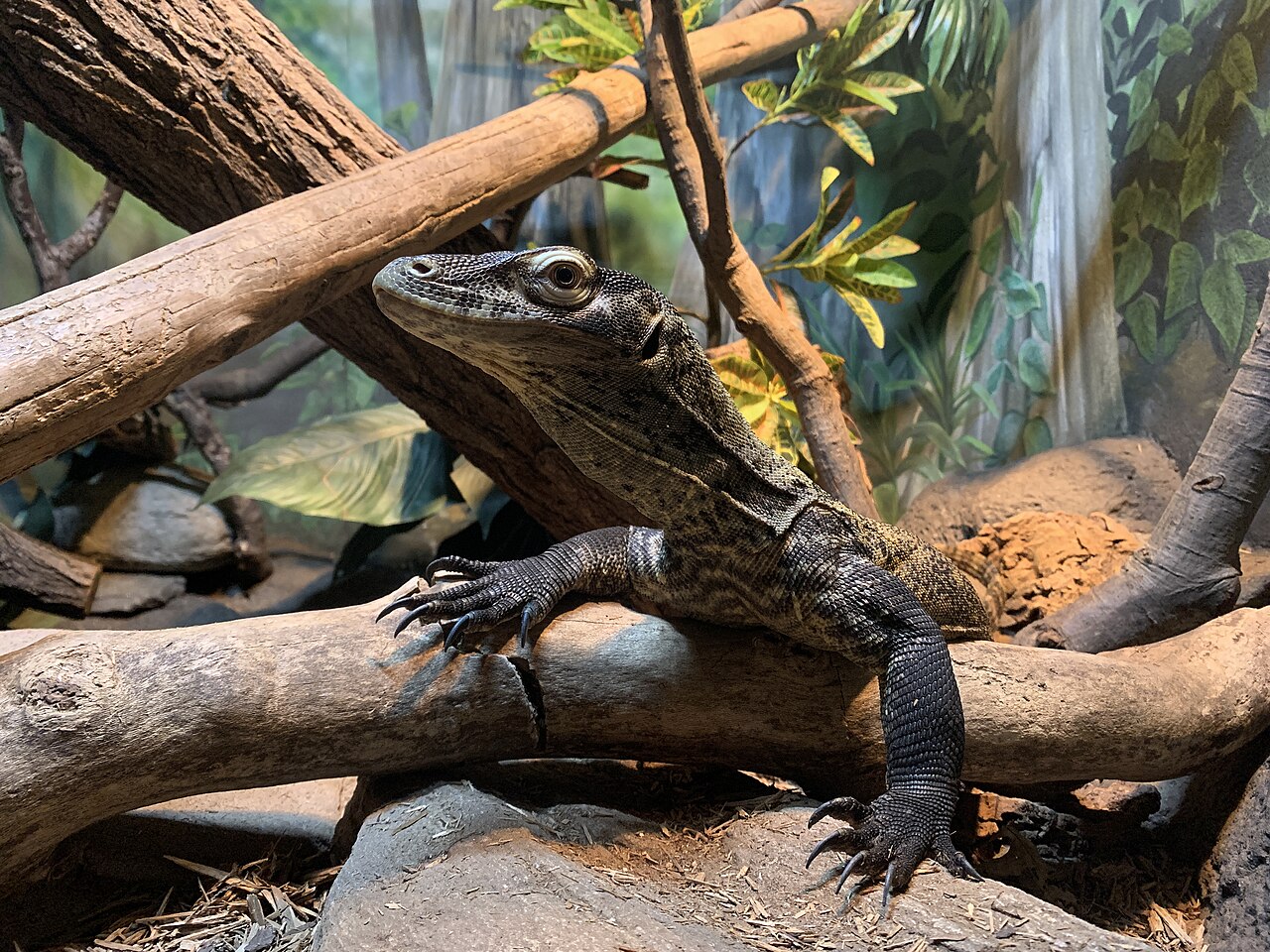
A baby Komodo dragon hatches roughly 16 inches long and weighing barely 3.5 ounces, a strikingly small and vulnerable start for an animal that will eventually grow into the world’s largest living lizard, reaching up to 10 feet and 150 pounds as an adult. That enormous size gap between hatchling and adult drives the single most important fact about young Komodo dragon survival: for their first several years of life, baby Komodo dragons live almost entirely in trees specifically to avoid being eaten by adult Komodo dragons, including, quite literally, their own parents and other adults of the same species.
This arboreal survival strategy, combined with genuinely unusual reproductive biology found in few other reptiles, makes Komodo dragon early life one of the more remarkable stories in the reptile world. This guide covers hatching and early development, the tree-dwelling survival strategy and why it exists, the reproductive oddity called parthenogenesis that occasionally lets females reproduce without a mate, and the significant conservation challenges facing this critically limited species today.
| Fact | Baby Komodo Dragon |
|---|---|
| Hatchling length | About 16 inches |
| Hatchling weight | About 3.5 ounces |
| Eggs per clutch | 15 to 30 |
| Incubation period | 7 to 8 months |
| Tree-dwelling period | First several years of life |
| Adult size | Up to 10 feet, 150+ pounds |
Hatching: A Long Wait Underground
Female Komodo dragons lay clutches of typically 15 to 30 eggs, most often buried in abandoned megapode (a type of ground-nesting bird) mounds or dug burrows, providing stable temperature and humidity conditions throughout an unusually long incubation period lasting seven to eight months before hatching finally occurs, one of the longest incubation periods among monitor lizard species generally.
Unlike many reptile species, some female Komodo dragons remain near the nest site during at least part of this extended incubation period, offering a degree of nest protection against potential egg predators, though this guarding behavior falls well short of the sustained parental care seen in some other animal groups and ends entirely once hatching occurs, after which hatchlings receive no further parental involvement whatsoever.
Hatchlings use a specialized egg tooth to break through the leathery eggshell, emerging as fully formed miniature Komodo dragons already equipped with sharp claws, functional jaws, and the instinctive climbing ability that will define their entire early survival strategy, since there is no gradual developmental period between hatching and needing to immediately fend for themselves in a genuinely dangerous environment.
Why Baby Komodo Dragons Live in Trees
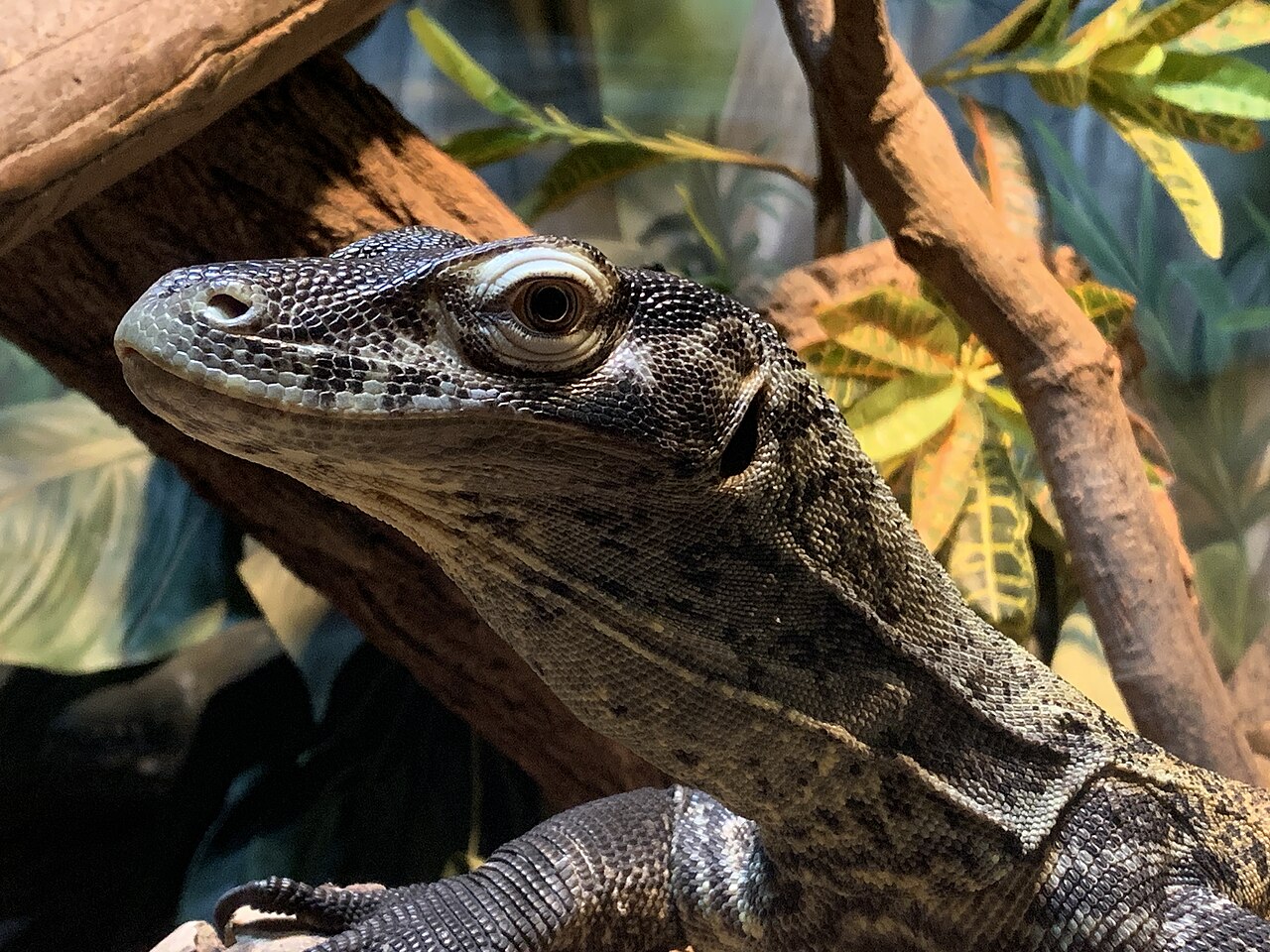
The single defining fact of young Komodo dragon life is arboreality: hatchlings and juveniles spend the vast majority of their first several years living in trees, a behavior driven by one specific and sobering reality, adult Komodo dragons are significant predators of their own young, making juvenile life on the ground extraordinarily dangerous regardless of which other Komodo dragon might be nearby.
This cannibalistic pressure from adults is severe enough that juvenile survival strategy has evolved around near-total avoidance of adult territory and ground-level activity, with young dragons using their proportionally larger claws and more agile, lighter build, advantages they will eventually lose as they grow heavier and more ground-adapted, to remain safely up in tree canopies where adult Komodo dragons, whose size and weight make them poor climbers, generally cannot easily follow.
This tree-dwelling period typically extends for several years, with young dragons only gradually transitioning to more ground-based living as they grow large enough that the cannibalism risk from adults diminishes substantially, a slow and genuinely precarious developmental window during which a considerable portion of any given clutch fails to survive to eventual ground-dwelling adulthood at all.
What Baby Komodo Dragons Eat
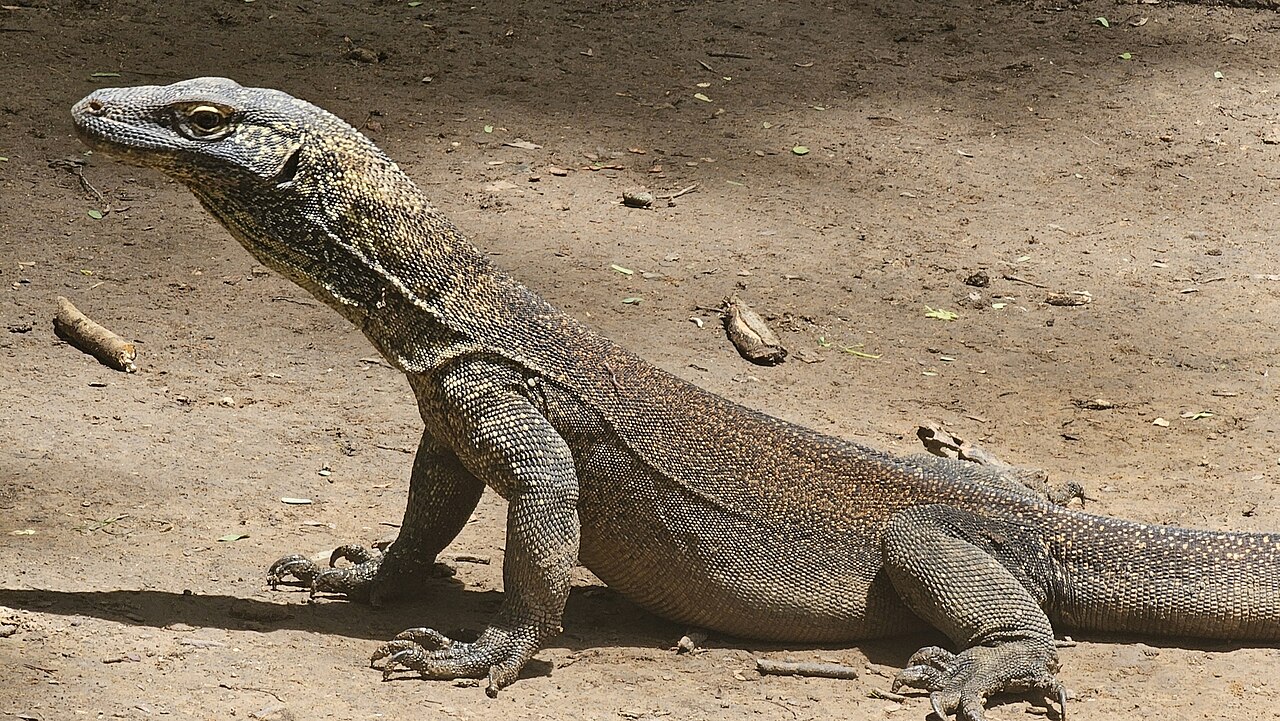
While living arboreally, juvenile Komodo dragons feed primarily on insects, small lizards, and various small vertebrates readily available within the tree canopy environment, a diet considerably different from the large mammal prey, including deer and wild pigs, that characterizes adult Komodo dragon hunting once they reach sufficient size and ground-based capability. For a closely related question, see our guide to poison dart frog.
This dietary shift as dragons age reflects both increasing body size and the corresponding shift away from tree-dwelling life, with young dragons gradually incorporating larger prey items as their own size increases and as ground-level foraging becomes progressively safer relative to the shrinking cannibalism risk from adults as juveniles themselves grow larger and less vulnerable over time.
Komodo dragons of all ages, including juveniles, are known to occasionally scavenge as well as actively hunt, an opportunistic feeding strategy similar in principle to the varied diets many lizard species rely on, likely providing some nutritional flexibility during the challenging early years when reliable prey availability in a tree-based lifestyle may fluctuate considerably compared to the more varied ground-based foraging options available to larger, more mobile adults.
The Reproductive Oddity: Parthenogenesis
One of the most scientifically remarkable aspects of Komodo dragon reproduction is a documented capacity for parthenogenesis, a reproductive process in which a female produces viable offspring without any genetic contribution from a male at all, a capability confirmed in captive Komodo dragons that had no access to a male partner yet still successfully produced fertile eggs.
This form of asexual reproduction in Komodo dragons specifically produces only male offspring due to the particular chromosomal system these lizards use for sex determination, meaning a single isolated female theoretically has the biological capacity to eventually produce both male and female descendants across multiple generations without ever encountering another Komodo dragon of either sex.
While genuinely fascinating and scientifically documented in captive settings, parthenogenesis is understood to be a rare occurrence rather than the typical reproductive pathway even for isolated Komodo dragons, and researchers studying the species, including those associated with major research institutions and zoos that have documented specific parthenogenetic cases, generally view standard sexual reproduction as the overwhelmingly dominant reproductive strategy under normal circumstances in the wild.
Growth from Hatchling to Adult
Komodo dragons grow relatively slowly compared to many other reptile species, with young dragons typically not reaching full adult size until somewhere between five and ten years of age, a considerably extended developmental timeline reflecting both their eventual enormous adult size and the overall slower metabolic and growth patterns characteristic of monitor lizards as a broader group.
Sexual maturity in Komodo dragons is generally reached somewhat before full adult size is achieved, meaning dragons can begin reproducing while still continuing to grow considerably larger over subsequent years, a pattern seen across many reptile species where reproductive capability and maximum physical size do not necessarily align on the exact same developmental timeline.
Wild Komodo dragons that survive the precarious juvenile years to reach adulthood can live for several decades under good conditions, a longevity far exceeding the brief lifespans of far smaller reptiles and insects, making the successful navigation of those early tree-dwelling years, when mortality from adult cannibalism, predation, and general environmental challenges runs genuinely high, the single most significant survival bottleneck this species faces across its entire natural lifecycle, one echoed in different form by the baby praying mantis and other small invertebrates facing their own steep early-life odds.
Komodo Dragons Among the World’s Reptile Giants
Komodo dragons hold the title of the world’s largest living lizard, a distinction that sets them apart even from other large monitor lizard relatives found across Asia and Australia, and their combination of size, venomous bite capability, and apex predator status within their limited island ecosystem makes them one of the more extraordinary reptile success stories in terms of raw physical presence, a scale utterly unlike the tiny hatchlings of species such as the baby dragonfly, even as their overall population remains genuinely limited and vulnerable.
Their relatively slow growth and long developmental timeline to full adult size, five to ten years, contrasts with the considerably faster growth many smaller reptile species show, a pattern reflecting the general tendency across the animal kingdom for larger-bodied species to require more time to reach their eventual mature size compared to smaller relatives, whether comparing Komodo dragons to smaller lizard species or considering the diet-driven questions many reptile keepers research, such as what bearded dragons can safely eat at a considerably smaller adult size than Komodo dragons ever approach.
Understanding where Komodo dragons fit within the broader reptile world, as genuine outliers in terms of maximum size and the specific arboreal juvenile survival strategy their unusual size differential between hatchling and adult necessitates, helps contextualize just how unusual their particular combination of biological traits actually is compared to the vast majority of the world’s lizard species, most of which never approach anything close to the size extremes Komodo dragons represent.
Conservation Status and Threats to Young Dragons
Komodo dragons are classified as endangered, with their entire wild population restricted to a small number of Indonesian islands within Komodo National Park and a few surrounding areas, making this already geographically limited species particularly vulnerable to any additional pressures affecting reproductive success or juvenile survival specifically.
Habitat loss, human encroachment, and the effects of climate change on the limited island habitats these dragons depend on all pose genuine threats to long-term population stability, with research published through institutions such as the Smithsonian highlighting habitat protection within Komodo National Park as a central conservation priority for maintaining viable wild populations of this uniquely restricted species.
Because juvenile survival already faces such steep natural odds through the tree-dwelling cannibalism-avoidance period, any additional environmental or habitat pressures affecting egg-laying sites, tree cover availability for juveniles, or overall ecosystem health within their limited range carry outsized importance for a species with such a naturally narrow geographic distribution and inherently challenging early-life survival bottleneck already built into its basic biology.
Komodo Dragons in Captivity
Zoos and conservation breeding programs around the world maintain captive Komodo dragon populations partly as insurance against wild population decline and partly for research and public education purposes, with successful captive breeding programs providing valuable scientific data on reproduction, growth rates, and development that would be considerably more difficult to study systematically in the wild given the species’ remote and limited natural range.
Captive-bred juvenile Komodo dragons in zoo settings are typically housed with careful attention to the same fundamental biological realities driving wild juvenile behavior, including providing appropriate climbing structures and separating juveniles from adults given the same cannibalism risk documented in wild populations, demonstrating that this behavioral pattern reflects genuine underlying biology rather than simply a response to wild environmental pressures alone, a captive-management principle that echoes how keepers approach diet questions for other reptiles too, such as what bearded dragons can eat in home terrariums.
These captive breeding and research efforts have also been the primary source of documented parthenogenesis cases, since the controlled conditions of zoo environments allow researchers to definitively confirm the complete absence of male genetic contribution in specific instances, providing scientific verification of a reproductive capability that would be extremely difficult to document with the same confidence in wild, less closely monitored dragon populations.
Related reading: Komodo Dragon Speed.
Related reading: Komodo Dragon Venom.
Related reading: Komodo Dragon Teeth.
Related reading: Komodo Dragon Lifespan.
Frequently Asked Questions
Why do baby Komodo dragons live in trees?
To escape being eaten by adult Komodo dragons, including their own parents. Adults are significant predators of juveniles, so young dragons use their agility and claws to stay safely in tree canopies for their first several years.
How big is a baby Komodo dragon when it hatches?
About 16 inches long and roughly 3.5 ounces, hatching from eggs after a seven to eight month incubation period. This is dramatically smaller than the up to 10 foot, 150 pound adults they eventually become.
Do Komodo dragons eat their own babies?
Yes, adult Komodo dragons are known to prey on juveniles of their own species, which is the primary reason young dragons live an arboreal, tree-dwelling lifestyle to avoid ground-level contact with adults.
What is Komodo dragon parthenogenesis?
A documented reproductive process where a female Komodo dragon produces viable offspring without any male genetic contribution at all. This asexual reproduction has been confirmed in captive dragons and produces only male offspring.
How long does it take a baby Komodo dragon to become an adult?
Typically five to ten years to reach full adult size, though sexual maturity is often reached somewhat earlier. Growth is relatively slow compared to many other reptile species.
What do baby Komodo dragons eat?
While living in trees, juveniles eat insects, small lizards, and other small vertebrates available in the canopy, a very different diet from the large mammal prey adults hunt on the ground once they reach sufficient size.
Are Komodo dragons endangered?
Yes, they are classified as endangered, with their entire wild population restricted to a small number of Indonesian islands, making habitat protection a central conservation priority for the species.