Bugs That Look Like Spiders: 7 Lookalikes and How to Tell Them Apart
Most bugs that look like spiders are not spiders at all, and the fastest way to separate them is to count body segments rather than legs. A spider has two body parts and eight legs; harvestmen have one fused body, ticks look like a flat seed with legs, and the insects people call spider like stink bugs have six legs and visible wings.
Seven lookalikes cover nearly every household and backyard case in the United States. Three of them can bite or transmit disease, so those come first, and the rest are harmless no matter how alarming they look on a basement wall.
The common spider lookalikes in the US are harvestmen, camel spiders, ticks, whip scorpions, pseudoscorpions, crane flies, and the nymphs of stink bugs and leaf footed bugs. Only ticks pose a real health risk. Count the body segments: one means harvestman, two means spider, three with wings means an insect.
Which Spider Lookalikes Bite, Sting, or Carry Disease?
Ticks are the only lookalike on this list that matters medically. They attach to skin and can transmit Lyme disease, Rocky Mountain spotted fever, and several other pathogens, and the CDC publishes removal and testing guidance by region. Remove an attached tick with fine tipped tweezers straight out, without twisting.
Camel spiders bite when trapped in a hand and have powerful jaws for their size, but they carry no venom and the wound is mechanical. Whip scorpions spray an acetic acid mist that stings eyes and smells like vinegar. Harvestmen, pseudoscorpions, crane flies, and all true bugs on this list cannot bite a person at all, including every spider like stink bug in the group.
| Lookalike | Legs | Body segments | Size | Risk |
|---|---|---|---|---|
| Harvestman (Phalangium opilio) | 8 | 1 fused oval | 0.2 to 0.4 in (5 to 10 mm) body | None |
| Camel spider (Solifugae) | 8 plus 2 leg like palps | 2, segmented abdomen | 0.4 to 2.0 in (1 to 5 cm) | Pinching bite |
| American dog tick (Dermacentor variabilis) | 8 | 1 flat teardrop | 0.2 in (5 mm), larger when fed | Disease vector |
| Whip scorpion (Thelyphonida) | 6 walking, 2 feelers | 2 plus whip tail | 1.0 to 3.0 in (2.5 to 7.6 cm) | Acid spray |
| Pseudoscorpion | 8 with pincers | 2, no tail | 0.1 in (2 to 3 mm) | None |
| Stink bug nymph | 6 | 3, wing pads | 0.1 to 0.5 in (3 to 12 mm) | None, odor only |
| Crane fly | 6 | 3 plus wings | 1.0 in (2.5 cm) leg span | None |
Harvestmen: The Daddy Longlegs That Is Not a Spider
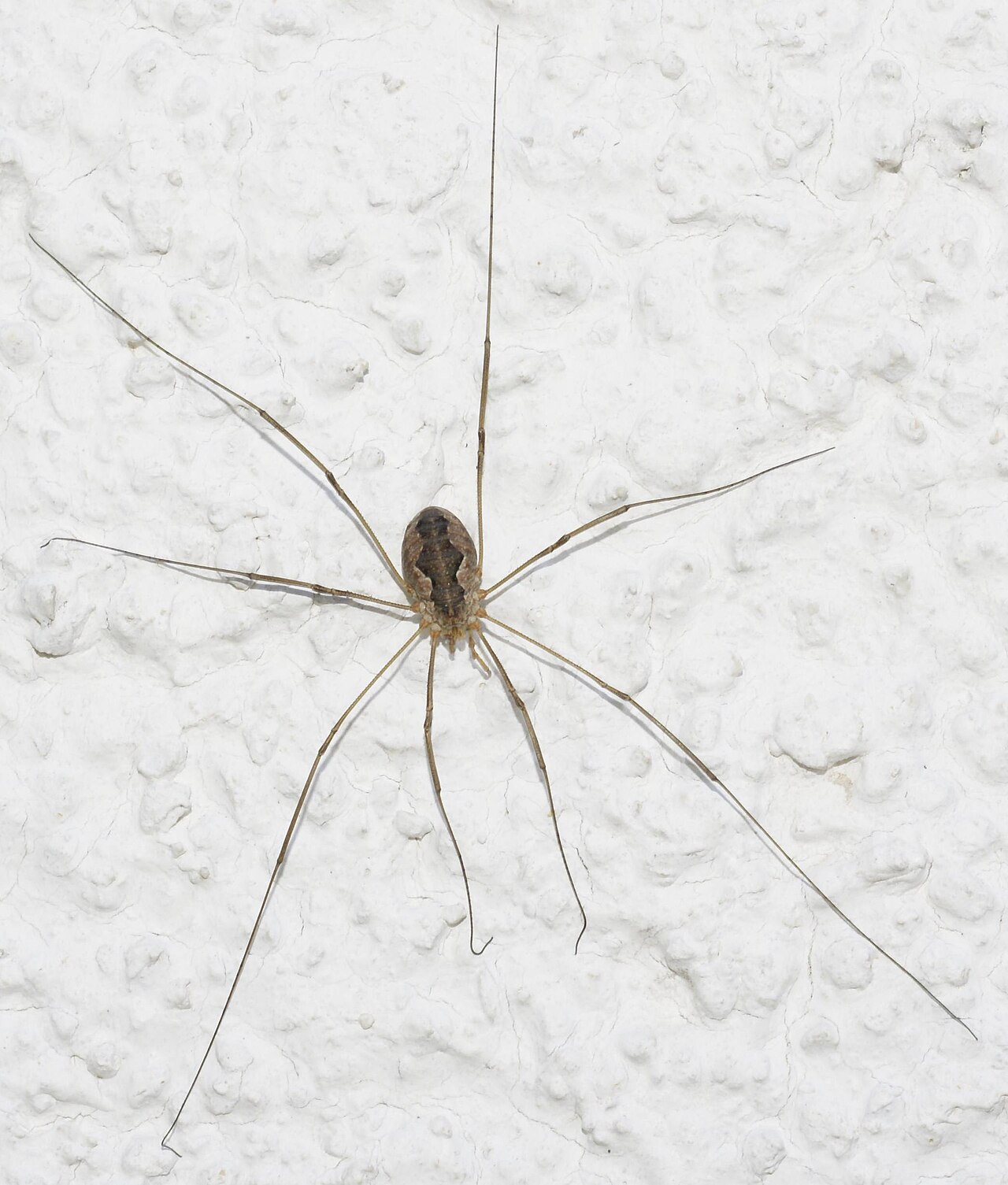
Harvestmen are the single most common spider lookalike in North America and the reason the name daddy longlegs confuses two unrelated groups. The body is one fused oval with no waist, carrying a pair of eyes on a small turret in the middle. Spiders always show a clear constriction between the front and rear body sections.
They have no silk glands, so a harvestman never builds a web, and no venom glands, so the claim that they are the most venomous animal with a mouth too small to bite is simply false. They scavenge dead insects, fungus, and bird droppings, and gather in dense clusters on shaded foundation walls in late summer. Numbers peak at harvest time, which is where the name comes from, and the songbirds listed under birds that eat spiders take them from those clusters all season. For a closely related question, see our guide to 5 spiders that look like brown recluses. For a closely related question, see our guide to 5 spiders that look like brown recluses. For a closely related question, see our guide to 5 spiders that look like brown recluses.
Camel Spiders: Ten Legs, No Venom
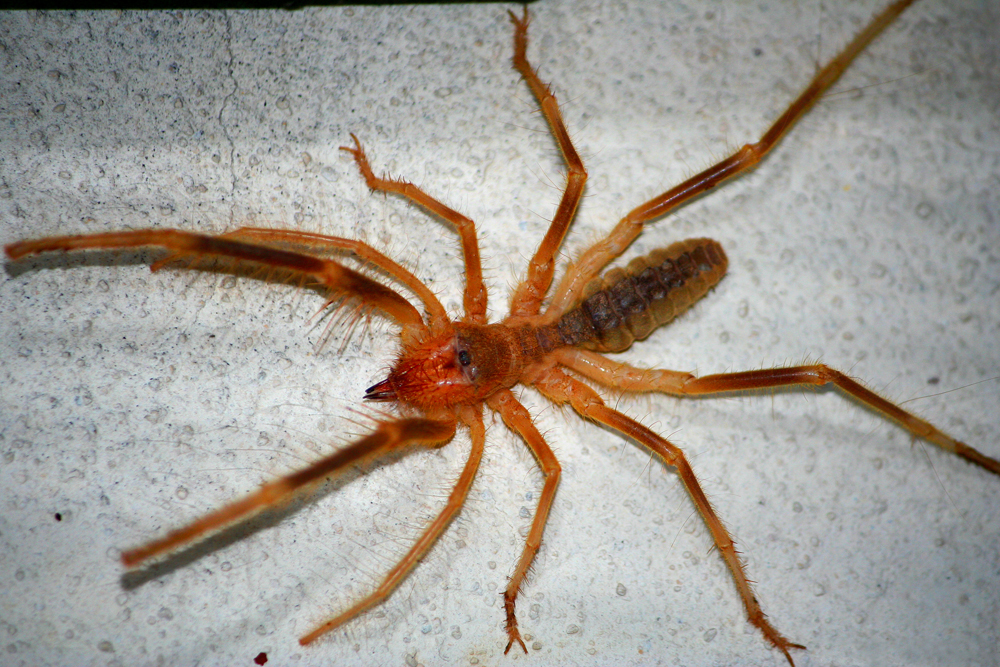
Solifugae look like spiders crossed with scorpions and are neither. The front pair of leg like limbs are pedipalps used as feelers, giving the impression of ten legs, and the jaws are the largest relative to body size of any arachnid. US species live in desert and arid shrubland from Texas and New Mexico west to California.
They are nocturnal, extremely fast, and reach 0.4 to 2.0 in (1 to 5 cm), far short of the exaggerated sizes in circulated photos. They run toward moving shadows for cover rather than attack, which is how the chasing stories started. No species in the United States has venom.
Ticks: Eight Legs, Flat Seed Shaped Body
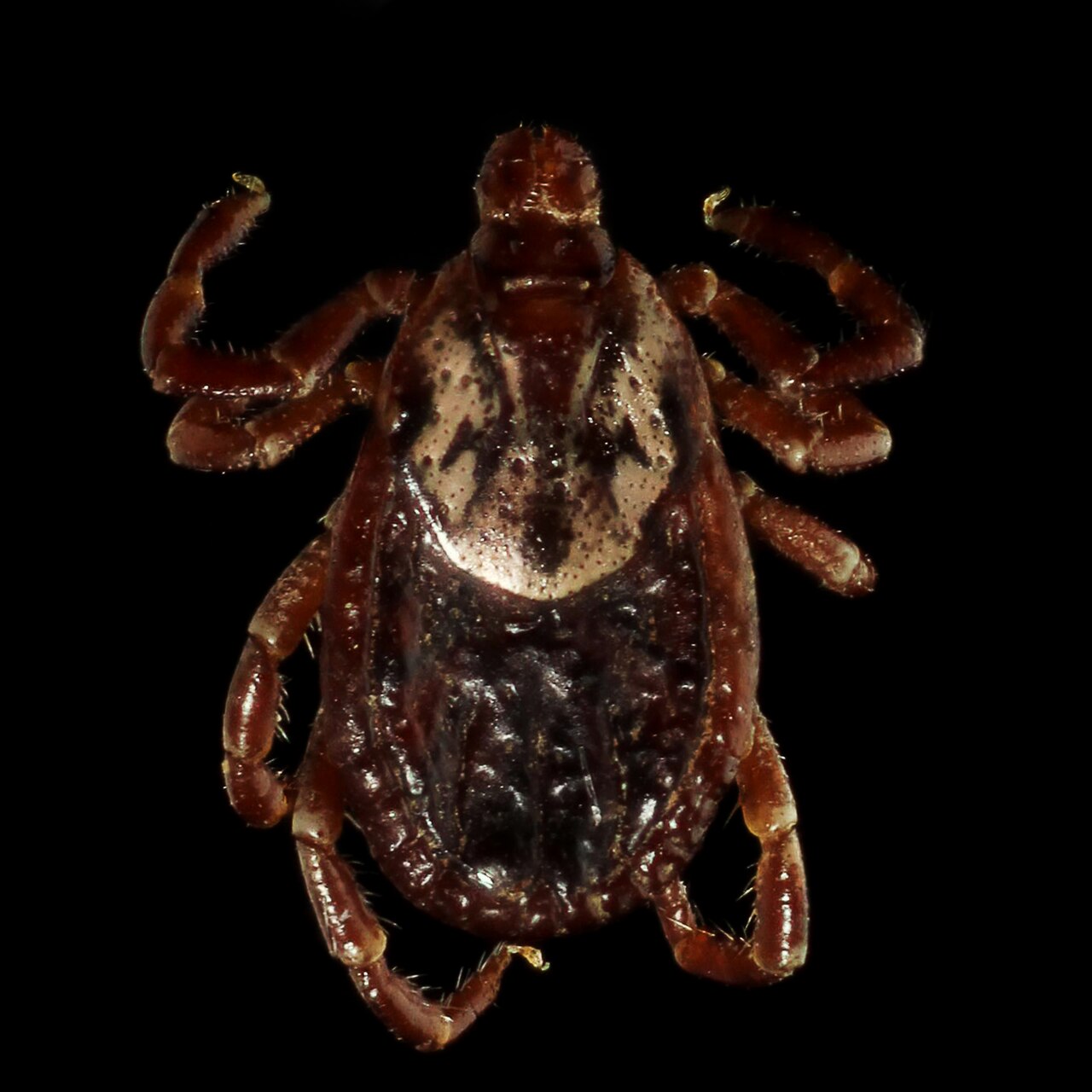
An unfed tick is flat, oval, and about the size of an apple seed, with eight short legs clustered at the front and no distinct head. People mistake them for tiny spiders on clothing, pet bedding, and bathroom tile. A fed tick swells into a gray bean shape and loses any resemblance.
The American dog tick is the species most often found on people and pets east of the Rockies, along with the blacklegged tick and the lone star tick. All three climb grass stems and wait with front legs extended. Check behind the knees, the hairline, and the waistband after any walk in tall vegetation, and remove anything attached the same day.
Is There a Stink Bug That Looks Like a Spider?
There is no stink bug with eight legs, but three situations produce the search. The first is a stink bug nymph, especially a brown marmorated stink bug nymph, whose dark round body and long splayed legs read as a spider on a wall at a distance. The second is a leaf footed bug nymph, which has thin flared hind legs and moves with a spider like crawl.
The third is the spiny backed orbweaver, a small hard shelled spider with pointed spines that people describe as a spider that looks like a stink bug or a crab. If the body shows three sections and wing pads along the back, it is a true bug. More examples of that confusion sit under bugs that look like stink bugs.
Whip Scorpions and Pseudoscorpions
Whip scorpions, also called vinegaroons, reach 1.0 to 3.0 in (2.5 to 7.6 cm) and walk on six legs while probing with two long antenna like front limbs and trailing a thin whip tail. They live under rocks and logs across Texas, New Mexico, Arizona, and Florida. There is no stinger; the defense is a spray of concentrated acetic acid aimed with the tail base.
Pseudoscorpions are the opposite problem, at 0.1 in (2 to 3 mm) they are usually dismissed as dirt until the pincers move. They turn up in books, bathroom corners, and under bark, hunting booklice and dust mites. Both groups are harmless indoors and need no treatment, unlike the cases covered under bugs that look like cockroaches.
Spider vs Harvestman vs True Bug: The Three Second Check
Work through three features in order and the group falls out before the species matters. Waist first: a visible pinch between two body sections means spider or whip scorpion. One smooth oval means harvestman or tick. Three sections with wings or wing pads means an insect, and that includes every stink bug.
Eyes next. Spiders carry six or eight eyes in a cluster on the front of the head, harvestmen have two on a central turret, and ticks show none that you can see. Last is movement: web building and silk trailing are spider only behaviors. Flat bodied indoor finds that are neither are usually covered under bugs that look like silverfish.
Related reading: spiders that look like black widows.
Related reading: spiders that look like brown recluses.
Frequently Asked Questions
What is in a stink bug?
Behind the shield shaped back sits a standard insect body: three segments, six legs, two wings folded flat, and a piercing mouthpart used to drain plant juices. The odor comes from paired glands on the underside of the thorax that release aldehydes when the insect is handled or crushed.
Which spiders eat stink bugs?
Orbweavers, especially large garden orbweavers, take the most stink bugs because their webs intercept clumsy autumn flyers. Jumping spiders and wolf spiders catch nymphs on foliage. Many predators reject adults after one taste, which is why birds are inconsistent too, as detailed under birds that eat stink bugs.
Is it okay to pick up a stick bug?
Yes. Walking sticks are harmless to handle in the United States, though a few species can release a mildly irritating spray, so avoid touching your eyes afterward. Let it walk onto your hand rather than gripping it, because the legs detach easily and do not always regrow.
What is the most hated bug?
Surveys of American households put cockroaches, bed bugs, and mosquitoes at the top, with the brown marmorated stink bug close behind in the Mid Atlantic because of autumn home invasions. Harvestmen and camel spiders rank high on fear but low on actual complaints, since neither damages anything.
Does a spider like stink bug leave a bite mark?
No. Stink bugs cannot pierce human skin, and marks blamed on them are usually flea bites, tick attachment sites, or a reaction to the insect’s defensive secretion, which can irritate skin and eyes on contact. For removal and exclusion, see how to get rid of stink bugs.