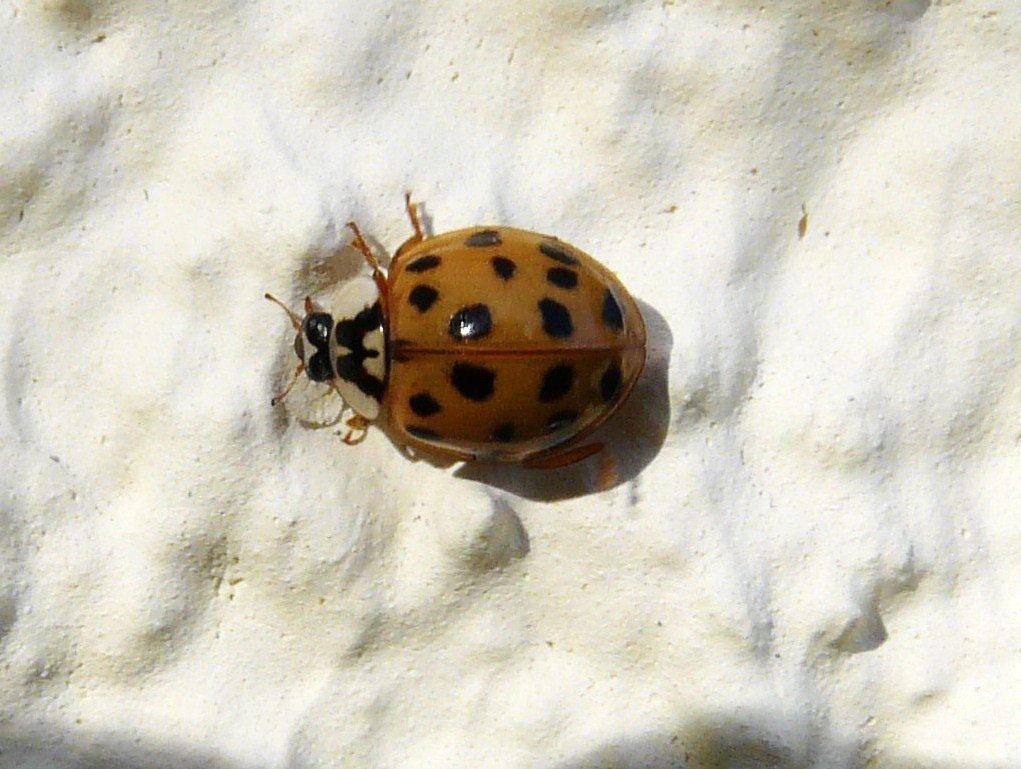
Orange Ladybug Meaning: Symbolism and the Real Species
An orange ladybug is traditionally read as a sign of creativity, energy, joy, and good fortune arriving through effort rather than luck, and like ladybugs generally it is taken as a positive omen with no negative reading attached. Orange adds warmth, enthusiasm, and a push toward action to the general ladybug symbolism of luck and protection.
The practical fact underneath is worth knowing before reading too much into it. Most orange ladybugs in North America are Asian lady beetles, an introduced species that gathers on houses in autumn, bites occasionally, and stains surfaces with a yellow fluid. That does not make the symbolism wrong, but it does mean an orange ladybug indoors in October is a seasonal event rather than a rare visitation. This guide covers both sides.
An orange ladybug traditionally means creativity, energy, joy, and good fortune earned through effort, and carries no negative reading. Most orange ladybugs in North America are introduced Asian lady beetles rather than native species, which is why they appear indoors in autumn in large numbers. They are still considered lucky.
| Aspect | Reading or Fact |
|---|---|
| Orange ladybug | Creativity, energy, joy, fortune earned |
| Lands on you | Good luck; a wish worth making |
| Indoors in autumn | Asian lady beetle seeking shelter |
| Red ladybug | Luck, love, protection |
| Yellow ladybug | Optimism, new beginnings |
| Black ladybug | Endings, transitions, hidden change |
| Spot count | Species trait, not age or luck |
What Does an Orange Ladybug Mean Spiritually?
Creativity and energy, layered onto the general ladybug meanings of luck, protection, and answered wishes. Orange in colour symbolism sits between red’s passion and yellow’s optimism, and is read as enthusiasm, warmth, sociability, and the impulse to start something.
The most common specific reading is that an orange ladybug marks a creative project or a new direction that is worth pursuing, and that the fortune involved will come through work rather than arrive unearned. That distinguishes it slightly from the red ladybug’s more passive luck reading.
Ladybug symbolism as a whole is unusually consistent and unusually positive across European traditions, and none of it turns negative for any colour. The name itself is religious in origin: ladybird and ladybug derive from Our Lady, with the seven spots of the common European species linked to the seven sorrows of the Virgin Mary. The guide to a ladybug landing on you covers the encounter itself.
Are Orange Ladybugs Lucky?
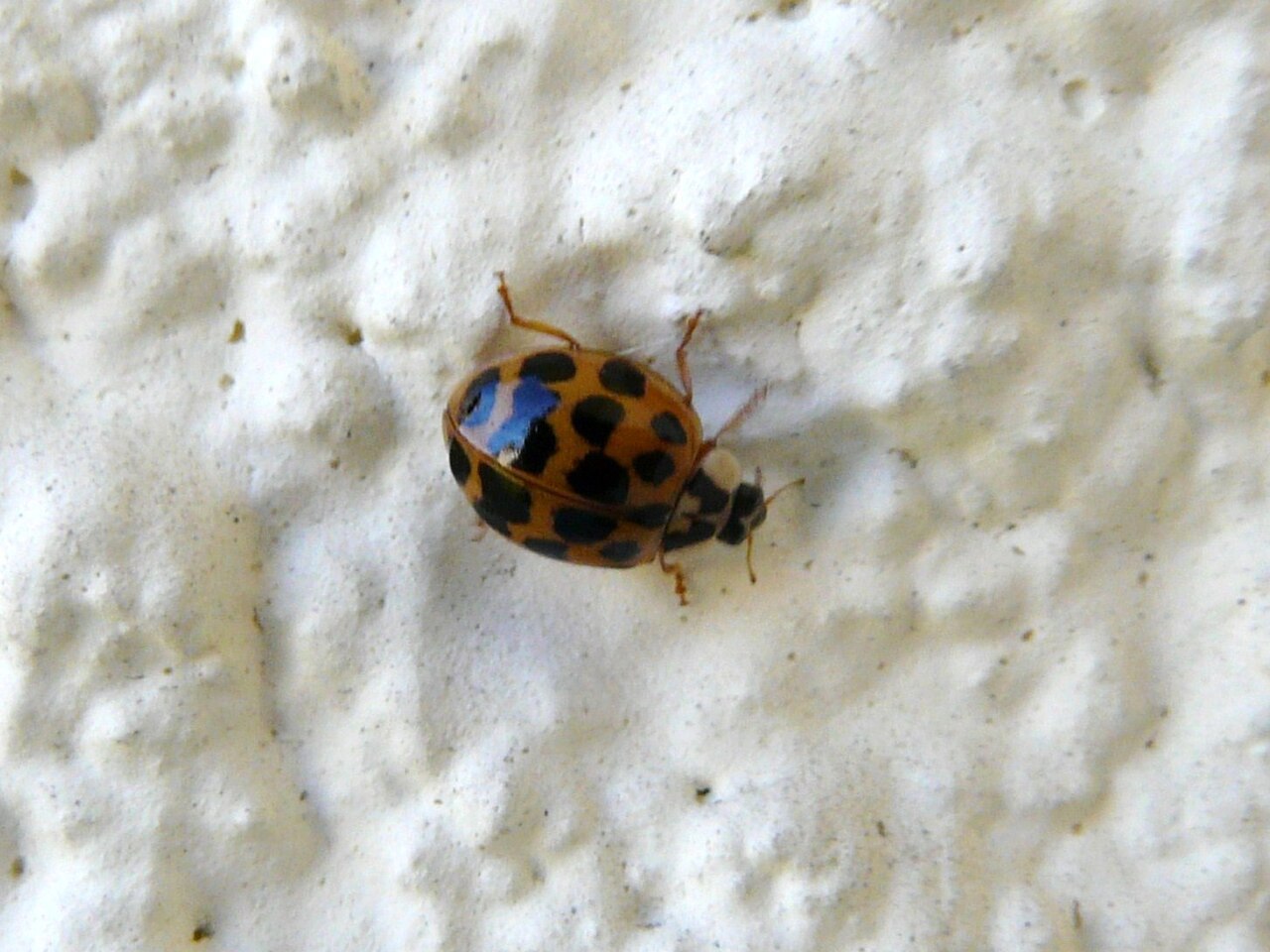
Yes, in every tradition that addresses colour. There is no version of the folklore in which an orange ladybug is unlucky, and the general beliefs apply to it: a ladybug landing on you brings good fortune, killing one brings bad luck, and one that lands and stays is worth making a wish on.
Specific customs attach to the departure. In several European traditions the direction a ladybug flies off in indicates where good fortune comes from, and the number of seconds it stays or the number of spots is read as the number of months of luck or the number of wishes granted. These vary widely between regions and contradict each other freely.
Killing one deliberately is the one clearly negative act in the folklore, and the belief is old and widespread enough to have practical value: ladybugs are among the most useful insects in a garden, and a tradition that discourages squashing them is doing real work. The orange ladybug identification guide covers which species you are actually looking at.
Is an Orange Ladybug Rare?
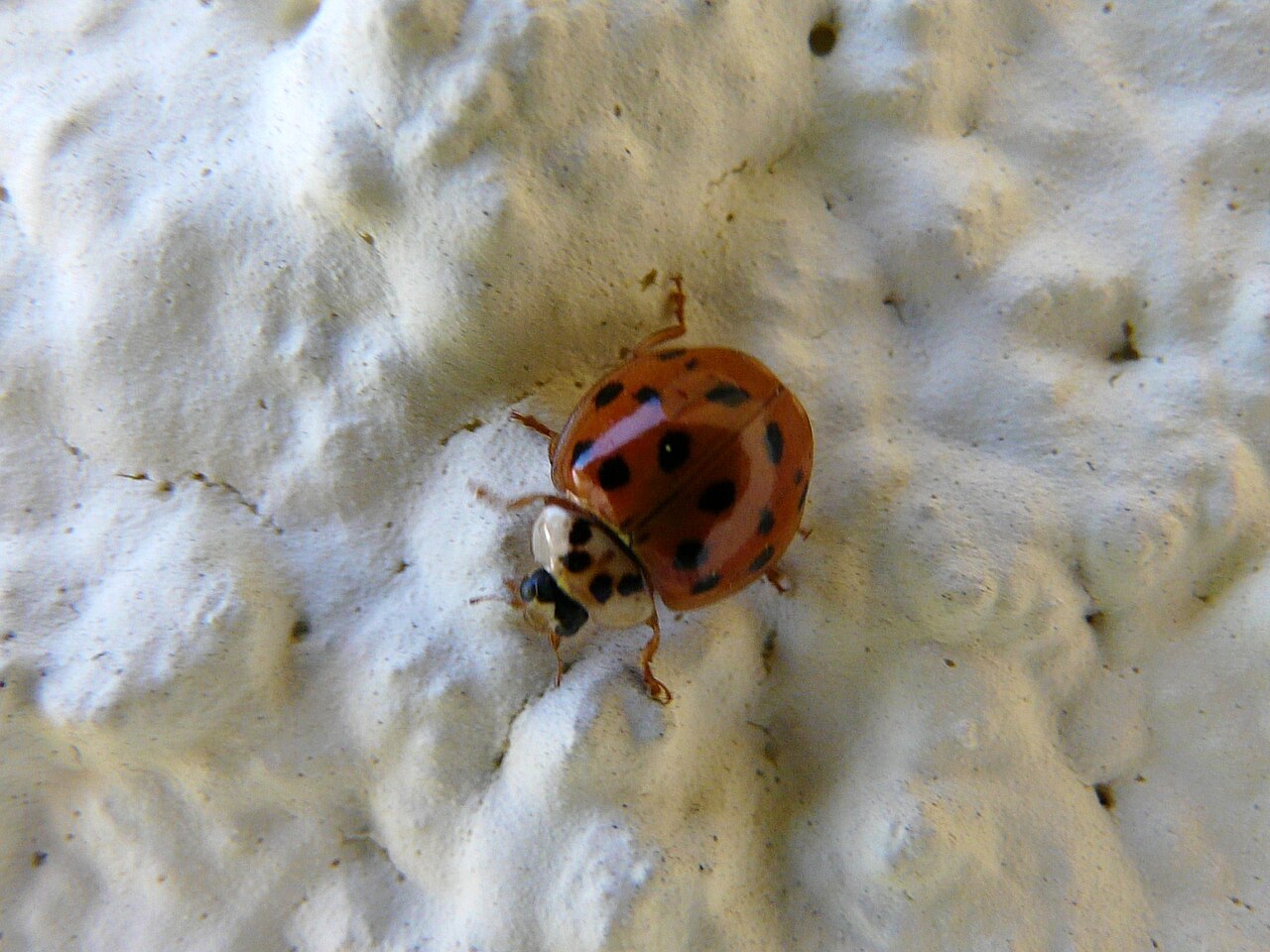
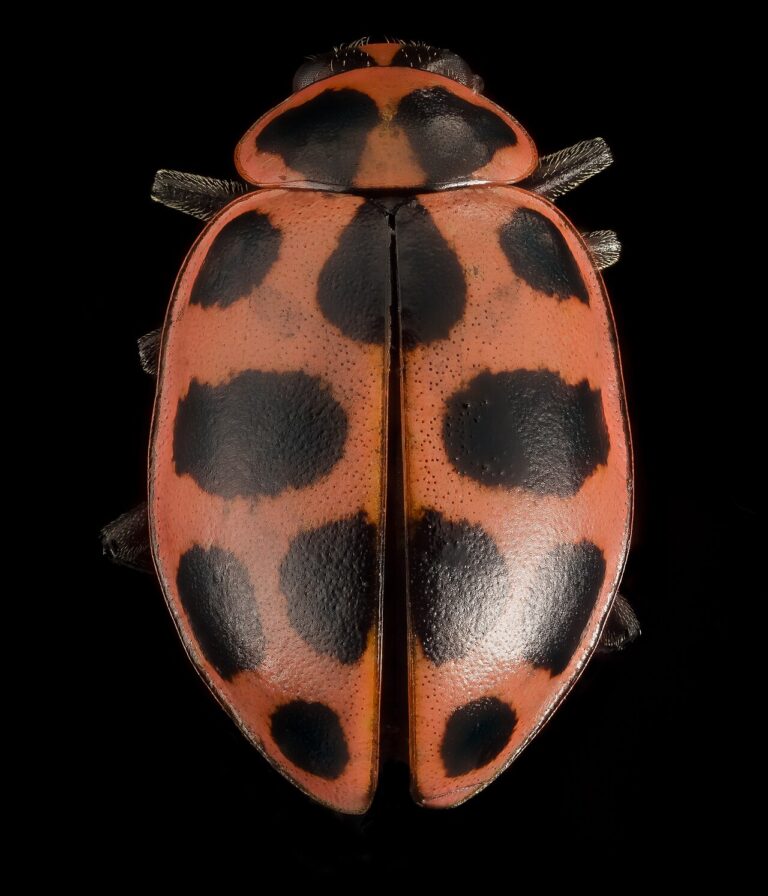
No, and this is where the symbolism and the biology diverge. Orange ladybugs are among the most commonly seen in North America, because the Asian lady beetle, introduced repeatedly through the twentieth century for aphid control, is now abundant across most of the continent and ranges from pale orange through to deep red.
Genuinely native orange species exist too, including the polished lady beetle and several others, but the beetle gathering on a sunlit wall in October in numbers is nearly always Harmonia axyridis. Colour alone does not identify a species in this group, which is the single most common misunderstanding about ladybugs.
The identifying feature is the pronotum, the shield behind the head. Asian lady beetles have a black M or W shape on a white pronotum, and spot counts ranging from zero to twenty-two on the same species. Native ladybugs have different pronotal markings, and the Asian lady beetle vs ladybug guide covers the comparison in detail.
Why Do Orange Ladybugs Come Indoors?
To overwinter. Asian lady beetles seek sheltered crevices as temperatures drop, and in their native range that means cliff faces and rock outcrops. In North America they use buildings instead, orienting toward tall sunlit surfaces, which is why light-coloured houses on ridges and at woodland edges take the worst of it.
They gather on the sunny south and west walls on warm autumn afternoons, then work into gaps around windows, siding, soffits, and vents, ending up in wall voids and attics. They do not feed or breed indoors and emerge on warm days through winter, appearing at windows and lights.
Aggregation pheromones concentrate them, which is why a house that gets them one year gets them every year: the chemical marker persists and new beetles orient to it. Sealing gaps before autumn is the only reliable prevention, and vacuuming with a nylon stocking rigged in the hose is the usual removal method. The ladybug infestation guide covers the practical response.
Do Orange Ladybugs Bite?
Asian lady beetles do, occasionally, which is the main practical difference between them and native ladybugs. The bite is a small pinch that may leave a red mark and does not break skin meaningfully, is not venomous, and transmits nothing. It happens most often in autumn when beetles are aggregating and land on skin.
The bigger nuisance is the reflex bleeding. When threatened, the beetles release a yellow-orange fluid from their leg joints containing alkaloids, which smells strongly, tastes foul to predators, and stains fabric, paint, and light-coloured surfaces. It is the reason a squashed one leaves a lasting mark.
Some people develop allergic reactions to heavy indoor infestations, with reported symptoms including rhinitis, conjunctivitis, and asthma exacerbation, though this requires large numbers over time rather than a single beetle. Dogs that eat large numbers can develop mouth ulceration. Native ladybugs cause none of these problems. The guide to whether ladybugs bite covers the detail.
What Do Other Ladybug Colours Mean?
Red is the classic and carries the strongest luck reading, along with love, protection, and answered wishes. It is the colour most of the traditional folklore was built around, since the seven-spot ladybird of Europe is red.
Yellow is read as optimism, joy, and new beginnings, and is often taken as encouragement at the start of something. Orange sits between red and yellow with creativity and energy. Black ladybugs, which genuinely exist and are often mistaken for other beetles, are read as endings, transitions, and change happening out of sight, without the ominous edge that black usually carries.
Pink, brown, grey, and white ladybugs all occur and have their own recent readings, none of them traditional. What none of the colours mean is age: the persistent belief that spot count indicates how many years a ladybug has lived is simply false, since spot number is fixed by species and never changes. The yellow ladybug guide covers the identification.
Should You Let a Ladybug Stay in Your House?
Folklore says yes emphatically, and killing one is the one act consistently held to reverse the luck. A single ladybug in a house over winter causes no harm at all: it does not feed, breed, bite meaningfully, or damage anything, and it will find its way out in spring.
Large numbers are a different question. Hundreds of beetles in a wall void produce odour, staining, and allergen build-up, and that is worth dealing with even if you like the individual insects. The distinction most people settle on is tolerating the ones they see and excluding the rest by sealing gaps.
Putting one outside in midwinter kills it, which is worth knowing before doing the apparently kind thing. A beetle released into freezing air has no time to find shelter. If you want it out of the room, a jar in an unheated garage, shed, or porch is a better outcome than the front step.
How Long Do They Live?
About a year for the generation that overwinters, and a few weeks to a few months for those that emerge and breed within the same season. The full cycle from egg to adult takes four to eight weeks depending on temperature and how many aphids are available.
The overwintering generation is the one people meet indoors. Beetles that emerge in late summer do not breed, enter a dormant state called diapause, and spend the winter in shelter before mating the following spring, which is why a beetle appearing at a window in January is not lost so much as briefly awake.
Within a season an individual may eat several thousand aphids, with the larval stage accounting for a large share despite lasting only one to three weeks. That is why finding the spiky alligator-like larvae on an infested plant is better news than finding the adults, and why spraying at that point undoes the work already underway.
Are Orange Ladybugs Good for the Garden?
Very. Asian lady beetles are voracious aphid predators, which is exactly why they were introduced repeatedly for biological control from the early twentieth century onward, and both adults and larvae consume large numbers of aphids, scale insects, and mites.
The complication is that they were too successful. Asian lady beetles outcompete and directly prey on native ladybug species, and several formerly common natives including the nine-spotted ladybug, once the New York state insect, have declined dramatically over the same period during which the introduced species spread. Causation is debated but the correlation is strong.
They also damage fruit. Asian lady beetles feed on ripening grapes, apples, and berries in autumn, and beetles harvested with grapes taint wine, a recognised problem called ladybug taint in the wine industry. This is the standard case study in why classical biological control introductions are now regulated far more tightly than they were, and the Lost Ladybug Project at Cornell University (cornell.edu) collects public photo records specifically to track how the native species are faring. The ladybug guide covers the natives worth encouraging instead.
Frequently Asked Questions
What does an orange ladybug mean spiritually?
Creativity, energy, joy, and fortune earned through effort, layered on the general ladybug meanings of luck and protection. Orange sits between red’s passion and yellow’s optimism in colour symbolism.
Are orange ladybugs lucky?
Yes. No tradition treats any ladybug colour as unlucky. A ladybug landing on you brings good fortune, and killing one deliberately is the one act consistently held to reverse it.
Is an orange ladybug rare?
No. Most orange ladybugs in North America are introduced Asian lady beetles, which are abundant and range from pale orange to deep red. Colour alone does not identify the species.
Why do orange ladybugs come indoors?
To overwinter. They orient to tall sunlit surfaces in autumn and work into gaps around windows, siding, and vents. Aggregation pheromones mean a house affected once is affected every year.
Do orange ladybugs bite?
Asian lady beetles occasionally deliver a small pinch that does not break skin and carries nothing. The bigger nuisance is the yellow defensive fluid they release, which stains permanently.
What do other ladybug colours mean?
Red means luck, love, and protection; yellow means optimism and new beginnings; black means endings and transitions without the usual ominous edge. Spot count means nothing about age.
Should you let a ladybug stay in your house?
A single one causes no harm and folklore says leaving it is lucky. Do not put it outside in freezing weather, which kills it; an unheated garage or shed is a better release point.

Similar Posts
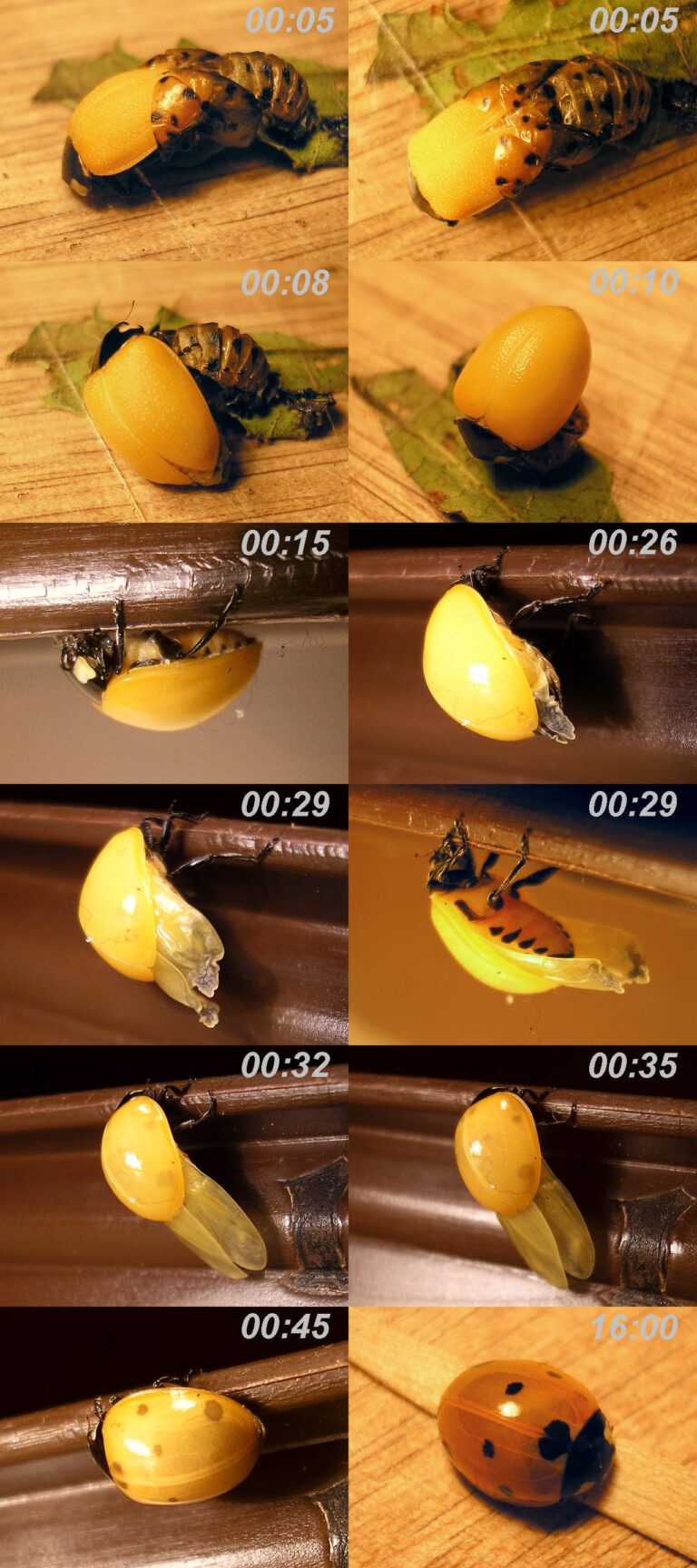
Ladybug Life Cycle: All Four Stages Explained
Egg to adult takes four to eight weeks. What the alligator-like larva looks like, why gardeners kill it by mistake, and how to support the full cycle in a garden.
Mole Poop: Why You’ll Never Actually See It
Mole poop is rarely seen since moles live entirely underground. Better identification through molehills, why moles are beneficial, and management options.
Chipmunk Sounds: What the Chip, Chuck, and Trill Mean
Chipmunk sounds decoded: the birdlike chip warns of hawks, the low chuck tracks ground predators, and the trill means run. Plus why night noises are never a chipmunk.
Green Ladybug: Why It’s Almost Never a True Ladybug
A green ladybug is almost always a tortoise beetle or other leaf beetle, not a true ladybug. Identification, the flattened-edge check, and beneficial vs pest.
Iguana Poop: Identification, Risks, and Cleanup
Iguana poop is a large dark dropping with a white cap, often mistaken for dog or raccoon waste. The Salmonella and pool risks, how to remove the stains, and how to deter iguanas.
Eastern Tailed-Blue Butterfly: ID, Host Plants, and the False Head
A thumbnail-sized blue butterfly that lives in clover lawns and tricks birds with a false head made of wing tails. Identification, host plants and ant partners.