House Earwig: Why They Get In and How to Remove Them
A house earwig is almost always the European earwig (Forficula auricularia), a half inch brown insect with forceps at the rear end that wanders indoors looking for moisture rather than for food or a nest. It does not bite in any meaningful sense, it carries no disease, and it cannot live and breed inside a dry heated home. Finding a few near a basement drain or a bathroom baseboard is a humidity signal, not an infestation.
That said, a steady stream of them means something outside the wall is holding water, usually mulch against the foundation, a clogged gutter, or a leaking hose bib. The sections below cover identification, why they suddenly appear, what actually kills them indoors, which deterrents hold up and which are folklore, and the case for leaving the ones in the garden alone.
House earwigs are harmless moisture seeking insects, usually European earwigs, that enter through gaps at ground level. They do not infest homes, bite dangerously, or crawl into ears. Vacuum the ones you see, dry out damp areas, seal foundation gaps, and pull mulch back 12 inches from the wall to stop new ones entering.
What Is a House Earwig?
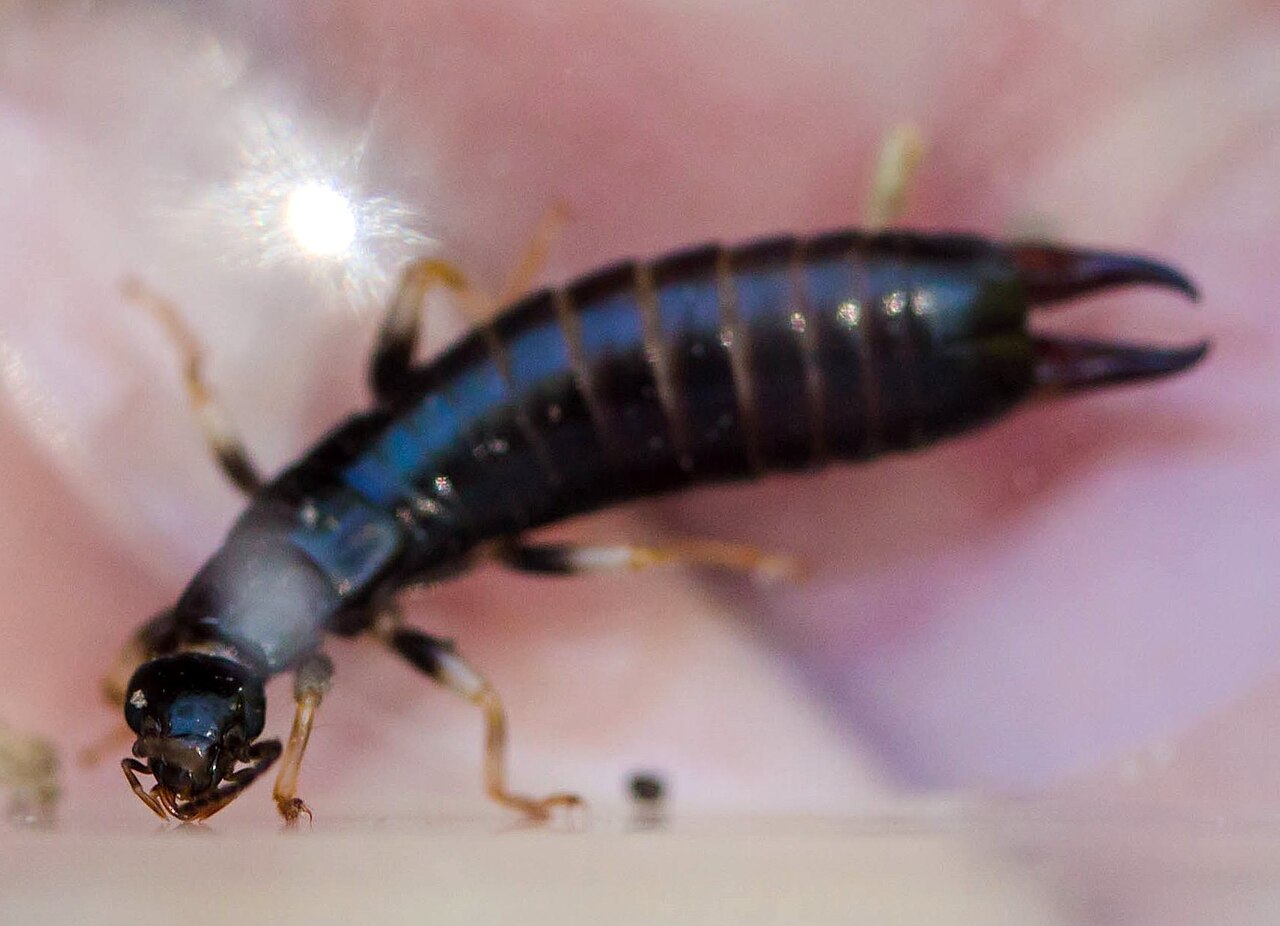
The house earwig is not a distinct species but a common name for whichever earwig turns up indoors, and in the United States that is overwhelmingly the European earwig. Introduced from Europe around 1907 and now established coast to coast, it is the reddish brown, flattened insect about 0.5 to 0.75 inches (13 to 19 mm) long with a pair of pincers called cerci at the tip of the abdomen.
Two other species show up regularly. The ring legged earwig (Euborellia annulipes) is darker, wingless, and more common in the southern states, and the striped earwig (Labidura riparia) is larger and paler with a Gulf Coast distribution. All three behave the same way around a house.
Earwigs belong to the order Dermaptera, which has around 2,000 species worldwide and roughly 20 in North America. They are nocturnal, they flatten into any crack that fits, and they are unusual among insects for genuine maternal care: a female guards her eggs and cleans them of fungus until the young disperse.
Is It Normal to Have Earwigs in Your House?
Yes, seeing a handful of earwigs indoors is completely normal, especially in late summer and after heavy rain. They are outdoor insects that crossed a threshold by accident, and the typical count is a few individuals in a week rather than a population.
Interior sightings cluster in predictable places: basements, crawl spaces, ground floor bathrooms, laundry rooms, the gap under an exterior door, and the inside of a kitchen sink cabinet where a supply line sweats. All of those share one property, which is available moisture.
Dozens at once is a different conversation. That volume usually means a large outdoor population directly against the house, most often in a mulch bed, a woodpile, or leaf litter in a window well, with an open entry point nearby. The insects are still not damaging the house, but the conditions that produced them are worth fixing.
Why Do I Have Earwigs All of a Sudden?
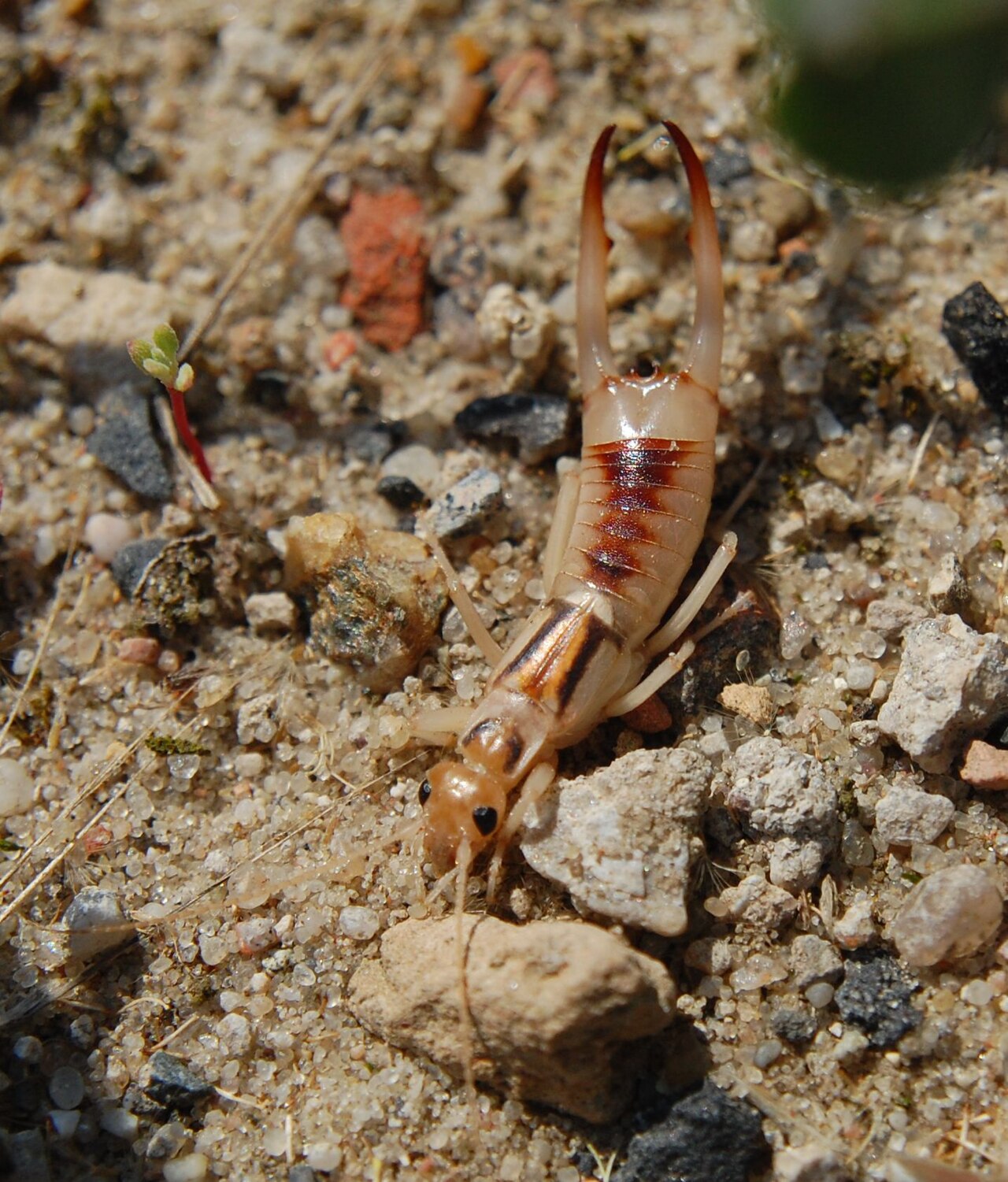
Sudden appearances follow weather. A stretch of heavy rain floods the shallow soil burrows where earwigs shelter and pushes them upward and outward, and a sudden dry spell does the same thing in reverse by driving them to hunt for damp ground, which your foundation slab provides.
Late summer is the peak because the year’s nymphs have matured by then and the population is at its annual maximum. Outdoor lighting compounds it: earwigs are drawn to porch and landscape lights, gather on the siding beneath them, and then find the door gap. Switching exterior bulbs to warm yellow or sodium tone reduces the gathering noticeably.
Anything that raises soil moisture against the wall increases the odds. Sprinkler heads aimed at the foundation, gutters dumping at the corner, thick mulch, ground cover plantings, and firewood stacked against the siding are the usual suspects. Earwigs in the house are most useful read as a sign that water is not moving away from the building.
House Earwig Identification at a Glance
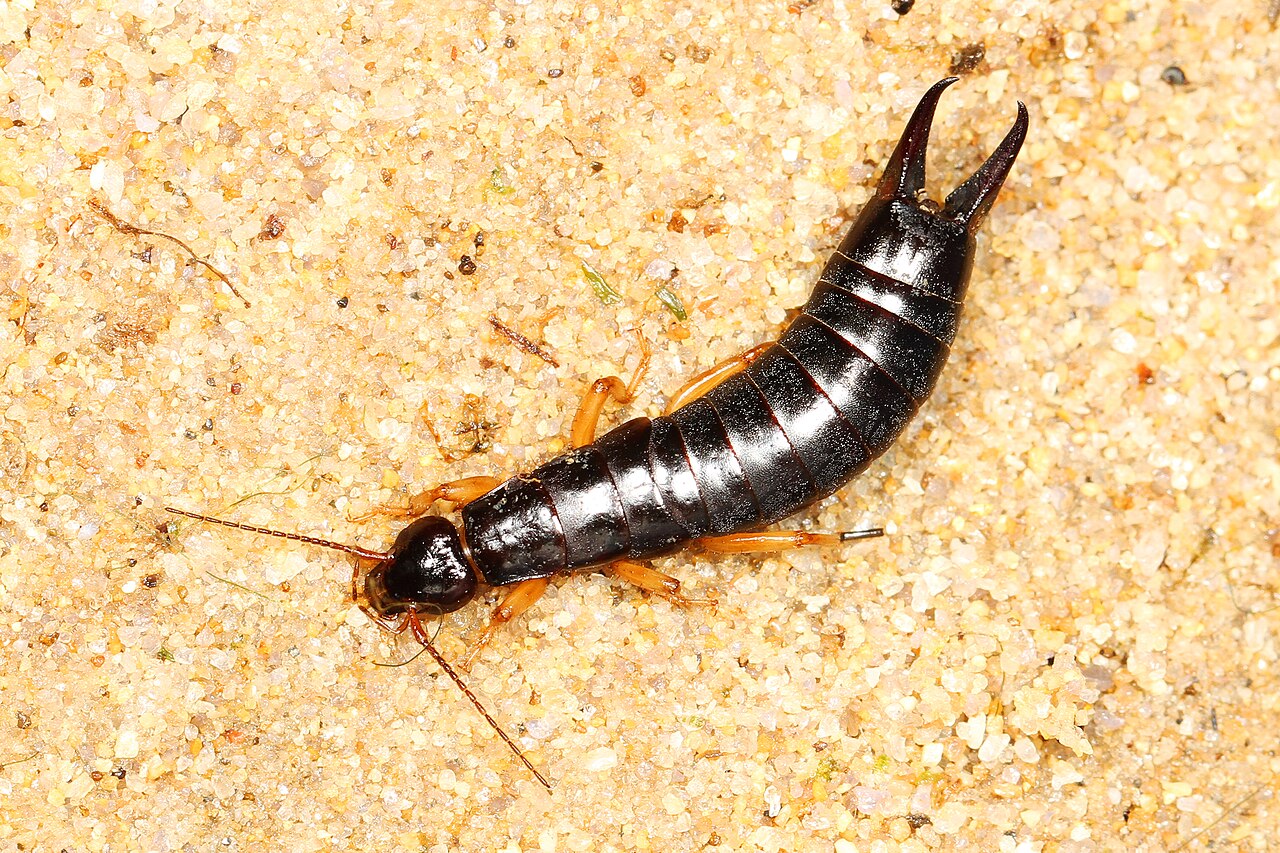
The pincers give it away instantly, but their shape also tells you the sex. Males carry curved, caliper-like forceps, while females have straighter, nearly parallel ones. Neither can break skin on a person with any reliability.
| Feature | House earwig | What it is not |
|---|---|---|
| Length | 0.5 to 0.75 in (13 to 19 mm) | Silverfish are shorter and tapered |
| Color | Reddish brown, darker head | Rove beetles are black and glossy |
| Rear end | Prominent forceps | Cockroach nymphs have thin cerci, no pincers |
| Wings | Short leathery covers, rarely flies | Not a beetle despite the resemblance |
| Activity | Night, hides in cracks by day | Not attracted to open food |
| Speed | Quick scuttle, no jumping | Springtails jump when disturbed |
| Where found | Damp floors, drains, door gaps | Rarely upstairs or in dry rooms |
Are House Earwigs Dangerous?
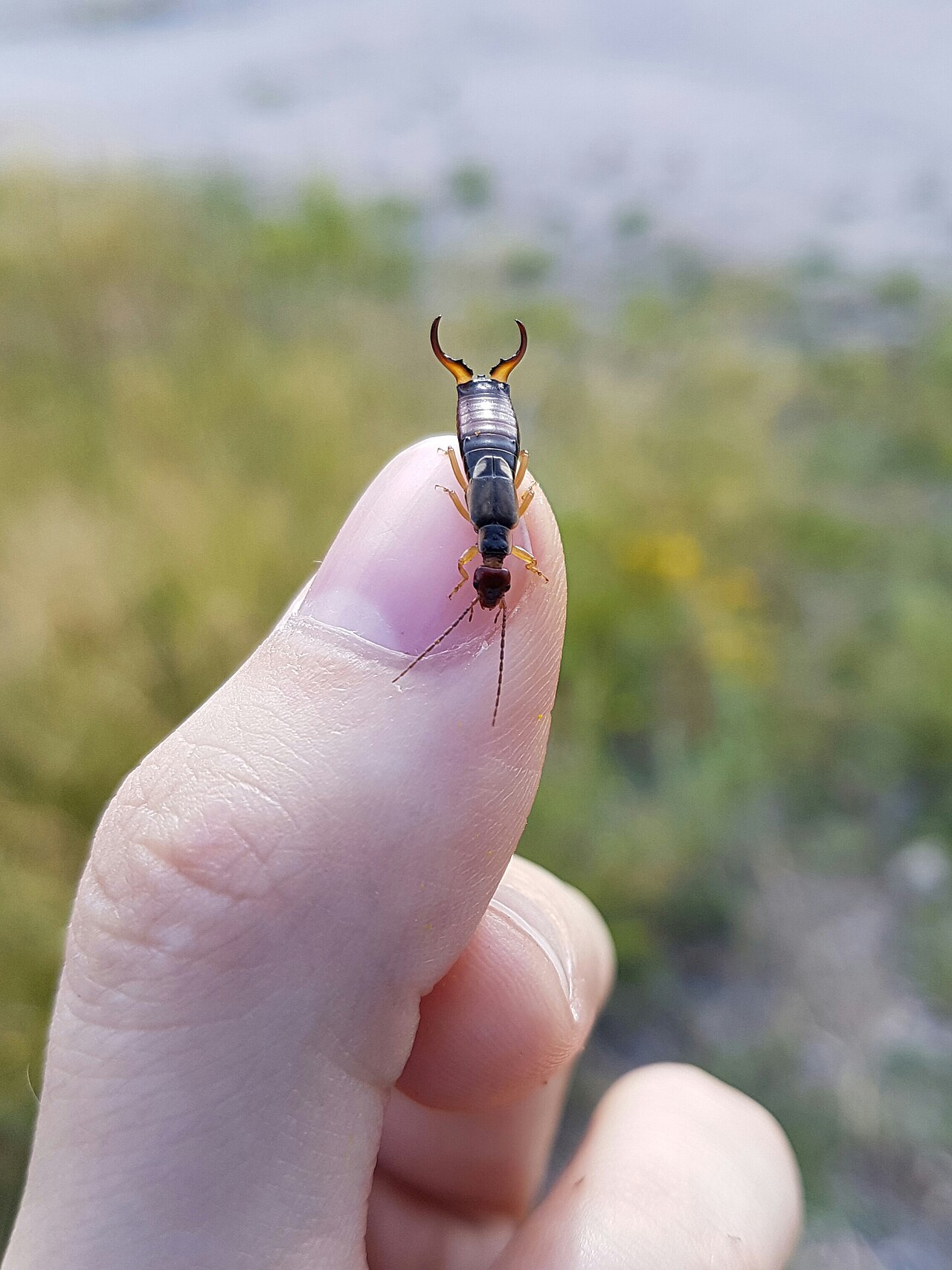
No. House earwigs are not venomous, they transmit no disease, and they do not damage structures, wiring, fabric or stored food. The forceps are used for defense against other insects, for holding prey, and during courtship, and a large male pinching a fingertip produces a pressure sensation at most.
A pinch can occasionally break the skin if you trap one against your hand, and the site may sting briefly. It is not a bite, since earwigs cannot bite people with their mouthparts, and it needs nothing more than soap and water. Our page on what an earwig bite actually is works through the difference and the rare cases that warrant attention.
The disproportionate fear this insect generates comes from its name and the old story attached to it, which has no basis in fact. Earwigs do not seek out ears, do not burrow into brains, and do not lay eggs in a sleeping person. The name traces to an Old English word for the insect, and the folklore grew around it afterward.
Do Earwigs Lay Eggs Indoors?
Very rarely, and almost never successfully. Earwigs need damp soil or decaying organic matter to nest, so a female needs a crawl space with an exposed dirt floor, a chronically wet basement corner, or a planter full of moist potting soil to have any chance indoors.
The normal cycle runs outdoors. A female digs a shallow chamber in fall, lays 20 to 80 eggs, and overwinters with them, cleaning each egg individually to prevent mold. Eggs hatch in spring, and the nymphs pass through four to five molts over roughly ten weeks before reaching adult size. The immature stages look like pale, softer versions of the adult, which our guide to baby earwigs illustrates.
The practical consequence is that indoor earwigs are immigrants, not residents. Kill every one in the house and more will appear next week if the outdoor conditions have not changed, and none will appear at all if they have. That single fact should drive your entire strategy.
What Kills Earwigs in the House Fast?
A vacuum is the fastest and cleanest answer for the ones you can see. Suck them up, then empty the canister or bag outside immediately, since a crushed earwig releases a distinctly unpleasant defensive odor. Soapy water in a spray bottle kills on contact for the ones tucked into a corner.
Diatomaceous earth works well in dry, undisturbed places such as behind the washer, along a basement sill plate, or inside a crawl space perimeter. Use the food grade product, apply a thin film rather than a heap, and understand that it stops working the moment it gets wet, which is a real limitation against a moisture loving insect.
Sticky traps along baseboards catch the night traffic and tell you where they are entering. For outdoors, a rolled damp newspaper or a shallow tuna can with half an inch of vegetable oil placed in the mulch bed collects impressive numbers overnight and is the traditional remedy for good reason. The University of Minnesota Extension publishes practical guidance along these lines.
What Is the Best Earwig Killer for Indoor Use?
For the interior, the best treatment is usually no chemical at all. The population is not reproducing inside, so spraying a baseboard treats individuals rather than a source and leaves residue in living space for no lasting gain.
Where a barrier is warranted, the pyrethroid products labeled for crawling insects are the standard choice, applied as a narrow band at the exterior foundation, around door thresholds and at utility penetrations. Read the label for interior clearance, keep it out of reach of pets and children, and treat the outside rather than the inside wherever possible.
Boric acid dust in wall voids and under appliances is a reasonable low toxicity option for a persistent problem. Foggers and bug bombs are the wrong tool entirely: they do not reach the cracks earwigs hide in and they fill the home with pesticide to no purpose. If sightings continue after sealing and drying, a licensed inspection is cheaper than three rounds of guessing.
What Do Earwigs Hate the Most?
Dryness. Earwigs lose body water quickly and cannot survive long in low humidity, which is why a dehumidifier in a damp basement outperforms any spray. Getting relative humidity below roughly 50 percent makes the space genuinely inhospitable rather than merely unattractive.
They also avoid bare, sun exposed ground. A 12 inch band of gravel or bare soil between the mulch bed and the foundation is one of the most effective single changes a homeowner can make, because it removes the damp, shaded daytime shelter they need right at the point of entry.
Among scents, the ones with research support behind them are strong essential oils, particularly peppermint, tea tree, lavender and citrus oil. These repel rather than kill, they evaporate within days, and they need reapplication after rain. Treat them as a minor supplement to drying and sealing, not as the plan.
How to Keep Earwigs Out for Good
Exclusion is the permanent fix and it is mostly a caulk gun and an afternoon. Seal gaps where pipes, cables and dryer vents pass through the wall, replace worn door sweeps, repair torn window screens, and close cracks in the foundation and around basement window frames.
Then take on the moisture. Clean the gutters, extend downspouts at least four feet from the wall, regrade any soil that slopes toward the house, fix dripping outdoor faucets, and aim sprinklers away from the foundation. Thin mulch to two inches maximum and keep it pulled back from the siding.
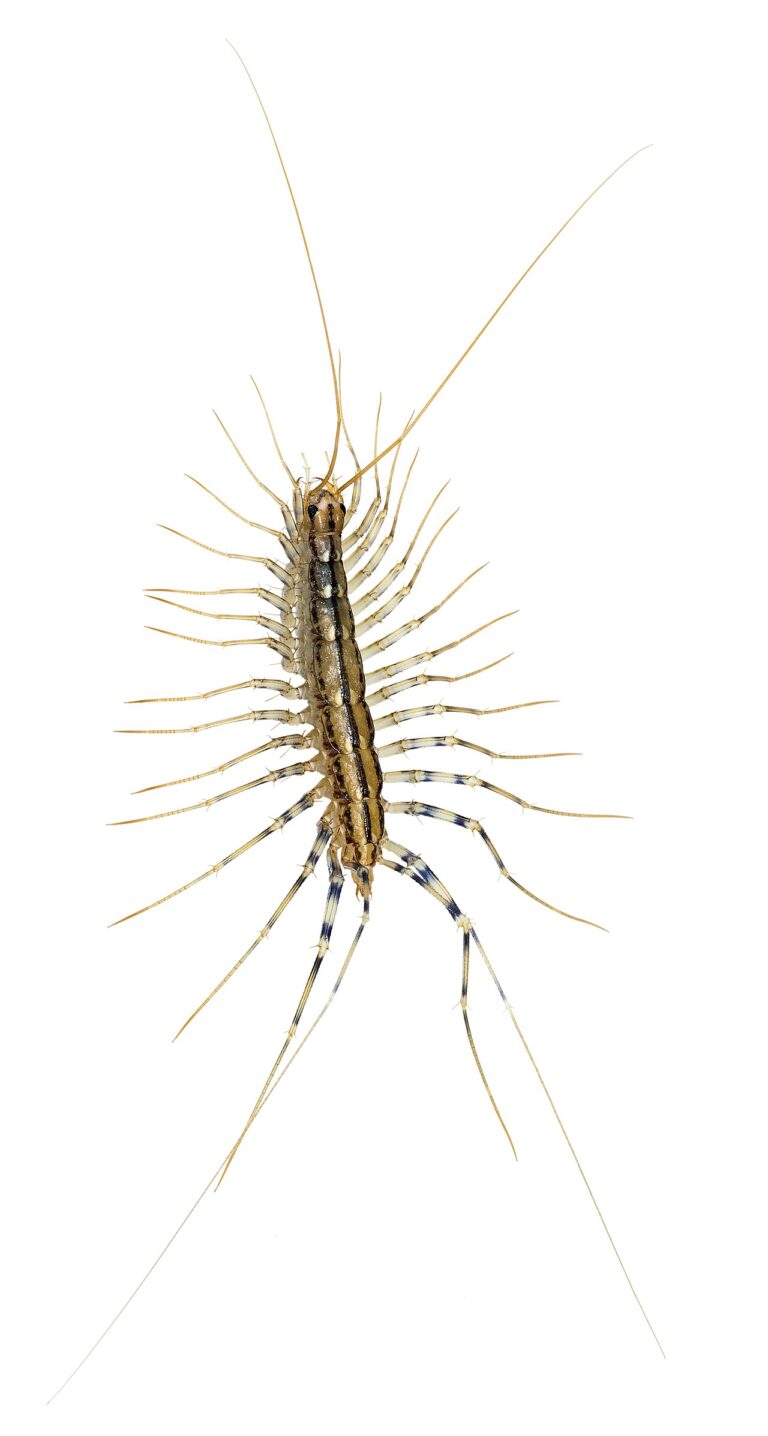
Finally, remove the harborage: move firewood off the ground and away from the wall, clear leaf litter out of window wells, and trim ground cover and shrub branches so they do not touch the siding. The same measures cut down on the other damp loving arrivals, including the house centipede and the southern house spider.
Why Shouldn’t You Kill Earwigs?
Outdoors, earwigs are more useful than harmful. They are omnivores that eat aphids, mites, insect eggs, scale insects and decaying plant matter, and they are considered a genuine biological control agent in orchards, where growers have deliberately encouraged them in apple and pear blocks.
The garden damage they cause is real but limited, mostly ragged holes in soft seedlings, dahlia and marigold petals, and occasionally ripe soft fruit. Slugs and caterpillars get blamed for some of it and earwigs get blamed for some of theirs. A garden with a moderate earwig population usually has fewer aphids.
That balance argues for control at the wall rather than eradication in the yard. Remove them from the house, keep them out of the house, and leave the ones working the mulch bed alone. Broad spectrum yard spraying to eliminate earwigs kills predators you were benefiting from and rarely holds past a season.
Insects Commonly Mistaken for House Earwigs
Rove beetles are the most frequent mix up. They are the same size and shape with short wing covers, but they are glossy black, they raise the abdomen in a scorpion-like curl when disturbed, and they have no pincers. They are harmless predators and belong outdoors too.
Small cockroach nymphs get misidentified in the other direction, which matters, because roaches genuinely do infest and breed indoors. The tell is the rear end: roach nymphs have thin, soft, hair-like cerci rather than the hard dark forceps of an earwig, and they scatter from light much faster.
Silverfish, centipedes and small dark spiders round out the list of things found in the same damp corners. If it moved fast along a basement wall and had legs down both sides, it was not an earwig. Our identification pages for the black house spider and the red house spider cover the arachnids that share the habitat.
Frequently Asked Questions
Is it safe to sleep in the same room as an earwig?
Yes. Earwigs have no interest in people, do not bite while you sleep, and cannot harm you. The old claim about crawling into ears is folklore with no medical basis, and the rare documented cases of any insect in an ear canal involve a range of species and no burrowing. Vacuum it in the morning and check the room for a moisture source.
What scents do earwigs hate?
Peppermint, tea tree, lavender, citrus and eucalyptus oils repel earwigs reasonably well when mixed at roughly 10 drops per cup of water and sprayed along entry points. The effect is short lived and needs reapplication every few days. Garlic and cayenne solutions are also popular, with weaker evidence behind them.
What is the lifespan of an earwig?
European earwigs live about one year. Adults emerge in spring or early summer, the female overwinters with her eggs, and most adults die after the following breeding season. Under favorable conditions some individuals reach 18 months or produce a second brood, but the one year cycle is the norm across most of the United States.
What are earwigs a sign of?
They are a sign of excess moisture and organic debris close to the structure. Interior sightings usually trace back to a clogged gutter, a downspout emptying at the foundation, mulch piled against the siding, a leaking hose bib, or a damp crawl space. Treating the water problem ends the earwig problem.
Do earwigs travel in groups?
They aggregate rather than swarm. Earwigs release a pheromone that draws others to good shelter, which is why you find a cluster under a single board or inside one window well and none twenty feet away. The clustering behavior makes trapping effective, since one good trap in the right spot catches many.
Can earwigs damage my house?
No. Earwigs do not chew wood, wiring, drywall, insulation or fabric, and they do not contaminate stored food the way pantry pests do. The only real nuisance is the odor when one is crushed, produced by a defensive chemical released from glands on the abdomen. Structurally, they are harmless visitors.