Pink Snake Identification: 6 US Species and Which Are Venomous
A pink snake in the United States is almost never venomous. The wild species that look pink are harmless colubrids and boas of the desert Southwest and the eastern woodlands, and the vivid bubblegum pink snakes people see in photos are captive-bred corn snake morphs, not wild animals. No pink snake in North America is poisonous to touch.
Pink shows up in snakes three ways: as a true body color in a few desert species, as a bright belly on an otherwise brown snake, and as a selectively bred morph. Knowing which one you are looking at is usually a matter of where you found it.
Pink snakes in the US include the red coachwhip, the rosy boa, the western ground snake, the western shovelnose snake, and several small woodland snakes with pink bellies. None are venomous. The brightest pink snakes, such as coral pink corn snakes, exist only in captivity as selectively bred color morphs.
Is a Pink Snake Venomous or Poisonous?
No pink snake in the United States is venomous. Every species listed below is harmless, and none of them are poisonous either, meaning they are not toxic to handle or to a curious pet that mouths one. The only US snakes that warrant caution are pit vipers and coral snakes, and none of them are pink.
A bite from any of these snakes produces shallow scratches at worst. Clean it and watch for ordinary infection. If you cannot identify a snake, leave it alone; our comparison of coral snakes and king snakes covers the one red-banded pattern that is actually worth getting right.
Red Coachwhip: The Pinkest Snake in North America
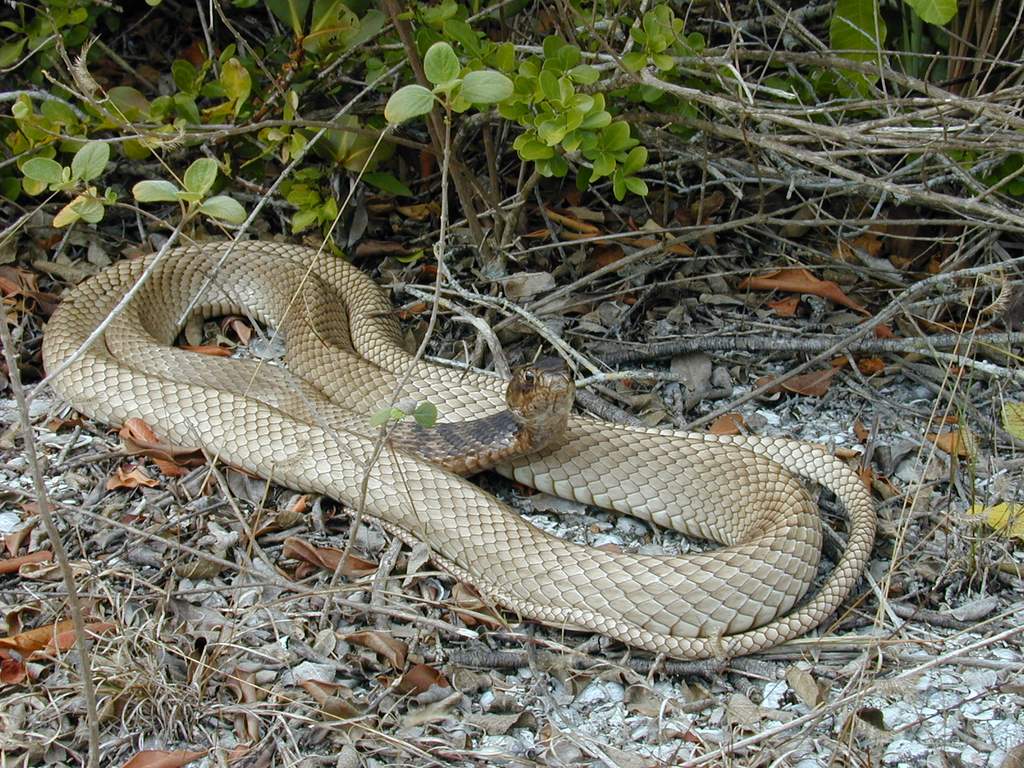
The most genuinely pink snake in North America. This western subspecies of the coachwhip runs salmon to rose pink over most of its body, reaching 3 to 6 ft (0.9 to 1.8 m). It lives in desert and dry scrub across southern California, Arizona, Nevada, and Utah, moves fast in daylight, and bites readily when cornered. Harmless but not docile.
Rosy Boa: Rose Stripes on Cream
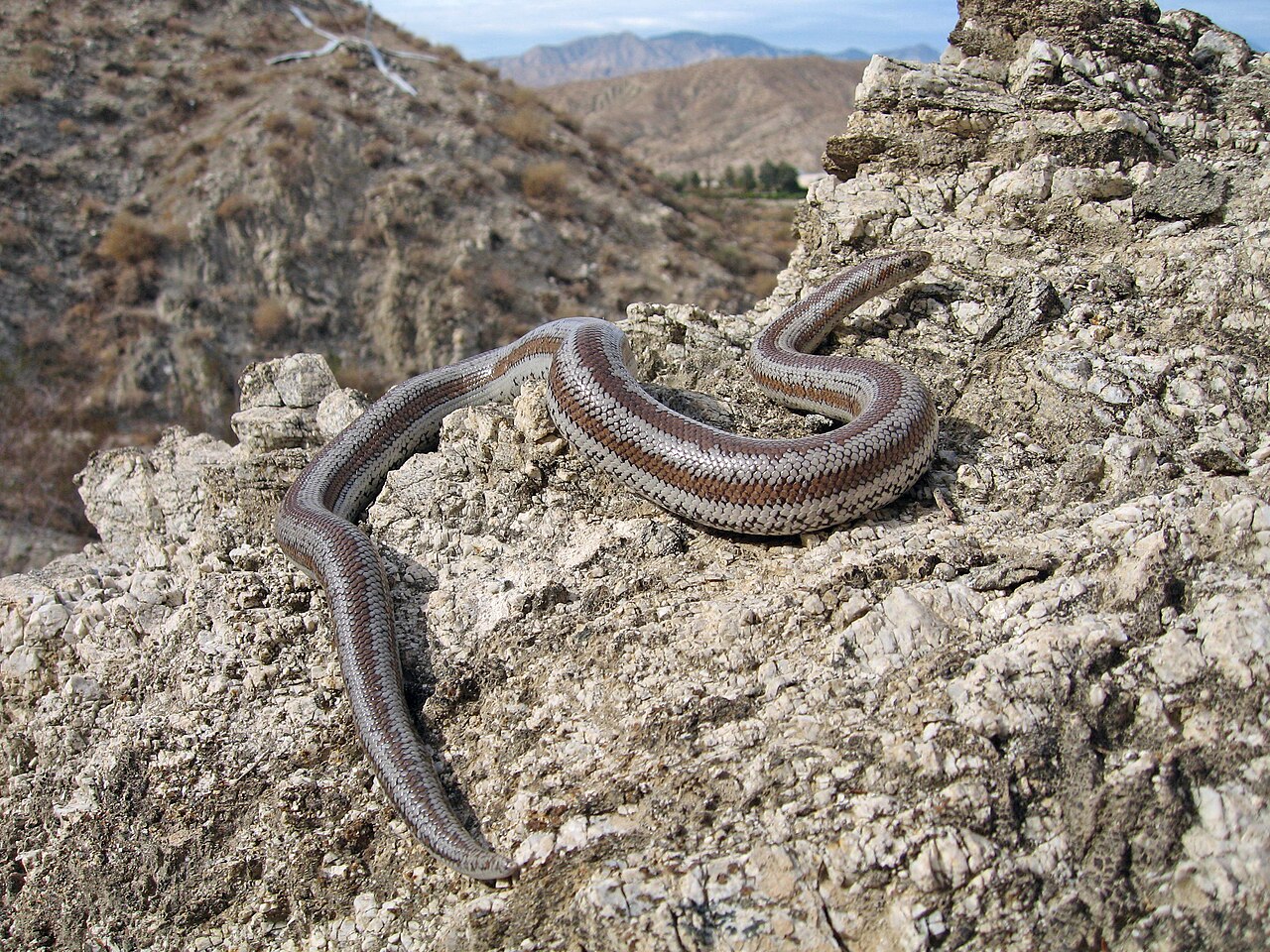
A heavy-bodied, slow-moving snake of 2 to 3 ft (60 to 90 cm) with rose or orange stripes on a cream background. Found in rocky desert in southern California and western Arizona. Rosy boas almost never bite and are among the most placid snakes in the country.
Western Ground Snake: Small, Salmon and Variable
A tiny snake, 8 to 19 in (20 to 48 cm), that varies wildly in color. Some individuals are plain salmon pink, others are banded. Widespread in the Southwest and Great Plains under rocks and debris. Too small to bite meaningfully.
Western Shovelnose Snake: Pink Saddles on Sand
A slender sand-swimmer of 10 to 17 in (25 to 43 cm) with cream and dark bands, often washed with pink or orange saddles. Lives in loose desert sand in California and Arizona and is mostly active at night.
Eastern Wormsnake and Red-Bellied Snake: Pink Underneath
Both are small eastern species reported as pink snakes because of their undersides. The eastern wormsnake (Carphophis amoenus) is brown above with a bright pink belly and looks like a large earthworm at 7 to 11 in (18 to 28 cm). The red-bellied snake (Storeria occipitomaculata) carries a belly ranging from pink to brick red. Both are harmless and are frequently found under mulch and logs, where they are easily mistaken for a brown snake.
| Feature | Red coachwhip | Rosy boa |
|---|---|---|
| Length | 3 to 6 ft (0.9 to 1.8 m) | 2 to 3 ft (60 to 90 cm) |
| Build | Slender, whip-like tail | Thick, blunt tail |
| Pattern | Uniform pink, darker toward head | Three broad rose stripes |
| Activity | Daytime, very fast | Dusk and night, slow |
| Temperament | Bites when handled | Rarely bites |
| Range | CA, AZ, NV, UT deserts | Southern CA, western AZ |
Can You Get a Pink Snake? Corn Snake Morphs Explained
Yes, and this is where most pink snake photos come from. Coral pink and strawberry corn snakes (Pantherophis guttatus) are selectively bred color morphs that combine amelanism with other genes to strip out the dark pigment and leave pink, peach, and lavender. They are the same species as the ordinary wild corn snake.
Prices run roughly 50 to 300 USD depending on the morph, with common amelanistic lines at the low end and newer designer combinations higher. Corn snakes are also one of the easiest snakes to keep, which is why they dominate the pink market rather than any wild species. Hatchlings are sold at a few weeks old, and our guide to identifying baby snakes explains why juvenile color rarely matches the adult.
How to Avoid Misidentifying a Pink Snake
Three mistakes account for most wrong calls. The first is reading a pink belly as a pink snake: flip the animal’s color priority and check the back, since wormsnakes and red-bellied snakes are brown or gray from above. The second is a shed skin or a recently shed snake, which looks washed out and pinkish for a day or two. Pink hornworms and other large larvae get called snakes often enough that we cover the caterpillars that look like snakes separately.
The third is range. A bright uniform pink snake found outdoors in Ohio or Georgia is an escaped or released pet, not a wild animal, and should be reported rather than relocated. Wild pink coloration in the US belongs to the desert Southwest. For the same logic applied to other colors, see our guides to the orange snake and the blue snake. The U.S. Fish and Wildlife Service maintains the reporting pathways for non-native reptiles.
Frequently Asked Questions
Is a pink snake rare?
Wild pink snakes are regionally common but seldom seen, because the red coachwhip and rosy boa live in thinly populated desert and both avoid people. Truly pink individuals of variable species such as the western ground snake are uncommon. Pink captive morphs are not rare at all and are produced by the thousand.
How much do pink snakes cost?
Pink corn snake morphs generally run 50 to 300 USD, with coral pink and strawberry lines near the middle of that range. Rosy boas cost 150 to 400 USD from breeders. The most expensive snakes on the market, occasionally advertised near 100,000 USD, are rare ball python and reticulated python combinations rather than anything pink.
Does a corn snake bite hurt?
Barely. A corn snake has small recurved teeth and no venom, so a bite feels like a pinprick or a cat scratch and often does not break the skin. Hatchlings cannot do any damage at all. Wash the spot with soap and water and treat it like any minor scratch.
Which smell do snakes hate?
Snakes react to strong sulfur and menthol compounds, which is why clove, cinnamon, and sulfur-based granules get marketed as repellents. Field tests show weak and short-lived results. Removing cover and cutting off the rodent food supply works far better than any scent product.

Similar Posts
Cicada Sounds: What You Are Hearing and Why
Cicadas sing with ribbed tymbals on the abdomen, not by rubbing legs. What each sound means, how to tell them from katydids, and when the noise finally stops.
Barking Tree Frog: Sound, Size, Range and Pet Facts
The barking tree frog is the largest native treefrog in the Southeast, and its doglike call carries for hundreds of yards. Here is how to identify it, where it lives and whether it can be kept as a pet.
Albino Corn Snake: Genetics, Care, Size, and Morphs
The albino corn snake is amelanistic rather than truly white. Here is what the genetics mean, plus size, morphs, care and feeding for a 20 year pet.
Crane Fly: Why It Does Not Eat Mosquitoes
Crane flies are called mosquito hawks and eat no mosquitoes at all. Here is what they actually are, plus the larvae that do damage lawns.
Alligator Symbolism and Spiritual Meaning: 7 Signs Explained
Seeing an alligator is read as a call to hold your ground. Meanings from Seminole and Choctaw tradition, the Bible, Egypt, Voodoo and modern spirit animal writing, plus what each sighting situation means.
Click Beetle: Why It Snaps, Why It Is Indoors, and How to Get Rid of It
Click beetles cannot bite or damage a house. What the snapping sound is for, why they turn up indoors, and what to do about wireworms in the garden.