Beetle Spiritual Meaning: What It Means When One Visits You
A beetle carries a spiritual meaning of transformation, endurance, protection and grounding, and when one lands on you or visits you, the message is to stay steady through a change that has already begun. Beetles go through complete metamorphosis, wear armor on their backs and spend most of their lives working out of sight in soil and wood. These meanings come from symbolism traditions and from the beetle’s own habits.
Most people search this right after a real encounter. A beetle crawled across a hand, sat on a doorframe for an hour or turned up on a windowsill at night.
A beetle landing on you says stay with a change you started. One crossing your path says go through the obstacle, not around it. One that sits a long time asks for patience, one that flies off says act now. A dead one means a phase has ended. Species and color refine the message.
What Do Beetles Mean Spiritually?
Beetles mean transformation, protection, endurance and grounding. The transformation theme comes straight from biology. A beetle passes through complete metamorphosis, from egg to larva to pupa to adult, and the grub that chews through rotten wood shares no visible feature with the armored insect that emerges. That is a full rebuild. A beetle sighting points to deep change, not a change of mood.
Protection comes from the body plan. A beetle’s hardened front wings, the elytra, close over the delicate flight wings folded beneath them. The insect carries its own shield and still keeps the ability to fly. Take that as permission to guard what is soft in you without giving up movement. Endurance follows from range. Beetles live in nearly every land habitat, from desert sand to the gap under a kitchen cabinet, and they got there by being adaptable rather than fast.
Grounding is the quietest of the four. Most beetles live in soil, dead wood and leaf litter, so a beetle sign is about the foundation and the slow work that nobody applauds.
What It Means When a Beetle Visits You or Lands on You
A beetle landing on you is an invitation to stay with a change you have already started. A beetle only lands on something that holds still, so the sign rewards the steadiness you already have. You are already in motion through something, a move, a new role, a repair in a relationship, and the sign says keep going at this pace.
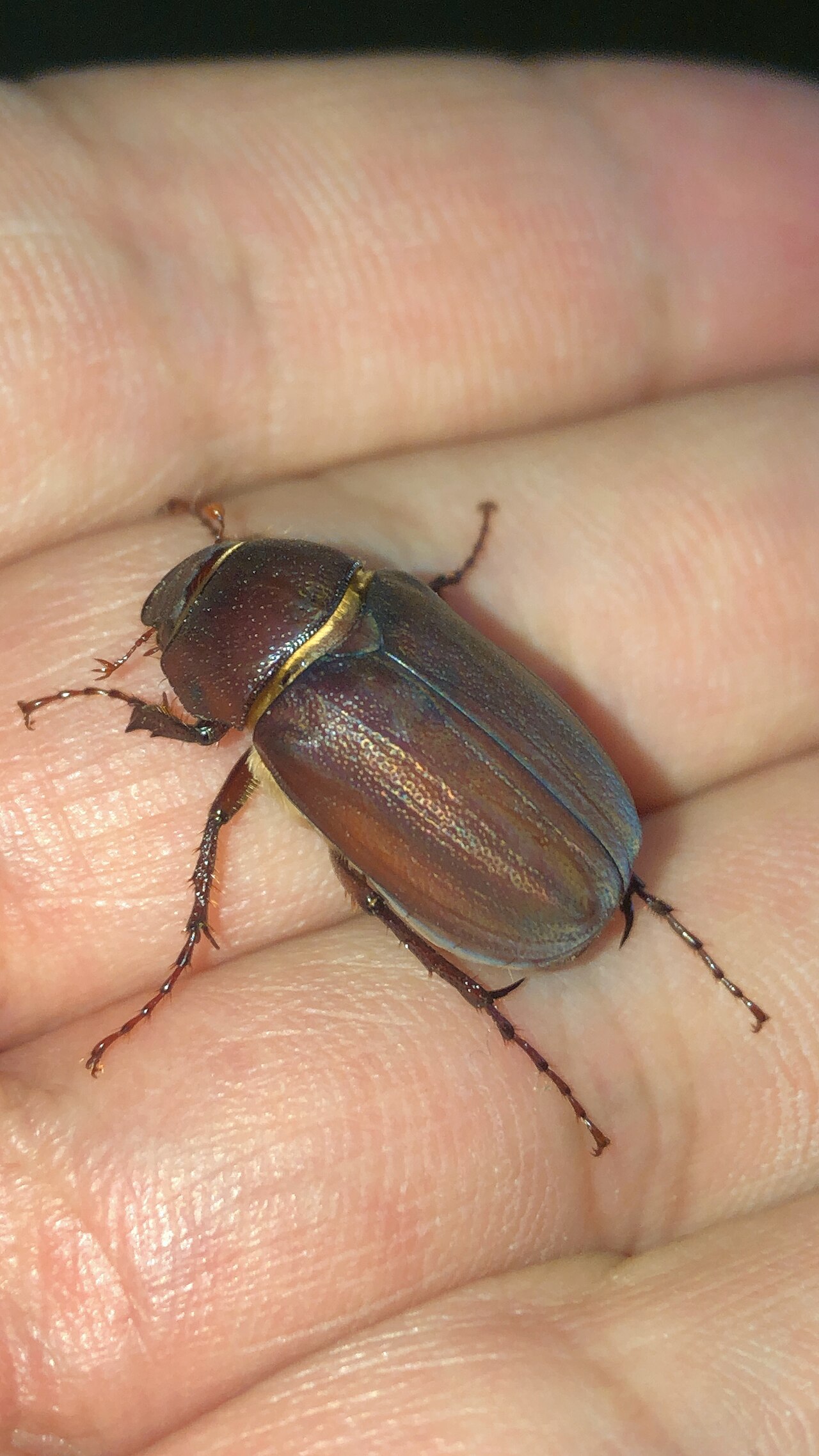
A beetle crossing your path means something different. Watch how it moves. A beetle climbs over an obstacle or works through a gap, and it almost never turns around. The thing in front of you gets crossed slowly and directly, not routed around. A beetle that stays put for a long time, on your sleeve, on a porch rail, on the inside of a window, asks for patience. Nothing is to be forced right now, and the sitting beetle models the waiting.
A beetle that lands and leaves within seconds is a message about timing. The window is open now and it is short. Treat it as a cue to act on the decision you have been circling.
Is a Beetle a Good Omen or a Bad Omen?
A beetle is a good omen in most traditions, and the luck it brings is earned rather than handed over. It symbolizes the kind of fortune that arrives after steady effort, the way a dung beetle’s ball becomes a nursery because it was rolled, buried and tended.
The negative interpretations come from a few places. Beetles in a swarm or in a crop field meant ruined harvests to farming communities, and in English folklore the tapping of the deathwatch beetle in old timber was long taken as an omen of death. When you feel the sighting as a warning, the message points at a neglected area that has been quietly consumed.
What does finding a dead beetle mean?
A dead beetle closes a phase, and it asks you to notice the ending rather than mourn it. A dead beetle inside the house points to something in your daily routine that has quietly finished, a habit or an arrangement that no longer needs tending. A beetle found dead on its back, legs curled, speaks of effort that ran out before the turn was made, so look at where you have been pushing without rest. A dead beetle on the threshold marks a clean break between what was and what comes next.
Where You See a Beetle: House, Door, Garden and Night
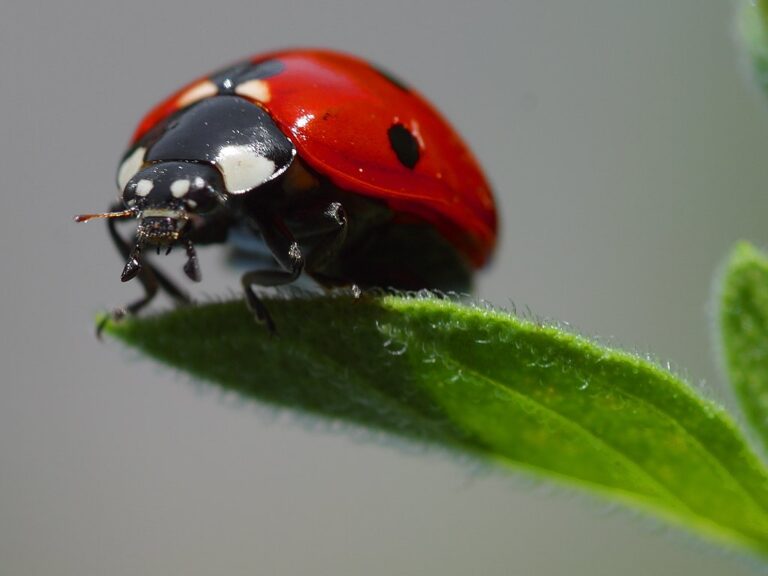
Where the beetle appears sets the room the message is about. In the house, a beetle asks you to clear and sort. One of the most common fall visitors in homes across much of the United States is the Asian lady beetle (a ladybug look-alike, though its fall swarms carry a different note than a single ladybug on your hand), which gathers on sunny walls in fall and slips inside through gaps to wait out winter. Something has come in to shelter, and your job is to decide what stays and what gets carried back out.
At the door, a beetle marks a threshold. A change is about to begin and you are standing at the edge of it. In the garden, a beetle stands for growth from patient work. Beetles in beds and borders turn dead matter into soil and eat the pests that eat your plants, so the sign confirms that your tending is working.
At night, a beetle is a seeker. Many beetles fly toward light after dark and crowd porch lamps in summer. The meaning is a search for clarity.
The Scarab: Beetle Symbolism in Ancient Egypt
The scarab is the most famous beetle symbol in the world, and in ancient Egypt it stood for rebirth and the daily renewal of the sun. The Egyptians connected the dung beetle to Khepri, a form of the sun god shown with a scarab for a head, who rolled the sun across the sky each morning the way the beetle rolls its ball across the sand.
The image works because of what the dung beetle actually does. The sacred scarab, Scarabaeus sacer, shapes a ball of dung, pushes it backward with its hind legs and buries it. Young beetles later emerge from the ground, which to Egyptian eyes looked like life rising from nothing. Khepri’s name is tied to the verb for coming into being, and the beetle became the sign of creation renewing itself every dawn.
That is why scarab amulets were worn by the living and placed with the dead. Heart scarabs, larger carved beetles laid over the chest of the mummy, carried inscriptions meant to help the heart through judgment and the person into the next life. A scarab-like beetle says something ends, something begins, and the turning is daily.
Beetles in the Bible and Christian Interpretation
The beetle appears by name in the King James Bible in Leviticus 11:22, listed among the insects that may be eaten, alongside the locust, the bald locust and the grasshopper. That is the entire direct mention. The verse belongs to the food laws, and it places the beetle among the clean creatures rather than the forbidden ones.
Modern translations handle the same verse differently. The Hebrew word rendered as beetle in the King James text appears as cricket or a kind of locust in most newer versions, so the beetle’s place in scripture rests on one older translation choice.
Christian readers draw a broader lesson from the beetle as a small creature of creation. It is humble, it works without being seen and it turns waste into something useful, and those traits line up with teachings on humility and diligence.
Stag Beetle Symbolism
The stag beetle symbolizes strength shown openly. The males carry enlarged mandibles shaped like a stag’s antlers, which gave the insect its name, and the message is to display what you are capable of rather than hide it.
The males use those mandibles to wrestle. Two rivals lock jaws and push, and the loser is lifted and dropped rather than wounded. Serious injury is rare in these contests.
Adult stag beetles fly on warm summer evenings after one to several years as larvae in rotting wood. The final note is readiness. You show yourself when the work below the surface is done, and not a day earlier.
Japanese Beetle Symbolism
The Japanese beetle symbolizes something new that takes up more room than you expected. Popillia japonica was first found in New Jersey in 1916 and spread across lawns and gardens, and it is now one of the most familiar summer beetles east of the Mississippi. When it appears as a sign, the question is what has recently arrived in your life and started claiming space.

Japanese beetles feed in groups. Dozens cluster on a single rose or grape leaf, and the crowd draws more beetles. The symbolism is appetite and excess, so a cluster of Japanese beetles is a prompt to look at where you are overdoing it and who is overdoing it with you.
Their feeding leaves a skeletonized leaf, the veins intact and the green tissue gone. Something is eating the substance out of your days while leaving the outline looking fine. The Japanese beetle asks for boundaries against whatever drains you, before only the veins are left.
Other Beetle Species and Their Meaning
These are the beetles most often searched after a sighting. The click beetle is the comeback beetle. Flipped on its back, it snaps a spine on its underside, launches into the air with an audible click and tries again until it lands upright.
The darkling beetle is the beetle of lean times. These dark, ground-dwelling beetles survive in dry habitats where little else manages, and the sign speaks to resourcefulness when the surroundings offer little. The blister beetle is a boundary. It defends itself with a chemical that irritates skin, and the instruction is literal. Keep your distance from what harms you.
The eastern Hercules beetle is one of the largest beetles in the United States, and the males carry two horns, a long one reaching forward from the thorax and a shorter one curving up from the head. Those horns are for display and for pushing rivals off a branch, not for attack.
Six more beetles that turn up around US homes and gardens:
| Beetle | Notable trait | Symbolic theme |
|---|---|---|
| Firefly | Produces its own light to signal mates | Inner light, hope in the dark |
| June bug | Bumbles into porch lights on early summer nights | Nostalgia, the return of a season |
| Ground beetle | Hunts pests at night on the soil surface | Quiet protection, work done unseen |
| Longhorn beetle | Antennae often as long as its body or longer | Sensitivity, reading the room |
| Tiger beetle | Fast runner with metallic green shell | Decisiveness, chasing what you want |
| Weevil | Long snout, bores into seeds and grain | Getting to the core, hidden costs |
Beetle Color Meanings: Black, Brown, Green, Red and Patterned
Beetle color refines the message, and black is the color most people ask about. A black beetle stands for the hidden and the inner, and the sign points toward private work, inward reflection and things you are not ready to share.
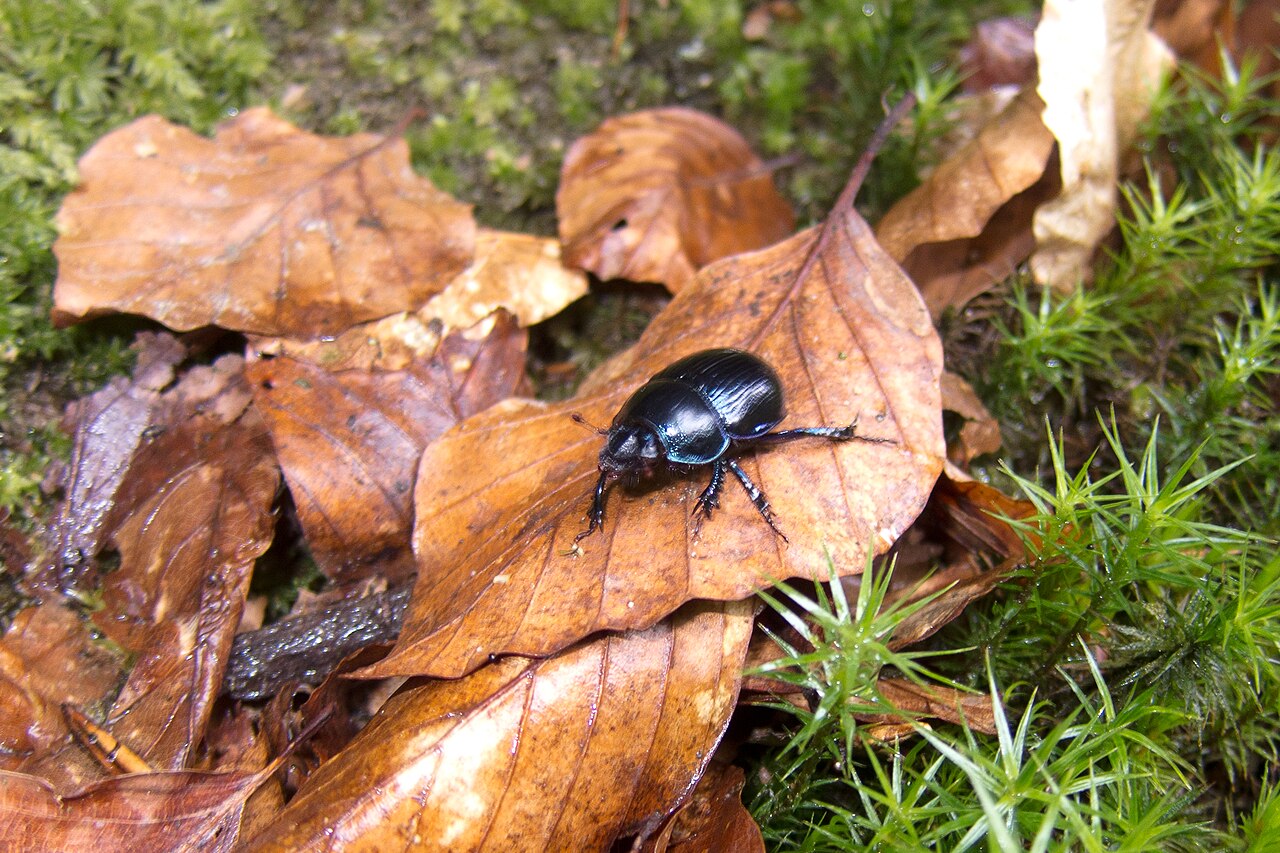
Brown is the color of home and roots. Brown beetles live in bark, leaf litter and dead wood, and they bring the message back to the practical. Green beetles carry growth and healing. The metallic green of a tiger beetle catches the light like new leaves, and the sign favors recovery and fresh starts.
Red and orange beetles are life force with a caution. Many bright beetles wear warning colors because they taste bad to predators, and the instruction is to slow down and look before you reach. A black-and-white beetle, patterned in bands or spots, speaks of balance.
What Can a Beetle Represent in Your Life?
A beetle represents steady building in whatever part of your life it touches. In work, the beetle favors the slow accumulation of skill over the shortcut.
In relationships, the beetle is loyalty that outlasts rough weather. Its armor is for surviving the hard season, and a beetle sign in a relationship question says the bond can take the pressure if you stay in it. In health, the beetle is the rebuilding of habits one step at a time. Metamorphosis goes through stages that look like nothing is happening, and so does recovery.
In creative work, the beetle is the reworker. Wood-boring beetles break down dead trees and return them to the forest floor as soil for the next growth.
Beetle as Spirit Animal, Totem and Power Animal
The beetle as a spirit animal belongs to people who are methodical, persistent and unhurried. If the beetle is your totem, you finish things.
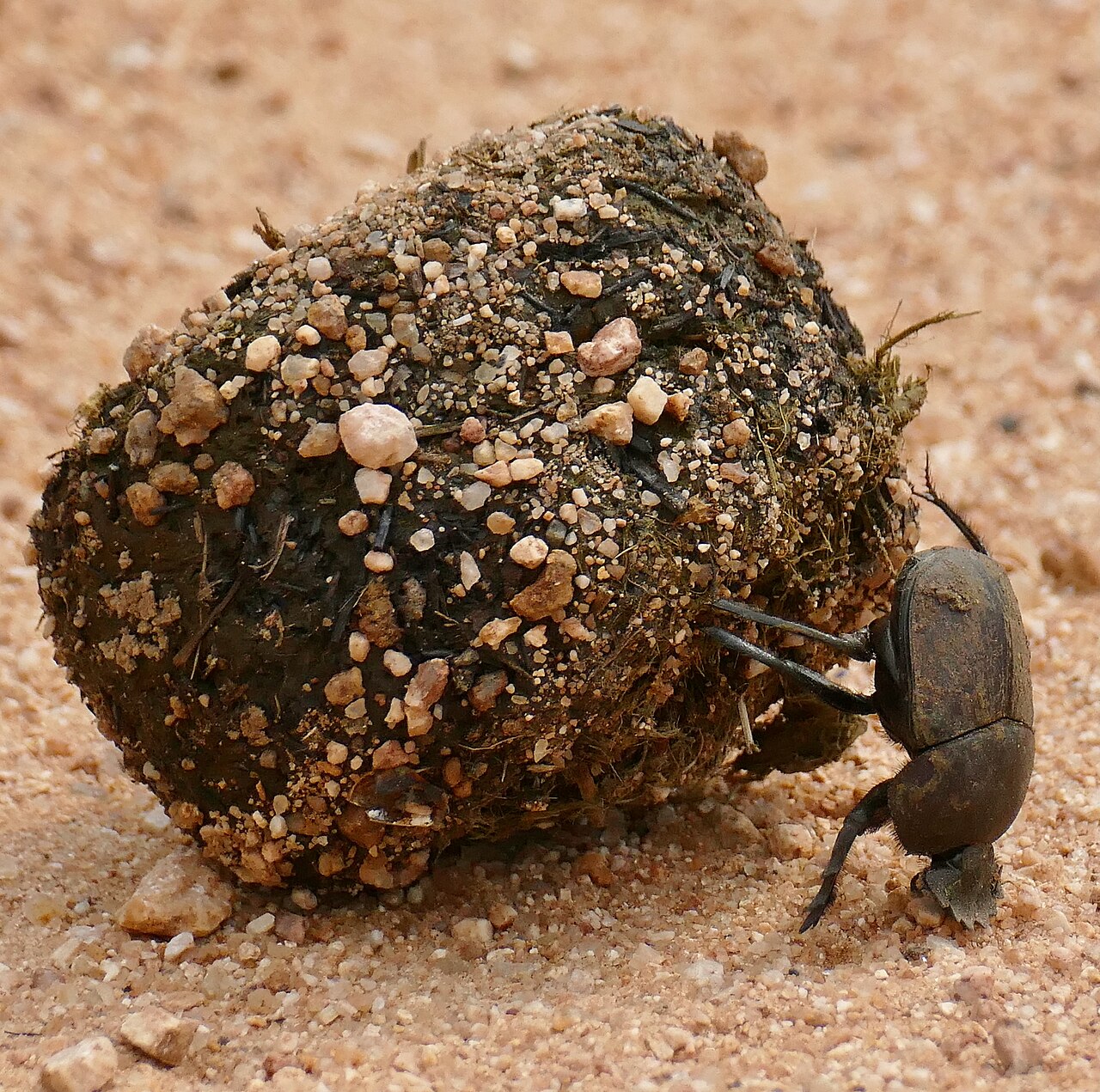
The beetle’s power is strength beyond its size. Dung beetles move balls many times their own weight. As a power animal, the beetle lends that capacity.
Every totem has a shadow and the beetle’s is armor that never comes off. Emotional hardness and rigidity are the beetle’s failure modes. Call on the beetle when something unglamorous has to be finished, and set it down when the hard shell starts to keep good things out.
Frequently Asked Questions
What does it mean when you keep seeing beetles?
It means the message is urgent, not different. One beetle is a prompt and a beetle every day for two weeks is a pattern, so interpret the pattern over the weeks instead of each visit on its own.
Can a beetle be a sign from a loved one who passed?
Yes, many people read a beetle as a sign from someone who has died, and the timing carries the meaning. A beetle on a grave, on a birthday or on the anniversary of a death is often felt as a visit, and the beetle’s link to rebirth makes it a fitting messenger.
Is it bad luck to kill a beetle?
No, killing a beetle carries no serious curse in folklore, though an old British belief holds that stepping on a black rain beetle brings rain. In symbolic terms, killing it cuts the encounter short before you have read it. Carry it outside instead. Place a glass over it, slide a sheet of paper underneath and release it outside.
Is a ladybug a beetle, and does it mean the same?
Yes, a ladybug is a beetle in the family Coccinellidae, but it carries its own luck symbolism that does not transfer to beetles in general. A ladybug on your hand means good fortune and a granted wish. A black beetle on the same hand means inner work and transformation.
What does finding a beetle grub mean?
It means a plan is further along than it looks. Grubs live in soil or wood for months or years before they pupate, and finding one while digging or splitting firewood reveals a stage most people never see.
What does it mean to dream about beetles?
A beetle crawling over you in a dream means a change is already in motion. A beetle in your mouth or in your food means something is feeding on you, a worry or a person that drains more than it gives. Crushing a beetle means resistance to a change you know is coming.
Sources
- The Metropolitan Museum of Art, Egyptian Scarabs
- Encyclopaedia Britannica, Khepri
- Bible Gateway, Leviticus 11:22 (King James Version)
Explore more: Insect Spiritual Meanings: 15 Bugs and What They Signal