Pigeon Poop: What It Looks Like and Is It Dangerous?
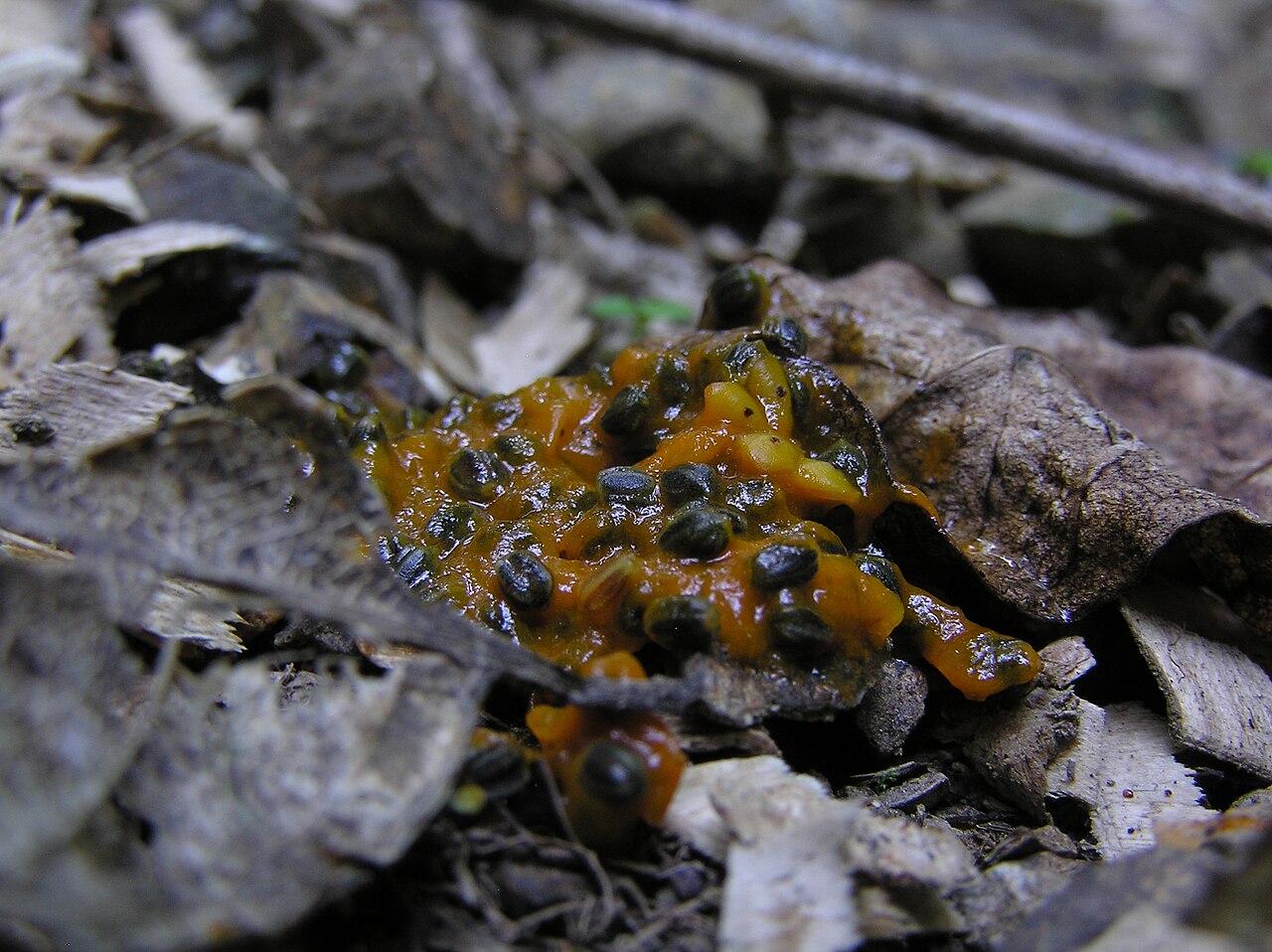
Pigeon poop is a semi-solid blob or short coil about 0.3 to 0.8 in (0.8 to 2 cm) across, dark green to olive brown with a bright white cap, found in heavy piles under ledges, beams and window sills rather than scattered at random. The white part is uric acid, not urine, because birds pass both wastes together.
A single dropping is a minor hazard. The real problem is accumulation: dried piles in attics, air shafts and barn lofts turn to dust that can carry fungal spores, so cleanup method matters more than the mess.
Pigeon droppings are white tipped, green brown, soft and roughly pea sized to dime sized, often with visible seeds or grit. Fresh piles under a roost are the giveaway. They are harmful to humans mainly as dried dust, which can carry Histoplasma and Cryptococcus spores, so wet the pile before removing it.
What Pigeon Poop Looks Like
A fresh dropping is glossy, holds a soft coil for a few minutes, then flattens and dries to a chalky gray white crust that bonds hard to stone and paint. Color tracks diet: birds on spilled grain pass pale tan droppings with seed husks, city birds on scraps pass darker green ones.
| Feature | Pigeon droppings |
|---|---|
| Size | 0.3 to 0.8 in (0.8 to 2 cm) per dropping |
| Shape | Soft blob or short coil, flattens as it dries |
| Color | Dark green to olive brown with a white urate cap |
| Contents | Seeds, grain husks, grit, no fur or bone |
| Where found | Under ledges, beams, signs, solar panels, girders |
| Pattern | Dense piles and streaked splatter below a fixed roost |
| Dried state | Chalky white crust that powders when disturbed |
Pigeon Poop vs Other Droppings You Might Find
Pigeon vs gull. Gull droppings are larger, far wetter and almost entirely white with a thin dark center, and they splash instead of holding a shape. Gulls foul open flat roofs, while pigeons concentrate under cover on narrow ledges.
Pigeon vs starling or grackle. Blackbird droppings are smaller, about 0.2 in (0.5 cm), looser, and often stained purple from berries in late summer. They fall in dense carpets under communal roost trees, not under building ledges.
Pigeon vs bat. Bat guano has no white cap at all. It is dark, dry and crumbles to glittering dust because of the insect wing fragments, and it piles in cones below one roost point in an attic. For attic finds, bat poop versus mouse poop is the other comparison worth making.
Mammal droppings in the same buildings look nothing like bird waste, being firm pellets without urate, as in rat poop versus mouse poop, squirrel poop versus rat poop, roach poop versus mouse poop and lizard poop versus mouse poop.
Are Pigeon Droppings Harmful to Humans?
Yes, but the risk is tied to dried, disturbed accumulations rather than one dropping on your jacket. Three organisms matter: Histoplasma capsulatum, a fungus that grows in soil enriched by droppings and causes histoplasmosis; Cryptococcus neoformans, another fungus found in aged droppings; and Chlamydia psittaci, the bacterium behind psittacosis.
Healthy people who inhale a small amount usually have no symptoms or a mild flu like illness. Risk rises sharply with enclosed spaces, large old piles and weakened immunity, and the guidance from the Centers for Disease Control and Prevention is to avoid raising dust in the first place.
How Do I Safely Remove Pigeon Poop?
Mist the area with water or household disinfectant and let it soak before you touch it. Wear disposable gloves, eye protection and an N95 respirator, scrape with a plastic putty knife, bag and seal the waste, then wash the surface. Never dry sweep, dry brush or hit a dry pile with a pressure washer.
For fresh spots on a car or deck, warm soapy water and a soft cloth are enough; dried droppings etch paint, so soak rather than scrub. Loft accumulations deeper than a couple of inches, and any job in a confined space, belong to a contractor with proper respiratory gear.
Related reading: Duck Poop.
Related reading: Crow Poop.
Related reading: Eagle Poop.
Related reading: Seagull Poop.
Related reading: Hawk Poop Identification.
Related reading: Hummingbird Poop.
Frequently Asked Questions
How long is bird poop infectious?
Fresh droppings carry bacteria for a few days, but the fungal spores behind histoplasmosis survive in aged droppings and contaminated soil for years. An old attic pile therefore deserves more caution than this morning’s splatter. Treat any dry accumulation as a dust hazard regardless of age.
Are pigeons good luck or bad luck?
Folk tradition in the US and Britain treats being hit by a bird dropping as a sign of coming money, and pigeons themselves have long symbolized home and safe return. These are beliefs rather than facts, and they have no bearing on the health advice above.
Do fake owls really keep pigeons away?
Only briefly. Pigeons habituate to a static decoy within days to a couple of weeks, after which they will perch on it. Moving the decoy every few days helps a little, but physical exclusion with netting or spikes is the only method that holds up over a season.
What do pigeons hate most?
Losing a flat place to stand. Sloped covers, tight netting and well set spikes end a roost, while smells, noise and gels mostly move the birds a few feet. Removing food is the other half: no spilled grain, no open dumpsters, no hand feeding nearby.